
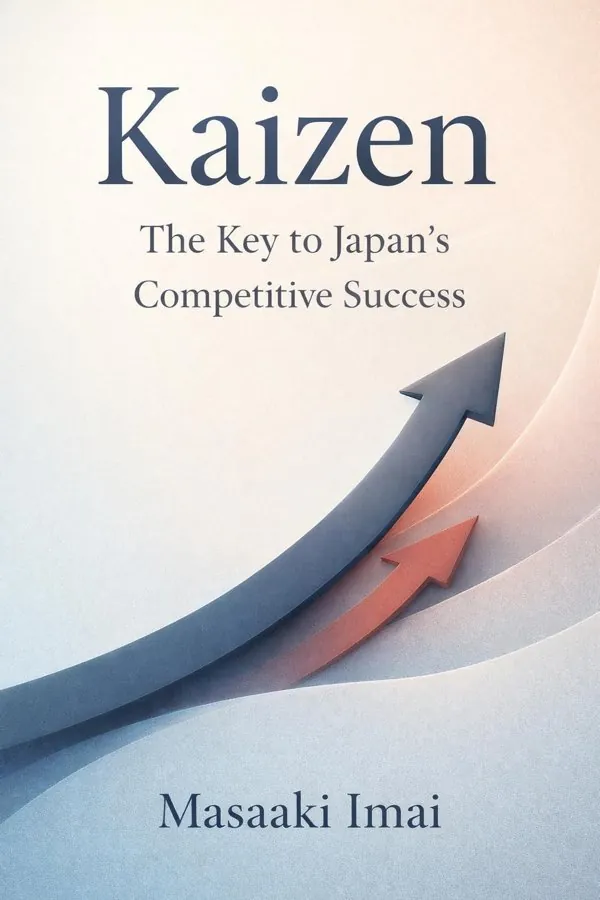
Kaizen: The Key to Japan’s Competitive Success: Summary & Key Insights
by Masaaki Imai
 10 min8 chaptersAudio available
What Is Kaizen: The Key to Japan’s Competitive Success About?
Kaizen: The Key to Japan’s Competitive Success by Masaaki Imai is a leadership book spanning 8 pages. 本書は、日本企業の競争力の源泉である「カイゼン(改善)」の哲学と実践を体系的に解説したものである。著者の今井正明は、トヨタ生産方式をはじめとする日本的経営の根幹にある継続的改善の考え方を、経営戦略・品質管理・従業員参加の観点から分析し、世界の企業が学ぶべき原則として提示している。
This FizzRead summary covers all 8 key chapters of Kaizen: The Key to Japan’s Competitive Success in approximately 10 minutes, distilling the most important ideas, arguments, and takeaways from Masaaki Imai's work. Also available as an audio summary and Key Quotes Podcast.
Kaizen: The Key to Japan’s Competitive Success
本書は、日本企業の競争力の源泉である「カイゼン(改善)」の哲学と実践を体系的に解説したものである。著者の今井正明は、トヨタ生産方式をはじめとする日本的経営の根幹にある継続的改善の考え方を、経営戦略・品質管理・従業員参加の観点から分析し、世界の企業が学ぶべき原則として提示している。
Who Should Read Kaizen: The Key to Japan’s Competitive Success?
This book is perfect for anyone interested in leadership and looking to gain actionable insights in a short read. Whether you're a student, professional, or lifelong learner, the key ideas from Kaizen: The Key to Japan’s Competitive Success by Masaaki Imai will help you think differently.
- ✓Readers who enjoy leadership and want practical takeaways
- ✓Professionals looking to apply new ideas to their work and life
- ✓Anyone who wants the core insights of Kaizen: The Key to Japan’s Competitive Success in just 10 minutes
Want the full summary?
Get instant access to this book summary and 100K+ more with Fizz Moment.
Get Free SummaryAvailable on App Store • Free to download
Key Chapters
Japan’s managerial philosophy did not emerge overnight. It grew from centuries of cultural values emphasizing harmony, diligence, and respect for craftsmanship. In postwar Japan, these ideas were married with Western scientific management techniques, forming a unique hybrid that balanced efficiency with human engagement.
The devastation of World War II created a demand for rebuilding not only infrastructure but also mindset. Japanese leaders realized that lasting recovery required systems capable of nurturing learning and adaptation. The idea of Kaizen gave people a psychological anchor—a way to turn personal effort into national strength. This cultural backdrop is essential to understanding why Kaizen succeeded here first.
Japanese firms made improvement a moral duty, not just a productivity initiative. Managers were expected to lead by example, not through distant directives. Workers were encouraged to suggest changes in their areas, however small. A sense of community replaced the adversarial mindset common in industrial relations elsewhere. This collective spirit made it natural for teamwork, quality circles, and shared responsibility to flourish.
At the center was the belief that value lies not in hierarchy but in participation. Japan’s cultural respect for learning and process-focused thinking supported a management style that viewed improvement as the foundation of excellence. This isn’t merely cultural romanticism—it’s a structural explanation of Japan’s postwar success that reveals why incremental progress, over time, becomes a formidable force.
Many people confuse Kaizen with innovation. Innovation, I often say, is dramatic—it disrupts, redefines, and depends on breakthroughs. Kaizen, by contrast, is subtle—it strengthens what exists and refines the everyday. Both are vital, but Kaizen gives continuity to innovation. Without the discipline of improvement, innovation fades.
Kaizen means everyone, everywhere, improving everything. It demands participation at all levels. A line worker adjusting the position of a tool to reduce fatigue and a manager redesigning workflow both practice Kaizen. The power of small changes accumulates, producing large results over time.
The distinction lies also in ownership. Innovation often belongs to a few visionary individuals; Kaizen belongs to all. It builds confidence and shared purpose. In companies like Toyota, this spirit ensures that every worker sees problems not as threats but as opportunities for progress. The organization thereby gains resilience and adaptability.
In practical terms, Kaizen involves observing the current process, identifying inefficiencies, and proposing straightforward solutions. These solutions do not require large investments—they depend on attention and creativity. What distinguishes Kaizen is its continuity: no problem is ever considered fully solved. The goal is perpetual learning and steady improvement.
Through Kaizen, employees learn to see 'waste'—in motion, waiting time, inventory, defects—and treat its elimination as a daily mission. The cumulative effect of these small acts produces the remarkable results that characterized Japan’s competitive ascendancy.
+ 6 more chapters — available in the FizzRead app
All Chapters in Kaizen: The Key to Japan’s Competitive Success
About the Author
今井正明(Masaaki Imai)は、日本の経営コンサルタントであり、カイゼン哲学の国際的な提唱者。今井マネジメント研究所(Kaizen Institute)を設立し、世界各国で継続的改善とリーン経営の普及に尽力している。
Get This Summary in Your Preferred Format
Read or listen to the Kaizen: The Key to Japan’s Competitive Success summary by Masaaki Imai anytime, anywhere. FizzRead offers multiple formats so you can learn on your terms — all free.
Available formats: App · Audio · PDF · EPUB — All included free with FizzRead
Download Kaizen: The Key to Japan’s Competitive Success PDF and EPUB Summary
Key Quotes from Kaizen: The Key to Japan’s Competitive Success
“Japan’s managerial philosophy did not emerge overnight.”
“Many people confuse Kaizen with innovation.”
Frequently Asked Questions about Kaizen: The Key to Japan’s Competitive Success
Kaizen: The Key to Japan’s Competitive Success by Masaaki Imai is a leadership book that explores key ideas across 8 chapters. 本書は、日本企業の競争力の源泉である「カイゼン(改善)」の哲学と実践を体系的に解説したものである。著者の今井正明は、トヨタ生産方式をはじめとする日本的経営の根幹にある継続的改善の考え方を、経営戦略・品質管理・従業員参加の観点から分析し、世界の企業が学ぶべき原則として提示している。
More by Masaaki Imai

You Might Also Like

Extreme Ownership
Jocko Willink
10 min
Dare to Lead
Brene Brown
10 min
Leaders Eat Last
Simon Sinek
10 min
The 21 Irrefutable Laws of Leadership
John Maxwell
10 min
Start With Why
Simon Sinek
10 min
How to Lead When You're Not in Charge
Clay Scroggins
10 minBrowse by Category
Ready to read Kaizen: The Key to Japan’s Competitive Success?
Get the full summary and 100K+ more books with Fizz Moment.