
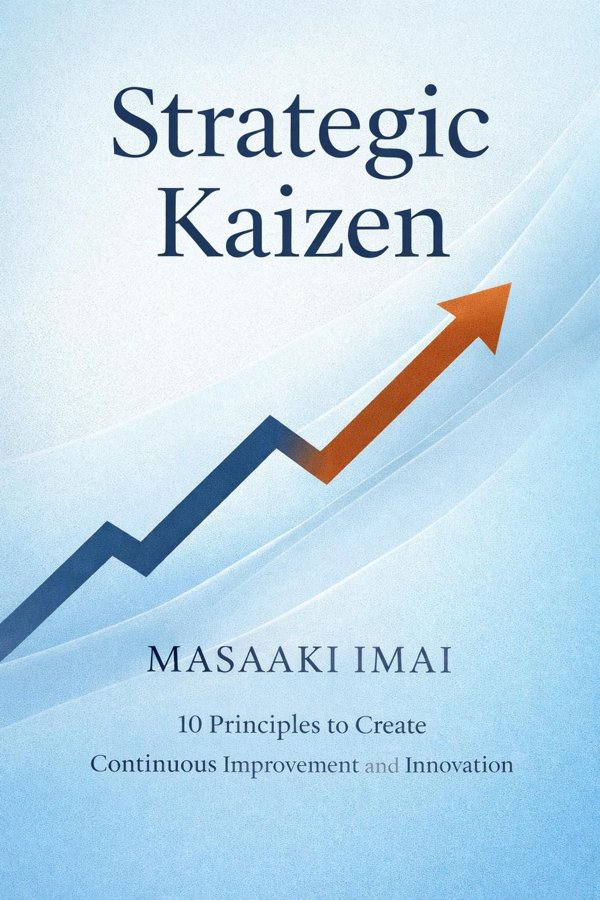
Strategic Kaizen: 10 Principles to Create Continuous Improvement and Innovation: Summary & Key Insights
by Masaaki Imai
 10 min7 chaptersAudio available
What Is Strategic Kaizen: 10 Principles to Create Continuous Improvement and Innovation About?
Strategic Kaizen: 10 Principles to Create Continuous Improvement and Innovation by Masaaki Imai is a strategy book spanning 7 pages. In 'Strategic Kaizen', Masaaki Imai expands on his foundational work on continuous improvement, presenting a comprehensive framework for integrating Kaizen principles into corporate strategy. The book emphasizes the alignment of daily improvement activities with long-term business goals, offering practical tools and case studies from global organizations that have successfully embedded Kaizen into their strategic management systems.
This FizzRead summary covers all 7 key chapters of Strategic Kaizen: 10 Principles to Create Continuous Improvement and Innovation in approximately 10 minutes, distilling the most important ideas, arguments, and takeaways from Masaaki Imai's work. Also available as an audio summary and Key Quotes Podcast.
Strategic Kaizen: 10 Principles to Create Continuous Improvement and Innovation
In 'Strategic Kaizen', Masaaki Imai expands on his foundational work on continuous improvement, presenting a comprehensive framework for integrating Kaizen principles into corporate strategy. The book emphasizes the alignment of daily improvement activities with long-term business goals, offering practical tools and case studies from global organizations that have successfully embedded Kaizen into their strategic management systems.
Who Should Read Strategic Kaizen: 10 Principles to Create Continuous Improvement and Innovation?
This book is perfect for anyone interested in strategy and looking to gain actionable insights in a short read. Whether you're a student, professional, or lifelong learner, the key ideas from Strategic Kaizen: 10 Principles to Create Continuous Improvement and Innovation by Masaaki Imai will help you think differently.
- ✓Readers who enjoy strategy and want practical takeaways
- ✓Professionals looking to apply new ideas to their work and life
- ✓Anyone who wants the core insights of Strategic Kaizen: 10 Principles to Create Continuous Improvement and Innovation in just 10 minutes
Want the full summary?
Get instant access to this book summary and 100K+ more with Fizz Moment.
Get Free SummaryAvailable on App Store • Free to download
Key Chapters
For most of the twentieth century, Kaizen was viewed as an operational method — a powerful one, yes, but confined largely to the shop floor. It was about small steps and practical actions: improving machine maintenance, reducing waste, refining standardized work. When I first codified Kaizen in its modern sense, it was meant to democratize improvement. Every worker could contribute ideas for betterment, and incremental change became a collective habit.
But as the world globalized, the challenges organizations faced became strategic, not just operational. Competition, digital innovation, global supply chains — these required organizations to rethink their long-range capabilities. What I observed was a disconnection: senior executives were devising bold strategies, while Kaizen continued to live in isolated departments. *Strategic Kaizen* seeks to merge these worlds. It expands Kaizen from the domain of operational excellence into the realm of corporate direction.
The distinction is critical. Operational Kaizen focuses on improving existing processes within given parameters. Strategic Kaizen questions those parameters themselves — it challenges whether the goals, business models, or customer assumptions are valid. It becomes a mechanism not only to do things right but to decide what the right things are to pursue. When every level of the organization is aligned through Kaizen, strategy is no longer a periodic exercise but an evolving discipline shaped daily by learning.
The ten principles at the core of *Strategic Kaizen* represent the synthesis of decades of practice and observation. They are not fixed rules but living guidelines that shape how organizations can harmonize continuous improvement and innovation. Among these, some key ideas emerge repeatedly.
The first is that everyone, regardless of title, bears responsibility for improvement. A company cannot improve continuously if improvement is delegated to a department. When each individual — from top management to frontline staff — accepts ownership, the organization becomes self-correcting and self-renewing.
The second principle is to align daily Kaizen with the company’s strategic direction. Incremental improvements without awareness of the larger purpose can drift into local optimizations that do not advance the whole enterprise. Leaders must articulate a clear long-term vision, ensuring that all Kaizen activities contribute toward that north star.
Third, Kaizen must embrace innovation. Traditionally, improvement was seen as small, evolutionary change, while innovation was viewed as something disruptive and top-down. I argue that they are deeply interconnected. Continuous small improvements create the conditions for major breakthroughs — by reducing waste, clarifying customer problems, and stimulating creative thinking.
Fourth, visualize problems. Without visibility, issues remain hidden, and hidden problems cannot be improved. Whether through digital dashboards or simple visual management on the floor, transparency is the first step toward progress.
Finally, sustain Kaizen through discipline. Improvement must be standardized, not improvised. The virtue of discipline transforms temporary success into enduring culture. Together, these principles help management integrate operational excellence and strategic vision, creating a company that improves as a matter of identity.
+ 5 more chapters — available in the FizzRead app
All Chapters in Strategic Kaizen: 10 Principles to Create Continuous Improvement and Innovation
About the Author
Masaaki Imai is a Japanese organizational theorist, management consultant, and founder of the Kaizen Institute. He is widely recognized as one of the leading authorities on continuous improvement and quality management, best known for introducing the concept of Kaizen to the global business community through his influential works.
Get This Summary in Your Preferred Format
Read or listen to the Strategic Kaizen: 10 Principles to Create Continuous Improvement and Innovation summary by Masaaki Imai anytime, anywhere. FizzRead offers multiple formats so you can learn on your terms — all free.
Available formats: App · Audio · PDF · EPUB — All included free with FizzRead
Download Strategic Kaizen: 10 Principles to Create Continuous Improvement and Innovation PDF and EPUB Summary
Key Quotes from Strategic Kaizen: 10 Principles to Create Continuous Improvement and Innovation
“For most of the twentieth century, Kaizen was viewed as an operational method — a powerful one, yes, but confined largely to the shop floor.”
“The ten principles at the core of *Strategic Kaizen* represent the synthesis of decades of practice and observation.”
Frequently Asked Questions about Strategic Kaizen: 10 Principles to Create Continuous Improvement and Innovation
Strategic Kaizen: 10 Principles to Create Continuous Improvement and Innovation by Masaaki Imai is a strategy book that explores key ideas across 7 chapters. In 'Strategic Kaizen', Masaaki Imai expands on his foundational work on continuous improvement, presenting a comprehensive framework for integrating Kaizen principles into corporate strategy. The book emphasizes the alignment of daily improvement activities with long-term business goals, offering practical tools and case studies from global organizations that have successfully embedded Kaizen into their strategic management systems.
More by Masaaki Imai

You Might Also Like

Mastery
Robert Greene
10 min
Cut Costs Not Corners: A Practical Guide to Staying Competitive and Improving Profits
Colin Barrow
10 min
Good Strategy/Bad Strategy: The Difference and Why It Matters
Richard P. Rumelt
10 min
On Grand Strategy
John Lewis Gaddis
10 min
The Six Disciplines of Digital Transformation
George Westerman
10 min
7 Powers: The Foundations of Business Strategy
Hamilton Helmer
10 minBrowse by Category
Ready to read Strategic Kaizen: 10 Principles to Create Continuous Improvement and Innovation?
Get the full summary and 100K+ more books with Fizz Moment.