
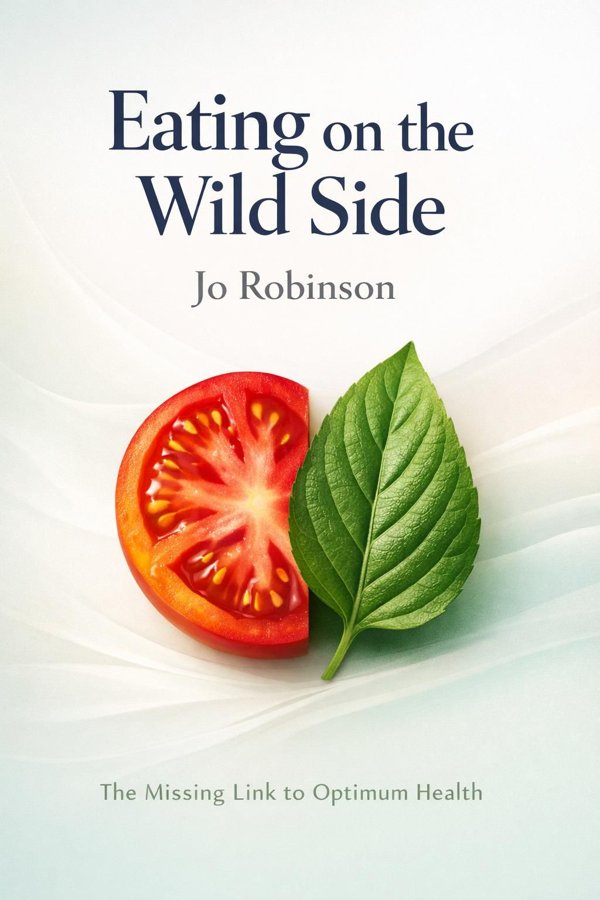
Eating on the Wild Side: The Missing Link to Optimum Health: Summary & Key Insights
by Jo Robinson
 10 min6 chaptersAudio available
What Is Eating on the Wild Side: The Missing Link to Optimum Health About?
Eating on the Wild Side: The Missing Link to Optimum Health by Jo Robinson is a nutrition book spanning 6 pages. In this groundbreaking work, Jo Robinson reveals how centuries of agricultural selection have stripped fruits and vegetables of their original nutritional power. Drawing on cutting-edge research, she guides readers to rediscover the healthiest varieties of produce and the best ways to store, prepare, and cook them to maximize their phytonutrient content. The book offers practical advice for choosing the most beneficial foods in modern markets while reconnecting with the wild origins of human nutrition.
This FizzRead summary covers all 6 key chapters of Eating on the Wild Side: The Missing Link to Optimum Health in approximately 10 minutes, distilling the most important ideas, arguments, and takeaways from Jo Robinson's work. Also available as an audio summary and Key Quotes Podcast.
Eating on the Wild Side: The Missing Link to Optimum Health
In this groundbreaking work, Jo Robinson reveals how centuries of agricultural selection have stripped fruits and vegetables of their original nutritional power. Drawing on cutting-edge research, she guides readers to rediscover the healthiest varieties of produce and the best ways to store, prepare, and cook them to maximize their phytonutrient content. The book offers practical advice for choosing the most beneficial foods in modern markets while reconnecting with the wild origins of human nutrition.
Who Should Read Eating on the Wild Side: The Missing Link to Optimum Health?
This book is perfect for anyone interested in nutrition and looking to gain actionable insights in a short read. Whether you're a student, professional, or lifelong learner, the key ideas from Eating on the Wild Side: The Missing Link to Optimum Health by Jo Robinson will help you think differently.
- ✓Readers who enjoy nutrition and want practical takeaways
- ✓Professionals looking to apply new ideas to their work and life
- ✓Anyone who wants the core insights of Eating on the Wild Side: The Missing Link to Optimum Health in just 10 minutes
Want the full summary?
Get instant access to this book summary and 100K+ more with Fizz Moment.
Get Free SummaryAvailable on App Store • Free to download
Key Chapters
To appreciate where our modern food went astray, we must remember what our ancestors ate. For nearly two million years before agriculture, humans thrived on wild plants that were biologically designed to protect themselves—and, coincidentally, to protect us. Wild greens, berries, and roots were intensely colored and powerfully flavored because they were suffused with defensive chemicals evolved to resist pests, disease, and harsh climates. When ancient humans consumed these plants, they ingested these same phytonutrients, which acted as antioxidants and anti-inflammatory agents in our own bodies.
The shift came with domestication. Roughly ten millennia ago, in the Fertile Crescent and other cradles of farming, we began selecting plants not for their nutritional density but for traits that pleased us—sweetness, tenderness, visual appeal. The first domesticated apples, for example, were smaller and more astringent than those we bite into today; the first corns were tiny ears bristling with hard kernels, not the plump golden rows found in a modern cob. Each generation of selective breeding reduced some of the bitterness and toughness—and along with it, the health-promoting compounds that created those traits.
As we cultivated, we also tamed. The wild thistle became artichoke, wild mustard diversified into cauliflower and broccoli, and wild carrots turned from purple or black to orange, a transformation fueled by aesthetics rather than nutrition. This long process, though it made food more palatable, slowly pruned away much of the biochemical diversity that had once been our nutritional armor.
Understanding this history is the first step in reclaiming what we have lost. Our food’s past is not nostalgia—it is a roadmap back to a biologically balanced partnership between plants and people.
+ 4 more chapters — available in the FizzRead app
All Chapters in Eating on the Wild Side: The Missing Link to Optimum Health
About the Author
Jo Robinson is an American investigative journalist and author specializing in food and nutrition. She has written extensively on the health benefits of traditional and wild foods, advocating for a return to nutrient-rich diets based on evolutionary and agricultural research.
Get This Summary in Your Preferred Format
Read or listen to the Eating on the Wild Side: The Missing Link to Optimum Health summary by Jo Robinson anytime, anywhere. FizzRead offers multiple formats so you can learn on your terms — all free.
Available formats: App · Audio · PDF · EPUB — All included free with FizzRead
Download Eating on the Wild Side: The Missing Link to Optimum Health PDF and EPUB Summary
Key Quotes from Eating on the Wild Side: The Missing Link to Optimum Health
“To appreciate where our modern food went astray, we must remember what our ancestors ate.”
“What makes wild plants so potent isn't their caloric value but their chemistry.”
Frequently Asked Questions about Eating on the Wild Side: The Missing Link to Optimum Health
Eating on the Wild Side: The Missing Link to Optimum Health by Jo Robinson is a nutrition book that explores key ideas across 6 chapters. In this groundbreaking work, Jo Robinson reveals how centuries of agricultural selection have stripped fruits and vegetables of their original nutritional power. Drawing on cutting-edge research, she guides readers to rediscover the healthiest varieties of produce and the best ways to store, prepare, and cook them to maximize their phytonutrient content. The book offers practical advice for choosing the most beneficial foods in modern markets while reconnecting with the wild origins of human nutrition.
You Might Also Like
Eating by the Seasons Cookbook: Seasonal Produce-Focused Recipes
Clare Foster
10 min
From Crook to Cook: Platinum Recipes from Tha Boss Dogg's Kitchen
Snoop Dogg with Ryan Ford
10 min
Juicing for Beginners: The Essential Guide to Juicing Recipes and Juicing for Weight Loss
Rockridge Press
10 min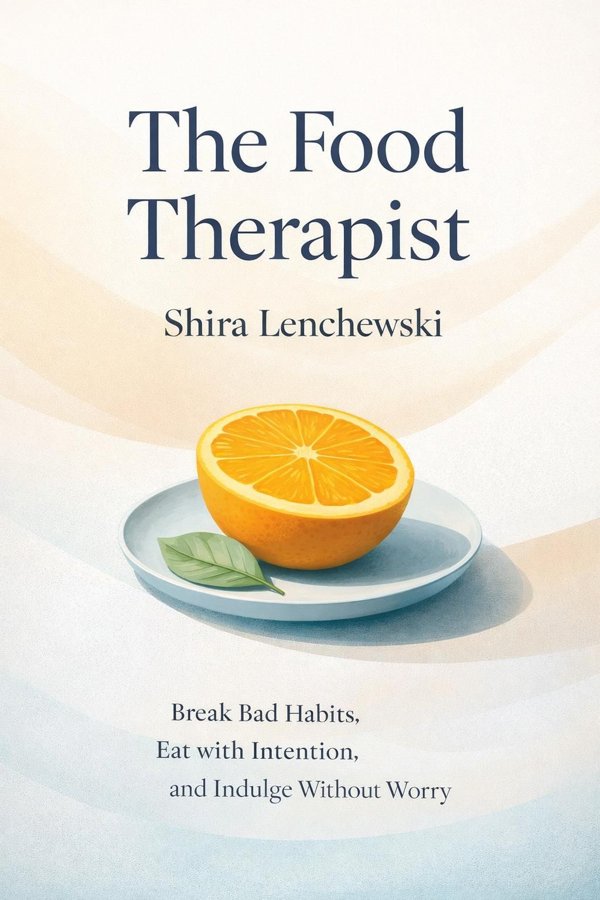
The Food Therapist: Break Bad Habits, Eat with Intention, and Indulge Without Worry
Shira Lenchewski
10 min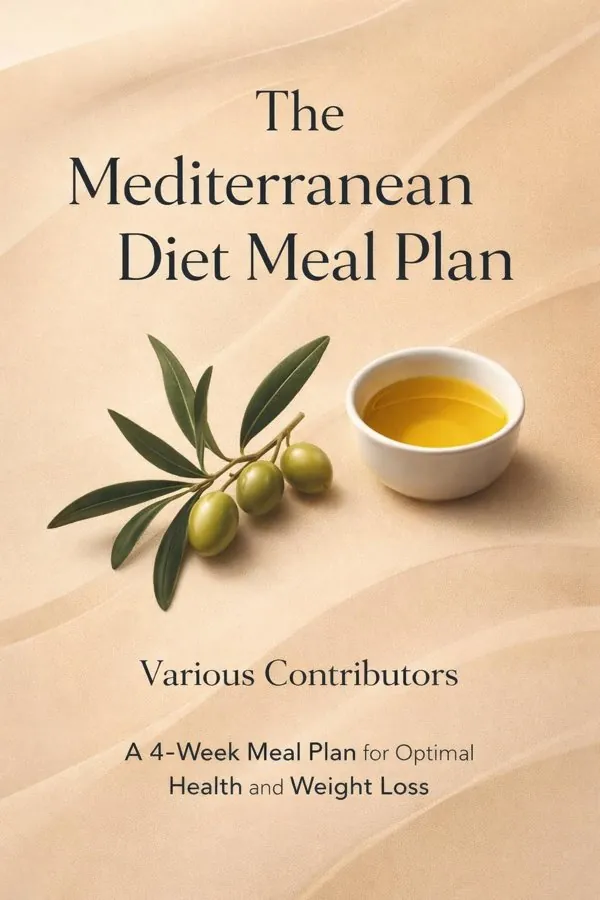
The Mediterranean Diet Meal Plan: A 4-Week Meal Plan for Optimal Health and Weight Loss
Various Contributors
10 min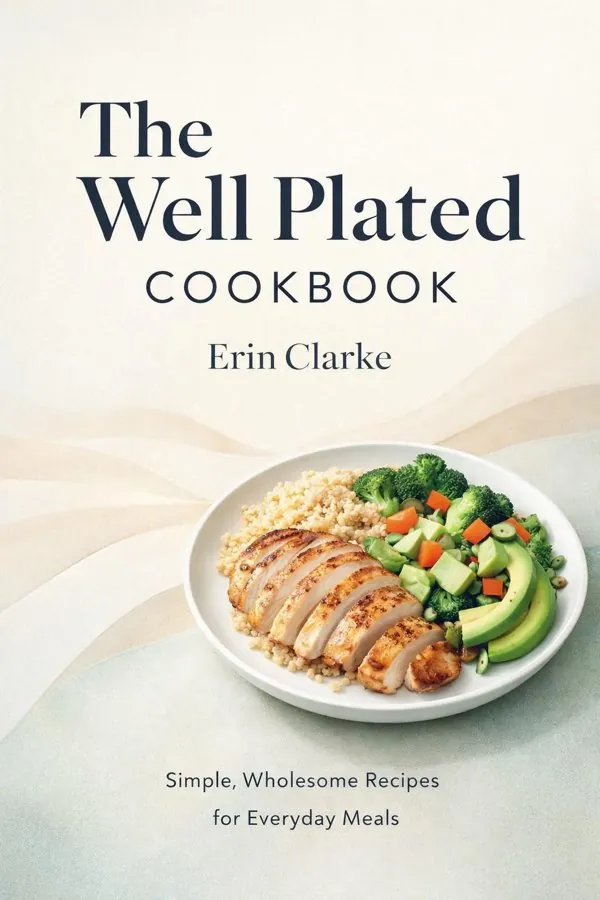
The Well Plated Cookbook: Simple, Wholesome Recipes for Everyday Meals
Erin Clarke
10 minBrowse by Category
Ready to read Eating on the Wild Side: The Missing Link to Optimum Health?
Get the full summary and 100K+ more books with Fizz Moment.