
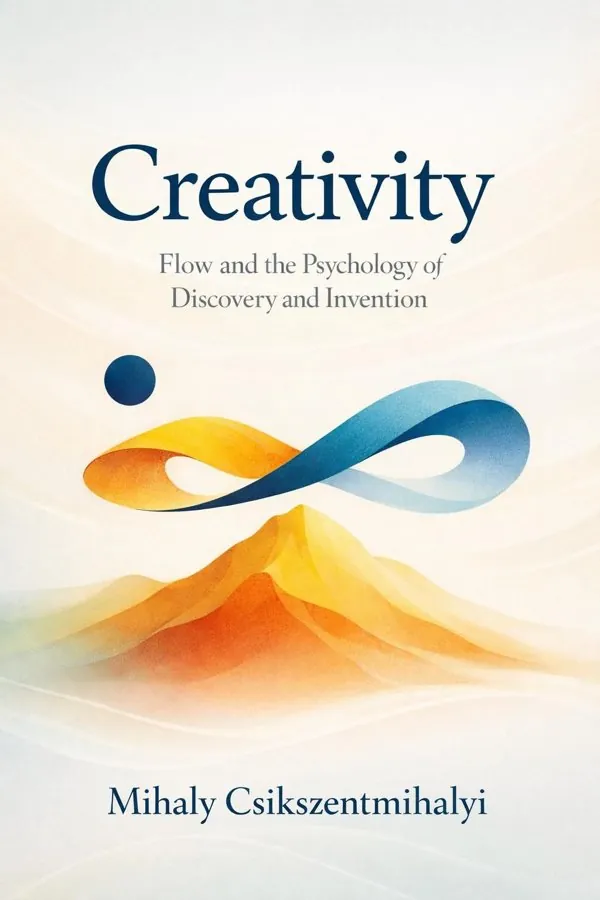
Creativity: Flow and the Psychology of Discovery and Invention: Summary & Key Insights
 10 min9 chaptersAudio available
Key Takeaways from Creativity: Flow and the Psychology of Discovery and Invention
Creative work often starts not with confidence, but with discomfort.
People are often happiest not when they are relaxed, but when they are fully engaged.
One of the book’s most memorable insights is that highly creative people are rarely simple or predictable.
Creative achievement is not confined to youth, nor does it follow a single timetable.
A brilliant idea is not enough.
What Is Creativity: Flow and the Psychology of Discovery and Invention About?
Creativity: Flow and the Psychology of Discovery and Invention by Mihaly Csikszentmihalyi is a creativity book spanning 11 pages. What makes a person truly creative: talent, discipline, luck, or something harder to define? In Creativity: Flow and the Psychology of Discovery and Invention, Mihaly Csikszentmihalyi answers that question by moving beyond romantic myths of genius and examining creativity as it actually unfolds in real lives. Drawing on interviews with ninety-one accomplished creators, from scientists and artists to business leaders and public thinkers, he shows that creativity is not a mysterious gift possessed by a few. It is a process shaped by personality, practice, culture, and the ability to enter states of deep, absorbing concentration he famously called “flow.” This book matters because it reframes creativity as both a personal experience and a social achievement. New ideas do not emerge in isolation; they develop inside traditions, disciplines, and communities that judge what counts as valuable innovation. Csikszentmihalyi, one of the most influential psychologists of the twentieth century, brings unusual authority to the subject through decades of research on happiness, motivation, and optimal experience. The result is a rich, practical, and deeply humane exploration of how discovery happens—and how more of us can live creatively.
This FizzRead summary covers all 9 key chapters of Creativity: Flow and the Psychology of Discovery and Invention in approximately 10 minutes, distilling the most important ideas, arguments, and takeaways from Mihaly Csikszentmihalyi's work. Also available as an audio summary and Key Quotes Podcast.
Creativity: Flow and the Psychology of Discovery and Invention
What makes a person truly creative: talent, discipline, luck, or something harder to define? In Creativity: Flow and the Psychology of Discovery and Invention, Mihaly Csikszentmihalyi answers that question by moving beyond romantic myths of genius and examining creativity as it actually unfolds in real lives. Drawing on interviews with ninety-one accomplished creators, from scientists and artists to business leaders and public thinkers, he shows that creativity is not a mysterious gift possessed by a few. It is a process shaped by personality, practice, culture, and the ability to enter states of deep, absorbing concentration he famously called “flow.”
This book matters because it reframes creativity as both a personal experience and a social achievement. New ideas do not emerge in isolation; they develop inside traditions, disciplines, and communities that judge what counts as valuable innovation. Csikszentmihalyi, one of the most influential psychologists of the twentieth century, brings unusual authority to the subject through decades of research on happiness, motivation, and optimal experience. The result is a rich, practical, and deeply humane exploration of how discovery happens—and how more of us can live creatively.
Who Should Read Creativity: Flow and the Psychology of Discovery and Invention?
This book is perfect for anyone interested in creativity and looking to gain actionable insights in a short read. Whether you're a student, professional, or lifelong learner, the key ideas from Creativity: Flow and the Psychology of Discovery and Invention by Mihaly Csikszentmihalyi will help you think differently.
- ✓Readers who enjoy creativity and want practical takeaways
- ✓Professionals looking to apply new ideas to their work and life
- ✓Anyone who wants the core insights of Creativity: Flow and the Psychology of Discovery and Invention in just 10 minutes
Want the full summary?
Get instant access to this book summary and 100K+ more with Fizz Moment.
Get Free SummaryAvailable on App Store • Free to download
Key Chapters
Creative work often starts not with confidence, but with discomfort. Csikszentmihalyi shows that many creative people begin with a nagging sense that something is missing, unresolved, or poorly understood. A scientist notices an anomaly no one else seems bothered by. A composer hears a structure that has not yet found its sound. An entrepreneur feels that existing solutions are clumsy, outdated, or incomplete. Creativity begins when a person takes that irritation seriously instead of dismissing it.
This matters because many people assume creativity looks like immediate inspiration. In reality, it more often emerges from sustained engagement with a question. The creative process is rarely neat or linear. It includes periods of preparation, confusion, incubation, sudden insight, and long stretches of verification. In other words, breakthrough is usually built on persistence. The people Csikszentmihalyi studied did not wait passively for ideas; they cultivated a deep relationship with problems worth solving.
In practical terms, this means creativity can be encouraged by learning to pay attention to what bothers, fascinates, or puzzles you. Keep a notebook of recurring questions. If you are a manager, ask where current systems create friction. If you are a writer, notice themes that repeatedly return in your thinking. Instead of seeking originality for its own sake, seek problems that feel alive.
The key shift is to treat confusion as a doorway rather than a flaw. Actionable takeaway: identify one unresolved question you have been avoiding, then spend thirty focused minutes exploring it without trying to solve it immediately.
People are often happiest not when they are relaxed, but when they are fully engaged. This is the central insight behind Csikszentmihalyi’s concept of flow, the state in which attention becomes so focused that action and awareness seem to merge. During flow, time can feel distorted, self-consciousness fades, and the activity becomes rewarding in itself. For many creative individuals, flow is not a luxury; it is the psychological condition that makes difficult work sustainable.
Flow tends to arise when challenge and skill are in balance. If a task is too easy, boredom sets in. If it is too difficult, anxiety takes over. Creative people often structure their lives to remain near this edge, where demands stretch ability without overwhelming it. A mathematician working through a proof, a designer refining a prototype, or a dancer practicing a demanding routine may all enter this state when the task is clear, feedback is immediate, and concentration is protected.
This idea has direct application in everyday life. If you want to become more creative, do not just ask what inspires you. Ask what kind of work reliably absorbs you. Then shape your environment accordingly: reduce interruptions, define a specific goal, and choose a challenge slightly beyond your current comfort zone. Even ordinary tasks can become more engaging when they are approached with full attention and deliberate difficulty.
Flow does not guarantee world-changing results, but it dramatically increases the quality of experience and the odds of sustained creative effort. Actionable takeaway: create one 60-minute distraction-free session this week with a clear goal and a task that stretches your abilities.
One of the book’s most memorable insights is that highly creative people are rarely simple or predictable. Instead, they often embody paradox. They can be disciplined yet playful, humble yet proud, rebellious yet deeply respectful of tradition, imaginative yet grounded in reality. Rather than fitting one tidy personality profile, they move flexibly between apparent opposites depending on what the work requires.
Csikszentmihalyi argues that this inner complexity is a strength. Creativity depends on range. A novelist may need the wildness to invent characters and the precision to revise sentences relentlessly. A scientist may need skepticism toward accepted theories and deep mastery of the field’s methods. Creative achievement emerges when people are not trapped by rigid self-definitions. They are able to be intense when focus is needed and open when discovery calls for exploration.
This helps explain why advice about creativity can seem contradictory. Some guidance emphasizes discipline; other advice celebrates spontaneity. Both are right, but only partly. The challenge is learning when each mode is appropriate. In practical life, this means developing capacities you may not naturally favor. If you are highly structured, experiment with unplanned exploration. If you are naturally intuitive, build routines that force completion and refinement.
The broader lesson is that creativity grows when identity becomes more spacious. You do not need to be one fixed kind of person to do original work. Actionable takeaway: identify one opposite trait that would strengthen your work—such as more playfulness, more rigor, or more patience—and deliberately practice it for the next seven days.
Creative achievement is not confined to youth, nor does it follow a single timetable. Csikszentmihalyi shows that different fields reward different rhythms of development. In some domains, such as mathematics or theoretical physics, major contributions often come relatively early, when raw cognitive speed matters. In others, like history, philosophy, leadership, or composition, creative power may deepen with age as experience, judgment, and synthesis accumulate.
This perspective is liberating because it challenges the cultural obsession with early genius. Many people give up on creative aspirations because they believe they are too late. The book argues otherwise. Creativity depends not only on mental horsepower, but on the gradual building of knowledge, networks, taste, and persistence. Mature creators often produce work of greater depth because they can connect disparate experiences and perceive larger patterns.
At the same time, each life stage carries its own advantages and constraints. Youth can bring boldness, energy, and risk tolerance. Midlife may offer technical mastery and access to resources, but also more responsibilities. Later life can provide reflective distance and freedom from status pressures. The creative task is to work with the opportunities of your current phase instead of idealizing another one.
Practically, this means designing goals that fit your season of life. A parent with limited time may focus on steady, cumulative progress. A retiree may finally pursue a long-postponed intellectual or artistic project. Actionable takeaway: stop measuring your creativity against someone else’s timeline and define one meaningful project that suits your present stage of life.
Originality is rarely born from ignorance. Csikszentmihalyi emphasizes that before people transform a field, they usually immerse themselves in it. They study its history, internalize its methods, and absorb what has already been done. Creativity is not random novelty; it is meaningful change within a domain. To change the game, you first need to know the game.
This principle applies across disciplines. A jazz musician learns standards before improvising brilliantly. A software engineer studies existing architectures before designing a new system. A chef understands ingredients and techniques before inventing a cuisine that feels fresh rather than chaotic. Deep familiarity enables informed deviation. It helps creators identify where convention is useful, where it is stale, and where a small change could have large consequences.
For modern readers, this is an important antidote to the pressure to be instantly original. Many people want to skip apprenticeship and move straight to innovation. But without enough input, output tends to be shallow. The creative people in the book read widely, practice intensely, and remain lifelong students. They are curious, but their curiosity is disciplined.
In practical terms, cultivating creativity means building a rich internal library. Read foundational works in your field. Study exemplary models. Learn the criteria by which quality is judged. Then experiment from a position of strength. Mastery does not suffocate creativity; it gives it material and direction.
Actionable takeaway: choose one domain you care about and create a 30-day learning plan that includes key texts, models, and deliberate practice, so your future originality rests on real understanding.
Chance plays a role in many creative breakthroughs, but luck is rarely enough on its own. Csikszentmihalyi shows that opportunity matters most when it meets preparation. A random encounter, an unexpected error, a new technology, or a surprising observation may open the door to discovery. But only someone with enough knowledge, alertness, and flexibility can recognize the significance of what others would ignore.
This is why creative careers often look accidental from the outside. We notice the fortunate event but miss the years of groundwork that made the person capable of using it. A researcher notices an anomaly because she understands what should have happened. A designer spots an unmet need because he has spent years studying user frustration. Serendipity is real, but it rewards people who are already deeply engaged.
This idea also encourages a healthier relationship with uncertainty. You cannot control chance, but you can increase your exposure to it. That means pursuing varied experiences, talking to people outside your specialty, experimenting more often, and staying curious when plans fail. Many breakthroughs begin as side paths, discarded attempts, or odd combinations of ideas from different domains.
Rather than waiting for inspiration, build a life in which surprising inputs can find you and prepared habits can make use of them. Actionable takeaway: this month, add one source of constructive randomness to your routine—such as attending an unfamiliar lecture, reading outside your field, or testing a small experimental idea you would normally dismiss.
Creative people may be exceptional, but they are never independent of their surroundings. Csikszentmihalyi repeatedly highlights the influence of family, institutions, mentors, cultural values, and daily routines on creative development. Supportive environments do not manufacture genius, but they make sustained creative work more likely by providing access, encouragement, standards, and time.
This includes both social and physical settings. Some creators grew up in homes where ideas were discussed seriously and curiosity was rewarded. Others found their environment later through teachers, collaborators, or institutions that recognized their potential. Workspaces matter too. Creativity tends to flourish where concentration is possible, tools are available, and interruptions are limited. Just as important, creators need environments that tolerate experimentation and occasional failure.
The lesson for readers is that creativity should not be treated solely as a matter of personal willpower. If your days are fragmented, overstimulated, and constantly reactive, even strong ideas may never mature. Small changes in context can produce major gains: setting regular hours for deep work, joining a serious peer group, creating visible reminders of long-term goals, or limiting technologies that erode attention.
Leaders and parents can apply this insight by designing cultures where curiosity, autonomy, and meaningful challenge are normal. Instead of demanding immediate results, they can protect the conditions from which results emerge.
Actionable takeaway: audit your environment and make one concrete change today—remove one recurring distraction, add one source of intellectual stimulation, or schedule one protected block of uninterrupted creative time each week.
Creativity is not only about producing valuable ideas; it is also about becoming a more whole person. In the later parts of the book, Csikszentmihalyi connects creativity to the self, arguing that creative work can organize attention, generate meaning, and reduce inner fragmentation. When people commit to difficult, absorbing pursuits, they often discover a stronger sense of coherence between what they do and who they are.
This does not mean creative lives are easy. In fact, they are often marked by tension, self-doubt, and sacrifice. But purposeful creation can transform scattered energy into directed effort. A life built around engaging problems tends to feel richer than one driven only by comfort, consumption, or external approval. Creativity becomes a path not just to achievement, but to fulfillment.
This insight is especially relevant in a distracted age. Many people experience their days as fragmented into obligations, notifications, and shallow entertainment. Creative practice counters that fragmentation by demanding commitment and offering depth. Whether the work is writing, coding, teaching, gardening, designing, or scientific inquiry, the process can strengthen identity by giving attention a worthy object.
To cultivate this kind of creativity, it helps to ask not just what you are good at, but what kind of work feels deeply worth doing. The best creative projects often sit at the intersection of skill, challenge, and personal meaning.
Actionable takeaway: write down one activity that consistently makes you feel more alive and integrated, then design a weekly ritual that protects time for it, even if only for thirty minutes.
All Chapters in Creativity: Flow and the Psychology of Discovery and Invention
About the Author
Mihaly Csikszentmihalyi (1934–2021) was a Hungarian-American psychologist and one of the most influential thinkers in modern positive psychology. After emigrating from Europe, he built a distinguished academic career studying happiness, motivation, creativity, and the conditions that make life deeply satisfying. He became internationally known for developing the concept of “flow,” the state of intense absorption in challenging, meaningful activity. Csikszentmihalyi taught at the University of Chicago and later at Claremont Graduate University, where his research influenced psychology, education, business, and leadership studies. His writing combined scientific rigor with unusual accessibility, helping broad audiences understand how attention, purpose, and engagement shape human flourishing. Through books such as Flow and Creativity, he showed that excellence and fulfillment are not opposing goals, but often grow from the same committed life.
Get This Summary in Your Preferred Format
Read or listen to the Creativity: Flow and the Psychology of Discovery and Invention summary by Mihaly Csikszentmihalyi anytime, anywhere. FizzRead offers multiple formats so you can learn on your terms — all free.
Available formats: App · Audio · PDF · EPUB — All included free with FizzRead
Download Creativity: Flow and the Psychology of Discovery and Invention PDF and EPUB Summary
Key Quotes from Creativity: Flow and the Psychology of Discovery and Invention
“Creative work often starts not with confidence, but with discomfort.”
“People are often happiest not when they are relaxed, but when they are fully engaged.”
“One of the book’s most memorable insights is that highly creative people are rarely simple or predictable.”
“Creative achievement is not confined to youth, nor does it follow a single timetable.”
“One of Csikszentmihalyi’s most important contributions is his systems view of creativity: creativity happens through the interaction of three elements—the individual, the domain, and the field.”
Frequently Asked Questions about Creativity: Flow and the Psychology of Discovery and Invention
Creativity: Flow and the Psychology of Discovery and Invention by Mihaly Csikszentmihalyi is a creativity book that explores key ideas across 9 chapters. What makes a person truly creative: talent, discipline, luck, or something harder to define? In Creativity: Flow and the Psychology of Discovery and Invention, Mihaly Csikszentmihalyi answers that question by moving beyond romantic myths of genius and examining creativity as it actually unfolds in real lives. Drawing on interviews with ninety-one accomplished creators, from scientists and artists to business leaders and public thinkers, he shows that creativity is not a mysterious gift possessed by a few. It is a process shaped by personality, practice, culture, and the ability to enter states of deep, absorbing concentration he famously called “flow.” This book matters because it reframes creativity as both a personal experience and a social achievement. New ideas do not emerge in isolation; they develop inside traditions, disciplines, and communities that judge what counts as valuable innovation. Csikszentmihalyi, one of the most influential psychologists of the twentieth century, brings unusual authority to the subject through decades of research on happiness, motivation, and optimal experience. The result is a rich, practical, and deeply humane exploration of how discovery happens—and how more of us can live creatively.
More by Mihaly Csikszentmihalyi
You Might Also Like
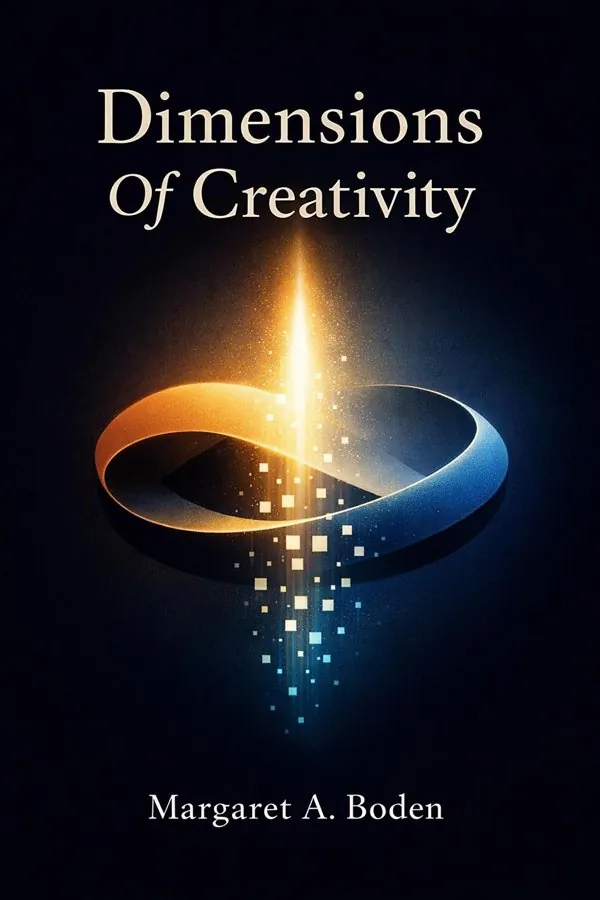
Dimensions Of Creativity
Margaret A. Boden
10 min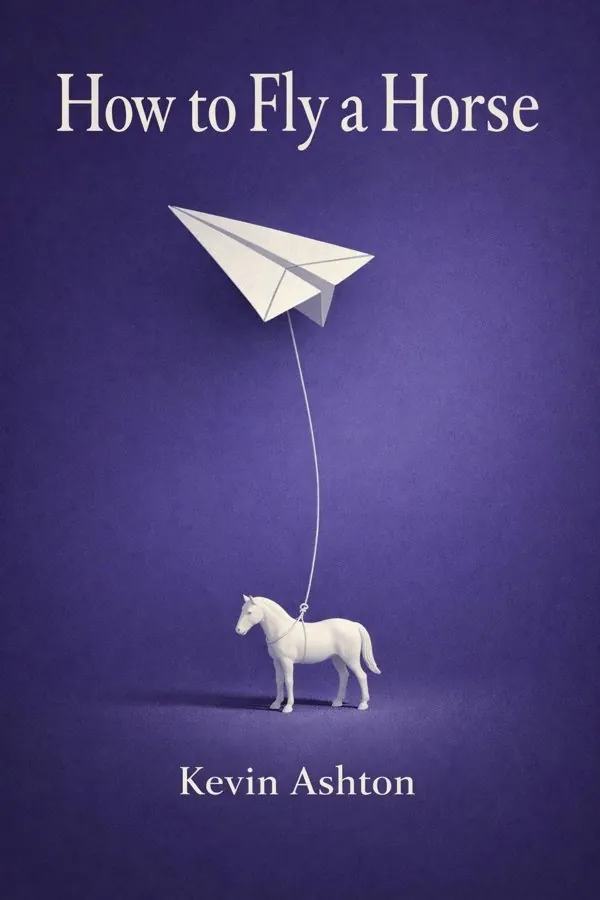
How to Fly a Horse: The Secret History of Creation, Invention, and Discovery
Kevin Ashton
10 min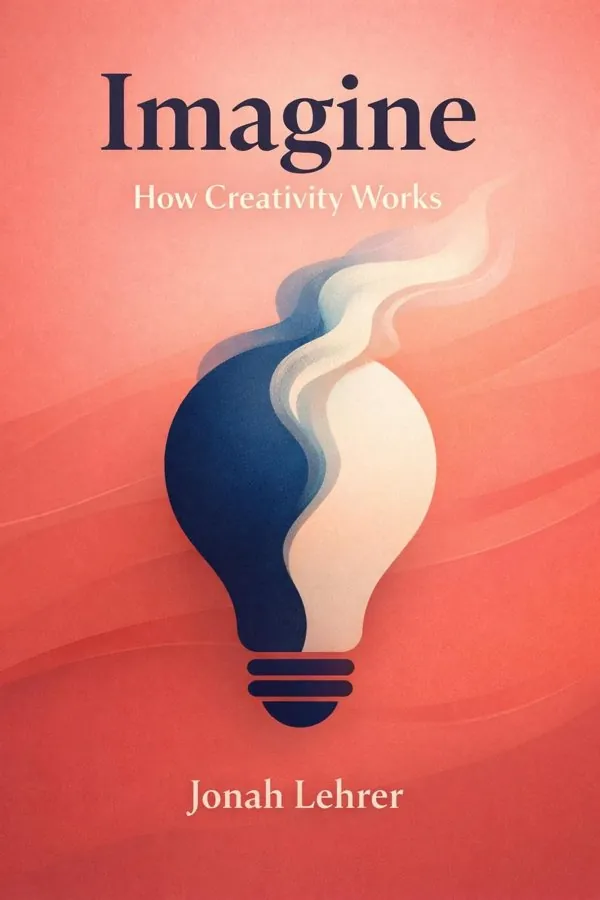
Imagine: How Creativity Works
Jonah Lehrer
10 min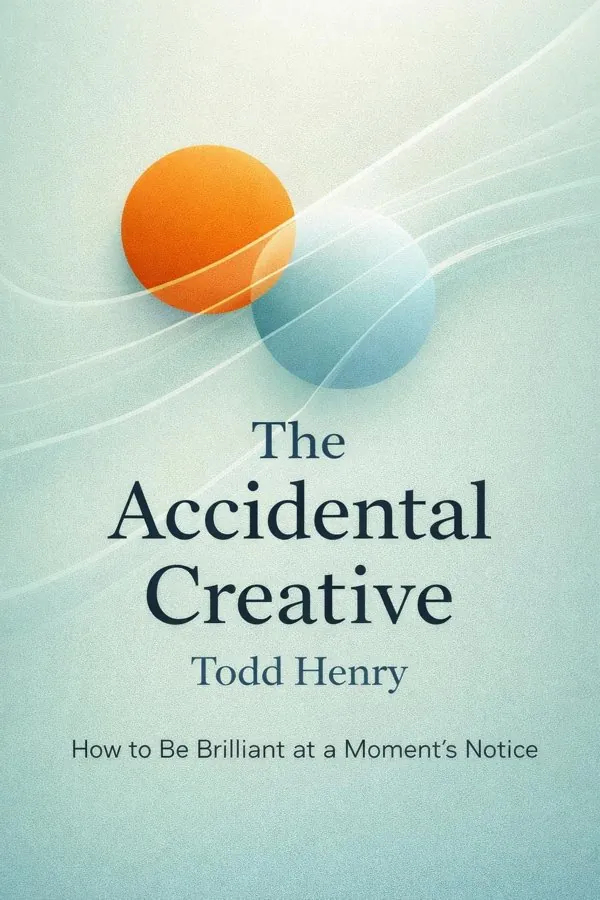
The Accidental Creative: How to Be Brilliant at a Moment's Notice
Todd Henry
10 min
The Origins of Creativity
Edward O. Wilson
10 min
Wired to Create: Unraveling the Mysteries of the Creative Mind
Scott Barry Kaufman, Carolyn Gregoire
10 minBrowse by Category
Ready to read Creativity: Flow and the Psychology of Discovery and Invention?
Get the full summary and 100K+ more books with Fizz Moment.