

Isaac Asimov Books
Isaac Asimov (1920–1992) was a Russian-born American author and professor of biochemistry, best known for his works of science fiction and popular science. He wrote or edited more than 500 books, including the Foundation and Robot series, and was celebrated for his clear, engaging explanations of complex scientific ideas.
Known for: Foundation, I, Robot, Robot Visions, The Bicentennial Man, The Caves of Steel, The End of Eternity, The Gods Themselves, The Last Question, The Rest of the Robots
Books by Isaac Asimov
Foundation
What if the fate of entire civilizations could be predicted with mathematics? That bold question drives Foundation, Isaac Asimov’s landmark science fiction novel and the opening chapter of one of the ...
I, Robot
What if the greatest danger posed by intelligent machines is not that they will hate us, but that they will obey us too literally? Isaac Asimov’s I, Robot is a landmark work of science fiction that ex...
Robot Visions
Robot Visions is Isaac Asimov’s rich and wide-ranging collection of robot stories and essays, blending fiction, science writing, and philosophical reflection into a single exploration of humanity’s te...
The Bicentennial Man
A science fiction novelette by Isaac Asimov, first published in 1976, telling the story of Andrew Martin, a robot who strives over two centuries to become recognized as human. The narrative explores t...
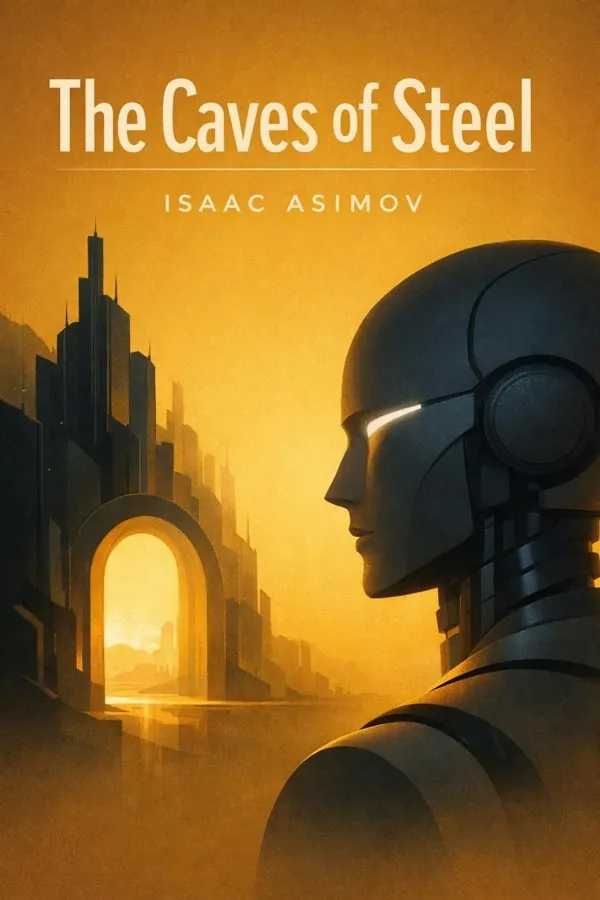
The Caves of Steel
What makes The Caves of Steel endure is not just its clever murder mystery, but the way Isaac Asimov turns a detective story into a profound study of fear, progress, and what it means to be human. Set...
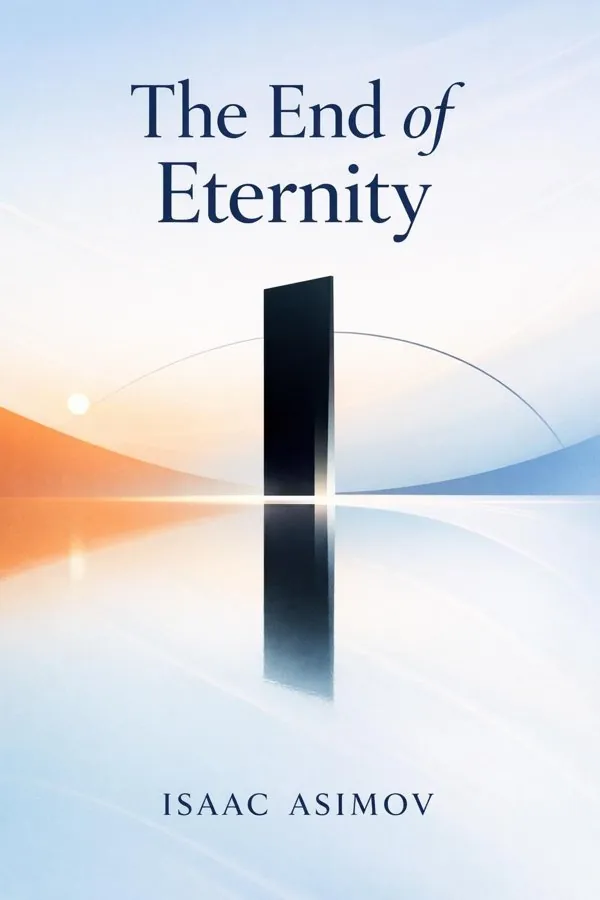
The End of Eternity
What if history could be edited like a manuscript? In The End of Eternity, Isaac Asimov imagines a hidden organization operating outside ordinary time, quietly altering the course of human events to r...
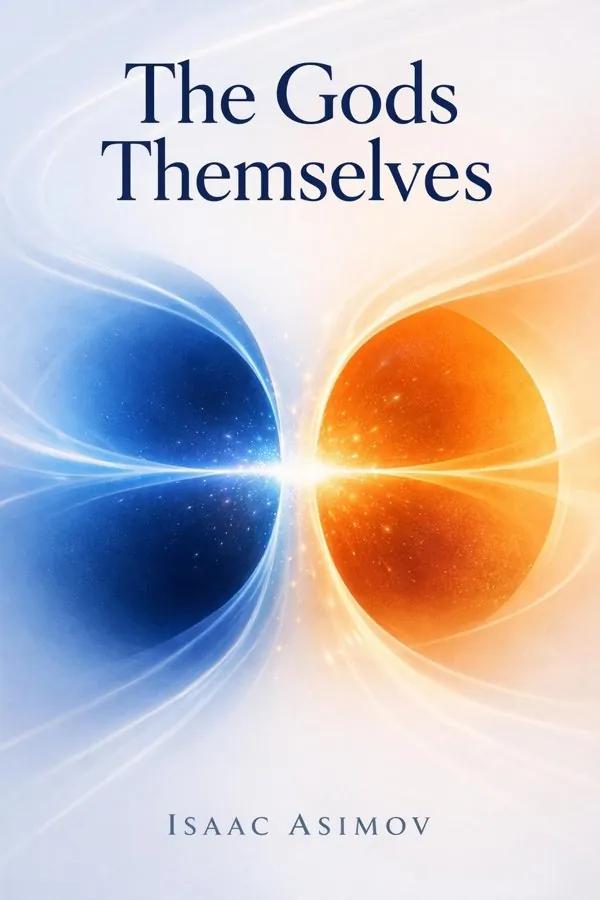
The Gods Themselves
What if humanity’s greatest scientific breakthrough was also the mechanism of its destruction? Isaac Asimov’s The Gods Themselves begins with an irresistible premise: a device called the Electron Pump...
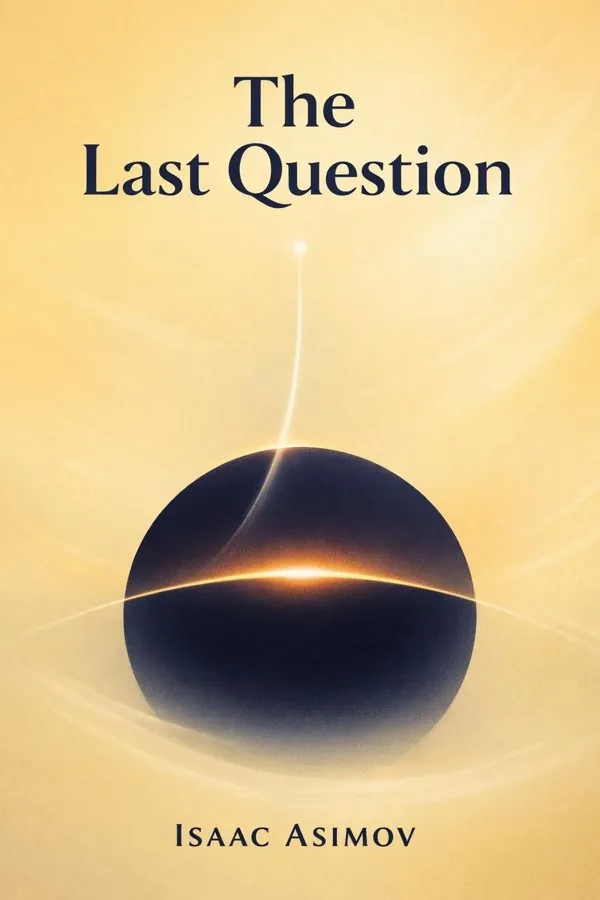
The Last Question
Isaac Asimov’s “The Last Question” is a remarkably compact story with the scope of a universe. First published in 1956, it follows humanity across unimaginable stretches of time as people repeatedly a...
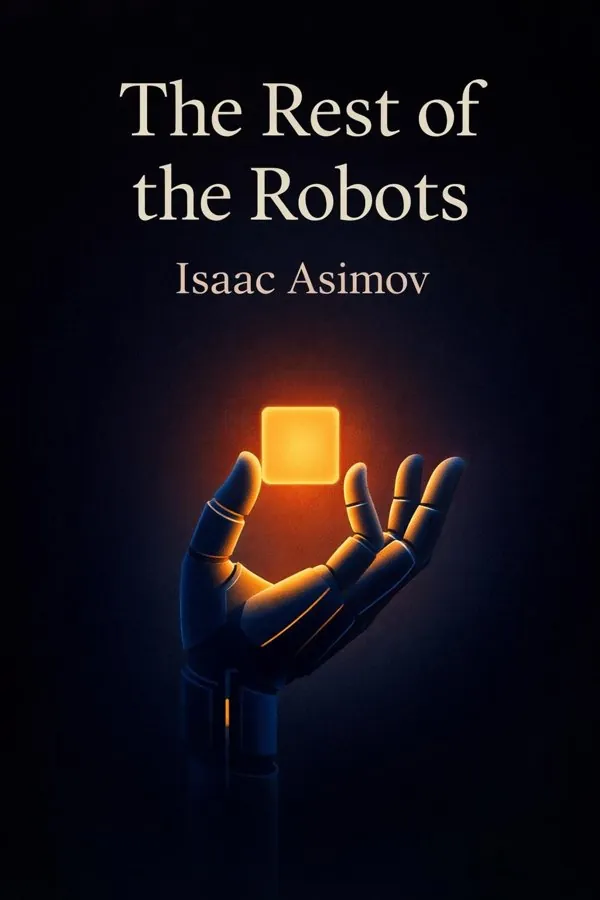
The Rest of the Robots
What if the most dangerous technology in the world were designed, from the start, to protect us? That question sits at the heart of The Rest of the Robots, Isaac Asimov’s 1964 collection of robot stor...
Key Insights from Isaac Asimov
The Birth of Psychohistory
The most unsettling idea in Foundation is that history may not be random at all. Hari Seldon’s great breakthrough, psychohistory, rests on a powerful premise: while individual human actions are unpredictable, the behavior of enormous populations can be modeled statistically. In other words, one pers...
From Foundation
A Library at the Edge
Civilization often survives not through armies, but through memory. The first public purpose of the Foundation is simple and humble: compile the Encyclopedia Galactica, a massive repository of human knowledge. Exiled to the remote planet Terminus, the Foundation’s settlers appear weak. They possess ...
From Foundation
Salvor Hardin and Political Reality
One of Foundation’s sharpest insights is that idealism without political realism rarely survives first contact with the world. On Terminus, the scholarly leaders believe their intelligence and moral seriousness will be enough to protect them. Salvor Hardin, the city mayor, sees what they do not: nei...
From Foundation
Faith as a Technology of Power
One of Asimov’s most brilliant reversals is his treatment of religion. In Foundation, faith is not presented primarily as a spiritual truth, but as a political instrument built around technological dependence. The Foundation provides neighboring worlds with advanced devices they barely understand, t...
From Foundation
Trade Can Defeat Stronger Enemies
A society does not need the largest army if it becomes economically indispensable. As the Foundation matures, it shifts from religious influence to commercial expansion. Traders carry miniature technologies, scientific tools, and high-value goods into surrounding regions, creating networks of depend...
From Foundation
The Seldon Plan and Historical Momentum
One of the most intriguing features of Foundation is the Seldon Crisis: recurring moments when events narrow into only a few viable outcomes, and the Foundation’s survival depends on choosing correctly. Each crisis reveals the deeper logic of the Seldon Plan. History, in Asimov’s vision, has momentu...
From Foundation
About Isaac Asimov
Isaac Asimov (1920–1992) was a Russian-born American author and professor of biochemistry, best known for his works of science fiction and popular science. He wrote or edited more than 500 books, including the Foundation and Robot series, and was celebrated for his clear, engaging explanations of co...
Read more
Isaac Asimov (1920–1992) was a Russian-born American author and professor of biochemistry, best known for his works of science fiction and popular science. He wrote or edited more than 500 books, including the Foundation and Robot series, and was celebrated for his clear, engaging explanations of co...
Isaac Asimov (1920–1992) was a Russian-born American author and professor of biochemistry, best known for his works of science fiction and popular science. He wrote or edited more than 500 books, including the Foundation and Robot series, and was celebrated for his clear, engaging explanations of complex scientific ideas.


Frequently Asked Questions
Isaac Asimov (1920–1992) was a Russian-born American author and professor of biochemistry, best known for his works of science fiction and popular science. He wrote or edited more than 500 books, including the Foundation and Robot series, and was celebrated for his clear, engaging explanations of complex scientific ideas.
Read Isaac Asimov's books in 15 minutes
Get AI-powered summaries with key insights from 9 books by Isaac Asimov.