
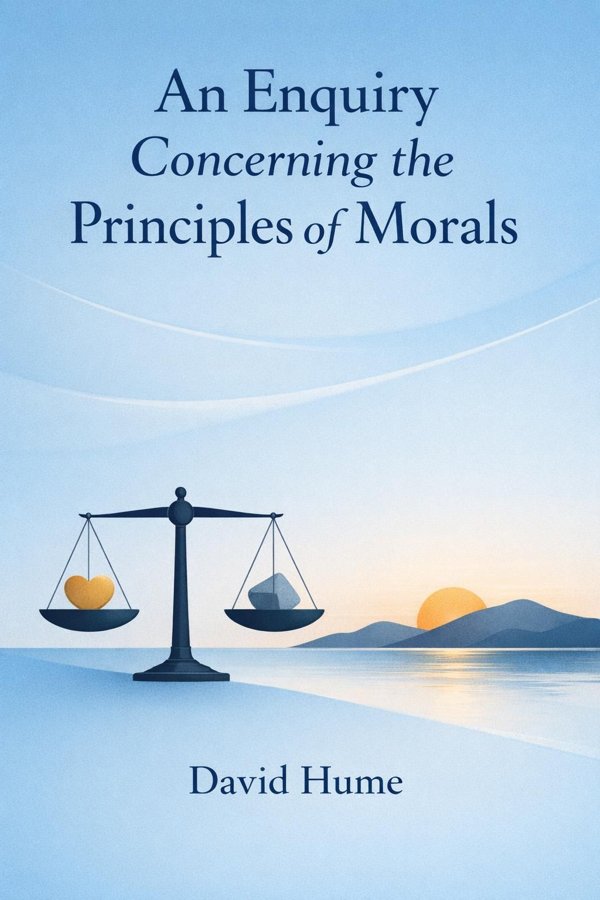
An Enquiry Concerning the Principles of Morals: Summary & Key Insights
by David Hume
 10 min9 chaptersAudio available
What Is An Enquiry Concerning the Principles of Morals About?
An Enquiry Concerning the Principles of Morals by David Hume is a western_phil book spanning 9 pages. An Enquiry Concerning the Principles of Morals is a philosophical work by David Hume, first published in 1751. It explores the foundations of moral judgment, arguing that morality is rooted in human sentiment rather than divine command or rational deduction. Hume distinguishes between natural and artificial virtues, emphasizing benevolence and social utility as central to moral evaluation. The text is considered one of the most refined expressions of Hume’s moral philosophy and a cornerstone of Enlightenment ethics.
This FizzRead summary covers all 9 key chapters of An Enquiry Concerning the Principles of Morals in approximately 10 minutes, distilling the most important ideas, arguments, and takeaways from David Hume's work. Also available as an audio summary and Key Quotes Podcast.
An Enquiry Concerning the Principles of Morals
An Enquiry Concerning the Principles of Morals is a philosophical work by David Hume, first published in 1751. It explores the foundations of moral judgment, arguing that morality is rooted in human sentiment rather than divine command or rational deduction. Hume distinguishes between natural and artificial virtues, emphasizing benevolence and social utility as central to moral evaluation. The text is considered one of the most refined expressions of Hume’s moral philosophy and a cornerstone of Enlightenment ethics.
Who Should Read An Enquiry Concerning the Principles of Morals?
This book is perfect for anyone interested in western_phil and looking to gain actionable insights in a short read. Whether you're a student, professional, or lifelong learner, the key ideas from An Enquiry Concerning the Principles of Morals by David Hume will help you think differently.
- ✓Readers who enjoy western_phil and want practical takeaways
- ✓Professionals looking to apply new ideas to their work and life
- ✓Anyone who wants the core insights of An Enquiry Concerning the Principles of Morals in just 10 minutes
Want the full summary?
Get instant access to this book summary and 100K+ more with Fizz Moment.
Get Free SummaryAvailable on App Store • Free to download
Key Chapters
Before diving into the specific virtues, I found it essential to distinguish two methods of moral philosophy. One is the rationalist manner, which seeks to deduce moral truths by abstract reasoning as though they were theorems of geometry. The other, which I prefer, proceeds experimentally—by observing actual human life, the workings of sentiment and affection.
Those philosophers who approach morality through reason alone imagine that mere intellectual discernment can generate moral distinction. But when we reflect carefully, we see that reason alone can inform us of facts and relations—it can show us the tendency of actions to produce happiness or misery—but it cannot make us prefer one to the other. The moment of preference, the feeling of obligation or approval, springs from a source distinct from reason: it arises from sentiment. It is only when the facts touch some principle of our nature—our desire for happiness, our sympathy with the happiness of others—that any moral judgment occurs.
Human nature is the proper field of moral enquiry, not abstract speculation upon ideal forms. The philosopher who observes the world as it is—people moved by love, ambition, compassion, resentment—gains truer insight into virtue than one who invents systems in isolation from experience. Hence my enquiry takes the empirical path: I look to the sentiments commonly observed among humankind and seek the principles that make them consistent, universal, and beneficial.
Among all the sentiments that move humanity, benevolence stands out as the most universally esteemed. Wherever there are human beings, you find admiration for kindness and goodwill. It is not by instruction or law that people come to love generosity; it arises from the sympathetic fabric of our nature.
When we witness an act of charity, friendship, or even mere good humor, we cannot help but feel warmth toward the actor. That approbation is spontaneous. The reason we delight in benevolence lies not merely in its practical benefit but in the agreeable sentiment it awakens within us. In every country and age, the tender affections—love, gratitude, compassion—engender moral approval. They form, therefore, the most direct expression of virtue.
So often theories of virtue have been founded upon self-interest. Yet such a view cannot explain the sincerity with which people praise those who sacrifice their own gain for others’ welfare. When we celebrate the hero who perishes for his country, or the mother who endures hardship for her child, we respond not to utility for ourselves, but to their intrinsic goodness as seen through sympathy. Thus benevolence, and the happiness it promotes, provide the purest mirror of the moral sense.
+ 7 more chapters — available in the FizzRead app
All Chapters in An Enquiry Concerning the Principles of Morals
About the Author
David Hume (1711–1776) was a Scottish philosopher, historian, and essayist known for his influential system of philosophical empiricism, skepticism, and naturalism. His works, including A Treatise of Human Nature and the Enquiries, profoundly shaped modern philosophy, particularly in epistemology, ethics, and the philosophy of religion.
Get This Summary in Your Preferred Format
Read or listen to the An Enquiry Concerning the Principles of Morals summary by David Hume anytime, anywhere. FizzRead offers multiple formats so you can learn on your terms — all free.
Available formats: App · Audio · PDF · EPUB — All included free with FizzRead
Download An Enquiry Concerning the Principles of Morals PDF and EPUB Summary
Key Quotes from An Enquiry Concerning the Principles of Morals
“Before diving into the specific virtues, I found it essential to distinguish two methods of moral philosophy.”
“Among all the sentiments that move humanity, benevolence stands out as the most universally esteemed.”
Frequently Asked Questions about An Enquiry Concerning the Principles of Morals
An Enquiry Concerning the Principles of Morals by David Hume is a western_phil book that explores key ideas across 9 chapters. An Enquiry Concerning the Principles of Morals is a philosophical work by David Hume, first published in 1751. It explores the foundations of moral judgment, arguing that morality is rooted in human sentiment rather than divine command or rational deduction. Hume distinguishes between natural and artificial virtues, emphasizing benevolence and social utility as central to moral evaluation. The text is considered one of the most refined expressions of Hume’s moral philosophy and a cornerstone of Enlightenment ethics.
More by David Hume

You Might Also Like
A Little History of Philosophy
Nigel Warburton
10 min
Areopagitica
John Milton
10 min
How To Think Like A Philosopher: Essential Principles For Clear Thinking
Peter Cave
10 min
Language, Truth and Logic
A. J. Ayer
10 min
The Age of Reason
Thomas Paine
10 min
The Essays
Michel De Montaigne
10 minFeatured In
Browse by Category
Ready to read An Enquiry Concerning the Principles of Morals?
Get the full summary and 100K+ more books with Fizz Moment.