
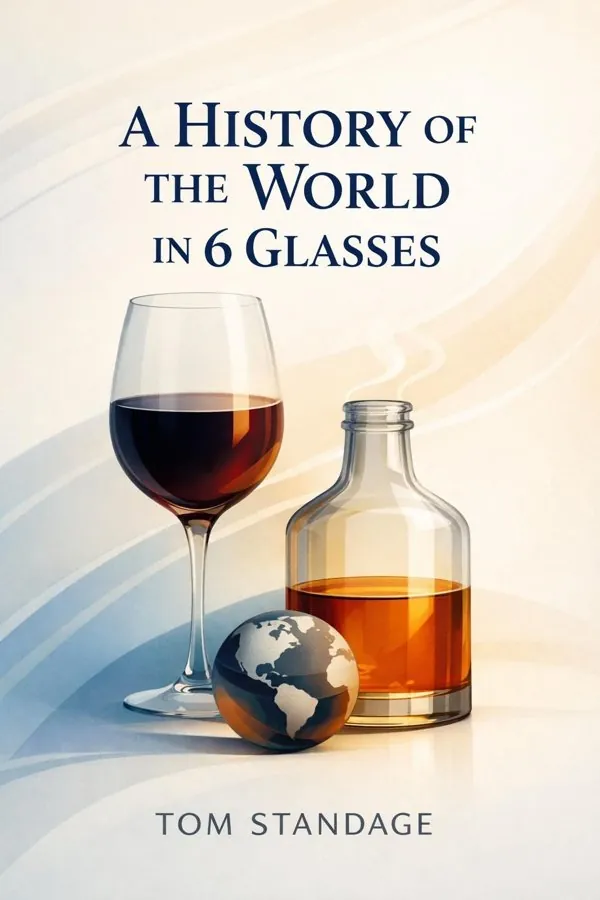
A History of the World in 6 Glasses: Summary & Key Insights
by Tom Standage
 10 min7 chapters
What Is A History of the World in 6 Glasses About?
A History of the World in 6 Glasses by Tom Standage is a world_history book spanning 7 pages. This book explores world history through the lens of six influential beverages—beer, wine, spirits, coffee, tea, and cola—each representing a distinct era of human civilization. Standage traces how these drinks shaped trade, culture, politics, and technological progress from ancient Mesopotamia to the modern globalized world.
This FizzRead summary covers all 7 key chapters of A History of the World in 6 Glasses in approximately 10 minutes, distilling the most important ideas, arguments, and takeaways from Tom Standage's work.
A History of the World in 6 Glasses
This book explores world history through the lens of six influential beverages—beer, wine, spirits, coffee, tea, and cola—each representing a distinct era of human civilization. Standage traces how these drinks shaped trade, culture, politics, and technological progress from ancient Mesopotamia to the modern globalized world.
Who Should Read A History of the World in 6 Glasses?
This book is perfect for anyone interested in world_history and looking to gain actionable insights in a short read. Whether you're a student, professional, or lifelong learner, the key ideas from A History of the World in 6 Glasses by Tom Standage will help you think differently.
- ✓Readers who enjoy world_history and want practical takeaways
- ✓Professionals looking to apply new ideas to their work and life
- ✓Anyone who wants the core insights of A History of the World in 6 Glasses in just 10 minutes
Want the full summary?
Get instant access to this book summary and 100K+ more with Fizz Moment.
Get Free SummaryAvailable on App Store • Free to download
Key Chapters
Beer is the first chapter of our story because it represents humanity’s profound leap from wandering hunter-gatherers to settled agricultural communities. The earliest evidence of beer dates back to ancient Mesopotamia and Egypt, where people discovered that wet grains spontaneously fermented. What began as a consequence of storing grain became a cornerstone of communal life. Beer, unlike uncertain water sources, could be safely consumed. It bound people together around shared labor and celebration.
To grasp beer’s significance is to understand the birth of civilization itself. Grain farming required cooperation — planting, harvesting, and storing demanded permanence. Beer gave these early communities not only an incentive to cultivate grain but also a reason to gather, worship, and define social order. It was consumed in rituals and offered to gods, symbolizing abundance and divine favor.
From the author’s viewpoint, beer is more than a form of sustenance; it is the liquid architecture of social cohesion. Written tablets from Sumer show workers paid in beer rations, reflecting an economy literally based on fermented grain. Brewing became a controlled process, a mark of humanity’s growing mastery over nature. One might say beer brewed not just grain, but civilization.
As these societies advanced, beer’s humble origins began shaping political and religious hierarchies. In temples and palaces, the act of offering beer reinforced authority. Beer gave rise to specialization — brewers, farmers, distributors. It is through beer that we can taste the foundations of economic systems and social classes. The story of beer reminds us that our journey toward urban life began not only with the plow, but also with the cup.
Wine belongs to the age of refinement and intellect — to ancient Greece and Rome, where it embodied taste, hierarchy, and discourse. In the author’s vision, wine represents the moment when civilization began to think about itself deliberately — what is beautiful, what is good, what is wise.
Unlike beer, which united communities through shared simplicity, wine separated them through elegance and distinction. The Greeks regarded wine as a symbol of cultural superiority, associating it with moderation, philosophy, and civic virtue. The symposium — the formal drinking assembly — was both an intellectual forum and a ritual of equality among free men. Conversation flowed as freely as the wine, yet always within the bounds of reason. The drink was civilizing; it encouraged contemplation rather than intoxication.
Rome inherited and expanded this ideology. Wine became not only a lifestyle but an empire’s trade engine. Vineyards spread across conquered lands, and the production, transport, and taxation of wine became tools of governance. The author presents wine’s dual identity — pleasure and power — as a reflection of civilization’s maturity. It could articulate taste, wealth, and even geopolitical influence.
Wine’s progression into the medieval Christian world continued its symbolic evolution. The sacramental transformation into blood reflected eternal ideas of sacrifice and salvation. Thus, wine transcended mere consumption; it became spiritual, cultural, and political currency. Through wine, civilization learned to express and codify its values — rationality, hierarchy, and ritual.
+ 5 more chapters — available in the FizzRead app
All Chapters in A History of the World in 6 Glasses
About the Author
Tom Standage is a British author and journalist known for his works on history and technology. He serves as Deputy Editor at The Economist and has written several books that reinterpret historical events through unconventional perspectives.
Get This Summary in Your Preferred Format
Read or listen to the A History of the World in 6 Glasses summary by Tom Standage anytime, anywhere. FizzRead offers multiple formats so you can learn on your terms — all free.
Available formats: App · Audio · PDF · EPUB — All included free with FizzRead
Download A History of the World in 6 Glasses PDF and EPUB Summary
Key Quotes from A History of the World in 6 Glasses
“Beer is the first chapter of our story because it represents humanity’s profound leap from wandering hunter-gatherers to settled agricultural communities.”
“Wine belongs to the age of refinement and intellect — to ancient Greece and Rome, where it embodied taste, hierarchy, and discourse.”
Frequently Asked Questions about A History of the World in 6 Glasses
A History of the World in 6 Glasses by Tom Standage is a world_history book that explores key ideas across 7 chapters. This book explores world history through the lens of six influential beverages—beer, wine, spirits, coffee, tea, and cola—each representing a distinct era of human civilization. Standage traces how these drinks shaped trade, culture, politics, and technological progress from ancient Mesopotamia to the modern globalized world.
More by Tom Standage

You Might Also Like
The Age of Capital
Eric Hobsbawm
10 min
The Gulag Archipelago
Aleksandr Solzhenitsyn
10 min
Jerusalem: The Biography
Simon Sebag Montefiore
10 min
The Anglo-Saxons
James Campbell
10 min
The Boer War
Thomas Pakenham
10 min
The Industrial Revolutionaries: The Making of the Modern World 1776–1914
Gavin Weightman
10 minFeatured In
Browse by Category
Ready to read A History of the World in 6 Glasses?
Get the full summary and 100K+ more books with Fizz Moment.