
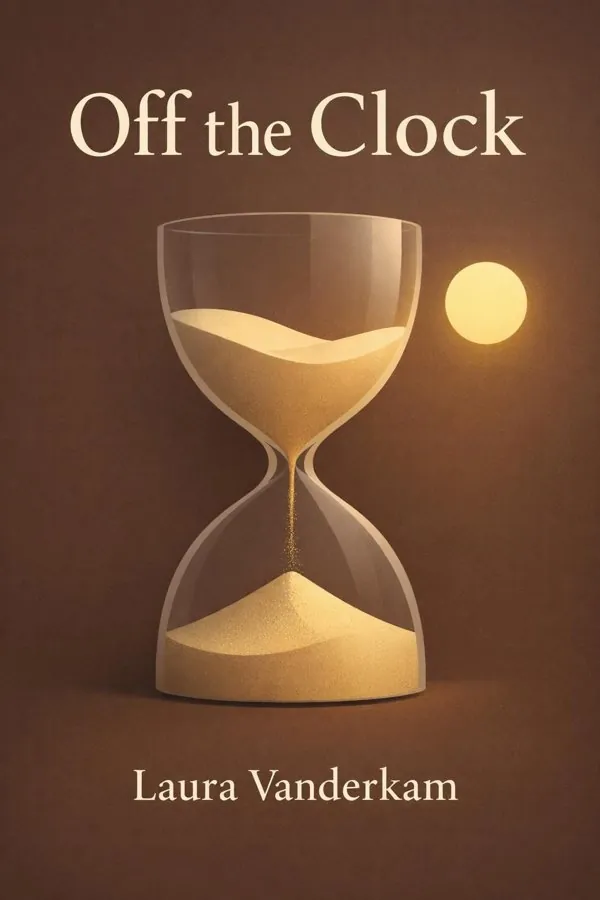
Off the Clock: Feel Less Busy While Getting More Done: Summary & Key Insights
 10 min11 chaptersAudio available
What Is Off the Clock: Feel Less Busy While Getting More Done About?
Off the Clock: Feel Less Busy While Getting More Done by Laura Vanderkam is a productivity book spanning 11 pages. In Off the Clock, time management expert Laura Vanderkam explores how people can feel less rushed and more fulfilled by changing their perception of time. Drawing on research and interviews, she shows how to cultivate mindfulness, prioritize meaningful activities, and create a sense of abundance in daily life. The book offers practical strategies to help readers make the most of their hours and live with greater intention.
This FizzRead summary covers all 11 key chapters of Off the Clock: Feel Less Busy While Getting More Done in approximately 10 minutes, distilling the most important ideas, arguments, and takeaways from Laura Vanderkam's work. Also available as an audio summary and Key Quotes Podcast.
Off the Clock: Feel Less Busy While Getting More Done
In Off the Clock, time management expert Laura Vanderkam explores how people can feel less rushed and more fulfilled by changing their perception of time. Drawing on research and interviews, she shows how to cultivate mindfulness, prioritize meaningful activities, and create a sense of abundance in daily life. The book offers practical strategies to help readers make the most of their hours and live with greater intention.
Who Should Read Off the Clock: Feel Less Busy While Getting More Done?
This book is perfect for anyone interested in productivity and looking to gain actionable insights in a short read. Whether you're a student, professional, or lifelong learner, the key ideas from Off the Clock: Feel Less Busy While Getting More Done by Laura Vanderkam will help you think differently.
- ✓Readers who enjoy productivity and want practical takeaways
- ✓Professionals looking to apply new ideas to their work and life
- ✓Anyone who wants the core insights of Off the Clock: Feel Less Busy While Getting More Done in just 10 minutes
Want the full summary?
Get instant access to this book summary and 100K+ more with Fizz Moment.
Get Free SummaryAvailable on App Store • Free to download
Key Chapters
One of the first truths I uncovered is that nearly everyone feels busier than they actually are. This paradox fascinated me—the more data I reviewed from people’s time diaries, the clearer it became that our subjective sense of busyness rarely matches reality. People who claimed they worked sixty hours a week often logged closer to forty-five. What was happening wasn’t a failure of math; it was a failure of perception.
Our perception of time is elastic. When we’re stressed or distracted, hours seem to vanish because we’re not mentally present to witness them. Neuroscience backs this up: memory formation directly influences how we experience duration. If your days are filled with monotonous tasks—emails, meetings, errands—they blur together. The brain doesn’t lay down distinct memories, and the retrospective impression becomes one of speed and scarcity.
On the other hand, when we immerse ourselves in meaningful, varied experiences, time feels fuller. It’s stretched by the richness of memory. This explains why vacations, romantic dinners, or challenging projects can feel expansive even if they occupy just a few hours. Feeling rushed isn’t always about how much we do—it’s about how conscious we are while doing it. The antidote to busyness is meaning.
Early in my research, I invited dozens of participants to track their time for a week, recording every activity in half-hour increments. I did the same myself. The first insight was transformative: most people vastly underestimate how much free time they actually have. When you write down your hours, the vague cloud of busyness breaks apart into visible pieces. You start to see patterns—how often downtime turns into phone scrolling, how certain commitments consume more emotional energy than they deserve.
Tracking time isn’t about judgment; it’s about awareness. Once you see your days clearly, you can begin aligning them with your values. For me, this often meant reclaiming small pockets—like twenty minutes before dinner—to read with my children instead of tidying the kitchen yet again. Those small shifts opened emotional space that made the evening feel richer, unhurried.
Awareness brings freedom. When you understand where your time goes, you regain agency. You stop saying “I don’t have time” and start asking “Is this how I want to spend my time?”
+ 9 more chapters — available in the FizzRead app
All Chapters in Off the Clock: Feel Less Busy While Getting More Done
About the Author
Laura Vanderkam is an American author and speaker specializing in time management, productivity, and work-life balance. She has written several bestselling books, including 168 Hours and What the Most Successful People Do Before Breakfast. Her work has been featured in major publications such as The New York Times, The Wall Street Journal, and Fortune.
Get This Summary in Your Preferred Format
Read or listen to the Off the Clock: Feel Less Busy While Getting More Done summary by Laura Vanderkam anytime, anywhere. FizzRead offers multiple formats so you can learn on your terms — all free.
Available formats: App · Audio · PDF · EPUB — All included free with FizzRead
Download Off the Clock: Feel Less Busy While Getting More Done PDF and EPUB Summary
Key Quotes from Off the Clock: Feel Less Busy While Getting More Done
“One of the first truths I uncovered is that nearly everyone feels busier than they actually are.”
“Early in my research, I invited dozens of participants to track their time for a week, recording every activity in half-hour increments.”
Frequently Asked Questions about Off the Clock: Feel Less Busy While Getting More Done
Off the Clock: Feel Less Busy While Getting More Done by Laura Vanderkam is a productivity book that explores key ideas across 11 chapters. In Off the Clock, time management expert Laura Vanderkam explores how people can feel less rushed and more fulfilled by changing their perception of time. Drawing on research and interviews, she shows how to cultivate mindfulness, prioritize meaningful activities, and create a sense of abundance in daily life. The book offers practical strategies to help readers make the most of their hours and live with greater intention.
More by Laura Vanderkam

Tranquility by Tuesday: 9 Ways to Calm the Chaos and Make Time for What Matters
Laura Vanderkam
10 min
168 Hours: You Have More Time Than You Think
Laura Vanderkam
10 minI Know How She Does It: How Successful Women Make the Most of Their Time
Laura Vanderkam
10 min
What the Most Successful People Do Before Breakfast: And Two Other Short Guides to Achieving More at Work and at Home
Laura Vanderkam
10 minYou Might Also Like
Browse by Category
Ready to read Off the Clock: Feel Less Busy While Getting More Done?
Get the full summary and 100K+ more books with Fizz Moment.