
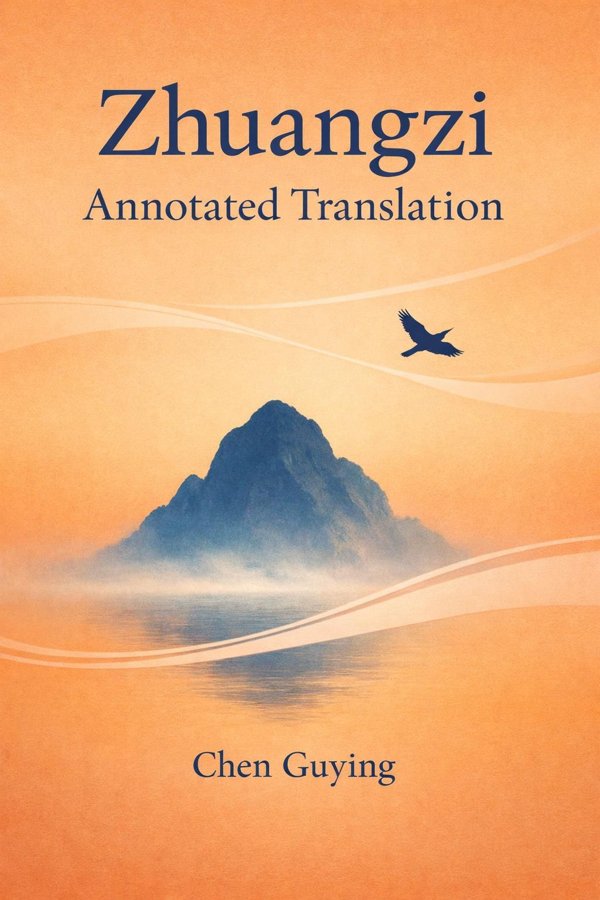
Zhuangzi Annotated Translation: Summary & Key Insights
by Chen Guying
 10 min13 chaptersAudio available
What Is Zhuangzi Annotated Translation About?
Zhuangzi Annotated Translation by Chen Guying is a eastern_wisdom book spanning 13 pages. Zhuangzi Annotated Translation is a comprehensive annotated edition of the classical Daoist text Zhuangzi, prepared by Chen Guying, one of the foremost scholars of Daoist philosophy. Originally published by Zhonghua Book Company in 1983, this work provides a modern Chinese translation and detailed commentary on the ancient text, exploring key philosophical themes such as freedom, naturalness, and the equality of all things. Chen’s interpretation bridges classical Daoist thought and modern philosophical inquiry, making the text accessible to contemporary readers and scholars.
This FizzRead summary covers all 13 key chapters of Zhuangzi Annotated Translation in approximately 10 minutes, distilling the most important ideas, arguments, and takeaways from Chen Guying's work. Also available as an audio summary and Key Quotes Podcast.
Zhuangzi Annotated Translation
Zhuangzi Annotated Translation is a comprehensive annotated edition of the classical Daoist text Zhuangzi, prepared by Chen Guying, one of the foremost scholars of Daoist philosophy. Originally published by Zhonghua Book Company in 1983, this work provides a modern Chinese translation and detailed commentary on the ancient text, exploring key philosophical themes such as freedom, naturalness, and the equality of all things. Chen’s interpretation bridges classical Daoist thought and modern philosophical inquiry, making the text accessible to contemporary readers and scholars.
Who Should Read Zhuangzi Annotated Translation?
This book is perfect for anyone interested in eastern_wisdom and looking to gain actionable insights in a short read. Whether you're a student, professional, or lifelong learner, the key ideas from Zhuangzi Annotated Translation by Chen Guying will help you think differently.
- ✓Readers who enjoy eastern_wisdom and want practical takeaways
- ✓Professionals looking to apply new ideas to their work and life
- ✓Anyone who wants the core insights of Zhuangzi Annotated Translation in just 10 minutes
Want the full summary?
Get instant access to this book summary and 100K+ more with Fizz Moment.
Get Free SummaryAvailable on App Store • Free to download
Key Chapters
The human story begins in the distant prehistoric era, when our ancestors evolved from primitive hominids into toolmakers and builders of community. They crafted stone implements, discovered fire, and organized hunting and gathering. The significance of prehistoric society lies in its establishment of the biological and cultural foundations shared by all humanity. I argue that creativity in productive activity is the primary engine of social evolution; through labor, humans transformed nature and at the same time shaped their inner world.
Early human organization was simple yet flexible. Clan and tribal structures embodied communal life and mutual dependence, the prototypes of social division of labor, gender roles, and property concepts that persist today. Archaeology and anthropology allow us to see how early humans devised distinctive patterns of survival across different regions—revealing the roots of cultural diversity.
To study prehistoric society is not to trace chaos but to uncover the logic of civilization’s beginnings. The seeds of human sociability and productivity already sprouted then, forming the backbone of all later cultures. Thus, the starting point of world history lies not in any single region, but in the shared origins of humankind.
In four ancient river valleys—the Nile of Egypt, the Tigris and Euphrates of Mesopotamia, the Ganges and Indus of India, and China’s Yellow River—human beings built the first enduring centers of civilization. These societies mark humanity’s decisive step from dependence on nature to organized social life.
I emphasize that the common feature of these four civilizations is the union of fertile resources and centralized power. Agriculture enabled permanent settlement, while administrative systems and religious beliefs bound society together. The pyramids of Egypt, Babylon’s city-states, India’s caste system, and China’s ritual and patriarchal order all represent distinct expressions of human ingenuity at this stage.
Yet civilization was never an isolated miracle. From the beginning, these centers interacted through trade, war, and cultural transmission, forming the earliest network of global connection. I highlight China’s singularity in its enduring continuity and internal coherence, whereas Western civilizations tended to thrive on openness and transformation. Out of these contrasts, the rich diversity of humanity gradually unfolded.
+ 11 more chapters — available in the FizzRead app
All Chapters in Zhuangzi Annotated Translation
About the Author
Chen Guying (born 1935) is a renowned Chinese philosopher and scholar specializing in Daoist thought and Chinese intellectual history. He has served as a professor of philosophy at National Taiwan University and authored influential works including Laozi Annotated Translation and Daoist Cultural Essays. His scholarship is recognized for its depth and clarity in interpreting classical Chinese philosophy for modern audiences.
Get This Summary in Your Preferred Format
Read or listen to the Zhuangzi Annotated Translation summary by Chen Guying anytime, anywhere. FizzRead offers multiple formats so you can learn on your terms — all free.
Available formats: App · Audio · PDF · EPUB — All included free with FizzRead
Download Zhuangzi Annotated Translation PDF and EPUB Summary
Key Quotes from Zhuangzi Annotated Translation
“The human story begins in the distant prehistoric era, when our ancestors evolved from primitive hominids into toolmakers and builders of community.”
“These societies mark humanity’s decisive step from dependence on nature to organized social life.”
Frequently Asked Questions about Zhuangzi Annotated Translation
Zhuangzi Annotated Translation by Chen Guying is a eastern_wisdom book that explores key ideas across 13 chapters. Zhuangzi Annotated Translation is a comprehensive annotated edition of the classical Daoist text Zhuangzi, prepared by Chen Guying, one of the foremost scholars of Daoist philosophy. Originally published by Zhonghua Book Company in 1983, this work provides a modern Chinese translation and detailed commentary on the ancient text, exploring key philosophical themes such as freedom, naturalness, and the equality of all things. Chen’s interpretation bridges classical Daoist thought and modern philosophical inquiry, making the text accessible to contemporary readers and scholars.
More by Chen Guying
You Might Also Like
A New Earth
Eckhart Tolle
10 min
The Daily Stoic
Ryan Holiday, Stephen Hanselman
10 min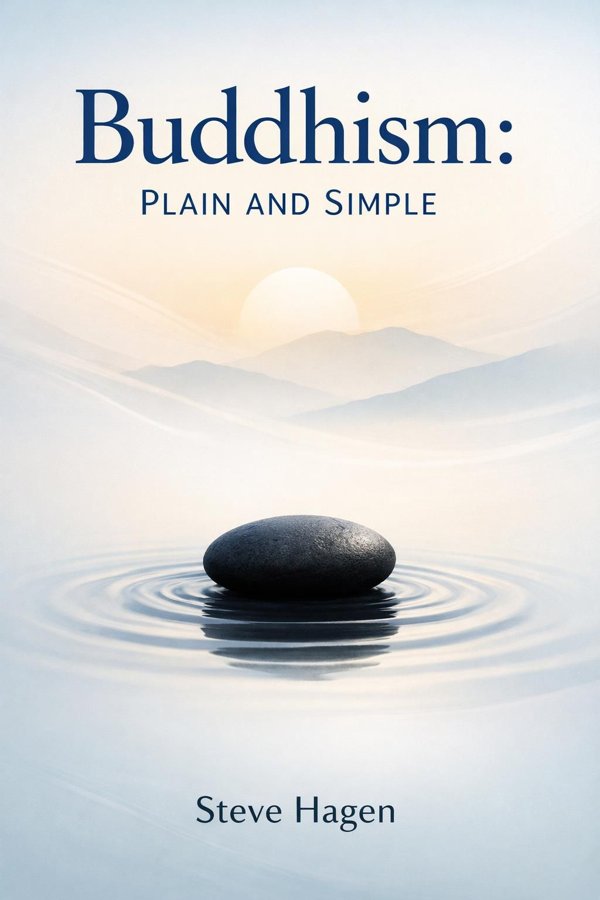
Buddhism: Plain and Simple
Steve Hagen
10 min
Enchiridion
Epictetus
10 min
The Book of Tea
Kakuzō Okakura
10 min
The Light We Give: How Sikh Wisdom Can Transform Your Life
Simran Jeet Singh
10 minBrowse by Category
Ready to read Zhuangzi Annotated Translation?
Get the full summary and 100K+ more books with Fizz Moment.