
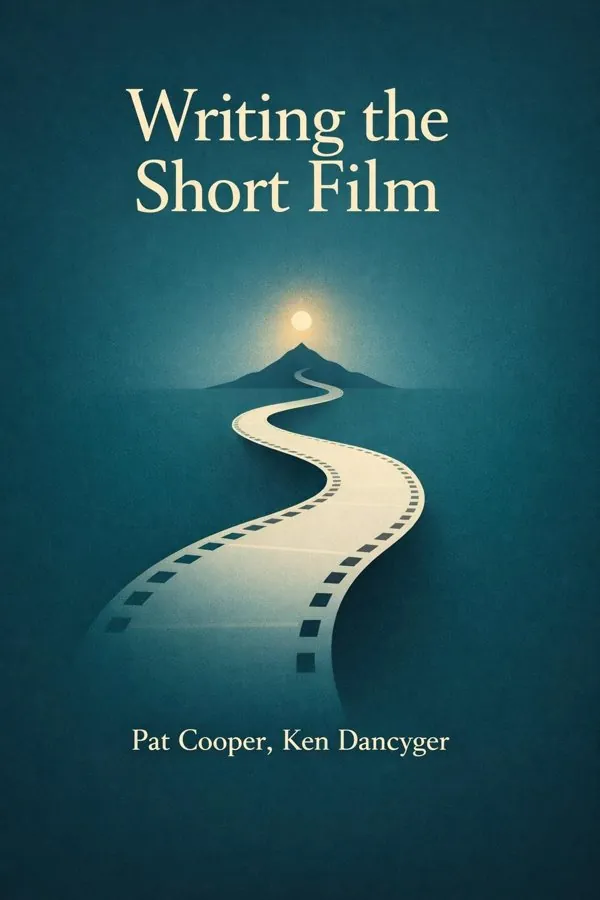
Writing the Short Film: Summary & Key Insights
 10 min9 chaptersAudio available
Key Takeaways from Writing the Short Film
One of the most liberating truths for a writer is this: a short film does not fail because it is small, and it does not succeed by imitating a feature.
A short film still needs structure, but structure in short form is less about visible machinery and more about clean momentum.
In short films, character development is not built through volume; it is built through selection.
Theme becomes meaningful only when it is dramatized.
A screenplay becomes cinematic when the writer trusts the image.
What Is Writing the Short Film About?
Writing the Short Film by Pat Cooper, Ken Dancyger is a writing book spanning 8 pages. Writing a great short film is not about shrinking a feature-length idea until it fits a smaller running time. It is about discovering a form of storytelling built on precision, compression, and emotional concentration. In Writing the Short Film, Pat Cooper and Ken Dancyger show that short films have their own logic, rhythms, and artistic demands. A successful short must create character, conflict, tone, and meaning quickly, often through implication rather than explanation, while still leaving a powerful impression. That is why this book matters. For aspiring screenwriters, film students, directors, and independent creators, the short film is often the first real proving ground. It is where craft becomes visible: every scene, line, image, and beat must earn its place. Cooper and Dancyger bring strong authority to the subject through years of teaching, filmmaking, and close engagement with screenwriting and film form. Their guidance is practical, not abstract. They help writers understand structure, develop memorable characters, sharpen visual storytelling, and revise scripts with production in mind. The result is a clear, disciplined framework for turning a compact idea into a cinematic work that feels complete, resonant, and filmable.
This FizzRead summary covers all 9 key chapters of Writing the Short Film in approximately 10 minutes, distilling the most important ideas, arguments, and takeaways from Pat Cooper, Ken Dancyger's work. Also available as an audio summary and Key Quotes Podcast.
Writing the Short Film
Writing a great short film is not about shrinking a feature-length idea until it fits a smaller running time. It is about discovering a form of storytelling built on precision, compression, and emotional concentration. In Writing the Short Film, Pat Cooper and Ken Dancyger show that short films have their own logic, rhythms, and artistic demands. A successful short must create character, conflict, tone, and meaning quickly, often through implication rather than explanation, while still leaving a powerful impression.
That is why this book matters. For aspiring screenwriters, film students, directors, and independent creators, the short film is often the first real proving ground. It is where craft becomes visible: every scene, line, image, and beat must earn its place. Cooper and Dancyger bring strong authority to the subject through years of teaching, filmmaking, and close engagement with screenwriting and film form. Their guidance is practical, not abstract. They help writers understand structure, develop memorable characters, sharpen visual storytelling, and revise scripts with production in mind. The result is a clear, disciplined framework for turning a compact idea into a cinematic work that feels complete, resonant, and filmable.
Who Should Read Writing the Short Film?
This book is perfect for anyone interested in writing and looking to gain actionable insights in a short read. Whether you're a student, professional, or lifelong learner, the key ideas from Writing the Short Film by Pat Cooper, Ken Dancyger will help you think differently.
- ✓Readers who enjoy writing and want practical takeaways
- ✓Professionals looking to apply new ideas to their work and life
- ✓Anyone who wants the core insights of Writing the Short Film in just 10 minutes
Want the full summary?
Get instant access to this book summary and 100K+ more with Fizz Moment.
Get Free SummaryAvailable on App Store • Free to download
Key Chapters
One of the most liberating truths for a writer is this: a short film does not fail because it is small, and it does not succeed by imitating a feature. Cooper and Dancyger insist that the short film is a distinct storytelling form with its own strengths, limitations, and possibilities. That means writers must stop thinking in terms of reducing a larger story and instead start thinking in terms of concentration. The short film thrives on a single dramatic question, a focused emotional shift, or a revealing moment that captures a larger human truth.
Unlike feature films, short films rarely have space for elaborate subplots, long backstory, or multiple turning points. Their power often comes from selecting one decisive slice of experience. A child waiting outside a hospital room, a stranger returning a lost object, or a couple navigating one final conversation can hold enough dramatic weight for an entire short if the situation is chosen carefully. In each case, the story is not “small” because little happens; it is precise because everything points toward one meaningful transformation.
This idea also changes how writers judge material. A concept that feels too slight for a feature may be perfect for a short. A fleeting encounter, moral dilemma, or symbolic act may work beautifully when treated with discipline and restraint. The question is not whether the premise can fill 90 minutes, but whether it can create impact in 5 to 20.
Actionable takeaway: before writing, summarize your film in one sentence focused on a single emotional or dramatic event. If the idea requires several major arcs, too many characters, or a long explanation, it likely belongs in another form.
A short film still needs structure, but structure in short form is less about visible machinery and more about clean momentum. Cooper and Dancyger argue that even the briefest successful short usually contains the essentials of dramatic movement: setup, complication, and resolution. The difference is scale. Each phase must arrive faster, carry more weight, and connect more tightly than it would in a feature.
The opening of a short film cannot wander. It must orient the audience immediately by establishing who matters, what situation they are in, and what tension is already present. A middle section then deepens or complicates that tension, often through one decisive encounter, revelation, or choice. Finally, the ending resolves the central dramatic movement, though not always neatly. Resolution in a short film may be emotional rather than plot-heavy: a change in awareness, a reversal of expectation, or a single image that redefines what came before.
Consider a 10-minute script about a father teaching his daughter to drive. The setup introduces their strained relationship and the test she is about to take. The middle reveals that his criticism is linked to his own fear of losing control. The ending comes not when she parks perfectly, but when he finally trusts her to drive away alone. That is a complete arc built on compression.
The lesson is that brevity is not an excuse for shapelessness. Even experimental shorts benefit from some felt progression. The audience should sense movement from one state to another.
Actionable takeaway: outline your short in three beats only: where it begins, what disrupts it, and how it ends. If each beat is clear and causally connected, your structure is likely strong enough to support the script.
In short films, character development is not built through volume; it is built through selection. Cooper and Dancyger emphasize that a short script does not have time to provide a full biography, but it can still create vivid, memorable characters by placing them under pressure and allowing their choices to define them. Character in short form emerges less from what people say about themselves and more from what they do in one critical circumstance.
This means writers should focus on a few telling details rather than broad explanation. A nurse who always straightens crooked picture frames, a teenager who rehearses apologies before knocking, or a man who refuses to sit in his late wife’s chair can become instantly legible if the detail is charged with emotional meaning. The audience begins to infer history from behavior.
The best short-film characters also want something concrete, even if the deeper issue is emotional. A boy wants to win a race. A woman wants a signature on a form. A retiree wants to return a borrowed coat. These simple objectives create action. But beneath them lies the richer material: the need for approval, dignity, closure, or connection. The short film becomes powerful when the visible goal and the hidden need collide.
Writers often make the mistake of trying to make characters “deep” by adding speeches or backstory. In a short, this usually slows the film down. It is stronger to let a character’s essence appear through one decision: lie or confess, stay or leave, speak or remain silent.
Actionable takeaway: define each main character with one desire, one fear, and one revealing action. If those three elements are clear, the audience will feel a fuller character than pages of explanation could provide.
Theme becomes meaningful only when it is dramatized. Cooper and Dancyger make clear that short films cannot afford abstract messaging or general statements about life. If a writer wants to explore loneliness, forgiveness, class, memory, or identity, those ideas must be embodied in a conflict the audience can watch unfold. Theme is not what the script announces; it is what the struggle reveals.
In practical terms, this means every short should be built around a tension between opposing forces. The conflict may be external, such as a worker trying to hide a mistake before being discovered. It may be interpersonal, such as siblings disagreeing over how to care for a parent. Or it may be internal, such as a woman deciding whether to open a letter she has avoided for years. What matters is that the conflict forces a value into motion. Through the pressure of the situation, the film says something about fear, power, love, guilt, or change.
Because short films are compact, thematic clarity matters. A script that introduces multiple unrelated conflicts can feel unfocused. But a script that aligns plot, character, and image around one central tension can feel unusually rich. For example, a short about a janitor secretly practicing piano in an empty school can carry themes of aspiration, shame, and unseen talent if the conflict centers on whether he will perform when discovered.
The ending then becomes especially important. It need not explain the theme, but it should crystallize it. A final choice, image, or reversal can leave the audience with a strong sense of what the story was truly about.
Actionable takeaway: state your theme as a question, then design a conflict that forces your character to answer it through action rather than dialogue.
A screenplay becomes cinematic when the writer trusts the image. One of the central lessons in Writing the Short Film is that short films rely even more heavily than features on visual storytelling because there is so little room for explanatory dialogue. The audience should understand mood, tension, relationship, and change through what they see, hear, and infer, not through speeches that summarize meaning.
This principle begins with scene design. Instead of having a character say, “I feel out of place here,” show her standing in formal clothes at a child’s birthday party, clutching an untouched gift while everyone else knows the songs. Instead of writing a long confession about grief, show a man resetting his wife’s voicemail greeting each night so he can hear her voice one more time. Such images carry emotional information quickly and memorably.
Visual storytelling also depends on choosing the right moments. A short film benefits from scenes built around actions, not explanations: preparing a meal, waiting for a train, fixing a dress, deleting a message, hiding an object. These actions can be staged and filmed in ways that reveal inner life. They also create opportunities for silence, subtext, and rhythm.
For writers, this means resisting the urge to over-write. Screenplays are not novels. Description should be selective and playable. Dialogue should sharpen conflict, not carry the whole burden of storytelling. The strongest short scripts often leave room for directors, actors, and editors to complete the emotional meaning through performance and cinematic execution.
Actionable takeaway: review each scene and ask, “Can this be understood without someone explaining it?” If not, rewrite the moment so at least one key emotional beat is expressed visually.
What a short film leaves out is often as important as what it includes. Cooper and Dancyger repeatedly stress economy: every character, location, scene, line, and prop must justify its presence. Because the form is compressed, indulgence becomes immediately visible. A weak short often feels padded, while a strong one feels inevitable.
Economy begins with premise selection. A good short-film idea naturally contains compression. It can be told through a limited number of scenes, a manageable cast, and a clear dramatic line. Once the idea is chosen, the writer must cut everything that does not serve the central movement. If a secondary character does not complicate the conflict or illuminate the protagonist, remove them. If two scenes achieve the same function, combine them. If a line simply states what the audience already understands, delete it.
Pacing is not just speed; it is the management of attention. Some shorts move quickly through plot. Others unfold slowly but remain gripping because every image increases tension or meaning. A silent close-up can be efficient if it deepens the emotional stakes. By contrast, fast dialogue can feel wasteful if it contributes little. The real test is whether the film is always advancing the audience’s engagement.
A useful example is the difference between showing a character travel to a confrontation versus cutting directly to the knock at the door. Unless the journey adds suspense, symbolism, or emotional preparation, it probably does not belong. In short form, transitions must earn their time.
Actionable takeaway: after drafting, cut 10 percent from the script without changing the story. Remove repeated information, merge scenes, and trim dialogue. This exercise usually reveals where the film gains clarity, tension, and pace.
Short films are often associated with realism or intimate character pieces, but Cooper and Dancyger show that genre can be a major advantage in short storytelling. Comedy, horror, thriller, romance, fantasy, and even science fiction bring built-in expectations that help a writer establish tone and stakes quickly. In a limited runtime, that efficiency matters. Genre gives the audience an immediate frame through which to interpret events.
A horror short, for instance, does not need extensive setup to create anticipation. A strange sound in a basement, a child speaking to an unseen visitor, or a locked room already cues tension. A comedy can begin from a recognizable social disaster, such as a disastrous wedding toast or an absurd misunderstanding, and move quickly into escalation. Genre lets the writer focus less on lengthy orientation and more on execution.
The book also treats adaptation and experimentation as fruitful pathways. A poem, anecdote, news item, or personal memory may provide ideal material for a short if the writer identifies the central cinematic moment. Likewise, the short form is especially suited to formal experimentation because audiences will follow unusual structures, tones, or visual styles more readily in 8 minutes than in 2 hours. Still, experimentation works best when it has purpose. Novelty alone is not enough.
The most effective use of genre in short film often involves one sharp premise and one memorable twist or payoff. A time-loop comedy, a supernatural fable, or a minimalist noir can flourish when built around a single strong idea.
Actionable takeaway: if your story feels too familiar, ask whether a genre frame could intensify it. Then commit fully to the chosen tone so the audience understands the rules from the opening moments.
A short script is not only a literary object; it is a blueprint for a film that must actually be made. Cooper and Dancyger remind writers that the best short-film scripts balance artistic ambition with practical awareness. This does not mean reducing imagination. It means understanding how choices on the page affect time, budget, casting, locations, and production complexity.
For emerging filmmakers especially, this is crucial. A beautiful script involving six locations, a crowd scene, a car chase, and visual effects may be impossible to execute well on limited resources. By contrast, a script set in one apartment, one hallway, and one elevator may be fully achievable and artistically stronger because its constraints force greater dramatic precision. Production-minded writing often improves storytelling rather than limiting it.
This perspective also encourages collaboration. Directors, producers, actors, cinematographers, and editors will all shape the final short film. A script should be specific enough to communicate intention but flexible enough to invite interpretation. Overdirecting every camera angle on the page can be less useful than clearly conveying dramatic priorities, emotional beats, and essential visual actions.
Revision becomes the bridge between writing and filmmaking. Once a draft exists, the writer should ask practical questions: Can this be cast easily? Are there too many night shoots? Is a child actor essential? Does a key prop or location create unnecessary obstacles? Streamlining these elements often leads to a more elegant film.
Actionable takeaway: create a simple production audit of your script listing number of locations, speaking roles, special effects, and difficult setups. Then revise at least one major element to make the film more achievable without weakening the story.
A short film often lives or dies by its ending. Because the audience spends so little time in the world of the story, the final beat must do more than stop the action; it must complete the emotional equation. Cooper and Dancyger suggest that the best endings in short films feel both surprising and inevitable. They arise from everything that came before, yet they also expand the story in the viewer’s mind after the screen goes dark.
Importantly, a strong ending is not always a twist. Twists can be effective, but they become hollow if they exist only to shock. A better short-film ending usually clarifies character or theme. It may reveal what a character is finally willing to do, what they cannot admit, or what has changed in the viewer’s understanding of the situation. Sometimes a quiet gesture carries more force than a plot revelation.
Imagine a short about a boy stealing flowers from graves to sell on the street. A weak ending might simply show him getting caught. A stronger ending might show him placing the last bouquet on an unmarked grave before walking away, transforming the story from petty theft into a meditation on grief and survival. The action is small, but the meaning deepens.
Endings in short films also benefit from resonance rather than over-explanation. The audience does not need every implication spelled out. In fact, part of the pleasure of short form is that a final image or action can remain open while still feeling complete. The key is emotional precision, not total closure.
Actionable takeaway: test your ending by asking what changes in the final moment: action, awareness, relationship, or meaning. If nothing shifts, the script may need a more decisive final beat.
All Chapters in Writing the Short Film
About the Authors
Pat Cooper and Ken Dancyger are experienced film educators and authors known for their work on screenwriting and cinematic storytelling. Dancyger has been closely associated with New York University’s Tisch School of the Arts, where he built a strong reputation teaching film craft, editing, and narrative form. He has written widely on the principles of filmmaking and is respected for translating complex creative ideas into practical guidance. Cooper has worked as a writer, filmmaker, and teacher with a particular interest in short-form storytelling and screenwriting technique. Together, they combine academic depth with hands-on filmmaking insight. Their collaboration in Writing the Short Film reflects years of working with students and emerging writers, helping them understand how to build short scripts that are structurally sound, visually expressive, and realistically producible.
Get This Summary in Your Preferred Format
Read or listen to the Writing the Short Film summary by Pat Cooper, Ken Dancyger anytime, anywhere. FizzRead offers multiple formats so you can learn on your terms — all free.
Available formats: App · Audio · PDF · EPUB — All included free with FizzRead
Download Writing the Short Film PDF and EPUB Summary
Key Quotes from Writing the Short Film
“One of the most liberating truths for a writer is this: a short film does not fail because it is small, and it does not succeed by imitating a feature.”
“A short film still needs structure, but structure in short form is less about visible machinery and more about clean momentum.”
“In short films, character development is not built through volume; it is built through selection.”
“Theme becomes meaningful only when it is dramatized.”
“A screenplay becomes cinematic when the writer trusts the image.”
Frequently Asked Questions about Writing the Short Film
Writing the Short Film by Pat Cooper, Ken Dancyger is a writing book that explores key ideas across 9 chapters. Writing a great short film is not about shrinking a feature-length idea until it fits a smaller running time. It is about discovering a form of storytelling built on precision, compression, and emotional concentration. In Writing the Short Film, Pat Cooper and Ken Dancyger show that short films have their own logic, rhythms, and artistic demands. A successful short must create character, conflict, tone, and meaning quickly, often through implication rather than explanation, while still leaving a powerful impression. That is why this book matters. For aspiring screenwriters, film students, directors, and independent creators, the short film is often the first real proving ground. It is where craft becomes visible: every scene, line, image, and beat must earn its place. Cooper and Dancyger bring strong authority to the subject through years of teaching, filmmaking, and close engagement with screenwriting and film form. Their guidance is practical, not abstract. They help writers understand structure, develop memorable characters, sharpen visual storytelling, and revise scripts with production in mind. The result is a clear, disciplined framework for turning a compact idea into a cinematic work that feels complete, resonant, and filmable.
You Might Also Like
The Art of Perspective
Christopher Castellani
10 min
Making a Point: The Persnickety Story of English Punctuation
David Crystal
10 min
The Elements Of Eloquence: How To Turn The Perfect English Phrase
Mark Forsyth
10 min
The Pocket Muse: Ideas and Inspirations for Writing
Monica Wood
10 min
A Little Book on Form: An Exploration into the Formal Imagination of Poetry
Robert Hass
10 min
Adventures In The Screen Trade: A Personal View Of Hollywood And Screenwriting
William Goldman
10 minBrowse by Category
Ready to read Writing the Short Film?
Get the full summary and 100K+ more books with Fizz Moment.