
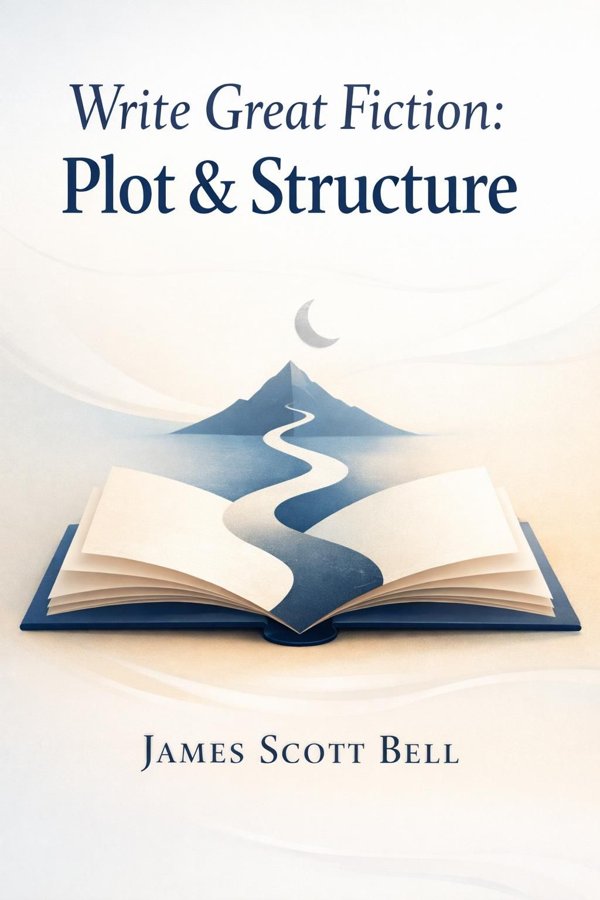
Write Great Fiction: Plot & Structure: Techniques and Exercises for Crafting a Plot That Grips Readers from Start to Finish: Summary & Key Insights
 10 min5 chaptersAudio available
What Is Write Great Fiction: Plot & Structure: Techniques and Exercises for Crafting a Plot That Grips Readers from Start to Finish About?
Write Great Fiction: Plot & Structure: Techniques and Exercises for Crafting a Plot That Grips Readers from Start to Finish by James Scott Bell is a writing book spanning 5 pages. This book provides practical guidance for writers on how to create compelling plots and well-structured stories. It includes techniques for brainstorming original ideas, troubleshooting common plot problems, and building tension and conflict that keep readers engaged. The author, James Scott Bell, uses examples from popular novels and offers exercises and checklists to help writers develop their storytelling skills.
This FizzRead summary covers all 5 key chapters of Write Great Fiction: Plot & Structure: Techniques and Exercises for Crafting a Plot That Grips Readers from Start to Finish in approximately 10 minutes, distilling the most important ideas, arguments, and takeaways from James Scott Bell's work. Also available as an audio summary and Key Quotes Podcast.
Write Great Fiction: Plot & Structure: Techniques and Exercises for Crafting a Plot That Grips Readers from Start to Finish
This book provides practical guidance for writers on how to create compelling plots and well-structured stories. It includes techniques for brainstorming original ideas, troubleshooting common plot problems, and building tension and conflict that keep readers engaged. The author, James Scott Bell, uses examples from popular novels and offers exercises and checklists to help writers develop their storytelling skills.
Who Should Read Write Great Fiction: Plot & Structure: Techniques and Exercises for Crafting a Plot That Grips Readers from Start to Finish?
This book is perfect for anyone interested in writing and looking to gain actionable insights in a short read. Whether you're a student, professional, or lifelong learner, the key ideas from Write Great Fiction: Plot & Structure: Techniques and Exercises for Crafting a Plot That Grips Readers from Start to Finish by James Scott Bell will help you think differently.
- ✓Readers who enjoy writing and want practical takeaways
- ✓Professionals looking to apply new ideas to their work and life
- ✓Anyone who wants the core insights of Write Great Fiction: Plot & Structure: Techniques and Exercises for Crafting a Plot That Grips Readers from Start to Finish in just 10 minutes
Want the full summary?
Get instant access to this book summary and 100K+ more with Fizz Moment.
Get Free SummaryAvailable on App Store • Free to download
Key Chapters
Many writers use the words ‘story’ and ‘plot’ interchangeably, but they’re not the same. Story is what happens—plot is the order and meaning behind those happenings. Story is a sequence of events; plot is how and why those events matter. When I say ‘plot,’ I mean the purposeful arrangement of incidents that lead your protagonist from one state of being to another.
As writers, we make an unspoken promise to our readers: that we will take them on a journey worth their emotional investment. That promise isn’t fulfilled by fine writing alone. It’s fulfilled when the reader senses forward motion, stakes that matter, and a resolution that delivers both surprise and inevitability. That sense of inevitability—of, ‘Of course it had to be this way,’—comes from structure.
A good plot has a throughline: a question that drives the story. It might be ‘Will she escape?’ ‘Will he find redemption?’ or ‘Can love overcome the impossible?’ Every scene, every turn must serve that question. When you lose sight of it, your plot wavers, and readers disengage. When you maintain it, readers remain hooked, eager to find out the answer.
Crafting that throughline requires clarity. Ask yourself not only what happens but why it happens now, to this person, and in this way. The story’s emotional momentum grows from the protagonist’s desire colliding with obstacles, and that collision creates a rhythm of cause and effect—a structure that feels alive. In the pages ahead, I’ll show you how to build and sustain that rhythm.
I developed the LOCK system to give writers a practical framework for thinking about plot. LOCK stands for Lead, Objective, Confrontation, and Knockout. These four elements are the heartbeat of a story that works.
Every story starts with a Lead—the character we bond with, root for, or sometimes fear. Without a vivid, engaging protagonist, readers feel lost. The Lead doesn’t need to be perfect; in fact, flaws create empathy. What matters is that the reader invests emotionally in the Lead’s fate.
Next is the Objective. What does your Lead want? It must be concrete and vital. The objective provides propulsion. Without it, scenes drift. When a Lead has a clear, urgent goal—escape, revenge, justice, love—the story gains focus and energy.
Then comes Confrontation. This is the essence of plot: obstacles that stand between the Lead and the Objective. The confrontation should escalate—complications deepening, stakes rising, failures haunting success. It’s conflict that tests the Lead and reveals character. Without confrontation, there’s no transformation.
Finally, there’s the Knockout—the climax that delivers the emotional payoff. Readers should feel that the resolution is both earned and surprising. The Knockout validates the journey, fulfilling the writer’s promise.
Notice how each element connects to the next: a flawed Lead pursues an urgent Objective, meets powerful Confrontations, and faces a Knockout that completes the arc. Master these four, and you’ll have a story with both drive and depth.
+ 3 more chapters — available in the FizzRead app
All Chapters in Write Great Fiction: Plot & Structure: Techniques and Exercises for Crafting a Plot That Grips Readers from Start to Finish
About the Author
James Scott Bell is an award-winning novelist and writing instructor known for his books on the craft of fiction. He has written numerous novels and guides for writers, and his work is widely respected in the field of creative writing education.
Get This Summary in Your Preferred Format
Read or listen to the Write Great Fiction: Plot & Structure: Techniques and Exercises for Crafting a Plot That Grips Readers from Start to Finish summary by James Scott Bell anytime, anywhere. FizzRead offers multiple formats so you can learn on your terms — all free.
Available formats: App · Audio · PDF · EPUB — All included free with FizzRead
Download Write Great Fiction: Plot & Structure: Techniques and Exercises for Crafting a Plot That Grips Readers from Start to Finish PDF and EPUB Summary
Key Quotes from Write Great Fiction: Plot & Structure: Techniques and Exercises for Crafting a Plot That Grips Readers from Start to Finish
“Many writers use the words ‘story’ and ‘plot’ interchangeably, but they’re not the same.”
“I developed the LOCK system to give writers a practical framework for thinking about plot.”
Frequently Asked Questions about Write Great Fiction: Plot & Structure: Techniques and Exercises for Crafting a Plot That Grips Readers from Start to Finish
Write Great Fiction: Plot & Structure: Techniques and Exercises for Crafting a Plot That Grips Readers from Start to Finish by James Scott Bell is a writing book that explores key ideas across 5 chapters. This book provides practical guidance for writers on how to create compelling plots and well-structured stories. It includes techniques for brainstorming original ideas, troubleshooting common plot problems, and building tension and conflict that keep readers engaged. The author, James Scott Bell, uses examples from popular novels and offers exercises and checklists to help writers develop their storytelling skills.
You Might Also Like
The Art of Perspective
Christopher Castellani
10 min
Making a Point: The Persnickety Story of English Punctuation
David Crystal
10 min
The Elements Of Eloquence: How To Turn The Perfect English Phrase
Mark Forsyth
10 min
The Pocket Muse: Ideas and Inspirations for Writing
Monica Wood
10 min
A Little Book on Form: An Exploration into the Formal Imagination of Poetry
Robert Hass
10 min
Adventures In The Screen Trade: A Personal View Of Hollywood And Screenwriting
William Goldman
10 minBrowse by Category
Ready to read Write Great Fiction: Plot & Structure: Techniques and Exercises for Crafting a Plot That Grips Readers from Start to Finish?
Get the full summary and 100K+ more books with Fizz Moment.