
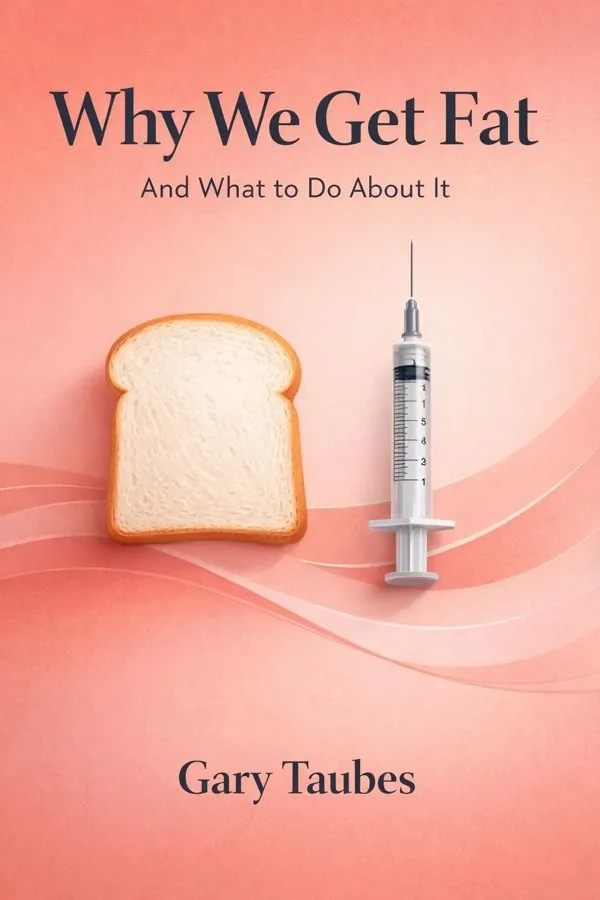
Why We Get Fat: And What to Do About It: Summary & Key Insights
by Gary Taubes
 10 min8 chaptersAudio available
Key Takeaways from Why We Get Fat: And What to Do About It
What if getting fat is not mainly about eating too much, but about what your body is instructed to do with the food you eat?
A calorie is a unit of energy, but Taubes insists that this fact does not tell the whole story of why people gain weight.
The central engine of Taubes’s argument is simple but controversial: carbohydrates, especially refined ones, stimulate insulin, and insulin promotes fat storage.
One of the book’s most humane messages is that hunger is not a moral failure.
Taubes does not dismiss exercise, but he strongly disputes the common belief that it is the primary solution to obesity.
What Is Why We Get Fat: And What to Do About It About?
Why We Get Fat: And What to Do About It by Gary Taubes is a nutrition book. Why do some people gain weight easily while others stay lean, even when they seem to eat more? In Why We Get Fat: And What to Do About It, science journalist Gary Taubes challenges the most common assumptions about obesity, dieting, and health. Rather than treating weight gain as a simple matter of overeating and inactivity, he argues that the real driver is hormonal regulation, especially the effect of carbohydrates on insulin. According to Taubes, fat accumulation is not primarily caused by gluttony or laziness, but by biological processes that influence hunger, energy storage, and metabolism. This book matters because it questions decades of conventional dietary advice and asks readers to reconsider what they have been taught about calories, willpower, and exercise. Taubes draws on historical research, clinical observations, and nutritional science to build his case in a clear, provocative way. Whether or not readers agree with every conclusion, the book is powerful because it forces a deeper examination of why people gain weight and why many traditional diets fail. It is an essential read for anyone interested in nutrition, metabolic health, and evidence-based thinking.
This FizzRead summary covers all 8 key chapters of Why We Get Fat: And What to Do About It in approximately 10 minutes, distilling the most important ideas, arguments, and takeaways from Gary Taubes's work. Also available as an audio summary and Key Quotes Podcast.
Why We Get Fat: And What to Do About It
Why do some people gain weight easily while others stay lean, even when they seem to eat more? In Why We Get Fat: And What to Do About It, science journalist Gary Taubes challenges the most common assumptions about obesity, dieting, and health. Rather than treating weight gain as a simple matter of overeating and inactivity, he argues that the real driver is hormonal regulation, especially the effect of carbohydrates on insulin. According to Taubes, fat accumulation is not primarily caused by gluttony or laziness, but by biological processes that influence hunger, energy storage, and metabolism.
This book matters because it questions decades of conventional dietary advice and asks readers to reconsider what they have been taught about calories, willpower, and exercise. Taubes draws on historical research, clinical observations, and nutritional science to build his case in a clear, provocative way. Whether or not readers agree with every conclusion, the book is powerful because it forces a deeper examination of why people gain weight and why many traditional diets fail. It is an essential read for anyone interested in nutrition, metabolic health, and evidence-based thinking.
Who Should Read Why We Get Fat: And What to Do About It?
This book is perfect for anyone interested in nutrition and looking to gain actionable insights in a short read. Whether you're a student, professional, or lifelong learner, the key ideas from Why We Get Fat: And What to Do About It by Gary Taubes will help you think differently.
- ✓Readers who enjoy nutrition and want practical takeaways
- ✓Professionals looking to apply new ideas to their work and life
- ✓Anyone who wants the core insights of Why We Get Fat: And What to Do About It in just 10 minutes
Want the full summary?
Get instant access to this book summary and 100K+ more with Fizz Moment.
Get Free SummaryAvailable on App Store • Free to download
Key Chapters
What if getting fat is not mainly about eating too much, but about what your body is instructed to do with the food you eat? This is one of Gary Taubes’s most provocative claims. He argues that body fat is regulated less by conscious choice and more by hormones, especially insulin. In his view, people do not simply become fat because they are greedy or inactive. Instead, they gain fat when their hormonal environment encourages calories to be stored in fat tissue rather than burned for energy.
Taubes compares body fat regulation to other biological processes that are tightly controlled, such as growth during puberty. We do not tell adolescents to grow taller by exercising willpower; their bodies are responding to hormonal signals. Likewise, he argues, fat accumulation follows internal regulation. When insulin levels remain chronically elevated, the body is pushed toward storing fat and away from using that stored fat as fuel. This can leave people feeling hungry, fatigued, and prone to eating more, not because they lack discipline, but because their metabolism is working against them.
A practical way to understand this is to compare two breakfasts: sugary cereal with juice versus eggs with avocado. The first meal may drive a sharper insulin response, potentially increasing hunger later. The second may keep blood sugar and appetite steadier. Taubes uses this contrast to suggest that food quality matters more than calorie quantity alone.
The actionable takeaway is to stop thinking about weight only as a willpower problem and start asking how your food choices may be shaping your hormonal response, appetite, and fat storage.
A calorie is a unit of energy, but Taubes insists that this fact does not tell the whole story of why people gain weight. His critique of the “calories in, calories out” model is not that energy balance is meaningless, but that it is often used in a simplistic and misleading way. People are told that if they gain fat, they must have eaten too much or moved too little. Taubes argues this reverses cause and effect. In his view, the body’s tendency to store fat can itself drive hunger and reduce available energy, leading people to eat more and be less active.
This idea challenges the standard assumption that overeating is the original problem. Taubes suggests that if fat tissue is taking in more fuel due to hormonal signals, less energy remains available for the rest of the body. That can make someone feel tired, cold, irritable, or hungry, even if they are consuming what looks like enough food. In this framework, excess eating may be a symptom of fat accumulation rather than its root cause.
Consider a person who begins every day with toast, low-fat yogurt, and fruit juice, then feels hungry by midmorning and reaches for snacks. Traditional advice might call this poor self-control. Taubes would ask whether the meal pattern is causing rapid blood sugar swings and persistent insulin secretion that fuels the cycle.
The actionable takeaway is to evaluate not just how much you eat, but how specific foods affect hunger, satiety, and energy across the day. Tracking these effects may be more useful than counting calories alone.
The central engine of Taubes’s argument is simple but controversial: carbohydrates, especially refined ones, stimulate insulin, and insulin promotes fat storage. This hormonal response is what he sees as the main mechanism behind weight gain. While proteins and fats can also affect hormones, carbohydrates have the strongest impact on blood sugar and therefore on insulin secretion. For Taubes, that makes them the most important dietary factor in understanding obesity.
He pays particular attention to sugar, flour, bread, pasta, rice, potatoes, and other starches that are rapidly digested into glucose. When these foods are eaten frequently, insulin can stay elevated enough to keep the body in storage mode. In that state, fat cells more readily absorb nutrients, while the release of stored fat is restrained. The result, he argues, is a body that becomes metabolically biased toward gaining or maintaining excess fat.
This does not mean every carbohydrate-rich food affects everyone identically. Taubes acknowledges individual differences, but he contends that populations consuming more refined carbohydrates and sugars tend to experience more obesity and metabolic disease. A person switching from soda, pastries, and white bread to meat, fish, eggs, non-starchy vegetables, nuts, and natural fats may notice reduced cravings and more stable energy, even without deliberate calorie restriction.
The actionable takeaway is to experiment with lowering refined carbohydrates and sugars for several weeks. Pay attention to changes in hunger, mood, waist size, and energy. According to Taubes, these are the signs that matter most.
One of the book’s most humane messages is that hunger is not a moral failure. Taubes pushes back against the idea that overweight people simply lack discipline. If hormones and metabolism are steering fuel into fat tissue, the rest of the body may be underfed in a meaningful sense. That can produce intense hunger and fatigue. In this model, telling people to just eat less is like telling them to ignore a biological alarm bell.
Taubes argues that when people restrict calories without addressing the hormonal drivers of fat storage, they often face a punishing combination of persistent hunger and declining energy expenditure. This helps explain why so many diets fail over time. The body is not passively accepting reduced intake; it is adapting, often in ways that make long-term adherence difficult. Hunger rises, spontaneous movement falls, and cravings intensify.
Think of someone trying to lose weight on a low-fat, high-carbohydrate diet of small portions. They may spend much of the day battling appetite and thinking about food. In contrast, a lower-carbohydrate approach with more protein and fat may help some people feel full with less effort. The difference, in Taubes’s view, is not superior character but a different biological response.
This reframing matters because it removes stigma. It encourages readers to stop judging themselves by appetite alone and start building a diet that reduces unnecessary hunger. The actionable takeaway is to judge an eating plan by how sustainable it feels biologically. If it leaves you constantly hungry, it may be fighting your physiology instead of working with it.
Taubes does not dismiss exercise, but he strongly disputes the common belief that it is the primary solution to obesity. His point is that physical activity improves health in many ways, yet it may not be sufficient to reverse fat gain if the diet continues to drive insulin and fat storage. This distinction is crucial. Exercise can strengthen the heart, improve mood, support mobility, and enhance metabolic health, but it does not necessarily override a hormonal environment that favors storing energy in fat tissue.
He challenges the familiar advice to “burn off” excess calories through movement. In practice, many people find that exercise increases appetite or leads them to unconsciously reduce activity later in the day. Others overestimate the energy they expend and underestimate what they consume. A hard workout may burn fewer calories than expected, while a muffin or sports drink can quickly replace them. More importantly, Taubes argues that focusing on exercise as the main weight-loss tool distracts from the dietary changes that may matter more.
For example, someone might jog every morning yet continue eating cereal, juice, sandwiches, and pasta while wondering why fat loss stalls. Taubes would say the issue is not a lack of effort, but a mismatch between strategy and biology.
The actionable takeaway is to treat exercise as a tool for health, strength, and resilience, not as permission to eat indiscriminately. If fat loss is your goal, prioritize food choices that support stable insulin and appetite, then use exercise to complement that foundation.
Few parts of the book are as controversial as Taubes’s criticism of mainstream low-fat guidance. He argues that public health recommendations have long encouraged people to fear fat, especially saturated fat, while overlooking the role of refined carbohydrates and sugar in obesity. In his telling, this advice unintentionally pushed many people toward exactly the foods most likely to raise insulin and promote fat storage: cereals, breads, pasta, snack bars, fruit juices, and low-fat processed products.
Taubes revisits how nutritional consensus was formed and suggests that weak evidence was often treated as established fact. He is especially skeptical of the assumption that dietary fat is the main cause of body fat. To him, this confuses what we eat with what our bodies do metabolically. Eating fat does not automatically mean storing fat; in fact, dietary fat may have a relatively small effect on insulin and can contribute to satiety.
A common example is the low-fat yogurt marketed as healthy despite being loaded with sugar. Another is the breakfast of whole-grain toast, banana, and orange juice that appears virtuous but may leave some people hungry again soon after. Taubes invites readers to question whether “healthy” labels are based on outcomes or on outdated theories.
The actionable takeaway is to read food advice critically. Instead of accepting low-fat claims at face value, inspect ingredients, notice how foods affect your hunger, and prioritize minimally processed options over products designed around dietary dogma.
If obesity runs in families, does that mean weight is predetermined? Taubes offers a more nuanced answer. He acknowledges that genetics influence how susceptible someone may be to gaining fat, but he emphasizes that genes do not act in isolation. The modern food environment, especially the abundance of refined carbohydrates and sugars, may trigger those vulnerabilities. In other words, heredity loads the gun, but diet often pulls the trigger.
This perspective helps explain why some people stay lean while eating foods that cause others to gain weight rapidly. People differ in insulin sensitivity, appetite regulation, and metabolic flexibility. Yet Taubes argues that these differences do not invalidate his framework. Instead, they make it even more important to understand individual response. A carbohydrate intake that is harmless for one person may be problematic for another.
Consider two siblings raised in the same home. One can snack on bread and sweets with little visible effect, while the other struggles with weight and constant cravings. Traditional advice may tell the second sibling to simply show more restraint. Taubes would say this ignores biology. If that person has a stronger insulin response or a different metabolic profile, the same foods may be far more disruptive.
The actionable takeaway is to personalize nutrition. Rather than copying what works for someone else, observe your own responses to different foods. Family history, waist circumference, energy dips, and cravings can all provide clues about whether carbohydrates may be affecting you more than average.
Taubes’s practical advice flows directly from his theory: if insulin drives fat storage, then the most effective eating pattern is one that minimizes unnecessary insulin stimulation. This generally means reducing sugar, refined grains, starchy foods, and many processed carbohydrates, while emphasizing protein, natural fats, and lower-carbohydrate vegetables. The goal is not mere restriction for its own sake, but a metabolic shift toward easier access to stored body fat and better appetite control.
He does not present this as a temporary crash diet. Instead, he frames it as a long-term change in how people think about fueling the body. Meals built around eggs, meat, fish, cheese, leafy greens, olive oil, butter, nuts, and non-starchy vegetables are intended to keep insulin lower and satiety higher. For many readers, this approach can feel liberating because it removes the obsession with eating tiny portions while staying hungry.
A practical day might include an omelet with spinach for breakfast, a chicken salad with olive oil for lunch, and salmon with roasted vegetables for dinner. Snacks may become less necessary if meals are satisfying enough. Taubes would argue that this is a sign the body is becoming better regulated, not deprived.
The actionable takeaway is to simplify your meals around foods that are naturally filling and minimally processed. If you reduce the foods most likely to spike insulin, you may find that appetite, energy, and body composition begin to improve without constant struggle.
All Chapters in Why We Get Fat: And What to Do About It
About the Author
Gary Taubes is an American science journalist and author known for his investigative work on nutrition, obesity, and public health. Trained in science reporting, he built his reputation by examining controversial scientific questions and challenging widely accepted beliefs. Taubes became especially influential through his writing on diet, weight gain, and the role of carbohydrates and insulin in metabolic health. His books include Good Calories, Bad Calories, Why We Get Fat, and The Case Against Sugar. He is widely recognized for bringing historical research, scientific criticism, and journalistic scrutiny to debates about what causes obesity and chronic disease. Although his views are often debated, he has played a major role in reshaping public discussion around low-carbohydrate diets and the limitations of conventional dietary advice.
Get This Summary in Your Preferred Format
Read or listen to the Why We Get Fat: And What to Do About It summary by Gary Taubes anytime, anywhere. FizzRead offers multiple formats so you can learn on your terms — all free.
Available formats: App · Audio · PDF · EPUB — All included free with FizzRead
Download Why We Get Fat: And What to Do About It PDF and EPUB Summary
Key Quotes from Why We Get Fat: And What to Do About It
“What if getting fat is not mainly about eating too much, but about what your body is instructed to do with the food you eat?”
“A calorie is a unit of energy, but Taubes insists that this fact does not tell the whole story of why people gain weight.”
“The central engine of Taubes’s argument is simple but controversial: carbohydrates, especially refined ones, stimulate insulin, and insulin promotes fat storage.”
“One of the book’s most humane messages is that hunger is not a moral failure.”
“Taubes does not dismiss exercise, but he strongly disputes the common belief that it is the primary solution to obesity.”
Frequently Asked Questions about Why We Get Fat: And What to Do About It
Why We Get Fat: And What to Do About It by Gary Taubes is a nutrition book that explores key ideas across 8 chapters. Why do some people gain weight easily while others stay lean, even when they seem to eat more? In Why We Get Fat: And What to Do About It, science journalist Gary Taubes challenges the most common assumptions about obesity, dieting, and health. Rather than treating weight gain as a simple matter of overeating and inactivity, he argues that the real driver is hormonal regulation, especially the effect of carbohydrates on insulin. According to Taubes, fat accumulation is not primarily caused by gluttony or laziness, but by biological processes that influence hunger, energy storage, and metabolism. This book matters because it questions decades of conventional dietary advice and asks readers to reconsider what they have been taught about calories, willpower, and exercise. Taubes draws on historical research, clinical observations, and nutritional science to build his case in a clear, provocative way. Whether or not readers agree with every conclusion, the book is powerful because it forces a deeper examination of why people gain weight and why many traditional diets fail. It is an essential read for anyone interested in nutrition, metabolic health, and evidence-based thinking.
More by Gary Taubes
You Might Also Like
Eating by the Seasons Cookbook: Seasonal Produce-Focused Recipes
Clare Foster
10 min
From Crook to Cook: Platinum Recipes from Tha Boss Dogg's Kitchen
Snoop Dogg with Ryan Ford
10 min
Juicing for Beginners: The Essential Guide to Juicing Recipes and Juicing for Weight Loss
Rockridge Press
10 min
The Food Therapist: Break Bad Habits, Eat with Intention, and Indulge Without Worry
Shira Lenchewski
10 min
The Mediterranean Diet Meal Plan: A 4-Week Meal Plan for Optimal Health and Weight Loss
Various Contributors
10 min
The Well Plated Cookbook: Simple, Wholesome Recipes for Everyday Meals
Erin Clarke
10 minBrowse by Category
Ready to read Why We Get Fat: And What to Do About It?
Get the full summary and 100K+ more books with Fizz Moment.