
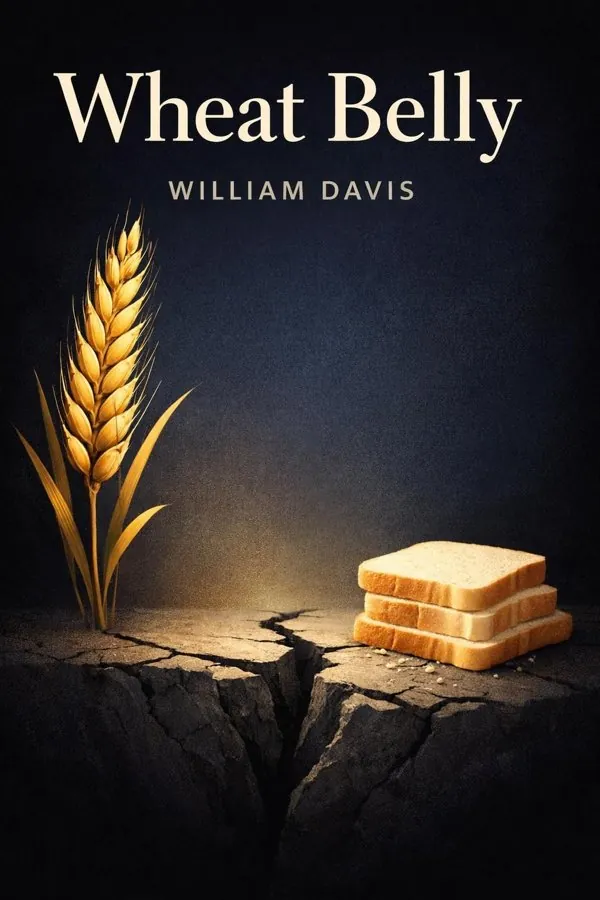
Wheat Belly: Lose the Wheat, Lose the Weight, and Find Your Path Back to Health: Summary & Key Insights
 10 min11 chaptersAudio available
What Is Wheat Belly: Lose the Wheat, Lose the Weight, and Find Your Path Back to Health About?
Wheat Belly: Lose the Wheat, Lose the Weight, and Find Your Path Back to Health by William Davis is a nutrition book spanning 11 pages. Wheat Belly es un libro de salud y nutrición escrito por el cardiólogo William Davis. El autor argumenta que el trigo moderno, modificado genéticamente y procesado, es responsable de una amplia gama de problemas de salud, incluyendo obesidad, diabetes y enfermedades cardíacas. Davis propone eliminar el trigo de la dieta para mejorar la salud metabólica, perder peso y reducir la inflamación.
This FizzRead summary covers all 11 key chapters of Wheat Belly: Lose the Wheat, Lose the Weight, and Find Your Path Back to Health in approximately 10 minutes, distilling the most important ideas, arguments, and takeaways from William Davis's work. Also available as an audio summary and Key Quotes Podcast.
Wheat Belly: Lose the Wheat, Lose the Weight, and Find Your Path Back to Health
Wheat Belly es un libro de salud y nutrición escrito por el cardiólogo William Davis. El autor argumenta que el trigo moderno, modificado genéticamente y procesado, es responsable de una amplia gama de problemas de salud, incluyendo obesidad, diabetes y enfermedades cardíacas. Davis propone eliminar el trigo de la dieta para mejorar la salud metabólica, perder peso y reducir la inflamación.
Who Should Read Wheat Belly: Lose the Wheat, Lose the Weight, and Find Your Path Back to Health?
This book is perfect for anyone interested in nutrition and looking to gain actionable insights in a short read. Whether you're a student, professional, or lifelong learner, the key ideas from Wheat Belly: Lose the Wheat, Lose the Weight, and Find Your Path Back to Health by William Davis will help you think differently.
- ✓Readers who enjoy nutrition and want practical takeaways
- ✓Professionals looking to apply new ideas to their work and life
- ✓Anyone who wants the core insights of Wheat Belly: Lose the Wheat, Lose the Weight, and Find Your Path Back to Health in just 10 minutes
Want the full summary?
Get instant access to this book summary and 100K+ more with Fizz Moment.
Get Free SummaryAvailable on App Store • Free to download
Key Chapters
The wheat your grandparents ate was not the wheat you eat today. Ancient strains like einkorn and emmer nourished humankind for thousands of years with modest yields and slow growth. Over the twentieth century, however, agricultural science transformed wheat into a high-yield dwarf variety through aggressive hybridization and genetic manipulation. These changes were made with admirable intentions—to solve hunger and increase crop output—but they drastically altered the plant’s biochemistry.
The result was a form of wheat whose proteins, particularly gluten, differ in structure and reactivity. Modern wheat contains novel gliadin sequences unseen in ancient strains. These proteins trigger inflammatory and immune responses and act upon the brain in ways that drive appetite and cravings. In my clinical experience, when patients removed wheat, many reported not only slimmer waistlines but clearer minds and calmer moods. This is the legacy of wheat’s evolution: what began as sustenance has become a stimulus for disease.
Understanding this transformation helps us reframe wheat not as a benevolent staple but as an industrial product, optimized for yield at the expense of human physiology. When we eat modern wheat, we are consuming something that our bodies no longer recognize as food in the natural sense—it is, chemically speaking, a hybrid organism designed for profit, not health.
Imagine consuming a slice of whole-wheat bread and believing it to be a 'healthy carbohydrate.' Yet, measured in terms of glycemic index—the rate at which food raises blood sugar—modern whole wheat spikes glucose levels faster than table sugar. This effect is due largely to the unique composition of its starch, known as amylopectin A, which is rapidly digested by intestinal enzymes. In a matter of minutes, blood sugar surges, insulin follows, and the metabolic cascade begins.
As a cardiologist, I witnessed how these repeated surges erode health over time, leading to insulin resistance, visceral fat accumulation, and the progression toward diabetes. Patients would lament, 'But I only eat whole grains!' not realizing that their daily toast or bagel carried the same metabolic punch as a dessert.
This rapid glycemic response keeps hunger alive; after the insulin rush, a precipitous drop in blood sugar triggers cravings for more. That is how modern wheat sustains a perpetual cycle of appetite. Breaking this cycle—by eliminating wheat—stabilizes blood sugar, calms insulin output, and restores metabolic balance. The first few days may feel like withdrawal from an addictive substance, yet what emerges is freedom from a rollercoaster of glucose highs and lows.
+ 9 more chapters — available in the FizzRead app
All Chapters in Wheat Belly: Lose the Wheat, Lose the Weight, and Find Your Path Back to Health
About the Author
William Davis es un cardiólogo estadounidense y autor de varios libros sobre nutrición y salud. Es conocido por su enfoque crítico hacia el consumo de trigo y carbohidratos refinados, y por promover una dieta baja en carbohidratos centrada en alimentos integrales y naturales.
Get This Summary in Your Preferred Format
Read or listen to the Wheat Belly: Lose the Wheat, Lose the Weight, and Find Your Path Back to Health summary by William Davis anytime, anywhere. FizzRead offers multiple formats so you can learn on your terms — all free.
Available formats: App · Audio · PDF · EPUB — All included free with FizzRead
Download Wheat Belly: Lose the Wheat, Lose the Weight, and Find Your Path Back to Health PDF and EPUB Summary
Key Quotes from Wheat Belly: Lose the Wheat, Lose the Weight, and Find Your Path Back to Health
“The wheat your grandparents ate was not the wheat you eat today.”
“Imagine consuming a slice of whole-wheat bread and believing it to be a 'healthy carbohydrate.”
Frequently Asked Questions about Wheat Belly: Lose the Wheat, Lose the Weight, and Find Your Path Back to Health
Wheat Belly: Lose the Wheat, Lose the Weight, and Find Your Path Back to Health by William Davis is a nutrition book that explores key ideas across 11 chapters. Wheat Belly es un libro de salud y nutrición escrito por el cardiólogo William Davis. El autor argumenta que el trigo moderno, modificado genéticamente y procesado, es responsable de una amplia gama de problemas de salud, incluyendo obesidad, diabetes y enfermedades cardíacas. Davis propone eliminar el trigo de la dieta para mejorar la salud metabólica, perder peso y reducir la inflamación.
You Might Also Like
Eating by the Seasons Cookbook: Seasonal Produce-Focused Recipes
Clare Foster
10 min
From Crook to Cook: Platinum Recipes from Tha Boss Dogg's Kitchen
Snoop Dogg with Ryan Ford
10 min
Juicing for Beginners: The Essential Guide to Juicing Recipes and Juicing for Weight Loss
Rockridge Press
10 min
The Food Therapist: Break Bad Habits, Eat with Intention, and Indulge Without Worry
Shira Lenchewski
10 min
The Mediterranean Diet Meal Plan: A 4-Week Meal Plan for Optimal Health and Weight Loss
Various Contributors
10 min
The Well Plated Cookbook: Simple, Wholesome Recipes for Everyday Meals
Erin Clarke
10 minBrowse by Category
Ready to read Wheat Belly: Lose the Wheat, Lose the Weight, and Find Your Path Back to Health?
Get the full summary and 100K+ more books with Fizz Moment.