
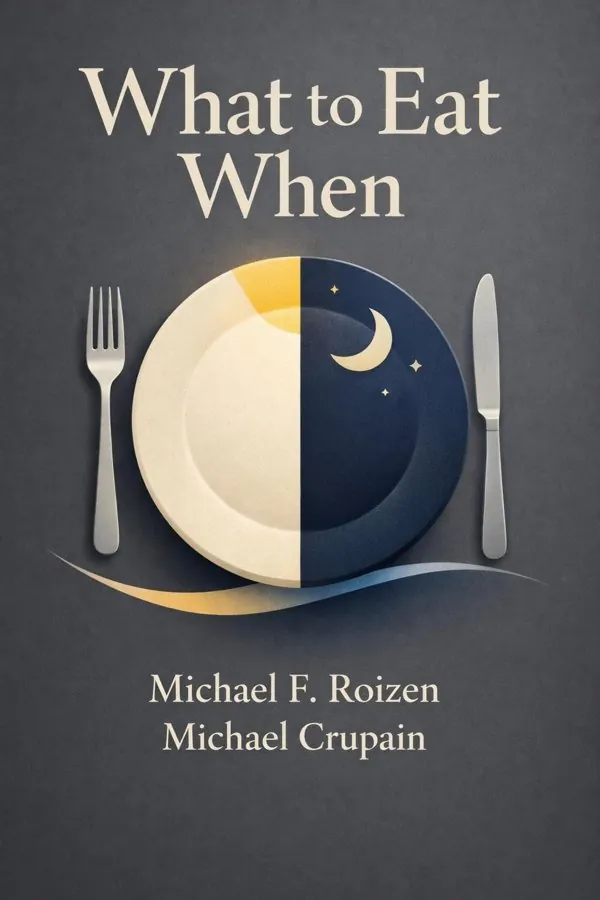
What to Eat When: A Strategic Plan to Improve Your Health and Life Through Food: Summary & Key Insights
by Michael F. Roizen, Michael Crupain
 10 min4 chaptersAudio available
What Is What to Eat When: A Strategic Plan to Improve Your Health and Life Through Food About?
What to Eat When: A Strategic Plan to Improve Your Health and Life Through Food by Michael F. Roizen, Michael Crupain is a nutrition book spanning 4 pages. This book presents a science-based approach to eating that focuses not only on what you eat but also on when you eat. Drawing on research in chronobiology and nutrition, the authors explain how aligning your meals with your body’s natural rhythms can improve energy, weight management, and overall health. The plan offers practical guidance for meal timing, food choices, and lifestyle habits to optimize well-being.
This FizzRead summary covers all 4 key chapters of What to Eat When: A Strategic Plan to Improve Your Health and Life Through Food in approximately 10 minutes, distilling the most important ideas, arguments, and takeaways from Michael F. Roizen, Michael Crupain's work. Also available as an audio summary and Key Quotes Podcast.
What to Eat When: A Strategic Plan to Improve Your Health and Life Through Food
This book presents a science-based approach to eating that focuses not only on what you eat but also on when you eat. Drawing on research in chronobiology and nutrition, the authors explain how aligning your meals with your body’s natural rhythms can improve energy, weight management, and overall health. The plan offers practical guidance for meal timing, food choices, and lifestyle habits to optimize well-being.
Who Should Read What to Eat When: A Strategic Plan to Improve Your Health and Life Through Food?
This book is perfect for anyone interested in nutrition and looking to gain actionable insights in a short read. Whether you're a student, professional, or lifelong learner, the key ideas from What to Eat When: A Strategic Plan to Improve Your Health and Life Through Food by Michael F. Roizen, Michael Crupain will help you think differently.
- ✓Readers who enjoy nutrition and want practical takeaways
- ✓Professionals looking to apply new ideas to their work and life
- ✓Anyone who wants the core insights of What to Eat When: A Strategic Plan to Improve Your Health and Life Through Food in just 10 minutes
Want the full summary?
Get instant access to this book summary and 100K+ more with Fizz Moment.
Get Free SummaryAvailable on App Store • Free to download
Key Chapters
To truly understand why timing matters, we have to begin with the body’s internal clock—the circadian rhythm. Every cell in your body carries a timed pattern of activity linked to the 24-hour day. Your brain’s master clock, located in the suprachiasmatic nucleus, synchronizes all of these microscopic clocks based on light exposure, sleep, and, crucially, food intake. What we discovered from decades of chronobiology is that food is one of the most potent signals to your body’s clock system. When you eat at the 'wrong time'—for instance, late at night—you confuse these internal clocks, disrupting hormone secretion, digestion, and cellular repair processes.
Your metabolism is naturally more active in the morning and early afternoon. Insulin, a key hormone for processing carbohydrates, is most responsive earlier in the day. Your digestive tract, enzymes, and liver all peak in efficiency during daylight hours when the body expects energy intake. In contrast, eating late keeps your digestive organs awake when they should be resting, causing your body to store excess calories as fat and impairing overnight recovery.
Numerous studies have shown that people who consume the majority of their calories earlier in the day have lower risk of obesity, type 2 diabetes, and heart disease. A study on shift workers, who eat primarily at night, revealed higher rates of metabolic syndrome, proving the cost of circadian misalignment. In essence, every time you eat, you tell your body what time it is. The question is: are you reinforcing the natural rhythm or fighting against it?
Now that you understand the rhythm that governs your metabolism, we can put that knowledge into practice. The *What to Eat When* plan follows a simple but transformative principle: eat more food earlier in the day when your body is primed to use it, and consume less food as the day winds down. Ideally, your eating window should begin soon after waking and end at least three hours before bedtime.
Breakfast in this plan isn’t a perfunctory meal—it’s your metabolic ignition. A nutrient-dense breakfast, rich in complex carbohydrates, proteins, and healthy fats, sets up steady glucose levels and sustained energy. Think along the lines of steel-cut oats with berries and nuts, or eggs with vegetables and whole-grain toast. Lunch should remain your heartiest meal, providing the bulk of your calories for the day. By early evening, your caloric intake should wind down, focusing on lighter, easily digestible foods. A small dinner ensures that your body can transition into repair mode rather than stay busy digesting late into the night.
What’s powerful about this plan isn’t only the timing—it’s the mindset it fosters. You begin to experience food as fuel for living rather than consolation for stress. Eating by time teaches you awareness, helping you reconnect with hunger cycles and natural cues that modern schedules have suppressed. You’ll find yourself eating intuitively but within a structure that supports your body’s innate design.
The idea isn’t to be perfect every single day; it’s to realign more often than not. Life brings travel, deadlines, and celebrations, but as you practice the What to Eat When approach, your body learns resilience. When you return to your rhythm—even after disruptions—it rewards you with energy, clarity, and restfulness that strict diets never deliver.
+ 2 more chapters — available in the FizzRead app
All Chapters in What to Eat When: A Strategic Plan to Improve Your Health and Life Through Food
About the Authors
Michael F. Roizen, M.D., is the Chief Wellness Officer at the Cleveland Clinic and a bestselling author known for his work on health and longevity. Michael Crupain, M.D., M.P.H., is a physician and nutrition expert who has served as the Medical Director of the Doctor Oz Show and contributed to public health education.
Get This Summary in Your Preferred Format
Read or listen to the What to Eat When: A Strategic Plan to Improve Your Health and Life Through Food summary by Michael F. Roizen, Michael Crupain anytime, anywhere. FizzRead offers multiple formats so you can learn on your terms — all free.
Available formats: App · Audio · PDF · EPUB — All included free with FizzRead
Download What to Eat When: A Strategic Plan to Improve Your Health and Life Through Food PDF and EPUB Summary
Key Quotes from What to Eat When: A Strategic Plan to Improve Your Health and Life Through Food
“To truly understand why timing matters, we have to begin with the body’s internal clock—the circadian rhythm.”
“Now that you understand the rhythm that governs your metabolism, we can put that knowledge into practice.”
Frequently Asked Questions about What to Eat When: A Strategic Plan to Improve Your Health and Life Through Food
What to Eat When: A Strategic Plan to Improve Your Health and Life Through Food by Michael F. Roizen, Michael Crupain is a nutrition book that explores key ideas across 4 chapters. This book presents a science-based approach to eating that focuses not only on what you eat but also on when you eat. Drawing on research in chronobiology and nutrition, the authors explain how aligning your meals with your body’s natural rhythms can improve energy, weight management, and overall health. The plan offers practical guidance for meal timing, food choices, and lifestyle habits to optimize well-being.
You Might Also Like
Eating by the Seasons Cookbook: Seasonal Produce-Focused Recipes
Clare Foster
10 min
From Crook to Cook: Platinum Recipes from Tha Boss Dogg's Kitchen
Snoop Dogg with Ryan Ford
10 min
Juicing for Beginners: The Essential Guide to Juicing Recipes and Juicing for Weight Loss
Rockridge Press
10 min
The Food Therapist: Break Bad Habits, Eat with Intention, and Indulge Without Worry
Shira Lenchewski
10 min
The Mediterranean Diet Meal Plan: A 4-Week Meal Plan for Optimal Health and Weight Loss
Various Contributors
10 min
The Well Plated Cookbook: Simple, Wholesome Recipes for Everyday Meals
Erin Clarke
10 minBrowse by Category
Ready to read What to Eat When: A Strategic Plan to Improve Your Health and Life Through Food?
Get the full summary and 100K+ more books with Fizz Moment.