
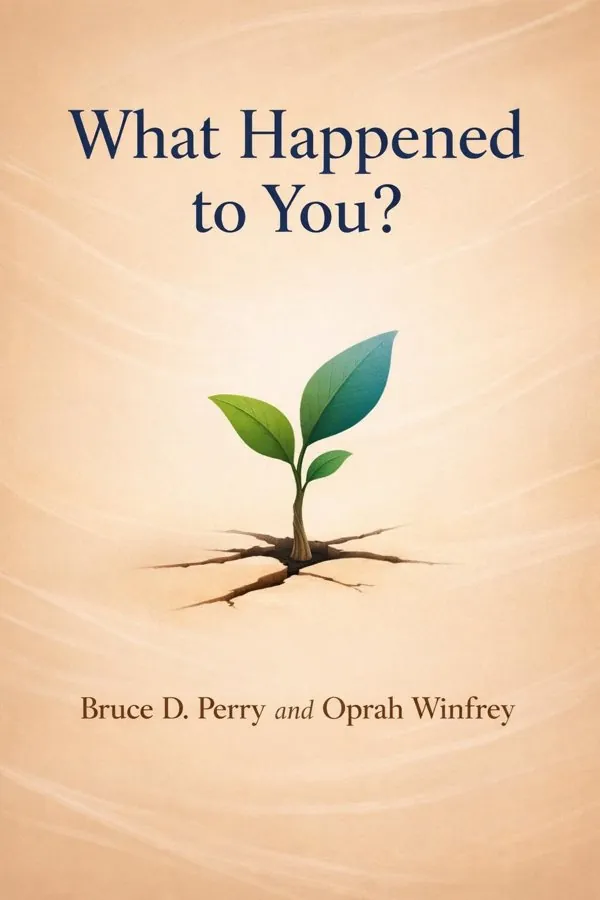
What Happened to You?: Conversations on Trauma, Resilience, and Healing: Summary & Key Insights
by Bruce D. Perry, Oprah Winfrey
 10 min9 chaptersAudio available
Key Takeaways from What Happened to You?: Conversations on Trauma, Resilience, and Healing
One of the book’s most powerful insights is that the brain is not simply born finished; it is built over time through experience.
Stress is not always harmful; in fact, the right amount of challenge helps people grow.
Human beings learn who they are in relationship with other people.
Healing does not happen in isolation because trauma itself often occurs in isolation, disconnection, or harmful relationships.
A behavior that looks irrational in the present often made perfect sense in the past.
What Is What Happened to You?: Conversations on Trauma, Resilience, and Healing About?
What Happened to You?: Conversations on Trauma, Resilience, and Healing by Bruce D. Perry and Oprah Winfrey is a mental_health book spanning 11 pages. What if the most important question we could ask about difficult behavior, emotional pain, or self-sabotage is not “What’s wrong with you?” but “What happened to you?” In this compassionate and eye-opening book, psychiatrist and neuroscientist Bruce D. Perry joins Oprah Winfrey in a series of deeply human conversations about trauma, brain development, resilience, and healing. Together, they show how childhood experiences—especially repeated stress, neglect, unpredictability, and relational wounds—shape the nervous system and influence how people think, feel, react, and connect throughout life. The book matters because it replaces blame with understanding. Rather than treating trauma as a private weakness or moral failure, Perry and Winfrey explain it as an adaptive response to lived experience. Perry brings decades of clinical expertise working with traumatized children, families, and communities, while Winfrey adds candor, empathy, and personal reflection drawn from her own history and public advocacy. The result is both scientifically grounded and emotionally accessible. What Happened to You? offers a powerful framework for anyone seeking to understand themselves, support others, or create more compassionate homes, schools, workplaces, and communities.
This FizzRead summary covers all 9 key chapters of What Happened to You?: Conversations on Trauma, Resilience, and Healing in approximately 10 minutes, distilling the most important ideas, arguments, and takeaways from Bruce D. Perry and Oprah Winfrey's work. Also available as an audio summary and Key Quotes Podcast.
What Happened to You?: Conversations on Trauma, Resilience, and Healing
What if the most important question we could ask about difficult behavior, emotional pain, or self-sabotage is not “What’s wrong with you?” but “What happened to you?” In this compassionate and eye-opening book, psychiatrist and neuroscientist Bruce D. Perry joins Oprah Winfrey in a series of deeply human conversations about trauma, brain development, resilience, and healing. Together, they show how childhood experiences—especially repeated stress, neglect, unpredictability, and relational wounds—shape the nervous system and influence how people think, feel, react, and connect throughout life. The book matters because it replaces blame with understanding. Rather than treating trauma as a private weakness or moral failure, Perry and Winfrey explain it as an adaptive response to lived experience. Perry brings decades of clinical expertise working with traumatized children, families, and communities, while Winfrey adds candor, empathy, and personal reflection drawn from her own history and public advocacy. The result is both scientifically grounded and emotionally accessible. What Happened to You? offers a powerful framework for anyone seeking to understand themselves, support others, or create more compassionate homes, schools, workplaces, and communities.
Who Should Read What Happened to You?: Conversations on Trauma, Resilience, and Healing?
This book is perfect for anyone interested in mental_health and looking to gain actionable insights in a short read. Whether you're a student, professional, or lifelong learner, the key ideas from What Happened to You?: Conversations on Trauma, Resilience, and Healing by Bruce D. Perry and Oprah Winfrey will help you think differently.
- ✓Readers who enjoy mental_health and want practical takeaways
- ✓Professionals looking to apply new ideas to their work and life
- ✓Anyone who wants the core insights of What Happened to You?: Conversations on Trauma, Resilience, and Healing in just 10 minutes
Want the full summary?
Get instant access to this book summary and 100K+ more with Fizz Moment.
Get Free SummaryAvailable on App Store • Free to download
Key Chapters
One of the book’s most powerful insights is that the brain is not simply born finished; it is built over time through experience. Bruce Perry explains that brain development happens in a sequence, from the lower regions that regulate basic survival functions to the higher regions involved in reasoning, planning, empathy, and self-control. This means early experiences do not just create memories—they literally help organize the systems that shape how we respond to the world.
If a child grows up in a predictable, loving, and regulated environment, the brain learns safety. If a child grows up in chaos, neglect, or fear, the brain adapts to survive those conditions. That adaptation may look like hypervigilance, impulsivity, emotional shutdown, or difficulty trusting others. These responses are not signs of bad character. They are often the nervous system doing what it learned to do.
This idea changes how we interpret behavior. A child who cannot sit still in class may not be defiant; they may have a sensitized stress response. An adult who overreacts in relationships may not be irrational; they may be carrying old patterns laid down long before they had language for them.
In practice, this means healing must go beyond insight alone. People often understand their problems intellectually but still feel trapped in automatic reactions. That is because the lower parts of the brain need repeated, regulating experiences—not just explanations. Parents, teachers, partners, and leaders can help by creating consistency, calm, routine, and emotional safety.
Actionable takeaway: When you notice a difficult reaction in yourself or someone else, pause and ask not “Why are they like this?” but “What experiences may have shaped this response?”
Stress is not always harmful; in fact, the right amount of challenge helps people grow. The real issue, Perry argues, is the pattern, timing, and intensity of stress. Brief, predictable, and buffered stress—such as trying something new with support—can build resilience. But chronic, unpredictable, or overwhelming stress, especially in childhood, can disrupt the development of the brain’s regulatory systems.
When children live in environments marked by violence, instability, addiction, emotional neglect, or constant fear, their stress response can become overactive. They may stay in a state of readiness, scanning for danger even when no threat is present. Over time, this affects sleep, attention, learning, emotional regulation, and physical health. The body keeps the score not as a slogan, but as a biological reality.
This framework helps explain why some people struggle in ways that seem confusing from the outside. A child may be labeled disruptive, lazy, or oppositional when they are actually flooded by stress. An adult may blame themselves for anxiety, shutdown, or anger without realizing those responses once served a protective purpose.
The practical application is to look at environments, not just individuals. Teachers can reduce chaos and increase predictability. Parents can create routines around meals, sleep, and transitions. Workplaces can recognize that constant urgency and instability erode well-being. Even small moments of reliability can begin to calm a sensitized system.
Actionable takeaway: Identify one source of chronic unpredictability in your daily life and replace it with a stabilizing routine, such as a regular bedtime, morning ritual, or check-in with a trusted person.
Human beings learn who they are in relationship with other people. One of the book’s central messages is that attachment—the felt experience of being seen, soothed, protected, and valued—is foundational to healthy development. When caregivers respond consistently and sensitively, children build an internal sense of safety. From that safety comes curiosity, trust, emotional balance, and the capacity to form healthy relationships later in life.
When attachment is inconsistent, frightening, or absent, the child’s world becomes harder to predict. A caregiver may be physically present but emotionally unavailable. Or a caregiver may alternate between affection and threat. In those conditions, children often develop adaptive strategies: clinginess, emotional distance, people-pleasing, aggression, or self-reliance taken to an extreme. These strategies may once have been necessary, but later they can interfere with intimacy and stability.
Oprah’s reflections make this idea especially vivid. The book shows that many adult struggles—fear of abandonment, inability to relax, repeated relationship patterns—often grow from early relational experiences rather than personal failure. This perspective is not about blaming parents simplistically. Many caregivers were themselves shaped by trauma and had little support.
Practically, healing attachment wounds often begins in present-day relationships. A therapist, mentor, friend, partner, teacher, or spiritual community can offer repeated experiences of trust and repair. The key is not one dramatic breakthrough, but many small moments of reliability over time.
Actionable takeaway: Strengthen one relationship that feels safe by practicing consistency—show up when you say you will, communicate clearly, and notice how repeated reliability creates emotional security.
Healing does not happen in isolation because trauma itself often occurs in isolation, disconnection, or harmful relationships. Perry emphasizes that connection is not merely comforting; it is biologically regulating. Safe human contact can help calm the stress response, restore a sense of belonging, and create the conditions in which higher reasoning and reflection become possible.
This matters because many traumatized people are told, directly or indirectly, to simply think differently, control themselves, or “get over it.” But when the nervous system is dysregulated, logic alone cannot do the job. Before people can reflect, they often need to feel safe. Before they can learn, they need regulation. Before they can trust themselves, they often need to experience trust with others.
This idea applies in families, schools, healthcare, and leadership. A teacher who greets a struggling student warmly each morning may be doing more than being kind—they may be helping that student regulate enough to learn. A manager who creates psychological safety may reduce threat responses that otherwise show up as defensiveness or withdrawal. A friend who listens without judgment may interrupt a cycle of shame.
Connection does not require perfection. In fact, healthy relationships include misunderstandings and repair. What matters is the repeated experience of being met with presence, curiosity, and steadiness. For people with trauma histories, that can feel unfamiliar at first. Safety may even feel uncomfortable. But over time, supportive connection helps rewrite expectations about relationships.
Actionable takeaway: Offer one moment of regulating connection today—a calm conversation, a validating text, a few minutes of undistracted listening, or simple companionship without trying to fix anything.
A behavior that looks irrational in the present often made perfect sense in the past. This is one of the most liberating ideas in the book. Perry and Winfrey invite readers to see patterns such as anger, dissociation, people-pleasing, perfectionism, avoidance, numbness, or hyper-independence as adaptations to earlier experiences. The goal is not to excuse harmful behavior, but to understand its roots.
For example, a child who learned that adults were unpredictable may become controlling because control feels safer than uncertainty. Someone raised in emotional chaos may become numb because feeling everything all the time was unbearable. A person who had to read other people’s moods to stay safe may grow into an adult who is highly sensitive to tone and tension. These patterns can persist long after the original threat is gone.
This reframing is powerful because shame keeps people stuck. When individuals believe their coping patterns prove they are broken, they often either hide them or fight them harshly. Understanding behavior as adaptation creates room for compassion and change. Once a pattern is recognized as protective, a person can ask whether it still serves them and what new skills might replace it.
In practical terms, this means becoming curious about triggers and routines. Instead of condemning yourself for overreacting, you can ask: What did my body perceive? What old expectation was activated? What need was I trying to protect?
Actionable takeaway: Choose one recurring pattern you dislike and write down how it may once have helped you survive, then identify one healthier response you can practice the next time that trigger appears.
When people are overwhelmed, they do not need a lecture first—they need regulation. Perry repeatedly explains that the brain works from the bottom up. If the lower, survival-oriented parts of the brain are activated, the higher thinking parts become less accessible. This is why traumatized children and adults may struggle to respond to logic when they are dysregulated. They are not refusing to think clearly; their nervous system is in a different state.
The book highlights the importance of rhythm, repetition, movement, music, breathing, and patterned sensory experiences in helping the brain regulate. This can include walking, drumming, rocking, dancing, humming, exercise, predictable routines, and other repetitive activities that calm the body. These tools are especially useful because trauma is stored not just in thoughts, but in bodily states.
This idea has practical implications everywhere. Parents can help a distressed child settle with calm voice tone, predictable touch if welcomed, or a familiar routine rather than immediate correction. Teachers can build transitions, movement breaks, and structured rhythms into the day. Adults can learn to recognize when they are too activated for productive conversation and regulate first.
Importantly, regulation is not the same as suppression. The aim is not to shut feelings down, but to create enough steadiness to process them safely. Once the nervous system is calmer, insight, problem-solving, and connection become much more available.
Actionable takeaway: Build a personal regulation menu of three reliable tools—such as walking, slow breathing, music, stretching, or a grounding routine—and use them before difficult conversations or after triggers.
Resilience is often misunderstood as toughness or the ability to endure pain alone. Perry offers a more humane definition: resilience grows when people experience enough supportive, stabilizing relationships and opportunities for recovery that stress does not overwhelm their development. In other words, resilience is not something people simply have or lack. It is built through experience.
This is hopeful because it means trauma is not destiny. Difficult beginnings matter deeply, but they do not write the entire future. A child who has one reliable, attuned adult can fare much better than a child with none. A teenager who finds belonging in a team, school, mentor relationship, or community can begin to heal. An adult can still build resilience through therapy, friendship, structure, self-understanding, and restorative practices.
The book avoids simplistic positivity. Healing is not quick, linear, or fair. Some wounds leave lasting sensitivities. Yet the nervous system remains capable of change. Small repeated experiences of safety, competence, and connection can gradually widen a person’s capacity.
This perspective also changes how we support others. Instead of demanding instant transformation, we can focus on creating conditions where growth becomes possible. Encouragement matters, but so do sleep, routine, movement, nourishment, stable relationships, and environments that reduce threat.
Actionable takeaway: If you want to build resilience, stop asking how to become tougher overnight and start asking what steady sources of support, structure, and restoration you can add consistently each week.
The question “What happened to you?” is not just a clever phrase; it is an ethical shift. It moves us from judgment to curiosity, from blame to context, and from shame to compassion. The book argues that many systems—families, schools, medicine, justice, and workplaces—too often respond to trauma-shaped behavior with punishment or dismissal. Empathy opens a different path.
This does not mean ignoring accountability. People are still responsible for their actions. But accountability works best when it is paired with understanding. A traumatized person who is shamed tends to become more defended, more dysregulated, or more hopeless. A person who feels understood is more likely to engage, reflect, and change.
Empathy is especially important because trauma survivors often internalize harmful beliefs: I’m too much. I’m weak. I’m broken. I’m unlovable. Compassionate understanding helps challenge those narratives. It allows people to recognize that many of their struggles are linked to what they endured, not proof of defectiveness.
In everyday life, empathy can look simple. Ask curious questions instead of making assumptions. Notice your tone. Separate the person from the behavior. In organizations, trauma-informed practice means designing responses that reduce re-traumatization and increase dignity, predictability, and support.
Actionable takeaway: The next time someone reacts in a difficult way, replace your first judgment with one compassionate question—either spoken or internal—such as “What might this person be carrying right now?”
Trauma fragments experience. People often carry intense sensations, emotions, or reactions without a coherent narrative that explains them. One of the book’s quieter but profound lessons is that healing involves making sense of what happened without being defined by it. Storytelling—whether through conversation, therapy, journaling, art, or reflection—can help integrate painful experiences into a larger understanding of self.
Oprah’s role is crucial here. Her willingness to connect ideas from neuroscience to lived experience gives the book emotional depth. She demonstrates that telling the truth about one’s past can be both painful and liberating. Naming experiences that were once hidden reduces confusion and shame. It allows people to see patterns, grieve losses, and reclaim dignity.
But the book also suggests that timing matters. People should not be pushed to tell their story before they have enough safety and regulation. Healing is not about repeatedly reliving pain. It is about gradually building the capacity to remember, feel, and understand without becoming overwhelmed.
Meaning-making also helps people move beyond victimhood without denying harm. A person can acknowledge what happened and still choose how to live now. Their past becomes part of their story, not the whole story.
Actionable takeaway: Set aside ten minutes to write about one recurring emotional pattern in your life and connect it to an earlier experience, not to judge yourself, but to create a more compassionate and coherent personal narrative.
All Chapters in What Happened to You?: Conversations on Trauma, Resilience, and Healing
About the Authors
Bruce D. Perry is an American psychiatrist, neuroscientist, and internationally recognized expert on childhood trauma, brain development, and mental health. He has worked extensively with traumatized children, families, and communities, and is known for translating neuroscience into practical frameworks for healing and care. Oprah Winfrey is a renowned media executive, interviewer, actress, producer, and philanthropist whose work has shaped public conversations around personal growth, adversity, and emotional well-being. Through her storytelling and advocacy, she has helped bring mental health and trauma awareness to a broad global audience. Together, Perry and Winfrey combine scientific insight and lived empathy, making complex ideas about trauma, resilience, and recovery understandable, compassionate, and deeply relevant to everyday life.
Get This Summary in Your Preferred Format
Read or listen to the What Happened to You?: Conversations on Trauma, Resilience, and Healing summary by Bruce D. Perry and Oprah Winfrey anytime, anywhere. FizzRead offers multiple formats so you can learn on your terms — all free.
Available formats: App · Audio · PDF · EPUB — All included free with FizzRead
Download What Happened to You?: Conversations on Trauma, Resilience, and Healing PDF and EPUB Summary
Key Quotes from What Happened to You?: Conversations on Trauma, Resilience, and Healing
“One of the book’s most powerful insights is that the brain is not simply born finished; it is built over time through experience.”
“Stress is not always harmful; in fact, the right amount of challenge helps people grow.”
“Human beings learn who they are in relationship with other people.”
“Healing does not happen in isolation because trauma itself often occurs in isolation, disconnection, or harmful relationships.”
“A behavior that looks irrational in the present often made perfect sense in the past.”
Frequently Asked Questions about What Happened to You?: Conversations on Trauma, Resilience, and Healing
What Happened to You?: Conversations on Trauma, Resilience, and Healing by Bruce D. Perry and Oprah Winfrey is a mental_health book that explores key ideas across 9 chapters. What if the most important question we could ask about difficult behavior, emotional pain, or self-sabotage is not “What’s wrong with you?” but “What happened to you?” In this compassionate and eye-opening book, psychiatrist and neuroscientist Bruce D. Perry joins Oprah Winfrey in a series of deeply human conversations about trauma, brain development, resilience, and healing. Together, they show how childhood experiences—especially repeated stress, neglect, unpredictability, and relational wounds—shape the nervous system and influence how people think, feel, react, and connect throughout life. The book matters because it replaces blame with understanding. Rather than treating trauma as a private weakness or moral failure, Perry and Winfrey explain it as an adaptive response to lived experience. Perry brings decades of clinical expertise working with traumatized children, families, and communities, while Winfrey adds candor, empathy, and personal reflection drawn from her own history and public advocacy. The result is both scientifically grounded and emotionally accessible. What Happened to You? offers a powerful framework for anyone seeking to understand themselves, support others, or create more compassionate homes, schools, workplaces, and communities.
You Might Also Like
Big Feelings: How to Be Okay When Things Are Not Okay
Liz Fosslien, Mollie West Duffy
10 min
Creative Arts Therapies Handbook: Art, Music and Dance Therapy Practices for Wellbeing
Susan I. Buchalter
10 min
Emotional First Aid: Healing Rejection, Guilt, Failure, and Other Everyday Hurts
Guy Winch
10 min
Lost Connections: Why You're Depressed and How to Find Hope
Johann Hari
10 min
No Time to Panic: How to Stop Worrying and Embrace Life
Matt Gutman
10 min
Overcoming Mobbing: A Recovery Guide for Workplace Aggression and Bullying
Maureen Duffy, Len Sperry
10 minBrowse by Category
Ready to read What Happened to You?: Conversations on Trauma, Resilience, and Healing?
Get the full summary and 100K+ more books with Fizz Moment.