
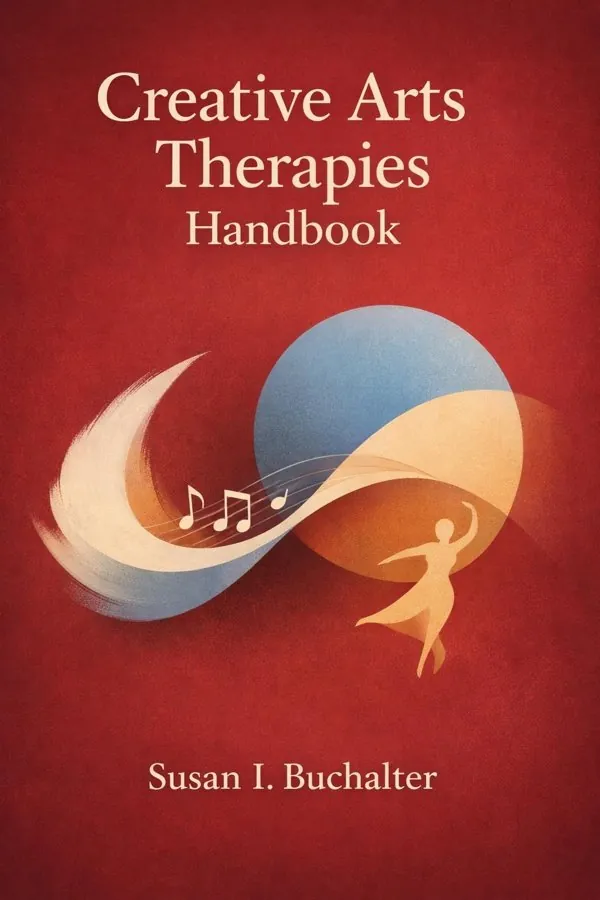
Creative Arts Therapies Handbook: Art, Music and Dance Therapy Practices for Wellbeing: Summary & Key Insights
 10 min9 chaptersAudio available
Key Takeaways from Creative Arts Therapies Handbook: Art, Music and Dance Therapy Practices for Wellbeing
Some experiences resist direct explanation, and that is precisely where creative arts therapies become powerful.
What we can see, we can begin to understand.
Music can reach the nervous system before the intellect catches up.
The body often tells the truth before the mind is ready to.
A creative exercise is not automatically therapeutic; it becomes therapeutic through relationship, intention, and reflection.
What Is Creative Arts Therapies Handbook: Art, Music and Dance Therapy Practices for Wellbeing About?
Creative Arts Therapies Handbook: Art, Music and Dance Therapy Practices for Wellbeing by Susan I. Buchalter is a mental_health book. Healing does not always begin with words. In Creative Arts Therapies Handbook: Art, Music and Dance Therapy Practices for Wellbeing, Susan I. Buchalter shows how image-making, rhythm, movement, and embodied expression can open doors that traditional conversation sometimes cannot. The book introduces readers to the practical and emotional power of creative arts therapies, explaining how art therapy, music therapy, and dance or movement therapy can support mental health, resilience, self-awareness, and recovery across different ages and settings. Rather than treating creativity as a luxury, Buchalter presents it as a vital route to connection, regulation, and healing. What makes this handbook especially valuable is its grounded, accessible approach. It bridges professional knowledge and practical application, helping readers understand both the theory behind expressive therapies and the ways these methods can be used in clinical work, education, caregiving, and personal wellbeing. Buchalter, an experienced creative arts therapist and educator, writes with authority while remaining compassionate and clear. For therapists, students, helping professionals, and curious readers alike, this book offers an inspiring reminder that creative expression can become a language of recovery when ordinary language falls short.
This FizzRead summary covers all 9 key chapters of Creative Arts Therapies Handbook: Art, Music and Dance Therapy Practices for Wellbeing in approximately 10 minutes, distilling the most important ideas, arguments, and takeaways from Susan I. Buchalter's work. Also available as an audio summary and Key Quotes Podcast.
Creative Arts Therapies Handbook: Art, Music and Dance Therapy Practices for Wellbeing
Healing does not always begin with words. In Creative Arts Therapies Handbook: Art, Music and Dance Therapy Practices for Wellbeing, Susan I. Buchalter shows how image-making, rhythm, movement, and embodied expression can open doors that traditional conversation sometimes cannot. The book introduces readers to the practical and emotional power of creative arts therapies, explaining how art therapy, music therapy, and dance or movement therapy can support mental health, resilience, self-awareness, and recovery across different ages and settings. Rather than treating creativity as a luxury, Buchalter presents it as a vital route to connection, regulation, and healing.
What makes this handbook especially valuable is its grounded, accessible approach. It bridges professional knowledge and practical application, helping readers understand both the theory behind expressive therapies and the ways these methods can be used in clinical work, education, caregiving, and personal wellbeing. Buchalter, an experienced creative arts therapist and educator, writes with authority while remaining compassionate and clear. For therapists, students, helping professionals, and curious readers alike, this book offers an inspiring reminder that creative expression can become a language of recovery when ordinary language falls short.
Who Should Read Creative Arts Therapies Handbook: Art, Music and Dance Therapy Practices for Wellbeing?
This book is perfect for anyone interested in mental_health and looking to gain actionable insights in a short read. Whether you're a student, professional, or lifelong learner, the key ideas from Creative Arts Therapies Handbook: Art, Music and Dance Therapy Practices for Wellbeing by Susan I. Buchalter will help you think differently.
- ✓Readers who enjoy mental_health and want practical takeaways
- ✓Professionals looking to apply new ideas to their work and life
- ✓Anyone who wants the core insights of Creative Arts Therapies Handbook: Art, Music and Dance Therapy Practices for Wellbeing in just 10 minutes
Want the full summary?
Get instant access to this book summary and 100K+ more with Fizz Moment.
Get Free SummaryAvailable on App Store • Free to download
Key Chapters
Some experiences resist direct explanation, and that is precisely where creative arts therapies become powerful. A central insight of Susan I. Buchalter’s handbook is that emotional pain, trauma, confusion, and inner conflict are often stored and expressed in ways that do not fit neatly into conversation. Art, music, and movement offer alternative channels for meaning-making, allowing people to externalize feelings, symbolize difficult experiences, and explore their inner world without needing perfect verbal clarity.
The book emphasizes that this is not simply about “being artistic.” Creative arts therapies are structured, intentional practices guided by therapeutic goals. A person who cannot speak easily about grief may paint a storm, select a song that mirrors sorrow, or use slow, heavy movement to embody loss. These forms of expression help transform vague emotional pressure into something observable, shareable, and workable. Once a feeling has shape, rhythm, or motion, it becomes less overwhelming and more available for reflection.
Buchalter also shows that these methods can be especially valuable for children, trauma survivors, medically ill patients, older adults, and anyone who feels blocked by conventional talk therapy. For example, a child may draw family relationships more honestly than they can describe them. A stressed adult may discover through drumming how tension lives in the body. A movement exercise may reveal guardedness, fatigue, or a longing for freedom.
The deeper lesson is that human beings communicate through many systems at once: words, images, sound, gesture, posture, and sensation. Effective healing honors this complexity rather than reducing it.
Actionable takeaway: When emotions feel hard to explain, try expressing them first through drawing, music, or movement, then reflect on what that expression reveals.
What we can see, we can begin to understand. In the handbook’s exploration of art therapy, Buchalter explains how visual creation allows people to externalize internal states. By turning emotions, memories, and conflicts into images, individuals gain distance from what troubles them while also deepening their awareness of it. A drawing, collage, sculpture, or painting can function like a mirror for the psyche, but one that is gentler and often less threatening than direct questioning.
Art therapy works because the process matters as much as the finished image. Choices about color, pressure, space, symbols, and materials can all reveal something meaningful. A tightly controlled drawing may suggest anxiety or perfectionism. Chaotic marks may reflect agitation, fear, or release. Repeated symbols can point to unresolved themes. Yet Buchalter is careful to frame interpretation responsibly: the therapist does not impose simplistic meanings but helps the client discover personal significance through dialogue and reflection.
The book also highlights how art-making can support emotional regulation. The sensory qualities of materials such as clay, paint, pastel, or paper can calm the nervous system, promote focus, and create a safe rhythm of engagement. In practice, art therapy may be used in schools, hospitals, community centers, private practice, or elder care. It can help with grief, stress, trauma, depression, identity exploration, and relational difficulties.
An important practical message is that artistic skill is irrelevant. Therapeutic value does not depend on making something beautiful. It depends on honest engagement. Even simple exercises, such as drawing your current emotional weather or creating a collage of inner strengths, can open surprising insight.
Actionable takeaway: Use a basic art prompt like “draw how you feel today” and focus on what the image communicates, not how good it looks.
Music can reach the nervous system before the intellect catches up. Buchalter presents music therapy as a discipline that uses sound, rhythm, melody, and structured listening or participation to support emotional expression, connection, regulation, and healing. Because music is deeply tied to memory, mood, and physiological response, it can shift a person’s internal state with remarkable speed and depth.
The handbook explains that music therapy is not limited to listening to relaxing songs. It may involve singing, drumming, lyric discussion, improvisation, songwriting, movement to music, or using musical patterns to support communication. In therapeutic settings, music can help people identify emotions, process life events, reduce anxiety, build social bonds, and improve attention or motivation. Someone coping with depression may create a playlist that tracks emotional states across the day. A child with communication difficulties may connect through rhythm before language. A group in recovery may write songs that express hope, accountability, and resilience.
Buchalter also draws attention to the embodied nature of music. Rhythm influences breathing, heart rate, and movement; melody evokes memory and emotion; repetition creates familiarity and safety. This is one reason music therapy can be effective in medical settings, palliative care, dementia care, and trauma-informed practice. A familiar song can restore identity to an older adult with memory loss. Drumming can help discharge tension. Lyric analysis can offer a safer route into discussing painful topics.
Importantly, therapeutic use of music is purposeful. The therapist selects interventions based on the client’s needs, capacities, and goals, not just personal preference.
Actionable takeaway: Create a small “emotional regulation playlist” with songs for calming, energizing, and comforting yourself, then notice how each one changes your body and mood.
The body often tells the truth before the mind is ready to. In discussing dance and movement therapy, Buchalter underscores the idea that emotional life is inseparable from bodily experience. Posture, gesture, pacing, tension, breath, and physical space all communicate psychological states. When therapy includes movement, people can recognize patterns they have been living in physically as well as emotionally.
Dance or movement therapy is not about performance, choreography, or looking graceful. It is about using the body as a medium for awareness, expression, and change. A client who feels trapped may discover they move in small, constricted ways. Someone who is disconnected from anger may notice difficulty pushing, stamping, or taking up space. A person recovering from trauma may gradually rebuild safety through grounding, rhythm, mirroring, and carefully paced movement exploration.
Buchalter presents movement as both diagnostic and transformative. It reveals habits of contraction, avoidance, defensiveness, and collapse, but it also creates opportunities to rehearse new possibilities. Expanding the arms, changing tempo, increasing rootedness, or experimenting with boundaries can shift internal experience. In group settings, movement can foster attunement and connection through shared rhythm, mirroring, and nonverbal communication. In individual work, it can reconnect clients with vitality and agency.
The handbook also suggests that movement-based work is especially useful when people feel numb, dissociated, restless, or over-intellectualized. It returns attention to sensation, timing, and embodied presence. This can be deeply stabilizing.
Actionable takeaway: Take two minutes to notice how you are sitting or standing right now, then intentionally change one physical pattern, such as posture or breathing, and observe what shifts emotionally.
A creative exercise is not automatically therapeutic; it becomes therapeutic through relationship, intention, and reflection. One of Buchalter’s most important contributions is her emphasis on process over product. Whether a client paints, sings, or moves, the healing value comes not from producing an impressive result but from engaging safely, honestly, and meaningfully with the experience.
This principle protects creative arts therapies from being misunderstood as simple recreational activities. Enjoyable creative activities can certainly be beneficial, but therapy involves more. The therapist creates a structured environment, attends to the client’s goals and emotional state, observes patterns, invites reflection, and helps translate expressive experience into psychological insight or behavioral change. A scribble can matter more than a polished painting if it expresses a truth the client has never allowed themselves to reveal.
Buchalter also points out that process includes the client’s choices and resistances. Refusing a material, avoiding a sound, staying motionless, or insisting on control may all be clinically meaningful. The therapist pays attention to pacing, consent, symbolism, and safety. This is especially important in trauma-informed work, where pushing expression too quickly can be overwhelming. A carefully held process allows clients to experiment with expression without feeling exposed or judged.
In practical terms, process-oriented work asks questions such as: What was it like to make that image? What did you notice in your body while listening? How did it feel to move closer or farther away? These questions deepen awareness and connect expression to lived experience.
Actionable takeaway: If you use creative self-expression for wellbeing, spend a few minutes afterward journaling about the experience itself, not just the outcome you created.
People do not express deeply unless they feel sufficiently safe. Throughout the handbook, Buchalter makes clear that creative arts therapies depend on a therapeutic container built from trust, empathy, boundaries, and emotional attunement. Because expressive work can bypass usual defenses, it can evoke strong feelings quickly. Safety is therefore not optional; it is the foundation that makes exploration possible.
This includes physical safety, emotional safety, cultural sensitivity, and respect for personal pace. A therapist must consider the setting, materials, level of stimulation, and the client’s history. For someone with trauma, an open-ended movement invitation may feel destabilizing, while a simple grounding exercise may be more appropriate. For a client who fears judgment, emphasizing that there is no right or wrong way to create can reduce performance anxiety. For group work, clear agreements about confidentiality and respectful witnessing are essential.
Buchalter also suggests that safety is created through predictability and choice. Beginning and ending rituals, structured prompts, and collaborative goal-setting help clients know what to expect. Allowing clients to choose whether to share their artwork, engage in music-making, or participate in movement preserves agency. This matters because expressive therapies can touch vulnerable material, and people need control over how much they reveal.
In application, a safe container might involve starting a session with breathing, offering multiple material options, checking in before interpreting imagery, and ending with reflection or grounding. These practices help expression become integrating rather than overwhelming.
Actionable takeaway: When using creative exercises for yourself or others, start with clear limits, simple choices, and a closing ritual so the experience feels contained and supportive.
Healing is not only about reducing symptoms; it is also about restoring connection, flexibility, and hope. Buchalter shows that creative arts therapies strengthen resilience by helping people access inner resources, communicate more authentically, and experience themselves as capable of change. Through repeated acts of creation, clients move from passivity to participation. They become makers rather than merely sufferers.
This has powerful implications in both individual and group settings. In individual therapy, creating something can help clients recognize strength, agency, and self-compassion. A collage of coping tools, a song about survival, or a movement sequence that expresses grounding can become a tangible reminder of resilience. In groups, shared creative activity reduces isolation and builds mutual recognition. People often discover that others understand emotions they had assumed were theirs alone.
Buchalter highlights that expressive therapies can support resilience across the lifespan. Children build emotional literacy through play and image. Adolescents explore identity through music and symbolic expression. Adults process stress and transitions through artistic and embodied work. Older adults maintain memory, connection, and vitality through song, movement, and reminiscence-based art. In each case, the arts help people tolerate complexity and imagine alternatives.
Another key point is that resilience is practiced, not simply possessed. Creative activities invite experimentation: what if I draw the problem and then draw a response? What if I improvise a different ending? What if my body can feel strong for one minute today? These small acts expand psychological flexibility.
Actionable takeaway: Create one simple “resilience artifact,” such as a drawing, playlist, or movement ritual, that you can return to when stress rises.
No single therapeutic language works for everyone. One of the strengths of Buchalter’s handbook is its recognition that art, music, and dance or movement therapy each offer distinct pathways into healing. Some people think visually, some respond emotionally to sound, and others understand themselves best through the body. Effective practice involves matching the modality to the person, context, and therapeutic goal.
Art therapy can be especially useful for externalizing complex feelings, exploring symbolism, and creating reflective distance. Music therapy often excels at mood regulation, memory activation, social bonding, and emotional resonance. Dance or movement therapy is uniquely strong for embodiment, trauma recovery, relational attunement, and reconnecting sensation with emotion. Buchalter’s framework invites practitioners and readers to appreciate these differences while also seeing how the modalities can complement one another.
For example, someone processing grief might begin by listening to music that accesses feeling, then create a visual piece representing the loss, and finally use gentle movement to release held tension. A child with attention difficulties might engage more effectively through rhythmic musical structure than through verbal discussion. A person who feels dissociated may benefit from grounded movement before attempting imagery-based work.
This multimodal view broadens the therapeutic imagination. It reminds readers that healing can be layered and adaptive. Rather than forcing a client into one form of expression, the therapist remains responsive to what opens rather than shuts down communication.
Actionable takeaway: If one method of self-expression feels flat, experiment with another modality such as sound, drawing, or movement and notice which one gives you the clearest access to feeling.
Mental health is sustained not only by symptom management but by aliveness. A final major idea in Buchalter’s handbook is that wellbeing grows when people can express themselves, create meaning, and engage playfully with experience. Creative arts therapies are valuable not just in crisis or pathology but in everyday wellbeing, prevention, growth, and self-discovery. They help people cultivate presence, imagination, emotional honesty, and renewed engagement with life.
Buchalter frames creativity as a human capacity rather than a professional identity. We are all meaning-makers, and creative processes help us explore identity, relationships, life transitions, and purpose. This is why expressive approaches can be integrated into schools, wellness programs, healthcare, community work, caregiving, and personal reflection. A brief drawing exercise can clarify stress. Singing can restore energy and connection. Movement can interrupt stagnation and reawaken vitality.
Play is especially important here. In many adults, playfulness has been narrowed by pressure, productivity, or self-consciousness. Creative therapies reopen experimentation without demanding perfection. This can reduce shame and widen emotional range. Someone who believes they are “not creative” may discover that simple, structured expressive tasks help them feel more connected and less burdened. In this sense, the arts do not merely decorate wellbeing; they actively produce it.
The broader message is hopeful: healing and growth can emerge through curiosity, sensory engagement, and imaginative action. Even small creative rituals can support a more balanced inner life.
Actionable takeaway: Add one short creative practice to your weekly routine, such as ten minutes of sketching, singing, or free movement, and treat it as mental hygiene rather than a luxury.
All Chapters in Creative Arts Therapies Handbook: Art, Music and Dance Therapy Practices for Wellbeing
About the Author
Susan I. Buchalter is a creative arts therapist, writer, and educator known for her work in expressive therapies and mental health practice. Her professional focus centers on the healing uses of art, music, and movement, especially as tools for emotional expression, self-awareness, and psychological wellbeing. Buchalter has written in a way that makes creative arts therapies approachable without oversimplifying their clinical depth, helping both professionals and general readers understand how nonverbal and sensory-based methods can support healing. Her work reflects experience in therapeutic and educational settings, along with a strong commitment to holistic care. Through her books, she has contributed to wider awareness of expressive therapies as meaningful, structured, and compassionate approaches to helping people process experience and build resilience.
Get This Summary in Your Preferred Format
Read or listen to the Creative Arts Therapies Handbook: Art, Music and Dance Therapy Practices for Wellbeing summary by Susan I. Buchalter anytime, anywhere. FizzRead offers multiple formats so you can learn on your terms — all free.
Available formats: App · Audio · PDF · EPUB — All included free with FizzRead
Download Creative Arts Therapies Handbook: Art, Music and Dance Therapy Practices for Wellbeing PDF and EPUB Summary
Key Quotes from Creative Arts Therapies Handbook: Art, Music and Dance Therapy Practices for Wellbeing
“Some experiences resist direct explanation, and that is precisely where creative arts therapies become powerful.”
“What we can see, we can begin to understand.”
“Music can reach the nervous system before the intellect catches up.”
“The body often tells the truth before the mind is ready to.”
“A creative exercise is not automatically therapeutic; it becomes therapeutic through relationship, intention, and reflection.”
Frequently Asked Questions about Creative Arts Therapies Handbook: Art, Music and Dance Therapy Practices for Wellbeing
Creative Arts Therapies Handbook: Art, Music and Dance Therapy Practices for Wellbeing by Susan I. Buchalter is a mental_health book that explores key ideas across 9 chapters. Healing does not always begin with words. In Creative Arts Therapies Handbook: Art, Music and Dance Therapy Practices for Wellbeing, Susan I. Buchalter shows how image-making, rhythm, movement, and embodied expression can open doors that traditional conversation sometimes cannot. The book introduces readers to the practical and emotional power of creative arts therapies, explaining how art therapy, music therapy, and dance or movement therapy can support mental health, resilience, self-awareness, and recovery across different ages and settings. Rather than treating creativity as a luxury, Buchalter presents it as a vital route to connection, regulation, and healing. What makes this handbook especially valuable is its grounded, accessible approach. It bridges professional knowledge and practical application, helping readers understand both the theory behind expressive therapies and the ways these methods can be used in clinical work, education, caregiving, and personal wellbeing. Buchalter, an experienced creative arts therapist and educator, writes with authority while remaining compassionate and clear. For therapists, students, helping professionals, and curious readers alike, this book offers an inspiring reminder that creative expression can become a language of recovery when ordinary language falls short.
You Might Also Like
Big Feelings: How to Be Okay When Things Are Not Okay
Liz Fosslien, Mollie West Duffy
10 min
Emotional First Aid: Healing Rejection, Guilt, Failure, and Other Everyday Hurts
Guy Winch
10 min
Lost Connections: Why You're Depressed and How to Find Hope
Johann Hari
10 min
No Time to Panic: How to Stop Worrying and Embrace Life
Matt Gutman
10 min
Overcoming Mobbing: A Recovery Guide for Workplace Aggression and Bullying
Maureen Duffy, Len Sperry
10 min
Sexual Detox: A Guide for Guys Who Are Sick of Porn
Tim Challies
10 minBrowse by Category
Ready to read Creative Arts Therapies Handbook: Art, Music and Dance Therapy Practices for Wellbeing?
Get the full summary and 100K+ more books with Fizz Moment.