
We Should All Be Feminists: Summary & Key Insights
 10 min8 chaptersAudio available
What Is We Should All Be Feminists About?
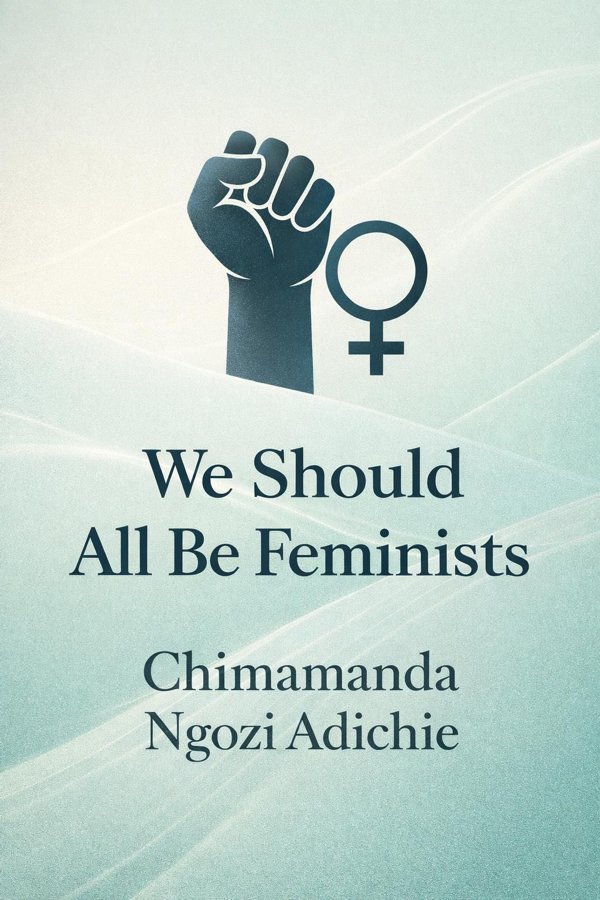
We Should All Be Feminists by Chimamanda Ngozi Adichie is a sociology book spanning 8 pages. Adapted from her acclaimed TEDx talk, this essay by Nigerian author Chimamanda Ngozi Adichie explores the meaning of feminism in the 21st century. Drawing on personal experiences and cultural observations, Adichie argues for gender equality and challenges stereotypes about feminism and gender roles.
This FizzRead summary covers all 8 key chapters of We Should All Be Feminists in approximately 10 minutes, distilling the most important ideas, arguments, and takeaways from Chimamanda Ngozi Adichie's work. Also available as an audio summary and Key Quotes Podcast.
We Should All Be Feminists
Adapted from her acclaimed TEDx talk, this essay by Nigerian author Chimamanda Ngozi Adichie explores the meaning of feminism in the 21st century. Drawing on personal experiences and cultural observations, Adichie argues for gender equality and challenges stereotypes about feminism and gender roles.
Who Should Read We Should All Be Feminists?
This book is perfect for anyone interested in sociology and looking to gain actionable insights in a short read. Whether you're a student, professional, or lifelong learner, the key ideas from We Should All Be Feminists by Chimamanda Ngozi Adichie will help you think differently.
- ✓Readers who enjoy sociology and want practical takeaways
- ✓Professionals looking to apply new ideas to their work and life
- ✓Anyone who wants the core insights of We Should All Be Feminists in just 10 minutes
Want the full summary?
Get instant access to this book summary and 100K+ more with Fizz Moment.
Get Free SummaryAvailable on App Store • Free to download
Key Chapters
For many people, the word feminism comes loaded with stereotypes. They imagine angry women who hate men or reject femininity. I have often been told, half-jokingly, that I should not call myself a feminist because feminists are unhappy, bitter, or un-African. But I claim the word proudly, because feminism, to me, is simply the belief in the social, political, and economic equality of the sexes.
There was a time when being called a feminist was meant as an insult. I remember being fifteen and a friend telling me, with laughter, that I was a feminist, as if it were a bad thing. I decided then to own the label and define it for myself. Feminism, as I understand it, is not about hating men or rejecting culture. It is about recognizing that something fundamental is wrong when a society rewards one gender and restricts the other based solely on biology.
We need to strip away the anger that others project onto feminism and rediscover its true purpose: justice. I have met women who shy away from the term because they fear alienating men or being seen as unfeminine. And I have met men who believe feminism has no place in their world. But feminism, at its heart, calls for both women and men to be liberated from narrow roles. It invites men to be gentle, to express vulnerability without shame, to see strength not as dominance but as empathy.
To call oneself a feminist, then, is to choose honesty. It is to acknowledge that we live in a world that systematically privileges one half of humanity over the other — and that we all lose when that imbalance persists.
Culture is a powerful force, shaping how we see ourselves and each other. In Nigeria, as in many other parts of the world, culture teaches women to aspire to marriage while teaching men to see marriage as an achievement but not a defining goal. A woman’s worth is measured by how desirable she is to men, while a man’s worth is measured by his success. We tell girls to make themselves small, to cook and clean, to never threaten a man’s ego. We teach them to feel ashamed when they are ambitious.
I have seen this countless times: a young woman graduates top of her class, yet feels pressured to dim her light so she does not intimidate a potential husband. Her brilliance is treated as a problem to be managed rather than a gift to be celebrated. At the same time, we excuse men’s failings by invoking culture — we say “boys will be boys,” as though irresponsibility were built into masculinity.
But culture is human. It is not immutable stone handed down from the heavens. Culture changes because we make it change. The foods we eat, the languages we speak, the rituals we keep — all have evolved over centuries. Why then should gender expectations remain frozen? We can decide, today, to teach both girls and boys to value ambition and kindness equally. We can build a cultural framework that no longer shames men for doing housework or applauds women for silence.
To redefine culture is not to reject it; it is to expand it so that everyone can breathe within it. When we challenge traditional gender roles, we are not erasing our heritage — we are enriching it.
+ 6 more chapters — available in the FizzRead app
All Chapters in We Should All Be Feminists
About the Author
Chimamanda Ngozi Adichie is a Nigerian writer known for her novels, essays, and short stories. Her works, including 'Half of a Yellow Sun' and 'Americanah', have received international acclaim for their insight into Nigerian society, identity, and feminism.
Get This Summary in Your Preferred Format
Read or listen to the We Should All Be Feminists summary by Chimamanda Ngozi Adichie anytime, anywhere. FizzRead offers multiple formats so you can learn on your terms — all free.
Available formats: App · Audio · PDF · EPUB — All included free with FizzRead
Download We Should All Be Feminists PDF and EPUB Summary
Key Quotes from We Should All Be Feminists
“For many people, the word feminism comes loaded with stereotypes.”
“Culture is a powerful force, shaping how we see ourselves and each other.”
Frequently Asked Questions about We Should All Be Feminists
We Should All Be Feminists by Chimamanda Ngozi Adichie is a sociology book that explores key ideas across 8 chapters. Adapted from her acclaimed TEDx talk, this essay by Nigerian author Chimamanda Ngozi Adichie explores the meaning of feminism in the 21st century. Drawing on personal experiences and cultural observations, Adichie argues for gender equality and challenges stereotypes about feminism and gender roles.
More by Chimamanda Ngozi Adichie

You Might Also Like
Between the World and Me
Ta-Nehisi Coates
10 min
Half the Sky
Nicholas D. Kristof, Sheryl WuDunn
10 min
Men Explain Things To Me
Rebecca Solnit
10 min
Rational Ritual
Michael Suk-Young Chwe
10 min
The New Jim Crow
Michelle Alexander
10 min
Beyond Culture
Edward T. Hall
10 minBrowse by Category
Ready to read We Should All Be Feminists?
Get the full summary and 100K+ more books with Fizz Moment.