
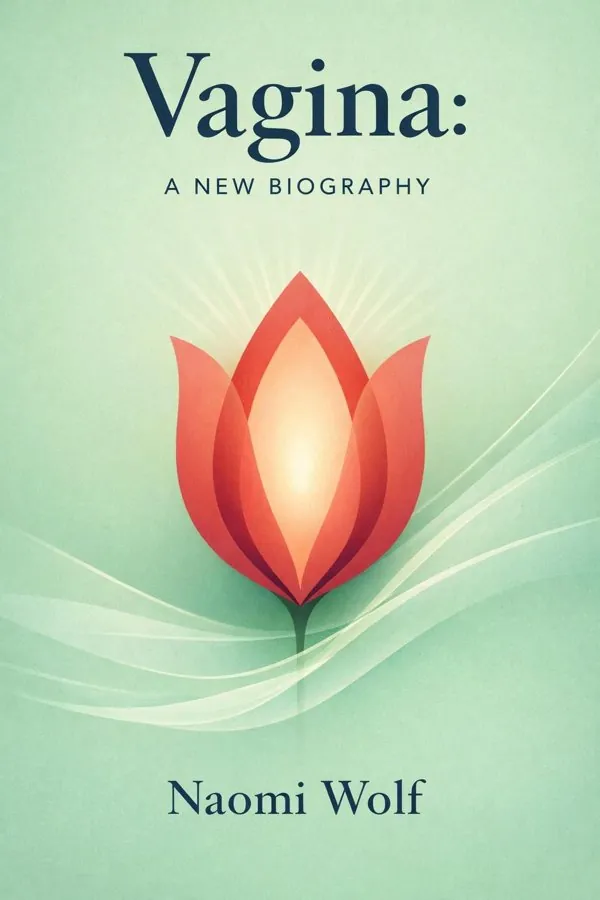
Vagina: A New Biography: Summary & Key Insights
by Naomi Wolf
 10 min10 chaptersAudio available
Key Takeaways from Vagina: A New Biography
Sometimes we only understand the importance of a bodily system when it stops working.
Desire does not live in one organ; it travels along networks of nerves, hormones, emotions, and meanings.
A woman’s erotic life is often a map of her broader emotional world.
No body is experienced outside of culture.
One of Wolf’s most provocative ideas is that erotic vitality and creative vitality may be linked.
What Is Vagina: A New Biography About?
Vagina: A New Biography by Naomi Wolf is a mental_health book spanning 10 pages. What if female sexuality were not a side topic in medicine, psychology, or culture, but a central force in identity, imagination, and emotional life? In Vagina: A New Biography, Naomi Wolf sets out to challenge the narrow ways women’s bodies have been understood. Blending memoir, neuroscience, psychology, interviews, and cultural history, she argues that the vagina is not merely an anatomical structure or a symbol shaped by society. It is deeply connected to mood, creativity, confidence, attachment, and consciousness itself. The book began with Wolf’s own medical crisis after spinal surgery, when a sudden change in sexual sensation led her to investigate how intimately the female pelvic nerves are tied to the brain. From there, she explores how erotic experience can influence selfhood, how trauma and disconnection can alter desire, and how love, touch, and agency can restore vitality. Though some of Wolf’s broader claims have sparked debate, the book remains provocative and memorable for placing female sexual experience at the center of a larger conversation about health, dignity, and power. It matters because it asks readers to reconsider how women’s bodies shape women’s lives.
This FizzRead summary covers all 10 key chapters of Vagina: A New Biography in approximately 10 minutes, distilling the most important ideas, arguments, and takeaways from Naomi Wolf's work. Also available as an audio summary and Key Quotes Podcast.
Vagina: A New Biography
What if female sexuality were not a side topic in medicine, psychology, or culture, but a central force in identity, imagination, and emotional life? In Vagina: A New Biography, Naomi Wolf sets out to challenge the narrow ways women’s bodies have been understood. Blending memoir, neuroscience, psychology, interviews, and cultural history, she argues that the vagina is not merely an anatomical structure or a symbol shaped by society. It is deeply connected to mood, creativity, confidence, attachment, and consciousness itself. The book began with Wolf’s own medical crisis after spinal surgery, when a sudden change in sexual sensation led her to investigate how intimately the female pelvic nerves are tied to the brain. From there, she explores how erotic experience can influence selfhood, how trauma and disconnection can alter desire, and how love, touch, and agency can restore vitality. Though some of Wolf’s broader claims have sparked debate, the book remains provocative and memorable for placing female sexual experience at the center of a larger conversation about health, dignity, and power. It matters because it asks readers to reconsider how women’s bodies shape women’s lives.
Who Should Read Vagina: A New Biography?
This book is perfect for anyone interested in mental_health and looking to gain actionable insights in a short read. Whether you're a student, professional, or lifelong learner, the key ideas from Vagina: A New Biography by Naomi Wolf will help you think differently.
- ✓Readers who enjoy mental_health and want practical takeaways
- ✓Professionals looking to apply new ideas to their work and life
- ✓Anyone who wants the core insights of Vagina: A New Biography in just 10 minutes
Want the full summary?
Get instant access to this book summary and 100K+ more with Fizz Moment.
Get Free SummaryAvailable on App Store • Free to download
Key Chapters
Desire does not live in one organ; it travels along networks of nerves, hormones, emotions, and meanings. One of Wolf’s central claims is that the vagina and clitoris are connected to the brain through intricate neurological pathways that influence far more than pleasure. Drawing on neuroscience, she discusses how genital stimulation can affect neurotransmitters, emotional states, attachment, and reward systems. Her larger point is that female sexuality should be understood as a whole-brain, whole-body process rather than a narrow reproductive function.
This matters because many cultural narratives still treat women’s arousal as mysterious, secondary, or psychologically exaggerated. Wolf pushes back by arguing that women’s erotic experience has a real biological basis that deserves serious scientific attention. The pelvic nerves, autonomic nervous system, and brain regions involved in pleasure and bonding all suggest that sexual experience can alter mood and perception in meaningful ways. That does not mean every claim about sexuality should be accepted uncritically, but it does mean female pleasure is not frivolous or imaginary.
A practical application of this idea is the way clinicians, therapists, and women themselves think about sexual difficulties. If arousal depends on neurological integrity, then numbness, reduced desire, or painful intercourse may stem from nerve damage, medication side effects, chronic stress, trauma, or hormonal changes. Likewise, improving sexual health may require more than better communication; it may call for medical assessment, stress reduction, body awareness, and recovery of safety.
Actionable takeaway: Treat sexual well-being as a legitimate neurological and health issue. If problems persist, ask specifically about nerve function, medication effects, pelvic health, and stress instead of assuming it is “all in your head.”
A woman’s erotic life is often a map of her broader emotional world. Wolf repeatedly returns to the idea that physical sensation and psychological experience are not separate realms but reflections of one another. Anxiety can constrict the body; shame can mute desire; tenderness and trust can increase responsiveness. In this view, the vagina is not simply acted upon by the mind but participates in shaping mood, openness, and self-perception.
This mind-body connection helps explain why sexual experience can feel intensely meaningful even when it is difficult to describe. For some women, feeling desired and safely embodied contributes to vitality, confidence, and creative flow. For others, unresolved fear or past violations can produce disconnection, numbness, or aversion. Wolf’s argument is that these patterns should not be dismissed as weakness or overreaction. They reveal the intimate way the nervous system integrates memory, touch, expectation, and emotion.
In everyday life, this concept has clear applications. Consider someone experiencing chronic stress from work, caregiving, or conflict at home. She may notice lower libido, less lubrication, or trouble reaching orgasm. Rather than interpreting this as personal failure, the mind-body lens suggests her nervous system is signaling overload. Similarly, practices like trauma-informed therapy, mindfulness, pelvic floor therapy, better sleep, and affectionate nonsexual touch may indirectly improve sexual response because they calm the body and rebuild safety.
Wolf’s broader contribution here is to widen the definition of sexual health. It is not just the absence of dysfunction. It includes emotional security, bodily awareness, and the ability to inhabit one’s own sensations without fear or dissociation.
Actionable takeaway: Instead of isolating sexual problems from the rest of your life, ask what your body may be communicating about stress, safety, emotion, and connection.
No body is experienced outside of culture. Wolf argues that women’s sexual consciousness is powerfully shaped by the stories societies tell about purity, shame, beauty, motherhood, danger, and worth. Across history, the female body has been medicalized, idealized, regulated, and feared. These forces do not remain abstract; they influence whether women feel entitled to pleasure, whether they trust their bodies, and whether they can express desire without guilt.
By placing neuroscience alongside cultural history, Wolf suggests that biology and culture are always intertwined. A woman may have intact physical capacity for pleasure and still struggle to feel free if she has absorbed messages that sexual expression makes her less respectable, less safe, or less lovable. Likewise, when female sexuality is treated only as a commodity or performance, women may become disconnected from their own internal experience. They learn to monitor how they appear instead of noticing what they feel.
This framework helps explain why sexual agency can vary so dramatically across relationships, communities, and life stages. For example, a woman raised in a highly restrictive environment may need time to separate her authentic desire from inherited shame. Another might recognize that social media, pornography scripts, or beauty standards have trained her to prioritize looking attractive over feeling present.
Wolf’s cultural analysis invites readers to examine which beliefs about sexuality they have unconsciously accepted. It also supports broader policy and educational changes: comprehensive sex education, better language for consent and pleasure, and healthcare that takes women’s testimony seriously.
Actionable takeaway: Write down three messages you absorbed about female sexuality growing up, then ask which ones support your well-being and which ones still limit your freedom.
One of Wolf’s most provocative ideas is that erotic vitality and creative vitality may be linked. She suggests that when women feel alive in their bodies, emotionally connected, and erotically awake, this energy can spill into art, work, intellectual confidence, and self-expression. The claim is not simply that sex makes people happy. It is that embodied pleasure can strengthen a woman’s sense of agency, imagination, and presence in the world.
This theme has a long cultural history, but Wolf tries to ground it in physiology and psychology. If sexual experience affects neurotransmitters, attachment, mood, and confidence, then it is plausible that an enriched erotic life could influence creative output and emotional courage. Many readers may recognize this in ordinary ways: when they feel desired, rested, and connected, they are more expansive and expressive; when they feel numb, ashamed, or cut off from their bodies, their mental world may narrow.
Importantly, Wolf is not saying that all women must be sexually active to be creative, nor that celibacy or low desire is a defect. The deeper point is that suppression, disembodiment, and chronic shame can dampen broader capacities for joy and expression. Creativity flourishes when people feel rooted in themselves.
In practice, this idea can encourage women to nurture embodiment in many forms: dance, movement, sensual self-care, journaling, therapy, affectionate touch, and spaces where desire can be explored without performance pressure. A novelist recovering from burnout, for instance, might discover that reconnecting with her body through rest and pleasure opens her writing again.
Actionable takeaway: If your creative life feels stalled, consider whether you need not more discipline but more embodiment, pleasure, and emotional aliveness.
What a society believes about women’s bodies shapes law, medicine, religion, and power. Wolf argues that female sexuality is never merely private. It is politically charged because control over women often begins with control over women’s bodily autonomy, reproductive choices, safety, and definitions of sexual legitimacy. If women are taught to distrust or ignore their own sensations, they may be easier to silence in other areas of life as well.
This is why the book moves beyond anatomy into questions of social structure. Medical neglect of women’s pain, moral double standards, coercive relationships, and cultural discomfort with female desire all form part of the same landscape. Wolf invites readers to see the minimization of women’s sexual reality as a civic problem, not just a personal inconvenience. When institutions fail to study female pleasure, dismiss trauma, or ignore pelvic health, they reinforce a hierarchy in which women’s experience remains secondary.
In practical terms, this perspective supports advocacy. It encourages better research on women’s health, more informed consent in medicine, stronger responses to sexual violence, and sex education that includes pleasure, boundaries, and respect. It also reminds readers that reclaiming sexual agency is not selfish. It can be part of claiming voice and personhood more broadly.
For individuals, the political lens can be empowering. A woman who has always felt ashamed of asking questions about pain, orgasm, or contraception may realize the shame was taught, not natural. Naming that can shift the conversation from private inadequacy to structural neglect.
Actionable takeaway: Treat knowledge about your sexual health as a form of civic empowerment. Ask questions, seek evidence-based care, and support institutions that take women’s bodily autonomy seriously.
Statistics can show trends, but lived stories show what those trends feel like. Wolf enriches her argument through interviews, case studies, and anecdotal accounts from women whose sexual experiences illuminate the links between the body, identity, trauma, healing, and love. These narratives broaden the conversation beyond theory. They reveal that female sexuality is not uniform; it is deeply shaped by health status, relationship dynamics, upbringing, and personal history.
The power of these stories lies in recognition. A reader struggling with low desire after childbirth, for example, may see herself in a woman whose pelvic trauma was dismissed by doctors. Someone recovering from abuse may recognize the complexity of wanting intimacy while fearing vulnerability. Another may relate to the rediscovery of pleasure after finally entering a respectful, emotionally attuned relationship. Through such examples, Wolf argues that women’s sexual lives cannot be understood through simplistic categories like “functional” or “dysfunctional.” Context matters.
Case studies also underscore the need for individualized care. Two women may report the same symptom, such as pain during sex, but one may need hormone treatment, another pelvic floor therapy, and another trauma-informed psychotherapy. Listening carefully to personal narrative helps reveal what standardized checklists may miss.
For readers, these stories can reduce isolation. Many women are taught to think their struggles are unusual or shameful. Encountering a range of testimonies helps normalize complexity and encourages help-seeking.
Actionable takeaway: Tell your full story when seeking support. Symptoms make more sense when doctors, therapists, or partners understand your history, relationships, stressors, and emotional context.
Pleasure is not only a matter of stimulation; often it is a matter of safety. Wolf places significant emphasis on the role of love, trust, and emotional attunement in women’s erotic experience. She suggests that for many women, the quality of connection with a partner can influence the intensity of physical responsiveness, the depth of pleasure, and the feeling of integration between body and self. This does not mean women require romance to experience desire, but it does challenge models that reduce sexuality to mechanical technique.
The underlying idea is that attachment and arousal interact. When a woman feels emotionally seen, respected, and safe, her nervous system may be more able to relax into sensation. By contrast, criticism, coercion, indifference, or emotional distance can create physiological inhibition even if attraction exists. Wolf uses this insight to argue that women’s sexual fulfillment often depends on relational conditions that traditional sexual scripts undervalue.
This has practical relevance for couples. Instead of focusing exclusively on performance, frequency, or orgasm outcomes, partners can pay attention to emotional climate. Is there tenderness? Is consent enthusiastic? Are difficult conversations handled respectfully? Is touch sometimes offered without demand? In many relationships, improving these foundations may matter more than adding novelty.
This chapter also speaks to self-love in a broader sense. Women who learn to honor their boundaries, recognize their desires, and choose partners carefully often create conditions for more authentic intimacy.
Actionable takeaway: If intimacy feels strained, discuss emotional safety before sexual technique. Ask what helps each person feel relaxed, respected, and genuinely connected.
When science ignores women’s reality, women pay the price in silence. Wolf sharply critiques medical and scientific paradigms that have historically minimized female pleasure, misunderstood female anatomy, and neglected the neurological and emotional complexity of women’s sexual lives. Her criticism is not anti-science; it is a demand for better science. She argues that medicine has too often treated male sexual function as the default model while reducing women’s concerns to hormones, reproduction, or vague psychology.
This critique resonates because many women have experienced dismissal in clinical settings. Pain during sex may be minimized. Loss of sensation after surgery may be poorly explained. Postpartum changes may be treated as inevitable and unimportant. Questions about arousal may be brushed aside unless fertility is involved. Wolf’s broader point is that what medicine chooses to study reflects what society values.
A more adequate paradigm would integrate neurology, gynecology, endocrinology, psychology, trauma research, and relationship health. It would also take patient testimony seriously. Women are often the first to notice subtle shifts in sensation, desire, mood, or pelvic functioning, yet these observations can be discounted because they do not fit conventional models.
For readers, this chapter offers both caution and confidence. It reminds them to be thoughtful consumers of medical advice and to seek second opinions when concerns are dismissed. It also encourages clinicians to practice humility, especially in areas where research remains incomplete.
Actionable takeaway: If a healthcare provider minimizes your sexual or pelvic concerns, ask for clarification, request referrals, and do not hesitate to seek a second opinion from a specialist who understands women’s sexual health.
Agency often begins not with a dramatic act of rebellion but with the simple decision to notice. Wolf ends up making a larger argument about reclamation: women can recover power by listening to their bodies, naming what they feel, questioning inherited shame, and pursuing relationships and care that support their vitality. Reclaiming sexual agency does not mean performing confidence or conforming to a liberated ideal. It means developing a truthful relationship to one’s own embodiment.
This can look different for different women. For one, it may mean finally seeking treatment for chronic pain. For another, it may mean leaving a relationship where intimacy is coercive or emotionally deadening. For someone else, it may involve learning the language to communicate desire, consent, or discomfort without apology. The common thread is self-trust.
Wolf suggests that when women reconnect with sexual agency, the effects may extend beyond the bedroom. They may speak more assertively, create more boldly, and define themselves less through external approval. This does not happen automatically, and the process may involve grief, therapy, education, or healing from trauma. But the possibility matters: embodied self-knowledge can be a source of psychological strength.
In modern life, reclaiming agency may also require boundaries against forces that fragment attention, such as constant self-surveillance, digital comparison, and pressure to sexualize oneself for validation. Genuine agency is inwardly anchored, not merely publicly displayed.
Actionable takeaway: Start a private practice of bodily self-awareness. Notice what increases or diminishes your sense of safety, aliveness, desire, and dignity, then let those observations guide your choices.
All Chapters in Vagina: A New Biography
About the Author
Naomi Wolf is an American author, journalist, and cultural critic known for her influential writing on feminism, sexuality, beauty, and politics. She gained international recognition with The Beauty Myth, which examined how beauty standards can function as social control over women. Her other notable works include Promiscuities, Misconceptions, and The End of America. Trained at Yale and Oxford, Wolf has often written at the intersection of personal experience, political analysis, and social commentary. Her work is known for being ambitious, provocative, and frequently debated. In Vagina: A New Biography, she turns her attention to female sexual health and embodiment, combining memoir, neuroscience, interviews, and feminist critique to argue that women’s sexual experience is far more central to identity and well-being than mainstream culture and medicine have acknowledged.
Get This Summary in Your Preferred Format
Read or listen to the Vagina: A New Biography summary by Naomi Wolf anytime, anywhere. FizzRead offers multiple formats so you can learn on your terms — all free.
Available formats: App · Audio · PDF · EPUB — All included free with FizzRead
Download Vagina: A New Biography PDF and EPUB Summary
Key Quotes from Vagina: A New Biography
“Sometimes we only understand the importance of a bodily system when it stops working.”
“Desire does not live in one organ; it travels along networks of nerves, hormones, emotions, and meanings.”
“A woman’s erotic life is often a map of her broader emotional world.”
“No body is experienced outside of culture.”
“One of Wolf’s most provocative ideas is that erotic vitality and creative vitality may be linked.”
Frequently Asked Questions about Vagina: A New Biography
Vagina: A New Biography by Naomi Wolf is a mental_health book that explores key ideas across 10 chapters. What if female sexuality were not a side topic in medicine, psychology, or culture, but a central force in identity, imagination, and emotional life? In Vagina: A New Biography, Naomi Wolf sets out to challenge the narrow ways women’s bodies have been understood. Blending memoir, neuroscience, psychology, interviews, and cultural history, she argues that the vagina is not merely an anatomical structure or a symbol shaped by society. It is deeply connected to mood, creativity, confidence, attachment, and consciousness itself. The book began with Wolf’s own medical crisis after spinal surgery, when a sudden change in sexual sensation led her to investigate how intimately the female pelvic nerves are tied to the brain. From there, she explores how erotic experience can influence selfhood, how trauma and disconnection can alter desire, and how love, touch, and agency can restore vitality. Though some of Wolf’s broader claims have sparked debate, the book remains provocative and memorable for placing female sexual experience at the center of a larger conversation about health, dignity, and power. It matters because it asks readers to reconsider how women’s bodies shape women’s lives.
More by Naomi Wolf

You Might Also Like

Big Feelings: How to Be Okay When Things Are Not Okay
Liz Fosslien, Mollie West Duffy
10 min
Creative Arts Therapies Handbook: Art, Music and Dance Therapy Practices for Wellbeing
Susan I. Buchalter
10 min
Emotional First Aid: Healing Rejection, Guilt, Failure, and Other Everyday Hurts
Guy Winch
10 min
Lost Connections: Why You're Depressed and How to Find Hope
Johann Hari
10 min
No Time to Panic: How to Stop Worrying and Embrace Life
Matt Gutman
10 min
Overcoming Mobbing: A Recovery Guide for Workplace Aggression and Bullying
Maureen Duffy, Len Sperry
10 minBrowse by Category
Ready to read Vagina: A New Biography?
Get the full summary and 100K+ more books with Fizz Moment.