
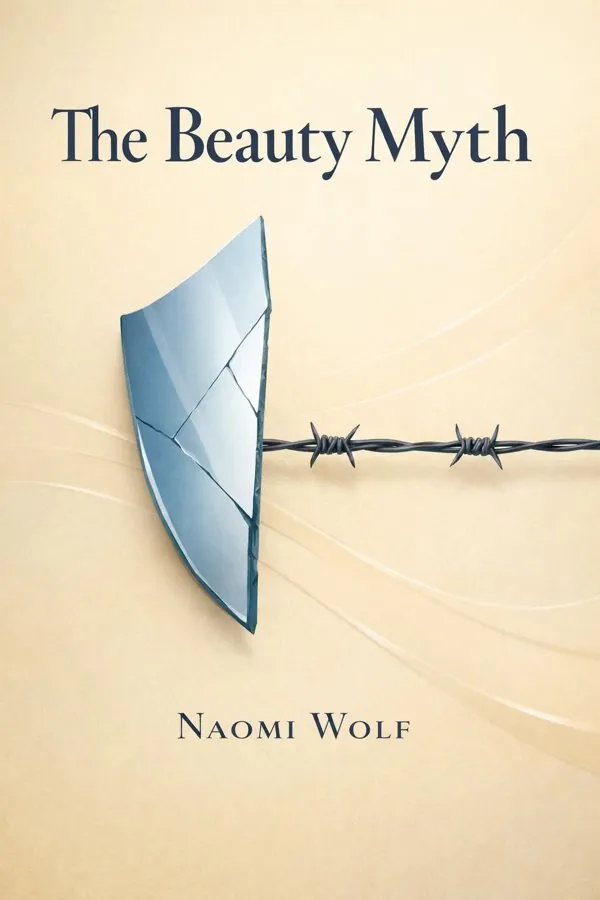
The Beauty Myth: How Images of Beauty Are Used Against Women: Summary & Key Insights
by Naomi Wolf
 10 min10 chaptersAudio available
What Is The Beauty Myth: How Images of Beauty Are Used Against Women About?
The Beauty Myth: How Images of Beauty Are Used Against Women by Naomi Wolf is a sociology book spanning 10 pages. The Beauty Myth is a groundbreaking feminist work by Naomi Wolf that explores how the concept of beauty has been manipulated to maintain women's subordination in modern society. Wolf argues that as women gained social and political power, the beauty industry and media created new standards of physical perfection to control and distract them. The book examines the cultural, psychological, and economic forces that perpetuate unrealistic beauty ideals and their impact on women's self-esteem, health, and freedom.
This FizzRead summary covers all 10 key chapters of The Beauty Myth: How Images of Beauty Are Used Against Women in approximately 10 minutes, distilling the most important ideas, arguments, and takeaways from Naomi Wolf's work. Also available as an audio summary and Key Quotes Podcast.
The Beauty Myth: How Images of Beauty Are Used Against Women
The Beauty Myth is a groundbreaking feminist work by Naomi Wolf that explores how the concept of beauty has been manipulated to maintain women's subordination in modern society. Wolf argues that as women gained social and political power, the beauty industry and media created new standards of physical perfection to control and distract them. The book examines the cultural, psychological, and economic forces that perpetuate unrealistic beauty ideals and their impact on women's self-esteem, health, and freedom.
Who Should Read The Beauty Myth: How Images of Beauty Are Used Against Women?
This book is perfect for anyone interested in sociology and looking to gain actionable insights in a short read. Whether you're a student, professional, or lifelong learner, the key ideas from The Beauty Myth: How Images of Beauty Are Used Against Women by Naomi Wolf will help you think differently.
- ✓Readers who enjoy sociology and want practical takeaways
- ✓Professionals looking to apply new ideas to their work and life
- ✓Anyone who wants the core insights of The Beauty Myth: How Images of Beauty Are Used Against Women in just 10 minutes
Want the full summary?
Get instant access to this book summary and 100K+ more with Fizz Moment.
Get Free SummaryAvailable on App Store • Free to download
Key Chapters
When women in Western societies began to step out of the domestic sphere and claim equality in education, work, and politics, the nature of their oppression evolved. In earlier centuries, a woman’s virtue and obedience were enforced by law, religion, and rigid social norms. But as those external structures weakened in the twentieth century, control migrated inward—into the mind and body. The new form of control was psychological, wrapped in the seemingly apolitical language of beauty.
The historical pattern is unmistakable: every time women achieve greater freedom, new images of physical perfection arise to constrain them anew. After the suffragette movement came the flapper ideal—childlike, slim, and frivolous. After World War II, with women encouraged to return to domesticity, the voluptuous housewife image dominated advertising. In the 1980s, as women ascended corporate ladders, the ‘professional beauty’ model appeared—slim yet strong, eternally young, and flawlessly groomed. These shifts did not stem from nature or evolution but from cultural necessity: they functioned as counterbalances to women’s social progress.
In this way, beauty myths serve as a quiet backlash, a form of political containment that disguises itself as personal aspiration. The controlling narratives no longer tell women to obey their husbands; they tell us to weigh less, to tone more, to erase the signs of age as if time itself were a failure. The more public power women gain, the more intensely private our self-criticism becomes. This is the historical logic of the beauty myth: the reconfiguration of power as self-discipline.
In professional life, the beauty myth takes on an economic and structural dimension. Women enter the workforce ostensibly as equals, yet their appearance remains a professional currency. Appearance standards are internalized as measures of competence and respectability, particularly in fields where authority has traditionally been male. A double bind emerges: too much attention to beauty risks being dismissed as superficial, yet neglecting it invites criticism for being unkempt or unfeminine.
This double standard sustains what I call ‘the professional beauty qualification’—an unspoken but omnipresent layer of judgment that men rarely face. For women, success and appearance are locked in uneasy partnership, generating a form of chronic insecurity that depletes cognitive and emotional energy. I argue that this dynamic is not accidental; it serves an economic purpose by maintaining wage disparities and hierarchical dependence.
In recounting case studies from corporate culture and media industries, I show how dress codes, grooming expectations, and youth bias reinforce this system. Even as workplaces espouse progressive values, beauty policing continues through subtler means such as ‘image consulting’ or ‘brand fit.’ The pressure to conform consumes time, money, and emotional bandwidth—resources that could otherwise nourish innovation, leadership, and solidarity. Recognizing this dynamic is the first step toward dismantling it. True equality at work cannot be achieved until competence is measured by contribution rather than compliance with aesthetic norms.
+ 8 more chapters — available in the FizzRead app
All Chapters in The Beauty Myth: How Images of Beauty Are Used Against Women
About the Author
Naomi Wolf is an American author, journalist, and feminist activist known for her influential works on gender, politics, and culture. A graduate of Yale University and a Rhodes Scholar at Oxford, she gained international recognition with her debut book, The Beauty Myth, which became a key text in third-wave feminism.
Get This Summary in Your Preferred Format
Read or listen to the The Beauty Myth: How Images of Beauty Are Used Against Women summary by Naomi Wolf anytime, anywhere. FizzRead offers multiple formats so you can learn on your terms — all free.
Available formats: App · Audio · PDF · EPUB — All included free with FizzRead
Download The Beauty Myth: How Images of Beauty Are Used Against Women PDF and EPUB Summary
Key Quotes from The Beauty Myth: How Images of Beauty Are Used Against Women
“When women in Western societies began to step out of the domestic sphere and claim equality in education, work, and politics, the nature of their oppression evolved.”
“In professional life, the beauty myth takes on an economic and structural dimension.”
Frequently Asked Questions about The Beauty Myth: How Images of Beauty Are Used Against Women
The Beauty Myth: How Images of Beauty Are Used Against Women by Naomi Wolf is a sociology book that explores key ideas across 10 chapters. The Beauty Myth is a groundbreaking feminist work by Naomi Wolf that explores how the concept of beauty has been manipulated to maintain women's subordination in modern society. Wolf argues that as women gained social and political power, the beauty industry and media created new standards of physical perfection to control and distract them. The book examines the cultural, psychological, and economic forces that perpetuate unrealistic beauty ideals and their impact on women's self-esteem, health, and freedom.
More by Naomi Wolf

You Might Also Like

Between the World and Me
Ta-Nehisi Coates
10 min
Half the Sky
Nicholas D. Kristof, Sheryl WuDunn
10 min
Men Explain Things To Me
Rebecca Solnit
10 min
Rational Ritual
Michael Suk-Young Chwe
10 min
The New Jim Crow
Michelle Alexander
10 min
Beyond Culture
Edward T. Hall
10 minBrowse by Category
Ready to read The Beauty Myth: How Images of Beauty Are Used Against Women?
Get the full summary and 100K+ more books with Fizz Moment.