

Too Fast To Think: How to Reclaim Your Creativity in a Hyper-Connected Work Culture: Summary & Key Insights
by Chris Lewis
 10 min9 chaptersAudio available
Key Takeaways from Too Fast To Think: How to Reclaim Your Creativity in a Hyper-Connected Work Culture
Lewis argues that acceleration has become the default condition of contemporary life.
One of the most damaging myths in modern work culture is that visible activity equals real productivity.
If adults struggle to think creatively, Lewis suggests the roots of the problem may begin much earlier.
We often assume that being constantly informed makes us more intelligent and creative, but Lewis argues that excessive media consumption can have the opposite effect.
Some of the most important thinking happens when nothing visible seems to be happening at all.
What Is Too Fast To Think: How to Reclaim Your Creativity in a Hyper-Connected Work Culture About?
Too Fast To Think: How to Reclaim Your Creativity in a Hyper-Connected Work Culture by Chris Lewis is a creativity book spanning 11 pages. Too Fast To Think argues that one of the greatest threats to creativity is not a lack of talent, intelligence, or technology, but the relentless speed of modern life. In a culture shaped by constant notifications, overloaded calendars, 24/7 media, and pressure to respond instantly, deep thought has been crowded out by perpetual reaction. Chris Lewis shows how this hyper-connected environment affects not only individual imagination, but also the quality of decisions made by teams, schools, companies, and leaders. His central claim is simple but urgent: when everything becomes faster, our capacity to reflect, connect ideas, and generate original insight begins to shrink. What makes the book especially valuable is that Lewis does not treat creativity as a mysterious gift reserved for artists. He presents it as a practical human capability that can be strengthened or weakened by the way we work and live. Drawing on his experience as founder and CEO of a global communications agency, along with research from psychology, business, media, and education, he offers a persuasive case for slowing down strategically. This is a timely guide for anyone who feels busy, stimulated, and informed, yet strangely unable to think deeply or create their best work.
This FizzRead summary covers all 9 key chapters of Too Fast To Think: How to Reclaim Your Creativity in a Hyper-Connected Work Culture in approximately 10 minutes, distilling the most important ideas, arguments, and takeaways from Chris Lewis's work. Also available as an audio summary and Key Quotes Podcast.
Too Fast To Think: How to Reclaim Your Creativity in a Hyper-Connected Work Culture
Too Fast To Think argues that one of the greatest threats to creativity is not a lack of talent, intelligence, or technology, but the relentless speed of modern life. In a culture shaped by constant notifications, overloaded calendars, 24/7 media, and pressure to respond instantly, deep thought has been crowded out by perpetual reaction. Chris Lewis shows how this hyper-connected environment affects not only individual imagination, but also the quality of decisions made by teams, schools, companies, and leaders. His central claim is simple but urgent: when everything becomes faster, our capacity to reflect, connect ideas, and generate original insight begins to shrink.
What makes the book especially valuable is that Lewis does not treat creativity as a mysterious gift reserved for artists. He presents it as a practical human capability that can be strengthened or weakened by the way we work and live. Drawing on his experience as founder and CEO of a global communications agency, along with research from psychology, business, media, and education, he offers a persuasive case for slowing down strategically. This is a timely guide for anyone who feels busy, stimulated, and informed, yet strangely unable to think deeply or create their best work.
Who Should Read Too Fast To Think: How to Reclaim Your Creativity in a Hyper-Connected Work Culture?
This book is perfect for anyone interested in creativity and looking to gain actionable insights in a short read. Whether you're a student, professional, or lifelong learner, the key ideas from Too Fast To Think: How to Reclaim Your Creativity in a Hyper-Connected Work Culture by Chris Lewis will help you think differently.
- ✓Readers who enjoy creativity and want practical takeaways
- ✓Professionals looking to apply new ideas to their work and life
- ✓Anyone who wants the core insights of Too Fast To Think: How to Reclaim Your Creativity in a Hyper-Connected Work Culture in just 10 minutes
Want the full summary?
Get instant access to this book summary and 100K+ more with Fizz Moment.
Get Free SummaryAvailable on App Store • Free to download
Key Chapters
The modern crisis of creativity begins with a simple paradox: we have access to more information than any previous generation, yet often have less time and mental space to turn that information into insight. Lewis argues that acceleration has become the default condition of contemporary life. Digital tools promise convenience, but they also create an expectation of immediacy. Emails must be answered quickly, news is refreshed by the second, and social platforms reward reaction over reflection. As a result, attention is fragmented into short bursts rather than sustained focus.
This matters because creativity depends on the mind’s ability to stay with a problem long enough to see beyond the obvious. Original ideas often emerge when separate thoughts are allowed to connect slowly, quietly, and without interruption. When people are constantly switching tasks, scanning updates, and responding to external demands, their minds remain in a state of surface processing. They may feel informed and active, but they are less likely to produce meaningful insight.
A workplace example makes this clear. Imagine a team trying to develop a new campaign while Slack messages, meeting invitations, and urgent email threads keep interrupting them. The team may appear highly engaged, yet no one has enough uninterrupted time to think strategically. The result is often recycled thinking delivered at high speed.
Lewis is not arguing against technology itself. He is warning that unless people consciously manage pace, technology will manage it for them. The practical lesson is to protect attention as a creative resource: schedule uninterrupted thinking blocks, silence nonessential notifications, and design parts of the day for depth rather than reaction.
One of the most damaging myths in modern work culture is that visible activity equals real productivity. Lewis challenges the assumption that full calendars, rapid responses, and nonstop meetings are signs of high performance. In many organizations, people are rewarded for being constantly available rather than consistently thoughtful. This creates a culture where motion is mistaken for progress.
The problem is that creativity rarely appears in frantic environments. It requires incubation, experimentation, and sometimes apparent inactivity. A person staring out the window may look idle, yet that pause may be the very moment when a complex problem starts to resolve itself. By contrast, a person who spends an entire day replying to messages may feel productive while contributing little original value.
This false productivity trap shows up in everyday habits. Teams schedule back-to-back meetings because coordination feels efficient. Managers demand instant updates because responsiveness feels responsible. Individuals multitask because doing many things at once feels impressive. But each of these habits reduces cognitive depth. People become excellent at maintaining workflow while losing the capacity to question assumptions, imagine alternatives, or challenge stale routines.
Lewis encourages readers to redefine productivity in terms of outcomes, quality, and originality rather than raw activity. For example, a company might replace some status meetings with written updates and preserve larger stretches of uninterrupted time for real problem-solving. An individual might measure the day not by how many messages were answered, but by whether a meaningful idea was developed or a difficult problem was clarified.
The takeaway is practical and powerful: stop using busyness as proof of value. Audit your routine, identify performative activity, and deliberately create time for the kind of slow work that leads to better thinking.
If adults struggle to think creatively, Lewis suggests the roots of the problem may begin much earlier. Many education systems claim to value innovation, curiosity, and independent thinking, yet in practice they often reward speed, conformity, and measurable output. Students are taught to produce answers quickly, perform well under time pressure, and prioritize correctness over exploration. This shapes not only what they know, but how they learn to think.
Creativity develops when people are given room to question, experiment, fail, and reflect. But classrooms under pressure to meet standardized benchmarks can narrow that space. Students learn to optimize for exams rather than understanding, for completion rather than imagination. Over time, they may internalize the idea that the goal of learning is to respond efficiently instead of thinking deeply. This pattern then carries into adult work culture, where fast execution is praised more often than thoughtful originality.
Consider the difference between two assignments. One asks students to memorize and repeat a model answer in a timed setting. The other asks them to explore a real problem, discuss multiple interpretations, and refine their ideas over time. The first builds compliance and speed. The second builds judgment and creativity. Lewis is not dismissing standards or discipline; he is warning that a system obsessed with immediate, measurable outputs can unintentionally suppress the very qualities it claims to nurture.
For parents, educators, and leaders, the lesson is to create environments where reflection is part of performance, not separate from it. Encourage open-ended questions, longer project cycles, and thoughtful discussion. The actionable takeaway is to reward curiosity and process as much as rapid answers, because creative confidence grows when people are given permission to think before they respond.
We often assume that being constantly informed makes us more intelligent and creative, but Lewis argues that excessive media consumption can have the opposite effect. When people are immersed in nonstop news, commentary, trends, alerts, and social chatter, they become highly responsive to the external world while losing contact with their own internal one. Instead of generating original thought, they absorb and repeat the dominant mood of the moment.
Media environments are designed to reward novelty, speed, and emotional intensity. This keeps attention locked onto what is immediate, dramatic, and shareable. Yet creative thinking usually requires the opposite conditions: distance, patience, and the ability to sit with ambiguity. A mind saturated with commentary has little room left for synthesis. It becomes easier to react than to interpret, easier to echo than to imagine.
This is especially relevant in communications-heavy professions. Marketers, executives, analysts, and creators often feel obligated to stay updated at all times. But there is a difference between informed awareness and compulsive consumption. Someone who scans every trend report and social signal may know what is happening now, while someone who also steps back to reflect may understand what it means and what could come next.
Lewis encourages readers to manage media as an input, not a constant atmosphere. Practical steps include setting specific windows for news consumption, taking regular digital sabbaths, and balancing external inputs with private reflection. A team might begin strategy sessions by reviewing relevant information, then spend the next hour with devices closed, focusing only on interpretation and idea generation.
The key takeaway is to consume less passively and think more actively. If you want stronger creative judgment, reduce noise, choose your inputs carefully, and leave enough silence for your own perspective to emerge.
Some of the most important thinking happens when nothing visible seems to be happening at all. Lewis emphasizes that reflection and solitude are not luxuries for the privileged or habits for introverts; they are essential conditions for serious creativity. In a hyper-connected culture, being alone with your thoughts can feel uncomfortable or even unproductive. Yet without those quiet periods, the mind has little chance to process experience, connect distant ideas, or notice subtle intuition.
Reflection is where information becomes understanding. Solitude is where borrowed opinions can fall away long enough for original thought to take shape. This is why so many creative breakthroughs arrive during walks, showers, travel, or moments away from screens. The mind needs intervals when it is not being directed from the outside. Continuous connection may keep us engaged, but it also keeps us mentally crowded.
In workplaces, solitude is often undervalued because it looks inactive and cannot be easily measured. Open offices, instant messaging, and collaborative rituals can create the impression that good work is always social and visible. But many of the best contributions to group work begin in private thinking. A strong meeting is often the result of people having had time alone beforehand to consider the issue properly.
Lewis suggests creating routines that normalize reflection. This could mean taking a daily walk without a phone, starting the morning with a notebook instead of email, or scheduling quiet time before major decisions. Teams can support this by sharing agendas early and allowing pre-meeting thinking time rather than demanding spontaneous answers.
The practical takeaway is clear: defend solitude as part of your creative process. Put regular quiet time on your calendar and treat it as work, because that is exactly what it is.
In a culture obsessed with data, process, and measurable proof, intuition is often dismissed as vague or unreliable. Lewis pushes back against that view. He argues that intuition, when properly understood, is not the opposite of intelligence but one of its most sophisticated forms. It is the mind’s ability to recognize patterns, integrate experience, and produce a felt sense of direction before every detail can be consciously explained.
This matters because many creative and strategic decisions cannot be solved by analysis alone. Data can tell you what has happened, and logic can help compare options, but breakthrough ideas often involve uncertainty. Leaders, creators, and innovators regularly face situations where the evidence is incomplete and timing matters. In those moments, intuition becomes valuable, especially when it is grounded in experience and combined with critical thinking.
For example, an experienced brand strategist may review market data and still feel that the obvious campaign direction is wrong. That instinct is not magic. It may reflect years of pattern recognition, cultural sensitivity, and tacit knowledge that has not yet been translated into formal language. Ignoring that signal because it cannot be fully quantified may lead to safe but uninspired choices.
Lewis does not recommend blind trust in every instinct. Intuition works best when paired with reflection, testing, and openness to challenge. A useful practice is to ask, “What is my instinct telling me, and what experience might that instinct be drawing on?” This makes intuition more visible and easier to examine.
The takeaway is to stop treating intuition as unprofessional. When facing complex decisions, note your first deep impression, investigate it thoughtfully, and use it alongside evidence rather than in opposition to it.
A common misconception is that creativity is a solitary act produced by lone geniuses. Lewis offers a more useful picture: while original insight often begins in individual thought, innovation becomes stronger when different perspectives interact. Diversity and collaboration matter because people do not all see the same patterns, ask the same questions, or define the same problems. The more varied the viewpoints in a group, the greater the chance of producing something genuinely new.
However, not all collaboration is creative. Poor collaboration simply accelerates consensus. Teams rush toward familiar answers, dominant voices shape the discussion, and everyone leaves with a decision that feels efficient but lacks originality. True collaborative creativity requires psychological safety, intellectual friction, and enough time for disagreement to lead somewhere productive.
Lewis highlights the value of interdisciplinary and cross-cultural exchange. A designer, engineer, teacher, analyst, and customer may each notice different constraints and possibilities in the same challenge. When these views are invited early, the result is often richer thinking than any single specialist could produce alone. Diversity here is not a slogan; it is a practical tool for escaping mental sameness.
A useful example is product development. A homogeneous team may optimize for existing users and current assumptions. A broader team may ask who is excluded, what need has been ignored, or what hidden barrier prevents adoption. Those questions open space for more original solutions.
The actionable lesson is to design collaboration, not just hope for it. Build teams with varied backgrounds, rotate who speaks first, create room for dissent, and separate idea generation from immediate judgment. Better creativity comes from combining quiet individual thought with structured, diverse conversation.
One of Lewis’s most practical arguments is that creative space does not appear by accident in modern life. If people do not actively reclaim it, it will be consumed by the demands of connectivity, administration, and noise. The issue is not only psychological but structural. Most calendars, offices, and communication systems are designed for responsiveness, not originality. That means creative work requires conscious boundaries.
Reclaiming creative space can happen at several levels. Individually, it means setting limits on interruptions, creating rituals that signal focus, and giving serious thinking a dedicated place in the schedule. A writer might block off mornings for idea development before opening email. A manager might cluster meetings into specific windows, leaving afternoons open for strategic work. Even small practices, such as keeping a notebook nearby or taking ten minutes after a meeting to process what was said, can rebuild mental depth.
At the organizational level, reclaiming space may involve more substantial cultural changes. Companies can reduce unnecessary meetings, question assumptions about constant availability, and protect time for experimentation. They can also redesign office norms so that interruptions are not treated as harmless. Creative work is fragile; every disruption has a cost.
Lewis also suggests reconnecting with slower sources of meaning, such as reading deeply, walking, engaging with art, or spending time away from screens. These activities may seem unrelated to productivity, yet they nourish the inner life from which original ideas emerge.
The takeaway is to stop waiting for the perfect conditions to think creatively. Build them yourself. Audit where your attention is going, remove what is draining it, and create recurring spaces where your mind can do more than simply keep up.
Perhaps the most important organizational insight in the book is that leadership shapes the speed and texture of thinking. Leaders do not only allocate resources or set goals; they also model what kinds of attention are valued. When leaders send midnight emails, demand instant answers, celebrate overwork, and fill every hour with activity, they teach people that speed is more important than judgment. Over time, this creates a culture where everyone is busy and no one is thinking deeply enough.
Lewis argues that leaders who care about innovation must become guardians of thoughtful pace. This does not mean slowing everything down indiscriminately. Some situations require urgency. But sustainable creativity depends on leaders knowing when to accelerate and when to create breathing room. Strategic decisions, culture design, and long-term innovation all suffer when organizations operate in permanent reaction mode.
Good leaders create conditions for better thinking. They ask better questions instead of demanding immediate certainty. They leave room for reflection before major decisions. They protect people from unnecessary noise and encourage healthy boundaries around communication. They also recognize that creative confidence often grows when people feel trusted rather than monitored.
Consider two managers. One checks in constantly, requests updates throughout the day, and jumps into every conversation. The other defines the problem clearly, gives the team room to think, and reconvenes at meaningful intervals. The first creates compliance and dependency. The second creates ownership and stronger ideas.
The actionable takeaway is for leaders to examine the signals they send. If you want a more creative team, reduce avoidable urgency, reward thoughtful contributions, and design rhythms that allow insight to develop instead of demanding constant visible activity.
All Chapters in Too Fast To Think: How to Reclaim Your Creativity in a Hyper-Connected Work Culture
About the Author
Chris Lewis is the founder and CEO of LEWIS, a global marketing and communications agency, and an author known for writing about leadership, creativity, communication, and workplace culture. His career in media and business has given him a close view of how modern organizations operate under pressure, speed, and constant connectivity. That practical experience shapes his writing, which often explores how external demands influence human judgment, innovation, and well-being. In Too Fast To Think, Lewis brings together insights from business, psychology, education, and communications to examine why creative thinking is under strain in the digital age. He is widely recognized for translating complex cultural and organizational trends into clear, usable ideas for leaders, professionals, and teams seeking to work more thoughtfully and effectively.
Get This Summary in Your Preferred Format
Read or listen to the Too Fast To Think: How to Reclaim Your Creativity in a Hyper-Connected Work Culture summary by Chris Lewis anytime, anywhere. FizzRead offers multiple formats so you can learn on your terms — all free.
Available formats: App · Audio · PDF · EPUB — All included free with FizzRead
Download Too Fast To Think: How to Reclaim Your Creativity in a Hyper-Connected Work Culture PDF and EPUB Summary
Key Quotes from Too Fast To Think: How to Reclaim Your Creativity in a Hyper-Connected Work Culture
“Lewis argues that acceleration has become the default condition of contemporary life.”
“One of the most damaging myths in modern work culture is that visible activity equals real productivity.”
“If adults struggle to think creatively, Lewis suggests the roots of the problem may begin much earlier.”
“We often assume that being constantly informed makes us more intelligent and creative, but Lewis argues that excessive media consumption can have the opposite effect.”
“Some of the most important thinking happens when nothing visible seems to be happening at all.”
Frequently Asked Questions about Too Fast To Think: How to Reclaim Your Creativity in a Hyper-Connected Work Culture
Too Fast To Think: How to Reclaim Your Creativity in a Hyper-Connected Work Culture by Chris Lewis is a creativity book that explores key ideas across 9 chapters. Too Fast To Think argues that one of the greatest threats to creativity is not a lack of talent, intelligence, or technology, but the relentless speed of modern life. In a culture shaped by constant notifications, overloaded calendars, 24/7 media, and pressure to respond instantly, deep thought has been crowded out by perpetual reaction. Chris Lewis shows how this hyper-connected environment affects not only individual imagination, but also the quality of decisions made by teams, schools, companies, and leaders. His central claim is simple but urgent: when everything becomes faster, our capacity to reflect, connect ideas, and generate original insight begins to shrink. What makes the book especially valuable is that Lewis does not treat creativity as a mysterious gift reserved for artists. He presents it as a practical human capability that can be strengthened or weakened by the way we work and live. Drawing on his experience as founder and CEO of a global communications agency, along with research from psychology, business, media, and education, he offers a persuasive case for slowing down strategically. This is a timely guide for anyone who feels busy, stimulated, and informed, yet strangely unable to think deeply or create their best work.
More by Chris Lewis
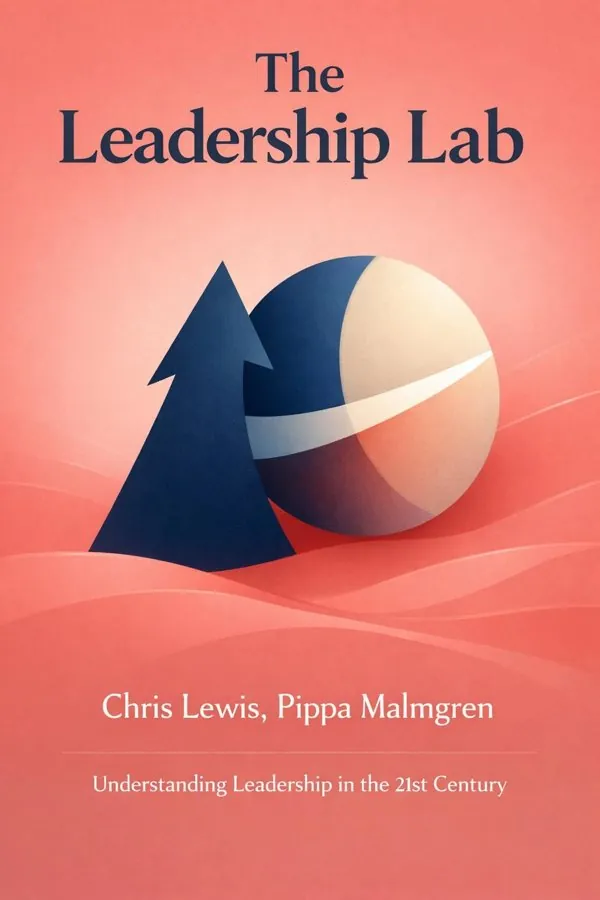

You Might Also Like
Dimensions Of Creativity
Margaret A. Boden
10 min
How to Fly a Horse: The Secret History of Creation, Invention, and Discovery
Kevin Ashton
10 min
Imagine: How Creativity Works
Jonah Lehrer
10 min
The Accidental Creative: How to Be Brilliant at a Moment's Notice
Todd Henry
10 min
The Origins of Creativity
Edward O. Wilson
10 min
Wired to Create: Unraveling the Mysteries of the Creative Mind
Scott Barry Kaufman, Carolyn Gregoire
10 minBrowse by Category
Ready to read Too Fast To Think: How to Reclaim Your Creativity in a Hyper-Connected Work Culture?
Get the full summary and 100K+ more books with Fizz Moment.