
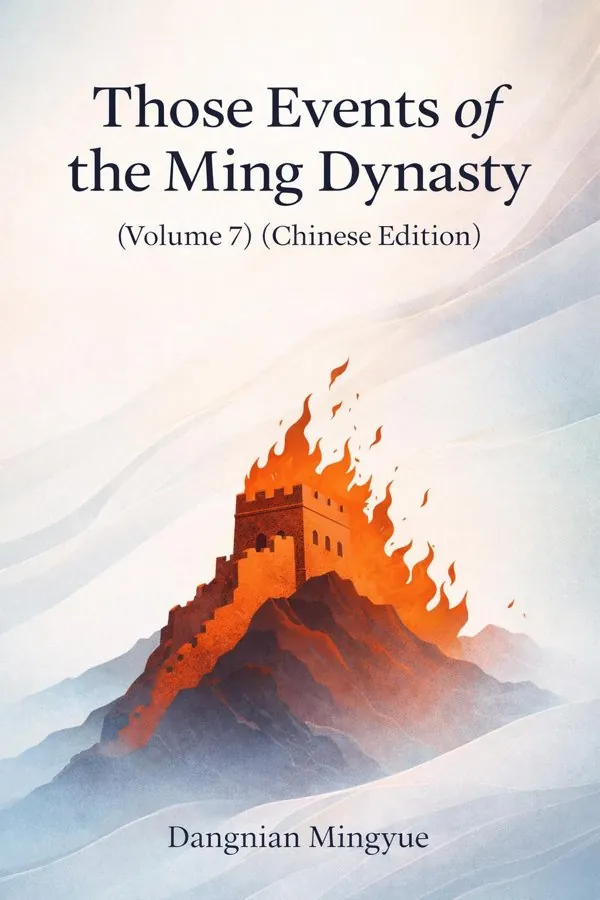
Those Events of the Ming Dynasty (Volume 7) (Chinese Edition): Summary & Key Insights
 10 min6 chaptersAudio available
What Is Those Events of the Ming Dynasty (Volume 7) (Chinese Edition) About?
Those Events of the Ming Dynasty (Volume 7) (Chinese Edition) by Dangnian Mingyue is a chinese_history book spanning 6 pages. Those Events of the Ming Dynasty (Volume 7) is the seventh book in the popular historical nonfiction series by Dangnian Mingyue. It narrates the late Ming dynasty period, including the reign of Emperor Chongzhen, internal and external crises, Li Zicheng’s rebellion, and the eventual fall of the Ming dynasty. Written in a lively and humorous style, the author brings complex historical events and figures to life, making Ming history accessible and engaging for readers.
This FizzRead summary covers all 6 key chapters of Those Events of the Ming Dynasty (Volume 7) (Chinese Edition) in approximately 10 minutes, distilling the most important ideas, arguments, and takeaways from Dangnian Mingyue's work. Also available as an audio summary and Key Quotes Podcast.
Those Events of the Ming Dynasty (Volume 7) (Chinese Edition)
Those Events of the Ming Dynasty (Volume 7) is the seventh book in the popular historical nonfiction series by Dangnian Mingyue. It narrates the late Ming dynasty period, including the reign of Emperor Chongzhen, internal and external crises, Li Zicheng’s rebellion, and the eventual fall of the Ming dynasty. Written in a lively and humorous style, the author brings complex historical events and figures to life, making Ming history accessible and engaging for readers.
Who Should Read Those Events of the Ming Dynasty (Volume 7) (Chinese Edition)?
This book is perfect for anyone interested in chinese_history and looking to gain actionable insights in a short read. Whether you're a student, professional, or lifelong learner, the key ideas from Those Events of the Ming Dynasty (Volume 7) (Chinese Edition) by Dangnian Mingyue will help you think differently.
- ✓Readers who enjoy chinese_history and want practical takeaways
- ✓Professionals looking to apply new ideas to their work and life
- ✓Anyone who wants the core insights of Those Events of the Ming Dynasty (Volume 7) (Chinese Edition) in just 10 minutes
Want the full summary?
Get instant access to this book summary and 100K+ more with Fizz Moment.
Get Free SummaryAvailable on App Store • Free to download
Key Chapters
The Ming bureaucracy, once the envy of the world, had by this time become a labyrinth. Every document, every appointment, every military decision flowed through lines blurred by personal vendetta and ideological zeal. When I wrote of the court debates, I wanted readers to feel the claustrophobia that even an emperor must have felt — trapped not by enemies, but by his own officials.
Chongzhen’s reform efforts were genuine. He dismissed corrupt eunuchs, demanded accountability, and personally reviewed memorials. Yet, he trusted no one fully, for trust had become a political liability. One minister might be righteous but too proud; another, efficient but suspected of ambition. His suspicion grew, and soon it was not just corrupt men who fell but heroes as well. Yuan Chonghuan, the general who had defended the north and defeated the Manchu commander Nurhaci, became a victim of palace intrigue. Chongzhen, in one of his most fateful errors, ordered him executed, believing false accusations of treason. The city mourned; the frontier trembled; and the emperor lost his most capable defender.
The court itself had become an echo chamber. Officials wrote to please the throne or to condemn their rivals. Debates that should have centered on policy now turned into moral crusades. When floods ruined crops or locusts devoured fields, memorials arrived blaming divine wrath, corruption, or unsound rituals — anything but structural dysfunction. And when the emperor tried to cut expenses by dismissing redundant posts, he only multiplied his enemies. In his eagerness to restore discipline, he drove fear into the hearts of the very men he needed.
It was as if the empire had forgotten that governance requires both rules and compassion. Chongzhen ruled as a perfectionist — instead of patching the leaking hull to stay afloat, he demanded a new ship at once. And so, while the court debated in rage and virtue, the countryside sank into chaos, unseen by those who argued about righteousness in the capital.
+ 4 more chapters — available in the FizzRead app
All Chapters in Those Events of the Ming Dynasty (Volume 7) (Chinese Edition)
About the Author
Dangnian Mingyue, whose real name is Shi Yue, was born in 1979 in Guangzhou, China. He is a Chinese author known for his bestselling historical popular works. His series Those Events of the Ming Dynasty gained widespread acclaim for its accessible and witty storytelling of Chinese history.
Get This Summary in Your Preferred Format
Read or listen to the Those Events of the Ming Dynasty (Volume 7) (Chinese Edition) summary by Dangnian Mingyue anytime, anywhere. FizzRead offers multiple formats so you can learn on your terms — all free.
Available formats: App · Audio · PDF · EPUB — All included free with FizzRead
Download Those Events of the Ming Dynasty (Volume 7) (Chinese Edition) PDF and EPUB Summary
Key Quotes from Those Events of the Ming Dynasty (Volume 7) (Chinese Edition)
“When Emperor Chongzhen ascended the throne in 1627, he inherited not a realm bathed in imperial glory but a country gasping under the weight of its own contradictions.”
“The Ming bureaucracy, once the envy of the world, had by this time become a labyrinth.”
Frequently Asked Questions about Those Events of the Ming Dynasty (Volume 7) (Chinese Edition)
Those Events of the Ming Dynasty (Volume 7) (Chinese Edition) by Dangnian Mingyue is a chinese_history book that explores key ideas across 6 chapters. Those Events of the Ming Dynasty (Volume 7) is the seventh book in the popular historical nonfiction series by Dangnian Mingyue. It narrates the late Ming dynasty period, including the reign of Emperor Chongzhen, internal and external crises, Li Zicheng’s rebellion, and the eventual fall of the Ming dynasty. Written in a lively and humorous style, the author brings complex historical events and figures to life, making Ming history accessible and engaging for readers.
More by Dangnian Mingyue
![Those Events of the Ming Dynasty (Volume 3) [Chinese Edition] book cover](https://nccgpub.blob.core.windows.net/cover/2026/01/04/172624_cc17cb8a-a143-4391-bafd-e6523e6806c1_600.webp)
You Might Also Like
1587, A Year of No Significance
Ray Huang
10 min
A Brief History of the Song Dynasty (Chinese Edition)
Chen Zhen
10 min
Comprehensive Mirror to Aid in Government (Zizhi Tongjian)
Sima Guang
10 min
General History of China (Chinese Edition)
Lü Simian
10 min
Modern History of China (Chinese Edition)
Li Kan
10 min
Records of the Grand Historian (Chinese Edition)
Sima Qian
10 minBrowse by Category
Ready to read Those Events of the Ming Dynasty (Volume 7) (Chinese Edition)?
Get the full summary and 100K+ more books with Fizz Moment.