
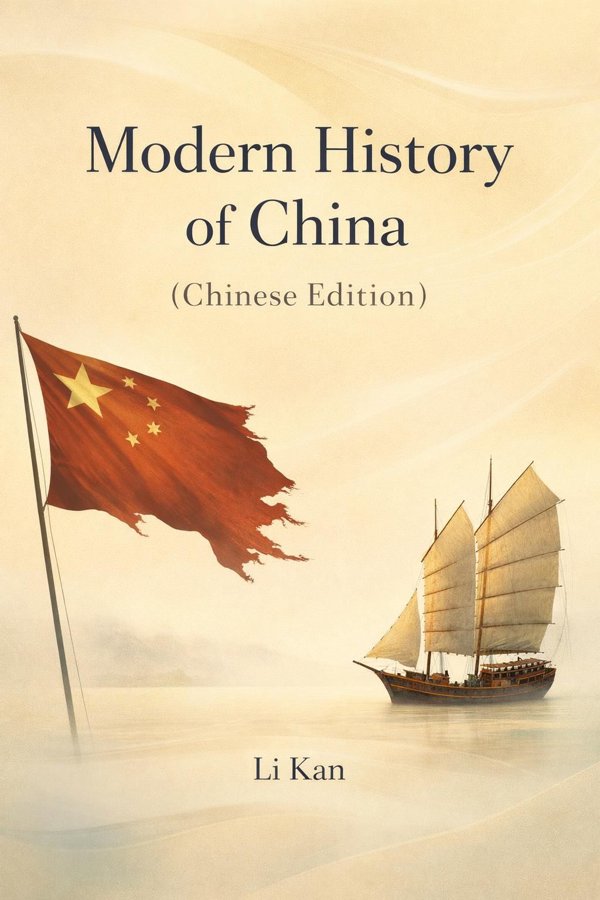
Modern History of China (Chinese Edition): Summary & Key Insights
by Li Kan
 10 min12 chaptersAudio available
What Is Modern History of China (Chinese Edition) About?
Modern History of China (Chinese Edition) by Li Kan is a chinese_history book spanning 12 pages. Modern History of China (Chinese Edition) is a comprehensive academic work by historian Li Kan, covering the period from the Opium War to the Xinhai Revolution. It analyzes the transformation of Chinese society, the impact of foreign invasions, and the rise of national consciousness and revolutionary movements. Based on rigorous historical methodology and extensive sources, it remains an important reference for the study of modern Chinese history.
This FizzRead summary covers all 12 key chapters of Modern History of China (Chinese Edition) in approximately 10 minutes, distilling the most important ideas, arguments, and takeaways from Li Kan's work. Also available as an audio summary and Key Quotes Podcast.
Modern History of China (Chinese Edition)
Modern History of China (Chinese Edition) is a comprehensive academic work by historian Li Kan, covering the period from the Opium War to the Xinhai Revolution. It analyzes the transformation of Chinese society, the impact of foreign invasions, and the rise of national consciousness and revolutionary movements. Based on rigorous historical methodology and extensive sources, it remains an important reference for the study of modern Chinese history.
Who Should Read Modern History of China (Chinese Edition)?
This book is perfect for anyone interested in chinese_history and looking to gain actionable insights in a short read. Whether you're a student, professional, or lifelong learner, the key ideas from Modern History of China (Chinese Edition) by Li Kan will help you think differently.
- ✓Readers who enjoy chinese_history and want practical takeaways
- ✓Professionals looking to apply new ideas to their work and life
- ✓Anyone who wants the core insights of Modern History of China (Chinese Edition) in just 10 minutes
Want the full summary?
Get instant access to this book summary and 100K+ more with Fizz Moment.
Get Free SummaryAvailable on App Store • Free to download
Key Chapters
The conflict that initiated China's modern era began not merely as a war over opium but as a clash between two systems—the mercantilist expansionism of industrial Britain and the imperial bureaucracy of the Qing. From the moment British traders violated Chinese law by flooding the market with opium, the integrity of traditional governance began to fray. Commissioner Lin Zexu’s moral stance and decisive actions in Guangdong symbolize the last stand of imperial authority against foreign encroachment. His efforts, though noble, revealed the limitations of a state built on Confucian ideals rather than global power politics.
In documenting this war, I emphasize how mismatched the encounter was. China’s military technology and diplomatic protocol were rooted in eighteenth-century patterns of tributary relations, while Britain operated under nineteenth-century industrial dominance. The Treaty of Nanking that closed the war did not merely cede Hong Kong—it opened five treaty ports, legalized foreign residence, and established extraterritoriality. This was a profound reconfiguration of sovereignty; for the first time, foreign powers gained legitimate footholds within Chinese territory.
From a historian’s vantage, the Opium War marks the decisive rupture between isolation and confrontation. It forced China to confront the inadequacy of its institutions and set in motion a century-long struggle to reconcile tradition with modernity. I underline that the failure in 1842 was not just military; it was epistemological. China’s worldview—its assumptions about itself and others—collapsed under the impact of Western pragmatism. That collapse catalyzed the long search for reform that defines the modern age.
If the first Opium War opened the gates of foreign intrusion, the subsequent decades widened them into an international system of control. The Second Opium War (1856–1860), the treaties of Tianjin and Peking, and the proliferation of foreign concessions in Shanghai, Tianjin, and other coastal cities created a semi-colonial structure. Through archival sources and diplomatic analyses, I show that these treaties were not isolated impositions but components of a systematic penetration—political, economic, cultural—that reshaped China’s urban landscape.
The foreign concessions became laboratories of modernity, introducing machinery, banks, and new forms of urban life, but they also stood as daily reminders of humiliation and powerlessness. The Qing court’s negotiation tactics, driven by short-term survival rather than long-term vision, reflect a tragic pragmatism under duress. The old empire adapted just enough to maintain control but never enough to regain autonomy. These years laid the groundwork for reformist thought—officials like Zeng Guofan and Li Hongzhang began to recognize that survival required change.
In narrating these tensions, I connect the foreign invasions to the gradual redefinition of sovereignty within Chinese consciousness. The system of unequal treaties broke the illusion of possession and forced intellectuals to ask: What does modernization mean for a country stripped of power? Out of resentment grew reflection, and from reflection, the first glimmers of the self-strengthening ethos.
+ 10 more chapters — available in the FizzRead app
All Chapters in Modern History of China (Chinese Edition)
About the Author
Li Kan (1909–1992) was a prominent Chinese historian specializing in modern Chinese history. He served as a researcher at the Institute of Modern History, Chinese Academy of Social Sciences, and authored several influential works, including Modern History of China and Outline of Modern Chinese History.
Get This Summary in Your Preferred Format
Read or listen to the Modern History of China (Chinese Edition) summary by Li Kan anytime, anywhere. FizzRead offers multiple formats so you can learn on your terms — all free.
Available formats: App · Audio · PDF · EPUB — All included free with FizzRead
Download Modern History of China (Chinese Edition) PDF and EPUB Summary
Key Quotes from Modern History of China (Chinese Edition)
“From the moment British traders violated Chinese law by flooding the market with opium, the integrity of traditional governance began to fray.”
“If the first Opium War opened the gates of foreign intrusion, the subsequent decades widened them into an international system of control.”
Frequently Asked Questions about Modern History of China (Chinese Edition)
Modern History of China (Chinese Edition) by Li Kan is a chinese_history book that explores key ideas across 12 chapters. Modern History of China (Chinese Edition) is a comprehensive academic work by historian Li Kan, covering the period from the Opium War to the Xinhai Revolution. It analyzes the transformation of Chinese society, the impact of foreign invasions, and the rise of national consciousness and revolutionary movements. Based on rigorous historical methodology and extensive sources, it remains an important reference for the study of modern Chinese history.
You Might Also Like
1587, A Year of No Significance
Ray Huang
10 min
A Brief History of the Song Dynasty (Chinese Edition)
Chen Zhen
10 min
Comprehensive Mirror to Aid in Government (Zizhi Tongjian)
Sima Guang
10 min
General History of China (Chinese Edition)
Lü Simian
10 min
Records of the Grand Historian (Chinese Edition)
Sima Qian
10 min
Romance of the Three Kingdoms
Luo Guanzhong
10 minBrowse by Category
Ready to read Modern History of China (Chinese Edition)?
Get the full summary and 100K+ more books with Fizz Moment.