
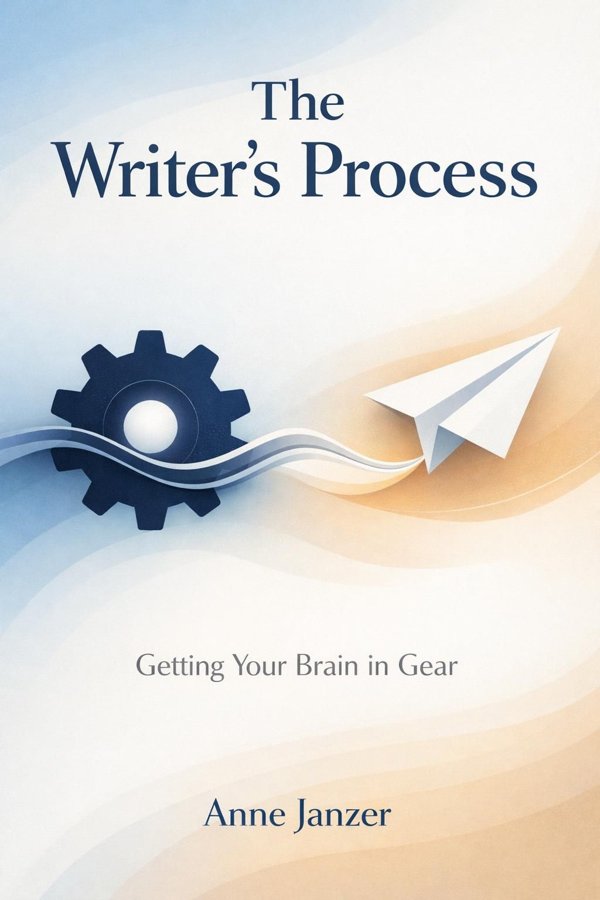
The Writer’s Process: Getting Your Brain in Gear: Summary & Key Insights
by Anne Janzer
 10 min6 chaptersAudio available
What Is The Writer’s Process: Getting Your Brain in Gear About?
The Writer’s Process: Getting Your Brain in Gear by Anne Janzer is a writing book spanning 6 pages. The Writer’s Process explores the intersection of creativity and productivity in writing. Anne Janzer combines insights from cognitive science with practical advice to help writers harness both the analytical and creative sides of their minds. The book offers strategies for managing focus, overcoming resistance, and developing sustainable writing habits that lead to consistent, high-quality work.
This FizzRead summary covers all 6 key chapters of The Writer’s Process: Getting Your Brain in Gear in approximately 10 minutes, distilling the most important ideas, arguments, and takeaways from Anne Janzer's work. Also available as an audio summary and Key Quotes Podcast.
The Writer’s Process: Getting Your Brain in Gear
The Writer’s Process explores the intersection of creativity and productivity in writing. Anne Janzer combines insights from cognitive science with practical advice to help writers harness both the analytical and creative sides of their minds. The book offers strategies for managing focus, overcoming resistance, and developing sustainable writing habits that lead to consistent, high-quality work.
Who Should Read The Writer’s Process: Getting Your Brain in Gear?
This book is perfect for anyone interested in writing and looking to gain actionable insights in a short read. Whether you're a student, professional, or lifelong learner, the key ideas from The Writer’s Process: Getting Your Brain in Gear by Anne Janzer will help you think differently.
- ✓Readers who enjoy writing and want practical takeaways
- ✓Professionals looking to apply new ideas to their work and life
- ✓Anyone who wants the core insights of The Writer’s Process: Getting Your Brain in Gear in just 10 minutes
Want the full summary?
Get instant access to this book summary and 100K+ more with Fizz Moment.
Get Free SummaryAvailable on App Store • Free to download
Key Chapters
Every writer knows the split within. On one side stands the Muse—playful, imaginative, full of intuitive connections and sudden insight. The Muse is the source of inspiration, the one who whispers ideas and sees patterns beyond logic. On the other side stands the Scribe—a disciplined craftsman who loves order, precision, and iteration. The Scribe brings structure, edits with care, and turns vague inspiration into tangible prose.
To become a truly effective writer, you must learn not only to embrace both, but to understand their rhythms. The Muse thrives in periods of openness—when you give yourself time to wander, experiment, and dream without judgment. The Scribe thrives under focus—when you narrow attention, refine logic, and polish language. Problems arise when we expect one to perform in the other’s domain. For instance, trying to edit while generating ideas can silence the Muse. Or letting the Muse run the show during revision can sabotage clarity. Writing is an alternating dance between these two modes.
Cognitive science helps explain this interplay. The creative process often activates the brain’s default network—associated with imagination, memory association, and daydreaming. When the Scribe takes over, the executive control network engages—handling logic, sequencing, and task execution. The trick is not to force one mode but to transition gracefully between them. Knowing when to invite the Muse and when to summon the Scribe keeps your process fluid and rewarding, preventing the stagnation of perfectionism or the chaos of endless ideation.
Writers often struggle not because of a lack of creativity or discipline, but because they fail to manage the transition between the Muse and the Scribe. The moment you switch from expansive imagination to focused execution, your mind requires time to realign. Impatience leads to frustration—the Scribe intrudes before the Muse has finished singing, or the Muse interrupts while the Scribe is trying to construct order.
I’ve found that honoring these transitions makes writing feel less like friction and more like flow. Begin creative sessions with openness. Lower expectations, free-write, brainstorm, or sketch ideas without judgment. Once you feel that spark settle into substance—an outline, an argument, a rhythm—invite the Scribe to take over. Give yourself a clear signal, like moving to a different space, shifting posture, or changing your medium.
Resistance often appears during these hand-offs. That resistance isn’t laziness—it’s your mind protecting cognitive resources. The key is gentle persistence. Create rituals, design your environment, and build habits that ease movement between the two modes. For example, you might draft in longhand to let the Muse roam and then edit digitally to engage the Scribe’s focus. Understanding these transitions makes writing both more productive and more humane—it respects your natural mental ecosystem rather than fighting it.
+ 4 more chapters — available in the FizzRead app
All Chapters in The Writer’s Process: Getting Your Brain in Gear
About the Author
Anne Janzer is an award-winning author, nonfiction writing coach, and marketing consultant. She writes about writing practices, motivation, and the creative process, helping authors and professionals communicate more effectively and find joy in their work.
Get This Summary in Your Preferred Format
Read or listen to the The Writer’s Process: Getting Your Brain in Gear summary by Anne Janzer anytime, anywhere. FizzRead offers multiple formats so you can learn on your terms — all free.
Available formats: App · Audio · PDF · EPUB — All included free with FizzRead
Download The Writer’s Process: Getting Your Brain in Gear PDF and EPUB Summary
Key Quotes from The Writer’s Process: Getting Your Brain in Gear
“On one side stands the Muse—playful, imaginative, full of intuitive connections and sudden insight.”
“Writers often struggle not because of a lack of creativity or discipline, but because they fail to manage the transition between the Muse and the Scribe.”
Frequently Asked Questions about The Writer’s Process: Getting Your Brain in Gear
The Writer’s Process: Getting Your Brain in Gear by Anne Janzer is a writing book that explores key ideas across 6 chapters. The Writer’s Process explores the intersection of creativity and productivity in writing. Anne Janzer combines insights from cognitive science with practical advice to help writers harness both the analytical and creative sides of their minds. The book offers strategies for managing focus, overcoming resistance, and developing sustainable writing habits that lead to consistent, high-quality work.
You Might Also Like
The Art of Perspective
Christopher Castellani
10 min
Making a Point: The Persnickety Story of English Punctuation
David Crystal
10 min
The Elements Of Eloquence: How To Turn The Perfect English Phrase
Mark Forsyth
10 min
The Pocket Muse: Ideas and Inspirations for Writing
Monica Wood
10 min
A Little Book on Form: An Exploration into the Formal Imagination of Poetry
Robert Hass
10 min
Adventures In The Screen Trade: A Personal View Of Hollywood And Screenwriting
William Goldman
10 minBrowse by Category
Ready to read The Writer’s Process: Getting Your Brain in Gear?
Get the full summary and 100K+ more books with Fizz Moment.