
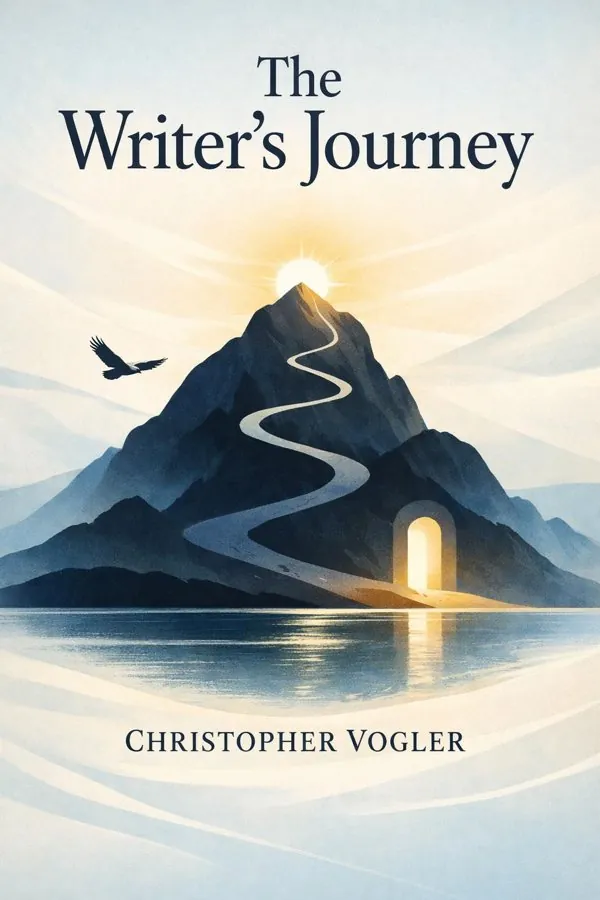
The Writer’s Journey: Mythic Structure for Writers: Summary & Key Insights
 10 min8 chaptersAudio available
What Is The Writer’s Journey: Mythic Structure for Writers About?
The Writer’s Journey: Mythic Structure for Writers by Christopher Vogler is a writing book spanning 8 pages. The Writer’s Journey: Mythic Structure for Writers explores how the archetypal hero’s journey, as described by Joseph Campbell, can be applied to modern storytelling. Vogler provides a practical guide for screenwriters and authors to structure narratives using timeless mythological patterns, offering insights into character development, plot progression, and emotional resonance.
This FizzRead summary covers all 8 key chapters of The Writer’s Journey: Mythic Structure for Writers in approximately 10 minutes, distilling the most important ideas, arguments, and takeaways from Christopher Vogler's work. Also available as an audio summary and Key Quotes Podcast.
The Writer’s Journey: Mythic Structure for Writers
The Writer’s Journey: Mythic Structure for Writers explores how the archetypal hero’s journey, as described by Joseph Campbell, can be applied to modern storytelling. Vogler provides a practical guide for screenwriters and authors to structure narratives using timeless mythological patterns, offering insights into character development, plot progression, and emotional resonance.
Who Should Read The Writer’s Journey: Mythic Structure for Writers?
This book is perfect for anyone interested in writing and looking to gain actionable insights in a short read. Whether you're a student, professional, or lifelong learner, the key ideas from The Writer’s Journey: Mythic Structure for Writers by Christopher Vogler will help you think differently.
- ✓Readers who enjoy writing and want practical takeaways
- ✓Professionals looking to apply new ideas to their work and life
- ✓Anyone who wants the core insights of The Writer’s Journey: Mythic Structure for Writers in just 10 minutes
Want the full summary?
Get instant access to this book summary and 100K+ more with Fizz Moment.
Get Free SummaryAvailable on App Store • Free to download
Key Chapters
At the heart of 'The Writer’s Journey' is the recognition that myth and story speak the same language. When I adapted Joseph Campbell’s work for writers, it became clear that myths were not distant legends but psychological blueprints for change. Writers, therefore, are modern mythmakers. We translate those enduring patterns into personal, cultural, and cinematic contexts.
The framework bridges two worlds: the world of ancient myth and the world of contemporary storytelling. In the mythic sense, stories reveal truths about being human. In the practical sense, they help us shape compelling structure. The hero’s journey gives your story emotional momentum, but it’s also flexible—each culture, each writer bends it uniquely to their own needs. The point is not imitation but understanding.
For instance, when a character crosses a threshold or faces an ordeal, the audience doesn’t see a mythic diagram—they see courage, fear, love, loss. The mythic structure works beneath the surface, ensuring every choice feels purposeful. That, to me, is the writer’s real power: to guide the audience through transformation without ever exposing the scaffolding.
As a writer, you are also journeying. You begin in the ordinary world of your comfort zone, hear the call of the story, resist it, meet mentors, cross thresholds of creativity, and face the ordeals of doubt and revision. Recognizing your own creative process as a hero’s journey brings empathy to your characters. You’ll realize that your struggles mirror theirs, and that understanding infuses your work with authenticity.
The mythic framework doesn’t replace intuition—it enhances it. It gives structure to inspiration and meaning to revision. That’s why I call it a map—not to confine you, but to guide you when the road disappears beneath your feet.
The hero’s journey presents a universal pattern divided into twelve distinct, fluid stages. These stages create a rhythm—a heartbeat—that sustains emotional engagement and character development. Each one represents a facet of transformation.
The journey begins in the Ordinary World, a place of balance before upheaval. Then, the Call to Adventure disrupts that equilibrium, beckoning the hero toward change. When fear or doubt arises, the Refusal of the Call brings depth and humanity. The Meeting with the Mentor injects guidance, a glimpse of hope or wisdom, before Crossing the First Threshold launches the hero into the new world—the realm of tests, allies, and enemies.
This middle act, filled with conflict and revelation, pushes the hero toward the inner sanctum—the Approach to the Inmost Cave—where stakes and emotions heighten. The Ordeal follows: the symbolic death or greatest trial that forces transformation. Emerging from the Ordeal, the hero gains a Reward—insight, treasure, or self-knowledge. But the story does not end there. The Road Back demands reintegration, often with renewed conflict. The Resurrection—another brush with death or ultimate sacrifice—completes the purification, and finally, the Return with the Elixir restores balance. The hero comes home changed and shares the gift of transformation with others.
As you write, these stages give you both direction and freedom. You may reorder or reinterpret them according to your narrative’s needs, but understanding their essence grants coherence to your story’s soul. The pattern endures because it mirrors life itself: every challenge, every creative act, every love or loss follows the arc of departure, initiation, and return.
+ 6 more chapters — available in the FizzRead app
All Chapters in The Writer’s Journey: Mythic Structure for Writers
About the Author
Christopher Vogler is an American writer, story consultant, and educator known for his work on narrative structure and mythic storytelling. He has worked with major Hollywood studios and is recognized for adapting Joseph Campbell’s ideas into accessible tools for writers.
Get This Summary in Your Preferred Format
Read or listen to the The Writer’s Journey: Mythic Structure for Writers summary by Christopher Vogler anytime, anywhere. FizzRead offers multiple formats so you can learn on your terms — all free.
Available formats: App · Audio · PDF · EPUB — All included free with FizzRead
Download The Writer’s Journey: Mythic Structure for Writers PDF and EPUB Summary
Key Quotes from The Writer’s Journey: Mythic Structure for Writers
“At the heart of 'The Writer’s Journey' is the recognition that myth and story speak the same language.”
“The hero’s journey presents a universal pattern divided into twelve distinct, fluid stages.”
Frequently Asked Questions about The Writer’s Journey: Mythic Structure for Writers
The Writer’s Journey: Mythic Structure for Writers by Christopher Vogler is a writing book that explores key ideas across 8 chapters. The Writer’s Journey: Mythic Structure for Writers explores how the archetypal hero’s journey, as described by Joseph Campbell, can be applied to modern storytelling. Vogler provides a practical guide for screenwriters and authors to structure narratives using timeless mythological patterns, offering insights into character development, plot progression, and emotional resonance.
You Might Also Like
The Art of Perspective
Christopher Castellani
10 min
Making a Point: The Persnickety Story of English Punctuation
David Crystal
10 min
The Elements Of Eloquence: How To Turn The Perfect English Phrase
Mark Forsyth
10 min
The Pocket Muse: Ideas and Inspirations for Writing
Monica Wood
10 min
A Little Book on Form: An Exploration into the Formal Imagination of Poetry
Robert Hass
10 min
Adventures In The Screen Trade: A Personal View Of Hollywood And Screenwriting
William Goldman
10 minBrowse by Category
Ready to read The Writer’s Journey: Mythic Structure for Writers?
Get the full summary and 100K+ more books with Fizz Moment.