
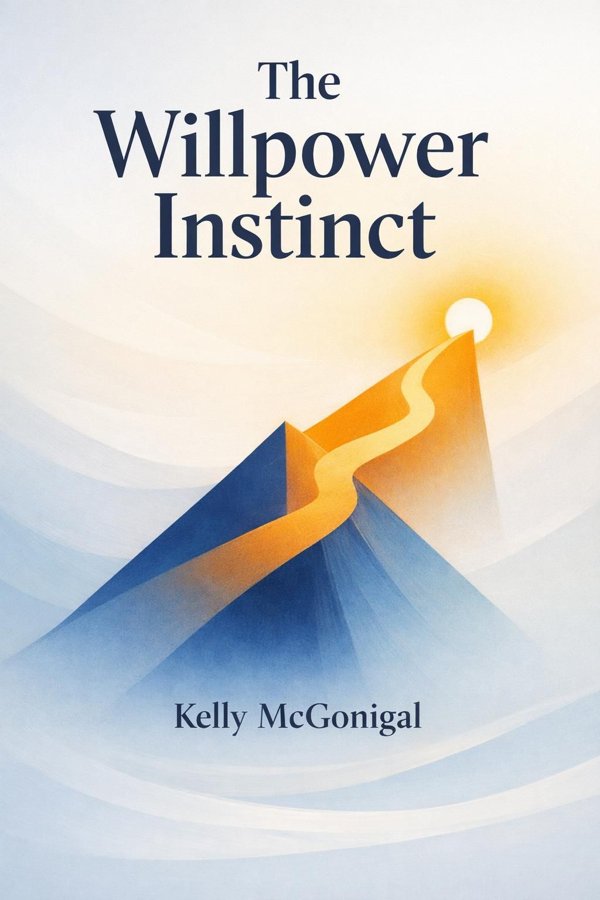
The Willpower Instinct: How Self-Control Works, Why It Matters, and What You Can Do to Get More of It: Summary & Key Insights
 10 min10 chaptersAudio available
Key Takeaways from The Willpower Instinct: How Self-Control Works, Why It Matters, and What You Can Do to Get More of It
Self-control is not one thing; it is a balancing act between competing forces inside the mind.
Every difficult decision is a conversation between ancient impulses and modern goals.
Self-control feels moral, but it is deeply biological.
The instinct to fight temptation head-on can sometimes make it stronger.
People rarely procrastinate because they do not care; they procrastinate because the present feels louder than the future.
What Is The Willpower Instinct: How Self-Control Works, Why It Matters, and What You Can Do to Get More of It About?
The Willpower Instinct: How Self-Control Works, Why It Matters, and What You Can Do to Get More of It by Kelly McGonigal is a psychology book spanning 10 pages. Why do people sabotage their own best intentions even when they know exactly what they should do? That question sits at the heart of The Willpower Instinct, Kelly McGonigal’s practical and research-driven guide to self-control. Based on her highly popular Stanford University course, the book brings together psychology, neuroscience, behavioral economics, and health science to show that willpower is not a mysterious moral trait. It is a set of trainable mental and physical skills. McGonigal argues that self-control is less about harsh discipline and more about awareness, energy management, stress reduction, and learning how the brain responds to temptation. She explains why people procrastinate, overeat, overspend, and relapse into habits they want to change, while also offering realistic tools to interrupt these patterns. Instead of blaming readers for failure, she helps them understand the mechanisms behind it. What makes this book especially valuable is McGonigal’s authority as a health psychologist and Stanford lecturer, combined with her compassionate tone. She turns complex science into useful daily practices, making this a powerful book for anyone who wants to improve health, productivity, focus, or emotional resilience.
This FizzRead summary covers all 10 key chapters of The Willpower Instinct: How Self-Control Works, Why It Matters, and What You Can Do to Get More of It in approximately 10 minutes, distilling the most important ideas, arguments, and takeaways from Kelly McGonigal's work. Also available as an audio summary and Key Quotes Podcast.
The Willpower Instinct: How Self-Control Works, Why It Matters, and What You Can Do to Get More of It
Why do people sabotage their own best intentions even when they know exactly what they should do? That question sits at the heart of The Willpower Instinct, Kelly McGonigal’s practical and research-driven guide to self-control. Based on her highly popular Stanford University course, the book brings together psychology, neuroscience, behavioral economics, and health science to show that willpower is not a mysterious moral trait. It is a set of trainable mental and physical skills.
McGonigal argues that self-control is less about harsh discipline and more about awareness, energy management, stress reduction, and learning how the brain responds to temptation. She explains why people procrastinate, overeat, overspend, and relapse into habits they want to change, while also offering realistic tools to interrupt these patterns. Instead of blaming readers for failure, she helps them understand the mechanisms behind it.
What makes this book especially valuable is McGonigal’s authority as a health psychologist and Stanford lecturer, combined with her compassionate tone. She turns complex science into useful daily practices, making this a powerful book for anyone who wants to improve health, productivity, focus, or emotional resilience.
Who Should Read The Willpower Instinct: How Self-Control Works, Why It Matters, and What You Can Do to Get More of It?
This book is perfect for anyone interested in psychology and looking to gain actionable insights in a short read. Whether you're a student, professional, or lifelong learner, the key ideas from The Willpower Instinct: How Self-Control Works, Why It Matters, and What You Can Do to Get More of It by Kelly McGonigal will help you think differently.
- ✓Readers who enjoy psychology and want practical takeaways
- ✓Professionals looking to apply new ideas to their work and life
- ✓Anyone who wants the core insights of The Willpower Instinct: How Self-Control Works, Why It Matters, and What You Can Do to Get More of It in just 10 minutes
Want the full summary?
Get instant access to this book summary and 100K+ more with Fizz Moment.
Get Free SummaryAvailable on App Store • Free to download
Key Chapters
Self-control is not one thing; it is a balancing act between competing forces inside the mind. McGonigal explains that willpower has three distinct forms: “I won’t” power, which helps us resist temptation; “I will” power, which helps us do what is difficult but necessary; and “I want” power, which keeps us connected to our deeper goals and values. Most people think self-control simply means saying no, but the book argues that lasting discipline depends just as much on remembering what matters most.
This framework is powerful because it makes self-control more precise. Saying no to junk food uses “I won’t” power. Starting a workout after a long day requires “I will” power. Keeping in mind that you want long-term health, confidence, or energy activates “I want” power. When these three powers align, choices feel less like punishment and more like meaningful action.
McGonigal also shows that self-control failures often happen when short-term impulses drown out long-term desires. You may truly want to save money, build a business, or finish a degree, but in the moment, comfort and distraction feel more urgent. The solution is not self-criticism. It is learning to regularly bring your long-term self into the present.
A practical way to do this is to name your three powers in real situations. Before a challenge, ask: What do I need to stop? What do I need to do? What do I really want? Actionable takeaway: Create a simple willpower script for one recurring struggle by identifying your “I won’t,” “I will,” and “I want” before temptation appears.
Every difficult decision is a conversation between ancient impulses and modern goals. McGonigal describes self-control as a struggle between the brain’s reward system, which seeks immediate pleasure and relief, and the prefrontal cortex, which supports planning, attention, and wise judgment. This is why people can sincerely decide to change and still act against their own interests hours later.
The reward system is not evil; it evolved to help humans pursue food, safety, and social connection. But in modern life, it is easily hijacked by endless stimulation: sugary foods, shopping apps, social media notifications, and convenient distractions. The prefrontal cortex, by contrast, is the part of the brain that can pause, evaluate consequences, and keep long-term goals in view. When it is functioning well, people feel more deliberate. When it is tired, overloaded, or stressed, impulses gain the upper hand.
This scientific perspective is liberating because it removes some of the shame around bad habits. If you binge-watch instead of sleeping or reach for your phone instead of working, it is not simply because you are lazy. It may be because your brain is being pulled toward a fast, certain reward while your control system is depleted.
McGonigal encourages readers to design environments that help the prefrontal cortex win. Put temptations out of sight, automate good choices, and reduce decision fatigue. For example, prepare healthy meals in advance or set a website blocker during work hours. Actionable takeaway: Strengthen self-control by making your desired behavior easier and your unwanted behavior harder before the moment of decision arrives.
Self-control feels moral, but it is deeply biological. One of McGonigal’s most useful insights is that willpower rises and falls with the body’s state. Sleep deprivation, hunger, mental overload, and constant stress all weaken the brain systems responsible for restraint and persistence. In other words, people often fail at self-control not because they lack values, but because they are trying to make good decisions with an exhausted nervous system.
The book explores the idea that self-control can be depleted by overuse, especially when people face repeated decisions, emotional strain, or constant temptation. While the science of ego depletion has been debated, McGonigal’s broader point remains practical and persuasive: tired people are more impulsive, more reactive, and less able to act in line with long-term goals. Anyone who has promised to be disciplined and then made poor choices late at night understands this intuitively.
This has major implications for daily life. If you want to control spending, do not browse online stores when you are mentally drained. If you are trying to eat better, do not rely on evening restraint after a chaotic day. If you need to finish important work, schedule it for times when your energy is highest.
The deeper lesson is that self-control grows when recovery becomes a priority. Adequate sleep, nourishing food, movement, breaks, and reduced overload are not rewards for discipline; they are conditions that make discipline possible. Actionable takeaway: Protect one daily source of energy this week, such as sleep, lunch breaks, or a focused morning routine, and treat it as a willpower investment rather than a luxury.
The instinct to fight temptation head-on can sometimes make it stronger. McGonigal highlights a surprising truth: cravings often intensify when people panic, suppress thoughts, or try to force themselves not to want something. The mind becomes fixated on the forbidden object, and resistance starts to feel like obsession. A wiser strategy is to notice urges without immediately obeying or attacking them.
This is where delayed gratification becomes more than a moral lesson. If you can pause and witness a craving as a passing mental event, rather than a command, you create space for choice. A desire for sugar, nicotine, shopping, or procrastination usually rises, peaks, and fades. The brain may scream that satisfaction is urgent, but observation reveals that urges are temporary waves, not permanent emergencies.
McGonigal suggests techniques such as urge surfing, mindful breathing, and labeling sensations. Instead of saying, “I need this now,” you might say, “I am noticing a craving” or “My body is feeling restless and my mind wants relief.” This small shift reduces identification with the impulse. It also interrupts automatic behavior.
In practice, this can help with everything from emotional eating to checking your phone every few minutes. When the urge appears, wait ten minutes, breathe, and watch what happens. Often the craving weakens enough for your wiser intention to re-enter the scene.
Actionable takeaway: The next time you feel a strong impulse, do not argue with it or obey it immediately. Set a timer for ten minutes, observe the craving with curiosity, and let the urge pass through without acting on it right away.
People rarely procrastinate because they do not care; they procrastinate because the present feels louder than the future. McGonigal explains that the brain consistently overvalues immediate comfort and undervalues delayed rewards. This is why starting a difficult report, having a hard conversation, or going to the gym can feel disproportionately painful in the moment, even when we know these actions serve our long-term interests.
The book calls attention to the myth of “future me.” We often assume that tomorrow we will be more disciplined, more energetic, and more motivated. So we postpone effort and hand responsibility to an imagined future self who will supposedly be better equipped. But future you is usually just present you under new conditions, often with the same fears, habits, and distractions.
Procrastination also becomes a form of mood repair. People avoid tasks that trigger anxiety, boredom, or self-doubt and choose activities that offer immediate relief. That relief may come from scrolling, snacking, cleaning, or making endless plans instead of acting. The short-term emotional payoff reinforces the delay.
McGonigal’s response is practical: shrink the task, reduce emotional resistance, and make the first step almost laughably easy. Instead of “write the proposal,” commit to opening the file and writing one sentence. Instead of “study all evening,” study for ten minutes. Progress changes feelings more reliably than waiting for motivation.
Actionable takeaway: Replace one delayed task with a two-minute starting ritual today. Make the goal not to finish, but simply to begin before your brain can negotiate another excuse.
When stress rises, self-control often disappears first. McGonigal shows that the body’s stress response narrows attention toward immediate survival, relief, and habit. Under pressure, the brain becomes less interested in long-term consequences and more eager for anything that promises comfort right now. That is why people under stress often eat impulsively, lash out, drink more, skip exercise, or abandon financial discipline.
This matters because many people respond to self-control failure by increasing pressure on themselves. They shame themselves, set harsher rules, or try to push through exhaustion. But stress does not strengthen willpower; it usually weakens it. The body interprets chronic tension as a threat, and threatened minds seek fast rewards and familiar routines.
McGonigal offers a gentler and more effective path: regulate the body first. Slow breathing, brief exercise, time in nature, social connection, and mindfulness practices can shift the nervous system out of fight-or-flight mode. Self-compassion is especially important. People who forgive themselves for setbacks are often more likely to recover quickly, while harsh self-judgment can trigger more of the very behavior they regret.
Imagine someone trying to stop emotional eating. If they come home overwhelmed, the goal should not be to white-knuckle their way past the kitchen. A better first move might be to sit down, breathe deeply for a few minutes, drink water, and acknowledge the stress before making any decision.
Actionable takeaway: Build a personal stress-reset routine of one to five minutes and use it before facing your biggest temptations, especially when you feel emotionally activated.
Major change rarely begins with a heroic act; it begins with a repeatable step. McGonigal emphasizes that habits are powerful because they reduce the need for constant decision-making. Once a behavior becomes routine, it requires less effort from willpower. This means that the smartest path to self-control is often not intense motivation, but consistent structure.
People frequently sabotage themselves by setting goals that are too ambitious to sustain. They decide to wake up two hours earlier, eliminate all sugar, meditate daily for an hour, and never procrastinate again. Such plans create friction, not transformation. The brain resists large disruptions, especially when rewards are delayed. Small steps are more effective because they create success experiences the brain can repeat.
Habits also shape identity. A person who writes for ten minutes every day starts to see themselves as a writer. Someone who walks after dinner begins to become an active person. These identity shifts matter because behavior that matches self-image feels more natural and less forced.
McGonigal encourages experimenting with modest, measurable changes: one push-up after brushing your teeth, a glass of water before coffee, putting your phone in another room during dinner, or saving a tiny percentage of each paycheck automatically. The point is not that small actions are trivial, but that they are psychologically easier to protect and compound over time.
Actionable takeaway: Choose one habit so small that it feels impossible to fail, attach it to an existing routine, and repeat it daily until it becomes part of who you are.
One of the most encouraging messages in the book is that willpower can be trained. McGonigal highlights meditation, mindful breathing, and attention exercises as practical ways to strengthen the mental muscles behind self-control. These practices improve the ability to notice impulses, redirect attention, and recover from distraction instead of being carried away automatically.
Meditation helps because self-control starts with awareness. You cannot interrupt a habit you do not notice. By repeatedly bringing attention back to the breath, the body, or the present moment, you practice the very skill required in real-life temptations: recognizing that the mind has wandered and choosing a different direction. Over time, this can improve emotional regulation and reduce reactivity.
The book also emphasizes the physiological side of calm attention. Slow, steady breathing can increase heart-rate variability, a marker associated with better self-regulation. This means a simple breathing practice is not just relaxing; it can improve the body’s readiness to pause and choose wisely.
These methods are especially valuable because they are accessible. You do not need perfect discipline to start. Even a few minutes of sitting quietly, following the breath, or noticing thoughts without judgment can begin to shift how you respond under pressure.
Actionable takeaway: Practice five minutes of mindfulness or slow breathing each day for one week, and use the same technique in moments of craving, stress, or procrastination to strengthen your pause before action.
Willpower becomes fragile when it is fueled only by guilt, fear, or social pressure. McGonigal’s deeper argument is that self-control lasts when it is connected to meaning. The “I want” power is not just another tool; it is the emotional engine that helps people endure discomfort in service of a life they care about. Without that connection, discipline feels empty and eventually collapses.
This is why shallow goals often fail. A person may try to lose weight because they feel ashamed, work harder because they fear falling behind, or save money because they think they should. These motives can create short bursts of effort, but they do not provide steady energy. More durable motivation comes from identifying the values beneath the goal: vitality, freedom, contribution, creativity, family, integrity, or peace of mind.
When people remember what a choice stands for, the immediate sacrifice becomes easier to tolerate. Saying no to an impulse is no longer just deprivation. It becomes a way of saying yes to something bigger. The person who skips a purchase may be choosing security. The person who closes social media may be choosing presence. The person who keeps writing may be choosing a future identity.
McGonigal encourages readers to repeatedly reconnect actions with purpose, especially during discouraging moments. Ask not only, “What am I trying to stop?” but also, “What kind of life is this helping me build?”
Actionable takeaway: Write down one important goal and list three deeper values it serves. Read that list before the situations in which your motivation usually fades.
All Chapters in The Willpower Instinct: How Self-Control Works, Why It Matters, and What You Can Do to Get More of It
About the Author
Kelly McGonigal, PhD, is a health psychologist, researcher, and lecturer at Stanford University known for her work on self-control, stress, and the mind-body connection. She teaches popular courses that translate findings from psychology and neuroscience into practical strategies for improving well-being, resilience, and behavior change. McGonigal has become especially respected for her ability to combine scientific rigor with an encouraging, compassionate voice that helps readers apply research to everyday life. Her writing often challenges common assumptions about motivation, discipline, and stress, showing how these forces can be better understood and used constructively. In addition to The Willpower Instinct, she has written other acclaimed books on stress and movement, reaching a wide audience of readers interested in personal growth, mental health, and human performance.
Get This Summary in Your Preferred Format
Read or listen to the The Willpower Instinct: How Self-Control Works, Why It Matters, and What You Can Do to Get More of It summary by Kelly McGonigal anytime, anywhere. FizzRead offers multiple formats so you can learn on your terms — all free.
Available formats: App · Audio · PDF · EPUB — All included free with FizzRead
Download The Willpower Instinct: How Self-Control Works, Why It Matters, and What You Can Do to Get More of It PDF and EPUB Summary
Key Quotes from The Willpower Instinct: How Self-Control Works, Why It Matters, and What You Can Do to Get More of It
“Self-control is not one thing; it is a balancing act between competing forces inside the mind.”
“Every difficult decision is a conversation between ancient impulses and modern goals.”
“Self-control feels moral, but it is deeply biological.”
“The instinct to fight temptation head-on can sometimes make it stronger.”
“People rarely procrastinate because they do not care; they procrastinate because the present feels louder than the future.”
Frequently Asked Questions about The Willpower Instinct: How Self-Control Works, Why It Matters, and What You Can Do to Get More of It
The Willpower Instinct: How Self-Control Works, Why It Matters, and What You Can Do to Get More of It by Kelly McGonigal is a psychology book that explores key ideas across 10 chapters. Why do people sabotage their own best intentions even when they know exactly what they should do? That question sits at the heart of The Willpower Instinct, Kelly McGonigal’s practical and research-driven guide to self-control. Based on her highly popular Stanford University course, the book brings together psychology, neuroscience, behavioral economics, and health science to show that willpower is not a mysterious moral trait. It is a set of trainable mental and physical skills. McGonigal argues that self-control is less about harsh discipline and more about awareness, energy management, stress reduction, and learning how the brain responds to temptation. She explains why people procrastinate, overeat, overspend, and relapse into habits they want to change, while also offering realistic tools to interrupt these patterns. Instead of blaming readers for failure, she helps them understand the mechanisms behind it. What makes this book especially valuable is McGonigal’s authority as a health psychologist and Stanford lecturer, combined with her compassionate tone. She turns complex science into useful daily practices, making this a powerful book for anyone who wants to improve health, productivity, focus, or emotional resilience.
More by Kelly McGonigal
The Upside of Stress: Why Stress Is Good for You, and How to Get Good at It
Kelly McGonigal
10 min
Yoga for Pain Relief: A New Approach to an Ancient Practice
Kelly McGonigal
10 min
The Joy of Movement: How Exercise Helps Us Find Happiness, Hope, Connection, and Courage
Kelly McGonigal
10 minYou Might Also Like

The Body Keeps the Score
Bessel van der Kolk
10 min
Surrounded by Idiots
Thomas Erikson
10 min
Emotional Intelligence
Daniel Goleman
10 min
Attached
Amir Levine
10 min
Why Does He Do That
Lundy Bancroft
10 min
Women Who Run with the Wolves
Clarissa Pinkola Estés
10 minBrowse by Category
Ready to read The Willpower Instinct: How Self-Control Works, Why It Matters, and What You Can Do to Get More of It?
Get the full summary and 100K+ more books with Fizz Moment.