
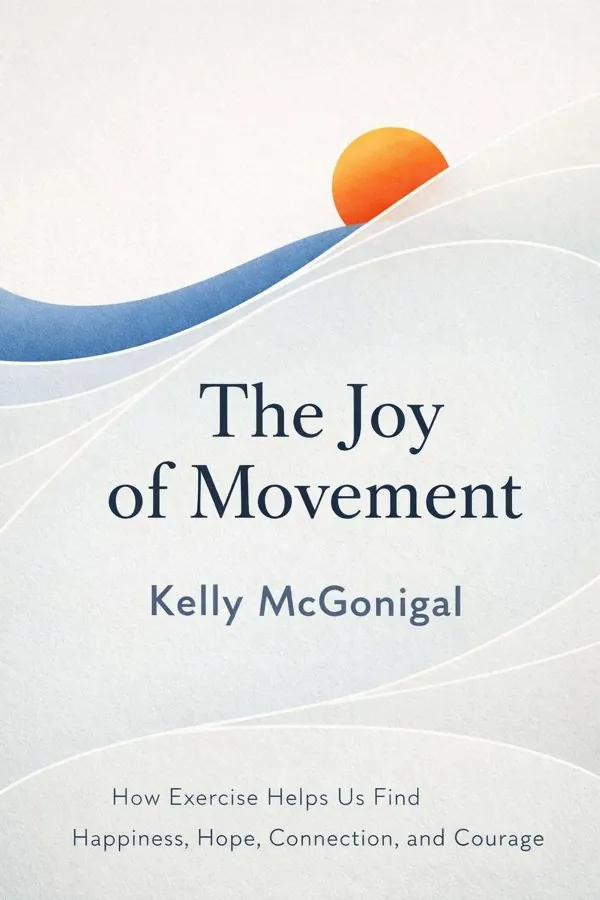
The Joy of Movement: How Exercise Helps Us Find Happiness, Hope, Connection, and Courage: Summary & Key Insights
 10 min9 chaptersAudio available
Key Takeaways from The Joy of Movement: How Exercise Helps Us Find Happiness, Hope, Connection, and Courage
One of the book’s most liberating insights is that exercise does not simply improve health in the future; it can change how you feel almost immediately.
Hope is often treated as a mindset, but McGonigal shows that it is also a bodily experience.
Few things bond people as quickly as moving together.
Courage is often imagined as a rare heroic act, but McGonigal reframes it as a quality we can practice through the body.
Empathy is not only a mental skill; it is also something we feel through the body.
What Is The Joy of Movement: How Exercise Helps Us Find Happiness, Hope, Connection, and Courage About?
The Joy of Movement: How Exercise Helps Us Find Happiness, Hope, Connection, and Courage by Kelly McGonigal is a positive_psych book spanning 9 pages. Most of us have been taught to think about exercise in narrow terms: calories burned, pounds lost, risks reduced. Kelly McGonigal’s The Joy of Movement turns that idea upside down. This book argues that movement is not merely a tool for fitness but a direct path to emotional well-being, resilience, belonging, and meaning. Drawing on psychology, neuroscience, public health research, and vivid real-world stories, McGonigal shows that physical activity can elevate mood, quiet despair, strengthen relationships, awaken bravery, and help people feel more fully alive. Whether the movement is a walk, a swim, yoga, dancing, team sports, or simply getting outside, the benefits reach far beyond the body. What makes the book especially compelling is McGonigal’s authority: as a Stanford health psychologist, she combines scientific rigor with warmth and practicality. Rather than shaming readers into exercise, she invites them to rediscover movement as something deeply human and inherently rewarding. The result is an uplifting, evidence-based guide for anyone who wants to feel better, connect more deeply, and build a happier life from the inside out.
This FizzRead summary covers all 9 key chapters of The Joy of Movement: How Exercise Helps Us Find Happiness, Hope, Connection, and Courage in approximately 10 minutes, distilling the most important ideas, arguments, and takeaways from Kelly McGonigal's work. Also available as an audio summary and Key Quotes Podcast.
The Joy of Movement: How Exercise Helps Us Find Happiness, Hope, Connection, and Courage
Most of us have been taught to think about exercise in narrow terms: calories burned, pounds lost, risks reduced. Kelly McGonigal’s The Joy of Movement turns that idea upside down. This book argues that movement is not merely a tool for fitness but a direct path to emotional well-being, resilience, belonging, and meaning. Drawing on psychology, neuroscience, public health research, and vivid real-world stories, McGonigal shows that physical activity can elevate mood, quiet despair, strengthen relationships, awaken bravery, and help people feel more fully alive. Whether the movement is a walk, a swim, yoga, dancing, team sports, or simply getting outside, the benefits reach far beyond the body. What makes the book especially compelling is McGonigal’s authority: as a Stanford health psychologist, she combines scientific rigor with warmth and practicality. Rather than shaming readers into exercise, she invites them to rediscover movement as something deeply human and inherently rewarding. The result is an uplifting, evidence-based guide for anyone who wants to feel better, connect more deeply, and build a happier life from the inside out.
Who Should Read The Joy of Movement: How Exercise Helps Us Find Happiness, Hope, Connection, and Courage?
This book is perfect for anyone interested in positive_psych and looking to gain actionable insights in a short read. Whether you're a student, professional, or lifelong learner, the key ideas from The Joy of Movement: How Exercise Helps Us Find Happiness, Hope, Connection, and Courage by Kelly McGonigal will help you think differently.
- ✓Readers who enjoy positive_psych and want practical takeaways
- ✓Professionals looking to apply new ideas to their work and life
- ✓Anyone who wants the core insights of The Joy of Movement: How Exercise Helps Us Find Happiness, Hope, Connection, and Courage in just 10 minutes
Want the full summary?
Get instant access to this book summary and 100K+ more with Fizz Moment.
Get Free SummaryAvailable on App Store • Free to download
Key Chapters
One of the book’s most liberating insights is that exercise does not simply improve health in the future; it can change how you feel almost immediately. McGonigal explains that when we move, the brain responds with a powerful blend of chemicals and neural activity that supports pleasure, motivation, and emotional regulation. Dopamine sharpens anticipation and reward, endocannabinoids create a sense of calm and ease, and other mood-enhancing systems help reduce stress and mental fatigue. This is why a walk can clear the mind, a bike ride can lift a dark mood, and dancing can make life feel lighter even when nothing external has changed.
Importantly, the “joy of movement” is not reserved for elite athletes or extreme workouts. It can be triggered by moderate, accessible activity: brisk walking, gardening, stretching, swimming laps, playing with children, or taking a short movement break during a difficult day. McGonigal challenges the belief that exercise must be punishing to be effective. In reality, when movement feels enjoyable or meaningful, we are more likely to repeat it, and the emotional payoff becomes part of a reinforcing cycle.
This idea also changes motivation. Instead of asking, “How can I force myself to exercise?” the better question becomes, “What kind of movement helps me feel more alive?” That shift moves exercise from obligation to self-care. When people notice the immediate emotional rewards of movement, consistency often follows naturally.
Actionable takeaway: Experiment with 10 to 20 minutes of movement you genuinely enjoy and pay close attention to how your mood, energy, and focus change afterward. Let that feeling become your reason to come back.
Hope is often treated as a mindset, but McGonigal shows that it is also a bodily experience. When life feels stuck, movement can interrupt helplessness and remind us that change is possible. Physical activity creates what psychologists call embodied hope: a direct, lived sense of agency. By moving through effort, discomfort, and recovery, we rehearse a powerful truth: we can act, adapt, and keep going.
This matters especially during periods of stress, grief, depression, or uncertainty. A person may not be able to solve every problem immediately, but a walk around the block, a set of stretches, or a swim can restore a sense of momentum. Movement becomes evidence that we are not frozen. The body learns progress before the mind fully believes it. McGonigal points to research showing that regular activity can reduce depressive symptoms, improve stress resilience, and increase optimism. Not because exercise erases hardship, but because it reconnects people to their own capacity.
The rhythm of movement also matters. Repeated steps, breaths, strokes, or pedal turns can soothe an overactive mind and create a steady forward pull. This is why people so often describe movement as something that helps them “reset.” In a very real sense, moving the body helps move emotion and thought.
Hope, then, does not have to arrive as inspiration. It can begin as action. The body can lead the mind toward a more open future.
Actionable takeaway: On difficult days, do not wait to feel motivated. Choose one small movement ritual—a 10-minute walk, a short yoga flow, or climbing stairs—and use it as a physical reminder that forward motion is still possible.
Courage is often imagined as a rare heroic act, but McGonigal reframes it as a quality we can practice through the body. Every time we keep moving through discomfort, uncertainty, or fatigue, we teach ourselves that we can tolerate challenge without collapsing. Exercise becomes a laboratory for bravery. The runner who finishes one more minute, the beginner who enters a class feeling awkward, the older adult who rebuilds strength after illness—all are rehearsing courage.
This does not mean glorifying pain or pushing recklessly. Rather, it means learning to distinguish between danger and difficulty. In movement, we experience elevated heart rate, heavy breathing, muscle burn, and moments of doubt. Instead of interpreting these sensations as proof that something is wrong, we can begin to see them as signs of effort and adaptation. That reinterpretation can carry into the rest of life. A difficult conversation, a new responsibility, or a personal risk may still feel uncomfortable, but less threatening.
McGonigal also emphasizes that courage grows through successively manageable challenges. People do not need extreme goals to become braver. They need repeated opportunities to discover, “I can do more than I thought.” Physical training provides those opportunities in concrete form. Over time, the body becomes a source of confidence, not because it is perfect, but because it has learned persistence.
This helps explain why people often describe exercise as mentally strengthening. Movement does not just build muscles and endurance; it expands self-trust. We begin to identify as someone who can meet discomfort and continue with purpose.
Actionable takeaway: Choose one small physical challenge this week—an extra lap, a steeper hill, a first class, a longer walk—and treat completion not as a fitness milestone alone, but as practice in courage.
Empathy is not only a mental skill; it is also something we feel through the body. McGonigal explores how movement deepens our capacity to resonate with others. When people dance together, train side by side, mirror one another’s actions, or share physical effort, they often become more emotionally attuned. The body picks up cues before language does: pace, tension, breath, posture, and rhythm all communicate inner states.
This is one reason movement can foster compassion across differences. In shared effort, status and abstraction tend to fall away. A person becomes the runner beside you, the teammate passing the ball, the stranger breathing hard in the same class, the fellow hiker reaching the summit. You do not merely understand them intellectually; you feel your way into mutual experience. Research on synchrony and coordinated activity suggests that moving in time with others can increase trust, generosity, and willingness to help.
McGonigal also points to the emotional expressiveness of movement. Dance, for example, allows people to communicate grief, joy, defiance, tenderness, or celebration beyond words. Even less artistic forms of activity can do this. A supportive spotter at the gym, a shared finish line, or the simple act of keeping pace with someone sends a message: I’m with you.
In a world that often fragments attention and reduces interaction to screens, movement offers a direct path back to embodied understanding. It reminds us that relationships are not built on ideas alone, but on felt presence.
Actionable takeaway: Use movement as a way to connect more deeply with others. Try a partner workout, a dance class, or a walk where your goal is not just exercise, but attunement, presence, and shared experience.
Not all movement environments affect us equally. McGonigal shows that taking movement outdoors can intensify its emotional and psychological benefits. Walking under trees, running near water, hiking on trails, cycling through open space, or simply stretching in a park can produce a sense of calm, awe, and perspective that indoor exercise often cannot replicate. Nature does not just provide scenery; it changes the quality of attention and emotion.
Part of this effect comes from reduced mental overload. Natural settings gently engage the mind without demanding the constant vigilance of urban or digital environments. This can lower stress, restore concentration, and reduce rumination. At the same time, outdoor movement often evokes something larger: gratitude, humility, wonder, and belonging to a wider living world. These emotions are powerful contributors to well-being.
McGonigal also notes that nature can make movement feel less like a task. A walk becomes exploration. A hike becomes adventure. A bike ride becomes contact with sunlight, air, and changing terrain. For people who resist formal exercise, outdoor movement can be an especially effective gateway because the reward is not only physical but experiential.
This connection can also strengthen consistency. People return to movement when they associate it with beauty, freedom, and renewal rather than guilt. Even brief exposure matters. A 15-minute walk in a green space may shift mood more than the same walk in a stressful environment.
Actionable takeaway: Move one of your weekly workouts outdoors. Choose a nearby park, trail, waterfront, or quiet street, and treat the environment itself as part of the practice, not just the backdrop.
Many people think meditation requires complete stillness, but McGonigal highlights a different possibility: movement can itself become a meditative practice. Repetitive physical activity—walking, running, swimming, rowing, cycling, yoga, tai chi, or even mindful strength training—can anchor attention in the present moment. Breath, rhythm, sensation, and coordinated effort provide a focus that quiets mental clutter and interrupts the cycle of worry.
This is especially valuable for people who struggle with seated meditation. When the body is engaged, attention often has something concrete to return to: footsteps on pavement, lungs expanding, muscles lengthening, arms swinging, feet striking the ground. Instead of trying to force the mind to be calm, movement gives the mind a channel. Presence emerges through participation.
McGonigal suggests that this state can feel both alert and peaceful. It is not numbness or escape, but a kind of embodied clarity. People often report insights during movement, not because they are actively trying to solve problems, but because the mind loosens while the body works. The self becomes less tangled in thought and more rooted in direct experience.
This quality of awareness can transform exercise from something merely instrumental into something meaningful. Movement is no longer just for fitness outcomes; it becomes a practice of inhabiting your life more fully. Over time, this can increase emotional regulation, self-awareness, and appreciation for the body as a source of wisdom rather than a project to manage.
Actionable takeaway: During your next workout, spend five minutes paying close attention to one anchor—breath, stride, posture, or muscle sensation—and gently return to it whenever your mind wanders.
One of McGonigal’s most important contributions is her insistence that movement is not merely preventive medicine; it is also a form of emotional healing. Research increasingly shows that regular physical activity can reduce symptoms of anxiety, depression, trauma-related distress, and chronic stress. While exercise is not a universal substitute for therapy or medication, it can be a powerful companion to other forms of care.
Movement supports healing through multiple pathways. Biologically, it influences stress hormones, sleep quality, inflammation, and brain plasticity. Psychologically, it interrupts rumination, restores a sense of control, and creates experiences of mastery. Socially, it can reconnect isolated people to community. Spiritually, it may help someone feel alive again after numbness or despair. These effects are especially meaningful because they often begin before dramatic physical changes occur.
McGonigal is careful not to present exercise as a simplistic cure. Instead, she emphasizes that movement can be a humane, accessible practice for recovery when approached with compassion rather than pressure. Gentle movement counts. Walking, stretching, restorative yoga, or slow cycling may be more helpful for some people than intense workouts, especially during periods of overwhelm.
This perspective is deeply encouraging. It means movement is not only for the already energetic and well; it can also be for those who feel depleted, anxious, or emotionally stuck. The body can participate in healing even when words are hard to find.
Actionable takeaway: If you are going through a stressful or emotionally difficult season, choose the most manageable form of movement available and treat it as support, not self-improvement. Consistency and kindness matter more than intensity.
The book’s final lesson is that lasting happiness does not come from occasional bursts of motivation but from building a sustainable relationship with movement. McGonigal encourages readers to stop treating exercise as punishment, debt repayment, or a test of discipline. The question is not how to force compliance, but how to create a movement practice that expresses who you are and what you value.
This means aligning activity with deeper rewards. Some people move for energy, some for friendship, some for spiritual clarity, some for adventure, and some for the pride of becoming stronger. When movement is tied to meaning, it becomes easier to sustain. Habits last when they are emotionally rich. A dancer returns for freedom, a walker for peace, a team athlete for belonging, a lifter for confidence, a hiker for awe.
McGonigal also emphasizes the importance of identity. When people begin to see themselves as someone who moves—not perfectly, not competitively, but regularly and with care—behavior becomes more stable. The goal is not to win every day; it is to keep the relationship alive. That requires flexibility. A meaningful movement practice can include hard days, easy days, short sessions, seasonal changes, and shifting life demands.
Ultimately, joy is not a bonus effect of exercise. It is one of the strongest reasons to move in the first place. The body is not an obstacle to happiness; it is one of its clearest pathways.
Actionable takeaway: Define your personal reason for moving beyond appearance or obligation. Write one sentence that begins, “I move because…” and use it to shape a weekly routine you can realistically enjoy and maintain.
All Chapters in The Joy of Movement: How Exercise Helps Us Find Happiness, Hope, Connection, and Courage
About the Author
Kelly McGonigal, Ph.D., is a health psychologist, lecturer at Stanford University, and internationally recognized author whose work explores the intersection of psychology, physical health, and human resilience. She is known for translating complex scientific research into practical insights that help people improve their well-being. McGonigal has written several influential books, including The Willpower Instinct and The Upside of Stress, both of which challenge conventional thinking about motivation and mental strength. Her teaching and research focus on how mindset, behavior, stress, and the body interact in everyday life. In The Joy of Movement, she brings together neuroscience, psychology, and powerful personal stories to show how exercise supports happiness, courage, connection, and hope. Her work is widely appreciated for being evidence-based, compassionate, and deeply accessible.
Get This Summary in Your Preferred Format
Read or listen to the The Joy of Movement: How Exercise Helps Us Find Happiness, Hope, Connection, and Courage summary by Kelly McGonigal anytime, anywhere. FizzRead offers multiple formats so you can learn on your terms — all free.
Available formats: App · Audio · PDF · EPUB — All included free with FizzRead
Download The Joy of Movement: How Exercise Helps Us Find Happiness, Hope, Connection, and Courage PDF and EPUB Summary
Key Quotes from The Joy of Movement: How Exercise Helps Us Find Happiness, Hope, Connection, and Courage
“One of the book’s most liberating insights is that exercise does not simply improve health in the future; it can change how you feel almost immediately.”
“Hope is often treated as a mindset, but McGonigal shows that it is also a bodily experience.”
“Few things bond people as quickly as moving together.”
“Courage is often imagined as a rare heroic act, but McGonigal reframes it as a quality we can practice through the body.”
“Empathy is not only a mental skill; it is also something we feel through the body.”
Frequently Asked Questions about The Joy of Movement: How Exercise Helps Us Find Happiness, Hope, Connection, and Courage
The Joy of Movement: How Exercise Helps Us Find Happiness, Hope, Connection, and Courage by Kelly McGonigal is a positive_psych book that explores key ideas across 9 chapters. Most of us have been taught to think about exercise in narrow terms: calories burned, pounds lost, risks reduced. Kelly McGonigal’s The Joy of Movement turns that idea upside down. This book argues that movement is not merely a tool for fitness but a direct path to emotional well-being, resilience, belonging, and meaning. Drawing on psychology, neuroscience, public health research, and vivid real-world stories, McGonigal shows that physical activity can elevate mood, quiet despair, strengthen relationships, awaken bravery, and help people feel more fully alive. Whether the movement is a walk, a swim, yoga, dancing, team sports, or simply getting outside, the benefits reach far beyond the body. What makes the book especially compelling is McGonigal’s authority: as a Stanford health psychologist, she combines scientific rigor with warmth and practicality. Rather than shaming readers into exercise, she invites them to rediscover movement as something deeply human and inherently rewarding. The result is an uplifting, evidence-based guide for anyone who wants to feel better, connect more deeply, and build a happier life from the inside out.
More by Kelly McGonigal
The Upside of Stress: Why Stress Is Good for You, and How to Get Good at It
Kelly McGonigal
10 min
Yoga for Pain Relief: A New Approach to an Ancient Practice
Kelly McGonigal
10 min
The Willpower Instinct: How Self-Control Works, Why It Matters, and What You Can Do to Get More of It
Kelly McGonigal
10 minYou Might Also Like
Don't Sweat the Small Stuff... and It's All Small Stuff
Richard Carlson
10 min
Option B
Sheryl Sandberg & Adam Grant
10 min
Hallelujah Anyway: Rediscovering Mercy
Anne Lamott
10 min
I Can Do It: How to Use Affirmations to Change Your Life
Louise Hay
10 min
The Coffee Bean: A Simple Lesson to Create Positive Change
Jon Gordon, Damon West
10 min
The Happiness Hypothesis: Finding Modern Truth in Ancient Wisdom
Jonathan Haidt
10 minBrowse by Category
Ready to read The Joy of Movement: How Exercise Helps Us Find Happiness, Hope, Connection, and Courage?
Get the full summary and 100K+ more books with Fizz Moment.