
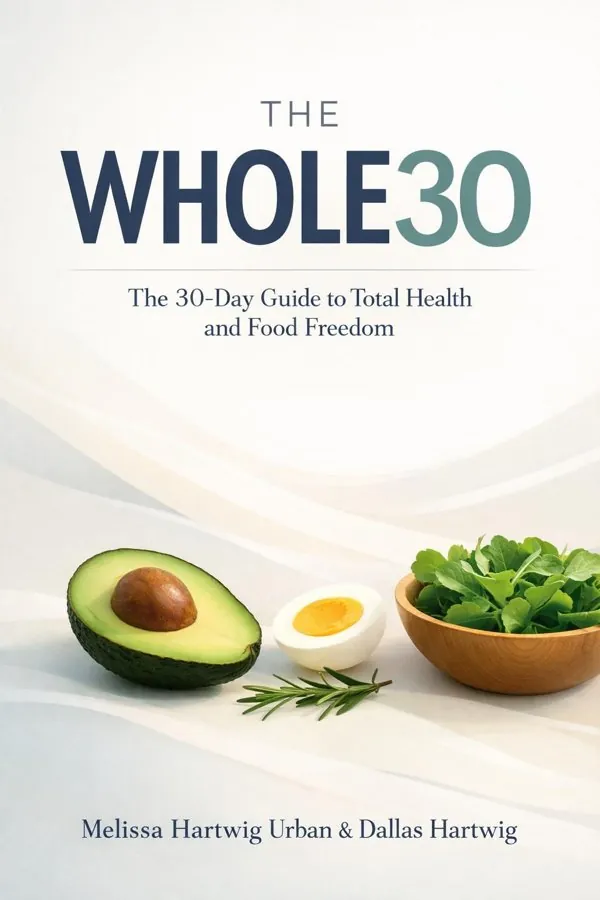
The Whole30: The 30-Day Guide to Total Health and Food Freedom: Summary & Key Insights
by Melissa Hartwig Urban, Dallas Hartwig
 10 min4 chaptersAudio available
What Is The Whole30: The 30-Day Guide to Total Health and Food Freedom About?
The Whole30: The 30-Day Guide to Total Health and Food Freedom by Melissa Hartwig Urban, Dallas Hartwig is a nutrition book spanning 4 pages. The Whole30 is a 30-day nutritional reset designed to help readers transform their relationship with food. It eliminates sugar, alcohol, grains, legumes, soy, and dairy for thirty days, focusing on whole, unprocessed foods. The book provides a step-by-step guide, meal plans, and over 100 recipes to support participants through the program, helping them identify food sensitivities and improve overall health and energy.
This FizzRead summary covers all 4 key chapters of The Whole30: The 30-Day Guide to Total Health and Food Freedom in approximately 10 minutes, distilling the most important ideas, arguments, and takeaways from Melissa Hartwig Urban, Dallas Hartwig's work. Also available as an audio summary and Key Quotes Podcast.
The Whole30: The 30-Day Guide to Total Health and Food Freedom
The Whole30 is a 30-day nutritional reset designed to help readers transform their relationship with food. It eliminates sugar, alcohol, grains, legumes, soy, and dairy for thirty days, focusing on whole, unprocessed foods. The book provides a step-by-step guide, meal plans, and over 100 recipes to support participants through the program, helping them identify food sensitivities and improve overall health and energy.
Who Should Read The Whole30: The 30-Day Guide to Total Health and Food Freedom?
This book is perfect for anyone interested in nutrition and looking to gain actionable insights in a short read. Whether you're a student, professional, or lifelong learner, the key ideas from The Whole30: The 30-Day Guide to Total Health and Food Freedom by Melissa Hartwig Urban, Dallas Hartwig will help you think differently.
- ✓Readers who enjoy nutrition and want practical takeaways
- ✓Professionals looking to apply new ideas to their work and life
- ✓Anyone who wants the core insights of The Whole30: The 30-Day Guide to Total Health and Food Freedom in just 10 minutes
Want the full summary?
Get instant access to this book summary and 100K+ more with Fizz Moment.
Get Free SummaryAvailable on App Store • Free to download
Key Chapters
When Dallas and I first developed the Whole30 program, we recognized how profoundly intertwined food is with every aspect of wellness—not just physical health, but mood, energy, focus, and self-esteem. Most people underestimate this connection. They think if their calories are under control, their weight will follow, and everything else will fall into place. Yet what we’ve seen is that food is chemistry—it dictates how your hormones communicate, how your gut processes nutrients, and how your brain perceives satisfaction. The modern diet is flooded with foods that hijack these systems: sugar spikes your insulin, causing energy crashes; grains and legumes, though culturally considered ‘healthy,’ can irritate your gut lining; dairy and soy often influence hormones in subtle but impactful ways. Add to that alcohol and the constant flow of processed ingredients, and it’s no wonder most people feel like they’re at war with their own bodies. The Whole30 invites you to step into a space where you become your own scientist. By eliminating the usual suspects for thirty days, you give your body the chance to reset its hormonal and digestive balance. Most participants discover that their cravings fade, sleep improves, skin clears, and mental sharpness returns. But this is not just about what’s on your plate; it’s about reclaiming trust in your body’s feedback. When inflammation subsides and digestion normalizes, the messages your body sends become reliable again. You start to learn what feeling truly good actually means—without stimulants, without sugar highs, without emotional eating to mask discomfort. Physiology and psychology converge here. Food influences neurotransmitters, shaping our moods. It impacts our energy cycles, shaping our motivation. And, perhaps most importantly, it influences the narratives we hold about control, worth, and pleasure. Through Whole30, you begin to dismantle those stories and witness the remarkable capacity of the body to heal once interference is removed.
I often say the Whole30 has just two rules: eat real food and eliminate what doesn’t serve your body for thirty days. Yet within those simple instructions lies profound liberation. For thirty days, you’ll eliminate sugar, alcohol, grains (including gluten-free varieties), legumes, soy, and dairy. These foods aren’t bad in moral terms, but they are frequently problematic—triggering inflammation, cravings, and hormonal disruption. The temporary removal isn’t a punishment; it’s a gift of clarity. This is your opportunity to give your body quiet so it can communicate without interference. As you step into the program, focus on foods that are rich, satisfying, and deeply nourishing. Protein sources like eggs, poultry, and fish. Vegetables of every color. Fruits in moderation. Healthy fats such as avocado, nuts, olives, and natural oils. You’ll discover that eating this way can be abundant and delicious—not restrictive. Preparing mentally matters just as much as organizing your pantry. That’s why we walk you through how to anticipate cravings, deal with social situations, and recognize when emotions—not hunger—push you toward food. Expect some tough days in the beginning; your body will detox from sugar and habitual cues. But by week two, most begin to feel the shift—better energy, fewer cravings, improved digestion. By week three, they often wake up feeling clear-headed and in control, something many haven’t experienced in years. The Whole30 is about changing patterns as much as it is changing ingredients. Each meal becomes a declaration: I choose nourishment over numbing. As you progress, you begin to realize that following the rules doesn’t imprison you—it liberates you from years of chaos around food. True freedom lies in making conscious choices, not in unrestricted indulgence.
+ 2 more chapters — available in the FizzRead app
All Chapters in The Whole30: The 30-Day Guide to Total Health and Food Freedom
About the Authors
Melissa Hartwig Urban is a certified sports nutritionist and the co-creator of the Whole30 program. Dallas Hartwig is a functional medicine practitioner and co-founder of Whole9. Together, they have authored several books on nutrition and lifestyle change, focusing on sustainable health habits and food freedom.
Get This Summary in Your Preferred Format
Read or listen to the The Whole30: The 30-Day Guide to Total Health and Food Freedom summary by Melissa Hartwig Urban, Dallas Hartwig anytime, anywhere. FizzRead offers multiple formats so you can learn on your terms — all free.
Available formats: App · Audio · PDF · EPUB — All included free with FizzRead
Download The Whole30: The 30-Day Guide to Total Health and Food Freedom PDF and EPUB Summary
Key Quotes from The Whole30: The 30-Day Guide to Total Health and Food Freedom
“Most people underestimate this connection.”
“I often say the Whole30 has just two rules: eat real food and eliminate what doesn’t serve your body for thirty days.”
Frequently Asked Questions about The Whole30: The 30-Day Guide to Total Health and Food Freedom
The Whole30: The 30-Day Guide to Total Health and Food Freedom by Melissa Hartwig Urban, Dallas Hartwig is a nutrition book that explores key ideas across 4 chapters. The Whole30 is a 30-day nutritional reset designed to help readers transform their relationship with food. It eliminates sugar, alcohol, grains, legumes, soy, and dairy for thirty days, focusing on whole, unprocessed foods. The book provides a step-by-step guide, meal plans, and over 100 recipes to support participants through the program, helping them identify food sensitivities and improve overall health and energy.
You Might Also Like
Eating by the Seasons Cookbook: Seasonal Produce-Focused Recipes
Clare Foster
10 min
From Crook to Cook: Platinum Recipes from Tha Boss Dogg's Kitchen
Snoop Dogg with Ryan Ford
10 min
Juicing for Beginners: The Essential Guide to Juicing Recipes and Juicing for Weight Loss
Rockridge Press
10 min
The Food Therapist: Break Bad Habits, Eat with Intention, and Indulge Without Worry
Shira Lenchewski
10 min
The Mediterranean Diet Meal Plan: A 4-Week Meal Plan for Optimal Health and Weight Loss
Various Contributors
10 min
The Well Plated Cookbook: Simple, Wholesome Recipes for Everyday Meals
Erin Clarke
10 minBrowse by Category
Ready to read The Whole30: The 30-Day Guide to Total Health and Food Freedom?
Get the full summary and 100K+ more books with Fizz Moment.