
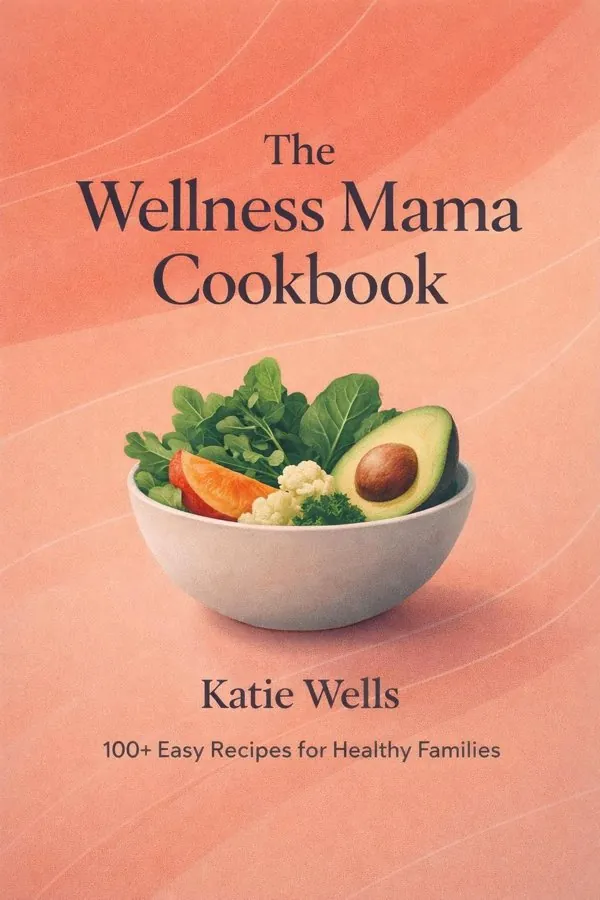
The Wellness Mama Cookbook: 100+ Easy Recipes for Healthy Families: Summary & Key Insights
by Katie Wells
 10 min10 chaptersAudio available
Key Takeaways from The Wellness Mama Cookbook: 100+ Easy Recipes for Healthy Families
Every lasting change in diet begins before the first recipe is cooked.
The first meal of the day often reveals a family’s food culture.
Snacking is often treated as a minor part of eating, but Wells shows that it can either support health or quietly undermine it.
Many people think of soups and salads as side dishes, light lunches, or foods associated with dieting.
The most successful home cooks are not the ones who make the most impressive meals; they are the ones who can consistently put nourishing food on the table.
What Is The Wellness Mama Cookbook: 100+ Easy Recipes for Healthy Families About?
The Wellness Mama Cookbook: 100+ Easy Recipes for Healthy Families by Katie Wells is a nutrition book spanning 10 pages. The Wellness Mama Cookbook is a practical guide to feeding a family well without relying on processed foods, complicated techniques, or unrealistic ideals. In this collection of more than one hundred recipes, Katie Wells shows how healthy eating can become a normal part of everyday life, even for busy households with children, changing schedules, and different dietary needs. Her focus is not on perfection or culinary performance, but on building nourishing meals from real ingredients that are accessible, satisfying, and family-friendly. What makes this book especially useful is its blend of nutrition philosophy and kitchen realism. Wells does not simply tell readers to eat better; she explains how to stock a supportive pantry, simplify meal prep, adapt recipes for special diets, and make healthier choices sustainable over time. The result is a cookbook that functions as both a recipe collection and a lifestyle manual. Katie Wells brings strong credibility to the topic as the founder of WellnessMama.com, where she has spent years researching natural health, food quality, and practical wellness for families. Her authority comes from lived experience, careful study, and a clear understanding of the challenges parents face at the table.
This FizzRead summary covers all 10 key chapters of The Wellness Mama Cookbook: 100+ Easy Recipes for Healthy Families in approximately 10 minutes, distilling the most important ideas, arguments, and takeaways from Katie Wells's work. Also available as an audio summary and Key Quotes Podcast.
The Wellness Mama Cookbook: 100+ Easy Recipes for Healthy Families
The Wellness Mama Cookbook is a practical guide to feeding a family well without relying on processed foods, complicated techniques, or unrealistic ideals. In this collection of more than one hundred recipes, Katie Wells shows how healthy eating can become a normal part of everyday life, even for busy households with children, changing schedules, and different dietary needs. Her focus is not on perfection or culinary performance, but on building nourishing meals from real ingredients that are accessible, satisfying, and family-friendly.
What makes this book especially useful is its blend of nutrition philosophy and kitchen realism. Wells does not simply tell readers to eat better; she explains how to stock a supportive pantry, simplify meal prep, adapt recipes for special diets, and make healthier choices sustainable over time. The result is a cookbook that functions as both a recipe collection and a lifestyle manual.
Katie Wells brings strong credibility to the topic as the founder of WellnessMama.com, where she has spent years researching natural health, food quality, and practical wellness for families. Her authority comes from lived experience, careful study, and a clear understanding of the challenges parents face at the table.
Who Should Read The Wellness Mama Cookbook: 100+ Easy Recipes for Healthy Families?
This book is perfect for anyone interested in nutrition and looking to gain actionable insights in a short read. Whether you're a student, professional, or lifelong learner, the key ideas from The Wellness Mama Cookbook: 100+ Easy Recipes for Healthy Families by Katie Wells will help you think differently.
- ✓Readers who enjoy nutrition and want practical takeaways
- ✓Professionals looking to apply new ideas to their work and life
- ✓Anyone who wants the core insights of The Wellness Mama Cookbook: 100+ Easy Recipes for Healthy Families in just 10 minutes
Want the full summary?
Get instant access to this book summary and 100K+ more with Fizz Moment.
Get Free SummaryAvailable on App Store • Free to download
Key Chapters
Every lasting change in diet begins before the first recipe is cooked. Katie Wells argues that a nourishing lifestyle depends less on willpower than on environment. If the kitchen is filled with refined snacks, sugary breakfast foods, and convenience meals, healthy eating becomes a constant uphill battle. But when the pantry, refrigerator, and freezer are stocked with whole-food staples, better choices become the default.
In the book, this idea comes alive through an emphasis on practical basics: quality fats, properly sourced proteins, fresh vegetables, fruits, herbs, spices, broth, and simple grain-free or nutrient-dense alternatives. Wells treats these ingredients not as specialty items for wellness enthusiasts, but as the new normal for a functional family kitchen. She encourages readers to think in systems rather than isolated meals. A jar of homemade dressing, a batch of cooked meat, chopped vegetables, and a tray of roasted sweet potatoes can become breakfasts, lunches, and dinners across several days.
This foundational approach also reduces stress. Instead of asking, "What should I make tonight?" families can ask, "What do we already have prepared?" A stocked kitchen makes it easier to assemble soups, salads, egg dishes, slow-cooker meals, and nourishing snacks without constant shopping or decision fatigue. Even small shifts matter: replacing industrial oils with healthier fats, swapping boxed snacks for nuts and fruit, or keeping broth on hand for quick soups.
The deeper message is that health is often built through preparation, not impulse. Actionable takeaway: choose five staple ingredients to keep stocked every week and build your meals around them until healthy cooking feels automatic.
The first meal of the day often reveals a family’s food culture. Wells challenges the conventional idea that breakfast must be cereal, toast, pastries, or other quick carbohydrates. Instead, she presents breakfast as an opportunity to anchor energy, mood, and appetite with protein, healthy fats, and real-food ingredients that keep both adults and children satisfied longer.
Her breakfast philosophy is refreshingly simple: make mornings easier by relying on repeatable, nutrient-dense options. Eggs appear frequently because they are versatile, affordable, and rich in protein and important nutrients. Smoothies, casseroles, breakfast hashes, muffins made from more wholesome ingredients, and make-ahead dishes offer alternatives for different schedules and tastes. Rather than seeking novelty every morning, Wells emphasizes creating a dependable rotation that supports family life.
This matters because many households begin the day with foods that spike blood sugar and leave everyone hungry again within hours. A breakfast centered on eggs, vegetables, sausage, avocado, yogurt, or leftovers from dinner can provide more stable energy and reduce midmorning cravings. For children, this can translate into better focus and fewer energy crashes. For parents, it can mean less snacking and less stress.
Wells also understands the real challenge of mornings: time. That is why the book includes recipes and strategies that can be prepped ahead, reheated quickly, or adapted for grab-and-go eating. Breakfast becomes sustainable when it is both nourishing and realistic.
Actionable takeaway: create a shortlist of three protein-rich breakfasts your household enjoys, and rotate them weekly so healthy mornings require less thinking and less rushing.
Snacking is often treated as a minor part of eating, but Wells shows that it can either support health or quietly undermine it. Families rarely reach for ultra-processed snacks because they truly prefer them; more often, they do so because hunger appears suddenly and there is no better option ready. In that sense, unhealthy snacking is often a planning problem, not a motivation problem.
The cookbook addresses snacks as functional tools for busy lives. Instead of relying on packaged bars, crackers, or sweets, Wells suggests real-food alternatives that travel well, satisfy hunger, and fit naturally into family routines. These include items like hard-boiled eggs, trail mixes, fruit paired with protein or fat, homemade energy bites, jerky, vegetable sticks with dips, and baked goods made from more nourishing ingredients. The goal is not to eliminate convenience, but to redefine it.
This approach has two major benefits. First, it helps regulate appetite. Snacks built from protein, fiber, and healthy fat tend to satisfy better than highly processed foods that disappear quickly and encourage overeating later. Second, it gives children a different baseline for what "normal" food looks like. When nourishing options are consistently available, they become familiar rather than restrictive.
Wells also recognizes that snacks can serve emotional and logistical purposes: road trips, school lunches, sports practices, and long afternoons all require portable fuel. By preparing a few staples in advance, parents can avoid last-minute purchases and reduce dependence on vending-machine food.
Actionable takeaway: choose two homemade or whole-food snacks to prepare each week and store them at eye level so the easiest option is also the healthiest one.
Many people think of soups and salads as side dishes, light lunches, or foods associated with dieting. Wells reframes them as efficient, nutrient-dense meals that can feed a family well when built with enough substance. A salad is not satisfying because it includes lettuce; it becomes satisfying when it contains protein, healthy fat, texture, color, and a flavorful dressing. A soup becomes memorable not because it is hot, but because it carries depth, nourishment, and versatility.
In this chapter, the cookbook emphasizes layered simplicity. Soups are ideal for using leftovers, stretching ingredients, and making use of broth, vegetables, and proteins in one pot. They can simmer while other tasks are happening, freeze well, and often taste better the next day. Salads, meanwhile, provide an easy platform for combining greens, roasted vegetables, shredded meat, nuts, seeds, fruit, herbs, and homemade dressings.
Wells’s treatment of these foods reflects a larger principle: healthy meals do not need to be elaborate to be complete. A soup made with broth, ground meat, vegetables, and herbs can be both comforting and highly nourishing. A salad with grilled chicken, avocado, olives, and a simple vinaigrette can satisfy far more than a sandwich built on refined bread. These formats are especially useful for families trying to increase vegetable intake without making meals feel punishing.
They also invite flexibility. Ingredients can be swapped based on season, budget, or dietary needs. What matters is the structure, not rigid perfection.
Actionable takeaway: once a week, build one soup and one hearty salad from ingredients you already have, using protein and homemade dressing to turn them into true meals.
The most successful home cooks are not the ones who make the most impressive meals; they are the ones who can consistently put nourishing food on the table. Wells understands that family dinners succeed when they are simple enough to repeat. Her main dishes focus on familiar formats such as casseroles, skillet meals, roasts, slow-cooker recipes, and one-pan dinners that reduce cleanup while keeping nutrition high.
A central insight here is that healthy eating becomes sustainable only when dinner stops feeling like a nightly test of creativity. Wells does not ask readers to produce restaurant-level meals from rare ingredients. Instead, she builds around practical combinations of protein, vegetables, herbs, spices, and wholesome starches or grain-free alternatives. This keeps meals approachable while still offering variety through seasoning, sauces, and cooking methods.
Her approach also supports family acceptance. Many of the recipes are designed to feel recognizable, even when they are made with cleaner ingredients or adapted to avoid common processed components. A well-seasoned meat dish, a baked casserole, or a hearty skillet meal can satisfy children and adults alike without turning dinner into a nutritional lecture. This is one of the book’s strengths: it respects the need for food to be both healthy and enjoyable.
Main dishes also become easier when components are prepared ahead. Cooked chicken, browned ground beef, chopped onions, and ready-made sauces can shorten weeknight cooking dramatically. In this way, the dinner chapter connects back to Wells’s broader philosophy of preparation over pressure.
Actionable takeaway: identify four dependable dinner templates your family likes, such as skillet, soup, casserole, roast, or slow-cooker meal, and reuse them with different ingredients each week.
Side dishes may seem secondary, but Wells shows that they are often where long-term food habits are formed. Main dishes get attention, yet the vegetables, starches, and small supporting foods around them gradually train a family’s palate. If sides are consistently thoughtful, colorful, and flavorful, healthy eating becomes more natural and less dramatic.
Rather than treating vegetables as obligatory add-ons, Wells makes them appealing through roasting, seasoning, healthy fats, and strategic pairings. A tray of roasted carrots, a skillet of sautéed greens, mashed cauliflower, baked sweet potatoes, or a crisp slaw can transform the experience of a meal. These dishes help families increase nutrient intake without requiring a total reinvention of dinner. They also provide a practical answer to a common challenge: how to serve produce in ways children and adults will actually eat.
Another important point is flexibility. Side dishes are one of the easiest places to adapt meals for varying needs. A family might share the same protein while choosing different sides depending on age, appetite, or dietary goals. This reduces the need to cook entirely separate meals. It also helps parents model variety and balance without confrontation.
Wells’s side-dish philosophy is deeply practical because these recipes tend to rely on straightforward ingredients and techniques. They can often be made in batches, repurposed into lunches, or folded into eggs, soups, and salads the next day. In that sense, they are not extras at all; they are building blocks.
Actionable takeaway: commit to serving one vegetable-based side at dinner every night for a week, prepared with enough flavor and fat to make it genuinely enjoyable.
One reason processed food dominates modern diets is not just convenience, but flavor. Wells understands that if healthy meals taste flat, families will eventually drift back toward packaged options engineered to be irresistible. Her chapter on condiments and sauces highlights an often overlooked truth: the small things on the table can determine whether nourishing food feels exciting or dutiful.
Homemade dressings, dips, marinades, mayonnaise-based sauces, seasoning blends, and finishing sauces allow basic ingredients to become craveable. A simple salad becomes memorable with a balanced vinaigrette. Roasted vegetables become more appealing with a creamy dip or herb sauce. Plain grilled chicken can feel completely different depending on whether it is paired with garlic aioli, salsa, pesto, or a savory glaze. These additions can also help children accept foods they might otherwise resist.
Wells encourages readers to make condiments themselves when possible because store-bought versions often contain industrial oils, excess sugar, preservatives, and unnecessary additives. Homemade alternatives offer better ingredient quality and more control, and many are surprisingly quick to prepare. A five-minute sauce can rescue an entire week of meals.
This chapter also reinforces the idea that healthy cooking should not feel restrictive. Pleasure matters. Flavor matters. A family is far more likely to keep eating vegetables, proteins, and homemade meals when those foods are paired with sauces they love.
Actionable takeaway: master two versatile homemade condiments, such as a simple vinaigrette and a creamy dipping sauce, and use them throughout the week to make basic meals more satisfying.
A healthy family kitchen does not require the elimination of treats. Wells takes a balanced view of desserts, arguing that sweets can still have a place when they are made more intentionally and with higher-quality ingredients. This perspective is important because all-or-nothing food rules often fail in real life. Families need approaches they can sustain, especially around celebrations, traditions, and simple enjoyment.
In the cookbook, desserts are not presented as health foods in disguise, nor are they demonized. Instead, Wells rethinks them by reducing refined sugars, removing certain processed ingredients, and using more nourishing substitutions where appropriate. This may include natural sweeteners, alternative flours, healthy fats, dark chocolate, fruit, nuts, or dairy-free modifications depending on the recipe. The point is not that every dessert becomes deeply nutritious, but that indulgence can be cleaner, more satisfying, and less dependent on ultra-processed products.
This shift has practical value for families. Homemade treats usually create more awareness around ingredients and portion size than packaged sweets do. They also turn dessert into an intentional event rather than a constant background habit. Children learn that treats are something made and enjoyed, not something passively consumed from boxes and wrappers every day.
Wells’s treatment of desserts fits the broader spirit of the book: improve what you can, enjoy what you make, and avoid turning food into a battleground. Better ingredients and mindful frequency can coexist with pleasure.
Actionable takeaway: replace one store-bought sweet this week with a homemade dessert made from simpler, more recognizable ingredients.
Healthy eating often breaks down not because families lack good intentions, but because daily life creates too many decisions. Wells addresses this with a practical emphasis on meal planning and preparation, showing that organization is one of the most important nutrition tools a household can develop. Planning is not about rigidity; it is about reducing friction.
Her approach encourages readers to think ahead in manageable ways: choosing meals before the week begins, shopping with purpose, prepping ingredients in batches, and cooking extra portions for leftovers. Even light preparation can have outsized effects. Washing produce, pre-cooking proteins, making a soup base, or mixing a dressing in advance can shorten cooking time enough to make a homemade meal realistic on a busy evening. This is especially important for parents balancing work, school schedules, and competing family preferences.
Meal planning also saves money and reduces food waste. When ingredients are selected with multiple meals in mind, fewer items are forgotten in the refrigerator and fewer emergency takeout orders are needed. A roast chicken can become dinner one night, salad topping the next day, and soup later in the week. A tray of roasted vegetables can support breakfast, lunch, and dinner. Wells promotes this kind of strategic overlap without making it feel obsessive.
The larger message is empowering: order in the kitchen creates calm around food. Instead of relying on motivation at the end of an exhausting day, families can rely on systems they created earlier.
Actionable takeaway: spend 20 minutes once a week choosing three dinners, prepping one protein and one sauce ahead of time, and letting those preparations simplify the days that follow.
One of the most encouraging ideas in The Wellness Mama Cookbook is that healthy cooking does not require every family to eat exactly the same way. Wells recognizes that households contain different ages, tastes, health concerns, and dietary restrictions. Instead of presenting one rigid food philosophy, she offers a flexible framework readers can adjust for gluten-free, grain-free, dairy-free, low-sugar, or other special dietary needs.
This flexibility matters because many people abandon healthy eating when it feels too complicated or too socially isolating. Wells addresses that barrier by showing how recipes can be modified without losing their practicality. A dish might use a different flour, skip dairy, swap sweeteners, or substitute one protein for another. The goal is not culinary perfection but broad usability. Families can work from a common meal structure while making targeted changes based on what helps them feel best.
Just as importantly, this chapter reflects a humane perspective on wellness. Food should support life, not dominate it. Adaptation allows readers to make meaningful progress even if they are not ready or able to overhaul every ingredient at once. A family can start with one change, observe how it feels, and continue from there. This lowers pressure and increases consistency.
Wells’s approach also helps readers build confidence. Once people understand the function of ingredients and the basic architecture of a recipe, they become less dependent on strict instructions and more capable in the kitchen.
Actionable takeaway: choose one dietary adjustment that would most benefit your household and apply it to two familiar recipes first, rather than trying to change your entire way of eating overnight.
All Chapters in The Wellness Mama Cookbook: 100+ Easy Recipes for Healthy Families
About the Author
Katie Wells is a health researcher, writer, podcaster, and founder of WellnessMama.com, a widely followed platform dedicated to natural living, family nutrition, and holistic wellness. Her work centers on helping parents make healthier choices in practical, sustainable ways, covering topics such as real-food eating, home routines, non-toxic products, and lifestyle habits that support long-term well-being. Wells is especially known for translating health information into accessible guidance for busy families who want realistic solutions rather than rigid rules. In The Wellness Mama Cookbook, she brings that same voice to the kitchen, combining nutrition-conscious recipes with meal-planning strategies and family-friendly advice. Her authority comes from years of study, hands-on experimentation, and a deep understanding of the challenges households face when trying to eat better.
Get This Summary in Your Preferred Format
Read or listen to the The Wellness Mama Cookbook: 100+ Easy Recipes for Healthy Families summary by Katie Wells anytime, anywhere. FizzRead offers multiple formats so you can learn on your terms — all free.
Available formats: App · Audio · PDF · EPUB — All included free with FizzRead
Download The Wellness Mama Cookbook: 100+ Easy Recipes for Healthy Families PDF and EPUB Summary
Key Quotes from The Wellness Mama Cookbook: 100+ Easy Recipes for Healthy Families
“Every lasting change in diet begins before the first recipe is cooked.”
“The first meal of the day often reveals a family’s food culture.”
“Snacking is often treated as a minor part of eating, but Wells shows that it can either support health or quietly undermine it.”
“Many people think of soups and salads as side dishes, light lunches, or foods associated with dieting.”
“The most successful home cooks are not the ones who make the most impressive meals; they are the ones who can consistently put nourishing food on the table.”
Frequently Asked Questions about The Wellness Mama Cookbook: 100+ Easy Recipes for Healthy Families
The Wellness Mama Cookbook: 100+ Easy Recipes for Healthy Families by Katie Wells is a nutrition book that explores key ideas across 10 chapters. The Wellness Mama Cookbook is a practical guide to feeding a family well without relying on processed foods, complicated techniques, or unrealistic ideals. In this collection of more than one hundred recipes, Katie Wells shows how healthy eating can become a normal part of everyday life, even for busy households with children, changing schedules, and different dietary needs. Her focus is not on perfection or culinary performance, but on building nourishing meals from real ingredients that are accessible, satisfying, and family-friendly. What makes this book especially useful is its blend of nutrition philosophy and kitchen realism. Wells does not simply tell readers to eat better; she explains how to stock a supportive pantry, simplify meal prep, adapt recipes for special diets, and make healthier choices sustainable over time. The result is a cookbook that functions as both a recipe collection and a lifestyle manual. Katie Wells brings strong credibility to the topic as the founder of WellnessMama.com, where she has spent years researching natural health, food quality, and practical wellness for families. Her authority comes from lived experience, careful study, and a clear understanding of the challenges parents face at the table.
You Might Also Like
Eating by the Seasons Cookbook: Seasonal Produce-Focused Recipes
Clare Foster
10 min
From Crook to Cook: Platinum Recipes from Tha Boss Dogg's Kitchen
Snoop Dogg with Ryan Ford
10 min
Juicing for Beginners: The Essential Guide to Juicing Recipes and Juicing for Weight Loss
Rockridge Press
10 min
The Food Therapist: Break Bad Habits, Eat with Intention, and Indulge Without Worry
Shira Lenchewski
10 min
The Mediterranean Diet Meal Plan: A 4-Week Meal Plan for Optimal Health and Weight Loss
Various Contributors
10 min
The Well Plated Cookbook: Simple, Wholesome Recipes for Everyday Meals
Erin Clarke
10 minBrowse by Category
Ready to read The Wellness Mama Cookbook: 100+ Easy Recipes for Healthy Families?
Get the full summary and 100K+ more books with Fizz Moment.