
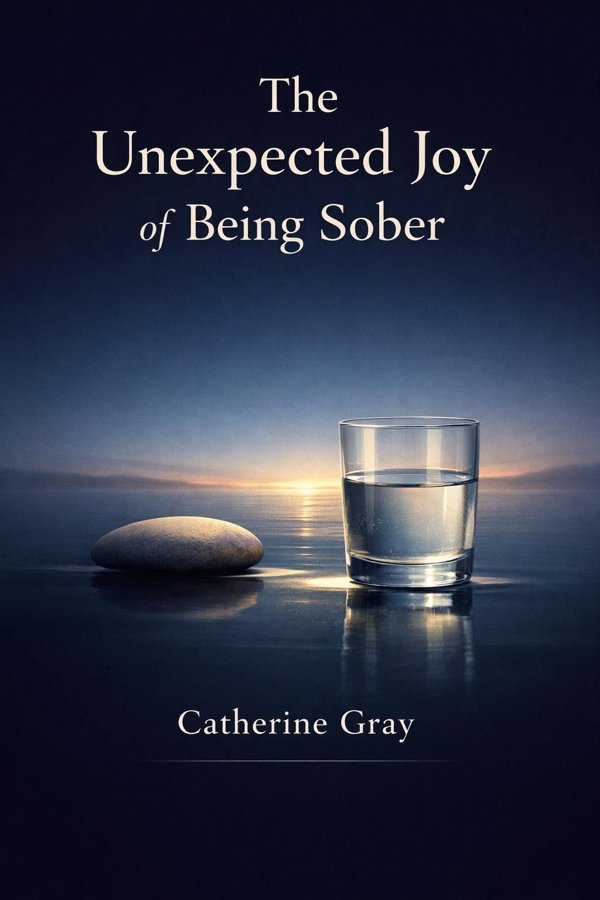
The Unexpected Joy of Being Sober: Discovering a Happy, Healthy, Wealthy Alcohol-Free Life: Summary & Key Insights
 10 min9 chaptersAudio available
Key Takeaways from The Unexpected Joy of Being Sober: Discovering a Happy, Healthy, Wealthy Alcohol-Free Life
Many people do not begin drinking because they love alcohol; they begin because they want to belong.
Addiction rarely arrives with a dramatic announcement; more often, it advances through normalization.
People often imagine transformation begins with certainty, but Gray shows that it usually begins with discomfort you can no longer ignore.
One of Gray’s most compassionate insights is that deciding to quit drinking can feel like grieving.
The earliest phase of sobriety is often less about inspiration and more about endurance.
What Is The Unexpected Joy of Being Sober: Discovering a Happy, Healthy, Wealthy Alcohol-Free Life About?
The Unexpected Joy of Being Sober: Discovering a Happy, Healthy, Wealthy Alcohol-Free Life by Catherine Gray is a biographies book spanning 12 pages. Catherine Gray’s The Unexpected Joy of Being Sober is part memoir, part cultural critique, and part practical guide to rebuilding life without alcohol. In it, Gray traces her own path from teenage drinking and adult dependency to a hard-won sobriety that transformed not only her health, but also her confidence, finances, relationships, and sense of self. What makes the book stand out is its tone: candid without being preachy, funny without minimizing pain, and deeply personal while still grounded in research about addiction, habit, reward, and mental health. This book matters because it challenges one of modern social life’s most protected assumptions: that alcohol is essential for celebration, relaxation, belonging, and fun. Gray shows how this belief is reinforced by culture, advertising, and routine, even when drinking is causing anxiety, shame, exhaustion, and disconnection. Her authority comes not from clinical distance, but from lived experience, careful reflection, and a willingness to investigate why sobriety can feel frightening before it becomes liberating. For readers who are sober-curious, struggling privately, or simply rethinking their relationship with alcohol, this is an honest and hopeful invitation to imagine a richer life on the other side of drinking.
This FizzRead summary covers all 9 key chapters of The Unexpected Joy of Being Sober: Discovering a Happy, Healthy, Wealthy Alcohol-Free Life in approximately 10 minutes, distilling the most important ideas, arguments, and takeaways from Catherine Gray's work. Also available as an audio summary and Key Quotes Podcast.
The Unexpected Joy of Being Sober: Discovering a Happy, Healthy, Wealthy Alcohol-Free Life
Catherine Gray’s The Unexpected Joy of Being Sober is part memoir, part cultural critique, and part practical guide to rebuilding life without alcohol. In it, Gray traces her own path from teenage drinking and adult dependency to a hard-won sobriety that transformed not only her health, but also her confidence, finances, relationships, and sense of self. What makes the book stand out is its tone: candid without being preachy, funny without minimizing pain, and deeply personal while still grounded in research about addiction, habit, reward, and mental health.
This book matters because it challenges one of modern social life’s most protected assumptions: that alcohol is essential for celebration, relaxation, belonging, and fun. Gray shows how this belief is reinforced by culture, advertising, and routine, even when drinking is causing anxiety, shame, exhaustion, and disconnection. Her authority comes not from clinical distance, but from lived experience, careful reflection, and a willingness to investigate why sobriety can feel frightening before it becomes liberating. For readers who are sober-curious, struggling privately, or simply rethinking their relationship with alcohol, this is an honest and hopeful invitation to imagine a richer life on the other side of drinking.
Who Should Read The Unexpected Joy of Being Sober: Discovering a Happy, Healthy, Wealthy Alcohol-Free Life?
This book is perfect for anyone interested in biographies and looking to gain actionable insights in a short read. Whether you're a student, professional, or lifelong learner, the key ideas from The Unexpected Joy of Being Sober: Discovering a Happy, Healthy, Wealthy Alcohol-Free Life by Catherine Gray will help you think differently.
- ✓Readers who enjoy biographies and want practical takeaways
- ✓Professionals looking to apply new ideas to their work and life
- ✓Anyone who wants the core insights of The Unexpected Joy of Being Sober: Discovering a Happy, Healthy, Wealthy Alcohol-Free Life in just 10 minutes
Want the full summary?
Get instant access to this book summary and 100K+ more with Fizz Moment.
Get Free SummaryAvailable on App Store • Free to download
Key Chapters
Addiction rarely arrives with a dramatic announcement; more often, it advances through normalization. Gray explains that her descent into problematic drinking was not defined by one cinematic rock-bottom moment, but by a gradual erosion of freedom. Nights out became routine blackouts. Hangovers became anxiety spirals. Promises to drink less became bargains that failed by evening. The alarming part was not only what alcohol was doing to her, but how ordinary it all began to seem.
This is one of the book’s most important corrections to popular myths. Dependency does not always look like chaos visible from the outside. It can look like keeping up appearances while privately feeling frightened, ashamed, and trapped. A person may still work, socialize, joke, and appear “high-functioning,” yet structure their life around drinking opportunities and recovery from drinking. They may spend mental energy calculating when to start, how much to have, and whether anyone noticed they had too much.
Gray captures the emotional loop well: drink to feel better, wake up worse, then drink again to escape the consequences. This cycle is sustained by denial, comparison, and cultural permission. If others drink heavily too, it is easy to assume everything is fine.
For readers, the practical value lies in recognizing patterns early. Warning signs include drinking alone more often, using alcohol primarily to manage feelings, repeatedly breaking personal limits, and experiencing shame after drinking. Actionable takeaway: instead of asking, “Am I bad enough to quit?” ask, “Is alcohol reducing my freedom, peace, or self-respect?” That question often reveals more than labels do.
People often imagine transformation begins with certainty, but Gray shows that it usually begins with discomfort you can no longer ignore. Her moment of reckoning was not just about a single incident; it was about the cumulative realization that alcohol was taking more than it was giving. The glamour had drained away, leaving anxiety, embarrassment, physical depletion, and a growing sense that life was shrinking.
This reckoning matters because change rarely starts when the evidence first appears. It starts when denial becomes harder to maintain than honesty. Gray’s story illustrates how drinkers often live with divided awareness for years: one part knows something is wrong, another part insists it is manageable, normal, or temporary. The turning point comes when the internal story breaks. You can no longer convincingly say alcohol is helping if it is consistently harming your mood, memory, dignity, or relationships.
Importantly, Gray does not present this reckoning as a moral failure. She frames it as an awakening. That shift matters. Shame often keeps people stuck because it encourages secrecy and self-punishment. Clarity, by contrast, creates movement. Once you can accurately name what alcohol is doing, quitting becomes conceivable.
In practical terms, a reckoning may come through a humiliating blackout, a concerned comment from someone you trust, mounting health issues, financial waste, or simply the exhaustion of repeating the same cycle. The event matters less than the honesty it produces.
Actionable takeaway: write two short accounts of your drinking life—one version as you usually explain it, and one version stripped of excuses. Comparing them can uncover the truth you may already be ready to face.
One of Gray’s most compassionate insights is that deciding to quit drinking can feel like grieving. Even if alcohol is causing harm, it may still seem like a friend, a reward, a ritual, and a reliable source of relief. That is why early sobriety can feel emotionally confusing. You are not only stopping a habit; you are letting go of a whole imagined future in which alcohol accompanies celebration, seduction, comfort, and ease.
Gray challenges the common assumption that people resist sobriety because they are irrational or weak. Often, they resist because they sincerely believe they are giving up pleasure. If alcohol has been woven into every enjoyable context, removing it can look like self-imposed dullness. Birthdays seem flatter. Weekends seem longer. Social events seem riskier. This fear is one of the biggest barriers to change.
The genius of the book is that Gray does not dismiss this fear. She honors it, then dismantles it. She shows that what many drinkers mourn is not alcohol itself, but the fantasy attached to it. In reality, alcohol frequently delivers less joy than promised and more cost than acknowledged.
Practically, this means the decision to quit benefits from reframing. Instead of thinking, “I can never drink again,” Gray suggests seeing sobriety as an experiment in gaining clarity, stability, and genuine enjoyment. Some people find it useful to commit to a defined break first, while others need a firmer decision. Either way, the emotional transition becomes easier when the focus shifts from deprivation to discovery.
Actionable takeaway: make two lists—what you fear losing by quitting and what alcohol has actually been costing you. Revisit both lists whenever nostalgia for drinking starts to distort reality.
The earliest phase of sobriety is often less about inspiration and more about endurance. Gray writes honestly about how raw, awkward, and destabilizing the first stretch can be. Without alcohol, emotions no longer arrive softened. Time can feel strange. Social interactions can feel exposed. Even simple routines—Friday evenings, dinners out, weddings, holidays—can trigger a sense of disorientation. This is why early sobriety requires strategy, not just willpower.
Gray emphasizes that cravings are not evidence that quitting is wrong; they are evidence that the brain is adjusting. Habits create deep associations: stress means wine, celebration means champagne, loneliness means a drink to numb it. When those cues remain but the alcohol is removed, discomfort is inevitable. The key is not to interpret that discomfort as permanent.
Practical support matters enormously here. Gray points toward tools such as changing routines, avoiding high-risk situations at first, stocking alcohol-free alternatives, finding supportive communities, and planning exits from events. She also highlights the importance of basic care: sleep, food, hydration, movement, and reducing unnecessary pressure. Someone in early sobriety does not need to become a perfect person overnight. They need stability.
A crucial application is learning to “play the tape forward.” Instead of fixating on the first pleasurable sip, imagine the likely full sequence: more drinking, poor sleep, anxiety, shame, and a reset of hard-won progress. This mental habit helps interrupt impulsive romanticizing.
Actionable takeaway: create a first-30-days sobriety plan with replacement rituals for your most common drinking moments—after work, social events, stress, and boredom—so decisions do not rely on mood alone.
The title’s central claim is that sobriety does not merely remove pain; it reveals pleasure. Gray argues that many people expect an alcohol-free life to be bleak, dutiful, and morally worthy at best. Instead, she discovered a surprising expansion of energy, humor, beauty, confidence, and freedom. This is the emotional hinge of the book: sobriety is not just a rescue mission from addiction, but an upgrade in the quality of daily life.
Gray describes improvements that are both dramatic and ordinary. Sleep becomes deeper and more restorative. Mornings become usable instead of punitive. Anxiety decreases because there are no blackouts to decode, no embarrassing messages to check, no shame spirals to manage. Money stretches further. Skin, concentration, and productivity improve. Relationships become more sincere because presence replaces performance.
Perhaps most importantly, joy becomes less frantic. Drinking promises excitement, but often delivers repetition: same bars, same stories, same fuzzy endings. Sobriety makes room for pleasures that are subtler but more durable—exercise, reading, conversation, travel, creative work, proper rest, and the pride of remembering your own life. Gray’s point is not that every sober day is radiant. It is that the overall emotional baseline rises when alcohol stops sabotaging it.
Readers can apply this by paying attention to gains, not just abstinence. Track better sleep, extra savings, fewer regrets, clearer skin, improved concentration, or calmer weekends. Tangible rewards reinforce motivation more effectively than abstract ideals.
Actionable takeaway: keep a “sobriety benefits log” for one month, noting every improvement you notice, however small. Evidence of progress helps your mind stop equating alcohol with pleasure.
One of Gray’s sharpest contributions is her critique of drinking culture itself. She asks a destabilizing question: what if the problem is not simply that some individuals cannot handle alcohol, but that society has built an entire mythology around a drug while minimizing its harms? In many cultures, alcohol is framed as sophisticated, romantic, rebellious, celebratory, and even therapeutic. Refusing it can seem more suspicious than consuming it.
Gray exposes how this mythology is reinforced everywhere: glossy advertising, workplace rituals, dating norms, comedy, holidays, and casual phrases like “I need a drink” after a stressful day. These messages teach people that alcohol is not just optional, but essential to adulthood and social ease. As a result, those who struggle often blame themselves rather than questioning the script.
This cultural lens matters because it reduces shame and increases agency. If you believe drinking is the only normal way to relax or celebrate, sobriety feels deviant. If you see that many of these expectations are manufactured and profitable, sobriety starts to look rational. Gray is particularly effective in showing how industries sell aspiration while individuals absorb the cost in health, self-respect, and lost time.
In practical terms, readers can begin noticing the cues that nudge them toward drinking. Which friendships revolve entirely around alcohol? Which events feel impossible without it? Which media messages make drinking look glamorous while omitting the aftermath? Awareness weakens automatic compliance.
Actionable takeaway: conduct a one-week “cultural audit.” Notice every message that links alcohol with fun, intimacy, success, or relief, and write a more honest translation beside it. This helps separate social conditioning from genuine desire.
Quitting alcohol creates a gap, and that gap must be filled with more than abstinence. Gray makes clear that long-term sobriety depends on building a new identity rather than simply resisting an old habit. If drinking once organized your weekends, friendships, rewards, and self-concept, removing it leaves a vacuum. Without conscious rebuilding, that vacuum can feel empty enough to tempt relapse.
A sober identity is not a rigid label. It is a more integrated way of living. Gray explores how she had to learn who she was without the “party girl” persona. That meant discovering activities she genuinely enjoyed, tolerating social uncertainty, and creating routines that supported peace instead of chaos. Over time, sobriety stopped being a constant act of omission and became a positive structure with its own rhythms and pleasures.
This idea has practical implications for anyone changing a deeply embedded habit. You cannot repeatedly say no to something meaningful unless you are also saying yes to something else. That might include exercise, writing, cooking, therapy, nature, volunteering, deeper friendships, or work that feels purposeful. It may also involve changing your environment: different venues, different evenings, sometimes different people.
Gray also emphasizes self-trust. Every sober event attended, every urge survived, every morning without regret becomes evidence that you can rely on yourself. That confidence compounds and slowly replaces the counterfeit confidence alcohol once provided.
Actionable takeaway: define three identity statements that have nothing to do with drinking—such as “I am someone who protects my peace,” “I am someone who shows up fully,” or “I am someone who values clear mornings”—and use them to guide new habits.
Recovery becomes more sustainable when it is understood rather than mystified. Gray strengthens her memoir by weaving in scientific and psychological insights about why alcohol is so habit-forming and why support matters. She points to dopamine, conditioning, emotional regulation, and the rebound effects that make drinking feel helpful in the short term while worsening mood and stress over time. This framework is empowering because it replaces moral weakness with understandable mechanisms.
Alcohol often appears to solve the very states it helps create. Someone drinks to reduce anxiety, but repeated drinking worsens sleep, destabilizes mood, and heightens baseline anxiety. Someone drinks for confidence, but repeated overreliance prevents real confidence from developing. Once readers see this trap, sobriety stops looking like punishment and starts looking like repair.
Gray also underscores the importance of community. Recovery is easier when people can speak honestly with others who understand the terrain. Support may come from friends, therapists, recovery groups, sober networks, books, podcasts, or online communities. The key is connection. Isolation allows cravings and shame to grow unchecked, while shared language reduces both fear and secrecy.
Long-term transformation, in Gray’s account, is not just the absence of alcohol. It is the return of agency. Health improves, finances recover, relationships stabilize, and pleasure becomes more intentional. The person who emerges is not merely the old self minus drinking, but a clearer self with more emotional range and less self-betrayal.
Actionable takeaway: treat sobriety as a system, not a single decision. Learn the science of your triggers, identify your emotional vulnerabilities, and build a support network before a crisis forces you to improvise.
All Chapters in The Unexpected Joy of Being Sober: Discovering a Happy, Healthy, Wealthy Alcohol-Free Life
About the Author
Catherine Gray is a British author, journalist, and speaker whose work focuses on sobriety, mental health, and personal wellbeing. After years of heavy drinking and a difficult struggle with alcohol, she got sober and transformed that experience into writing that is candid, witty, and deeply encouraging. Gray became widely known for The Unexpected Joy of Being Sober, which helped reframe recovery as a source of freedom and pleasure rather than deprivation. Drawing on both lived experience and research, she writes in a way that is accessible to readers who may feel alienated by clinical or moralizing discussions of addiction. Her journalism has appeared in major UK publications, and her books have made her an influential voice in the growing sober-curious and recovery conversation.
Get This Summary in Your Preferred Format
Read or listen to the The Unexpected Joy of Being Sober: Discovering a Happy, Healthy, Wealthy Alcohol-Free Life summary by Catherine Gray anytime, anywhere. FizzRead offers multiple formats so you can learn on your terms — all free.
Available formats: App · Audio · PDF · EPUB — All included free with FizzRead
Download The Unexpected Joy of Being Sober: Discovering a Happy, Healthy, Wealthy Alcohol-Free Life PDF and EPUB Summary
Key Quotes from The Unexpected Joy of Being Sober: Discovering a Happy, Healthy, Wealthy Alcohol-Free Life
“Many people do not begin drinking because they love alcohol; they begin because they want to belong.”
“Addiction rarely arrives with a dramatic announcement; more often, it advances through normalization.”
“People often imagine transformation begins with certainty, but Gray shows that it usually begins with discomfort you can no longer ignore.”
“One of Gray’s most compassionate insights is that deciding to quit drinking can feel like grieving.”
“The earliest phase of sobriety is often less about inspiration and more about endurance.”
Frequently Asked Questions about The Unexpected Joy of Being Sober: Discovering a Happy, Healthy, Wealthy Alcohol-Free Life
The Unexpected Joy of Being Sober: Discovering a Happy, Healthy, Wealthy Alcohol-Free Life by Catherine Gray is a biographies book that explores key ideas across 9 chapters. Catherine Gray’s The Unexpected Joy of Being Sober is part memoir, part cultural critique, and part practical guide to rebuilding life without alcohol. In it, Gray traces her own path from teenage drinking and adult dependency to a hard-won sobriety that transformed not only her health, but also her confidence, finances, relationships, and sense of self. What makes the book stand out is its tone: candid without being preachy, funny without minimizing pain, and deeply personal while still grounded in research about addiction, habit, reward, and mental health. This book matters because it challenges one of modern social life’s most protected assumptions: that alcohol is essential for celebration, relaxation, belonging, and fun. Gray shows how this belief is reinforced by culture, advertising, and routine, even when drinking is causing anxiety, shame, exhaustion, and disconnection. Her authority comes not from clinical distance, but from lived experience, careful reflection, and a willingness to investigate why sobriety can feel frightening before it becomes liberating. For readers who are sober-curious, struggling privately, or simply rethinking their relationship with alcohol, this is an honest and hopeful invitation to imagine a richer life on the other side of drinking.
More by Catherine Gray
You Might Also Like

An American Marriage
Tayari Jones
10 min
Benjamin Franklin: An American Life
Walter Isaacson
10 min
I Know Why The Caged Bird Sings
Maya Angelou
10 min
Long Walk to Freedom
Nelson Mandela
10 min
Persepolis
Marjane Satrapi
10 min
Surely You're Joking, Mr. Feynman!
Richard P. Feynman
10 minBrowse by Category
Ready to read The Unexpected Joy of Being Sober: Discovering a Happy, Healthy, Wealthy Alcohol-Free Life?
Get the full summary and 100K+ more books with Fizz Moment.