
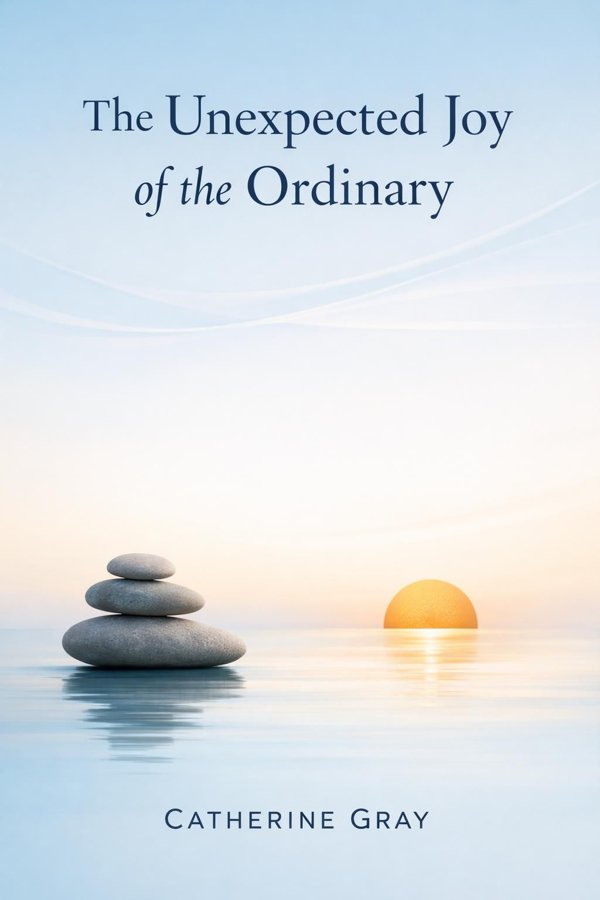
The Unexpected Joy of the Ordinary: Summary & Key Insights
 10 min9 chaptersAudio available
Key Takeaways from The Unexpected Joy of the Ordinary
One of the most damaging cultural beliefs is the idea that happiness must look impressive from the outside.
Transformation is often imagined as dramatic, but real change frequently begins in quieter moments of recognition.
Joy is often misunderstood as a high-intensity emotion, but Gray suggests it may be more helpful to think of it as a way of noticing.
Routine is often dismissed as dull, but Gray shows that repetition can be one of the hidden foundations of wellbeing.
Much of what we call boredom or dissatisfaction is often a failure of attention rather than a failure of life.
What Is The Unexpected Joy of the Ordinary About?
The Unexpected Joy of the Ordinary by Catherine Gray is a positive_psych book spanning 12 pages. In The Unexpected Joy of the Ordinary, Catherine Gray makes a persuasive case that the life we are taught to chase is often the very thing making us unhappy. Modern culture glorifies peak experiences, public success, and constant excitement, leaving many people feeling as though a normal day is somehow a failure. Gray challenges that assumption with warmth, honesty, and sharp psychological insight. She argues that real contentment is rarely found in dramatic highs; it is built through attention, gratitude, connection, rest, and the ability to appreciate ordinary moments that are easy to overlook. What makes this book especially compelling is Gray’s ability to combine personal experience with research in a way that feels accessible rather than preachy. Known for writing about sobriety, emotional wellbeing, and self-discovery, she brings credibility not only as a journalist but as someone who has lived through the exhausting pursuit of external validation. This book matters because it speaks directly to a restless age. For readers tired of comparison, overstimulation, and the pressure to live an exceptional life, Gray offers something far more sustainable: a richer, calmer, and more grounded way to be happy.
This FizzRead summary covers all 9 key chapters of The Unexpected Joy of the Ordinary in approximately 10 minutes, distilling the most important ideas, arguments, and takeaways from Catherine Gray's work. Also available as an audio summary and Key Quotes Podcast.
The Unexpected Joy of the Ordinary
In The Unexpected Joy of the Ordinary, Catherine Gray makes a persuasive case that the life we are taught to chase is often the very thing making us unhappy. Modern culture glorifies peak experiences, public success, and constant excitement, leaving many people feeling as though a normal day is somehow a failure. Gray challenges that assumption with warmth, honesty, and sharp psychological insight. She argues that real contentment is rarely found in dramatic highs; it is built through attention, gratitude, connection, rest, and the ability to appreciate ordinary moments that are easy to overlook.
What makes this book especially compelling is Gray’s ability to combine personal experience with research in a way that feels accessible rather than preachy. Known for writing about sobriety, emotional wellbeing, and self-discovery, she brings credibility not only as a journalist but as someone who has lived through the exhausting pursuit of external validation. This book matters because it speaks directly to a restless age. For readers tired of comparison, overstimulation, and the pressure to live an exceptional life, Gray offers something far more sustainable: a richer, calmer, and more grounded way to be happy.
Who Should Read The Unexpected Joy of the Ordinary?
This book is perfect for anyone interested in positive_psych and looking to gain actionable insights in a short read. Whether you're a student, professional, or lifelong learner, the key ideas from The Unexpected Joy of the Ordinary by Catherine Gray will help you think differently.
- ✓Readers who enjoy positive_psych and want practical takeaways
- ✓Professionals looking to apply new ideas to their work and life
- ✓Anyone who wants the core insights of The Unexpected Joy of the Ordinary in just 10 minutes
Want the full summary?
Get instant access to this book summary and 100K+ more with Fizz Moment.
Get Free SummaryAvailable on App Store • Free to download
Key Chapters
One of the most damaging cultural beliefs is the idea that happiness must look impressive from the outside. We are surrounded by messages suggesting that joy lives in glamorous careers, dramatic romance, constant travel, and public recognition. The ordinary day, by contrast, is framed as something to escape, optimize, or endure until something better comes along. Catherine Gray argues that this narrative is not only misleading but deeply destabilizing, because it trains us to overlook the texture of our actual lives.
The problem with extraordinary happiness is that it is, by definition, rare. If we make rare moments the standard by which we judge our lives, most days will feel inadequate. That creates chronic dissatisfaction, even when life is objectively good. Gray shows how social media, advertising, and cultural storytelling intensify this problem by rewarding spectacle over substance. We begin to confuse excitement with fulfillment and visibility with meaning.
In practical terms, this can look like always waiting for the holiday, the promotion, the perfect partner, or the breakthrough year. Meanwhile, breakfast with a loved one, a quiet walk, a finished task, or an evening of calm barely register as sources of wellbeing. Yet these ordinary experiences make up the majority of life.
Gray’s point is not that ambition or adventure are bad. It is that they cannot serve as the sole foundation of happiness. A life built only around peaks becomes emotionally fragile. A life that values everyday steadiness becomes far more resilient.
Actionable takeaway: Notice one ordinary part of your day that you usually dismiss, and deliberately treat it as a meaningful part of your life rather than a placeholder between bigger events.
Transformation is often imagined as dramatic, but real change frequently begins in quieter moments of recognition. Gray’s personal awakening did not arrive with a grand revelation or a cinematic reset. Instead, it emerged through exhaustion, disillusionment, and the dawning realization that chasing intensity had left her depleted rather than fulfilled. That honesty is central to the book’s power: it shows that a healthier life often starts not with inspiration, but with admitting that our current strategy is not working.
Her experience reflects a common pattern. Many people spend years pursuing stimulation, achievement, or approval because those goals are culturally rewarded. But beneath the surface, the pace can become unsustainable. When every day must feel significant, every ordinary day feels like a problem. Gray’s turning point came when she began to see simplicity not as failure, but as relief.
This shift matters because it reframes recovery from dissatisfaction. You do not need to become a radically different person overnight. You do not need to reject all pleasure, ambition, or excitement. You simply need to become more honest about what actually nourishes you and what merely creates short-lived spikes followed by emptiness.
In everyday life, this may mean recognizing that a packed social calendar leaves you drained, that overwork is eroding your peace, or that trying to impress others has little connection to your real values. Once acknowledged, these patterns can be changed gradually. Gray’s awakening invites readers to stop performing a desirable life and start inhabiting a livable one.
Actionable takeaway: Ask yourself, “What parts of my life feel impressive but not genuinely nourishing?” Write down one answer and consider one small adjustment this week.
Joy is often misunderstood as a high-intensity emotion, but Gray suggests it may be more helpful to think of it as a way of noticing. If we only recognize joy when it arrives as exhilaration, we miss the subtler forms that make life feel rich: relief, comfort, companionship, absorption, beauty, and peace. Redefining joy means broadening our emotional vocabulary so we stop disqualifying everyday pleasures simply because they are quiet.
This idea is liberating because it lowers the threshold for happiness without lowering its value. A cup of tea in a clean kitchen, rain against the window, laughter during an ordinary conversation, or the satisfaction of finishing something small can all count as joy. The issue is not whether these moments are dramatic enough. The issue is whether we are present enough to register them.
Gray helps readers understand that the search for constant highs often makes us emotionally numb to moderate but meaningful pleasures. Like taste buds overwhelmed by too much sugar, a mind trained on intensity can struggle to appreciate subtle satisfaction. Recalibrating joy means allowing gentler experiences to matter again.
A practical way to apply this is by paying attention to your mood throughout the day rather than asking only whether you are “happy” in a grand sense. You may notice many brief pockets of contentment that would otherwise go uncounted. Over time, these small recognitions build a more accurate and encouraging picture of life.
Actionable takeaway: At the end of each day, note three small moments that felt quietly good. Do this for a week to retrain your attention toward ordinary joy.
Routine is often dismissed as dull, but Gray shows that repetition can be one of the hidden foundations of wellbeing. In a culture that celebrates novelty, it is easy to assume that a good life must be varied, spontaneous, and eventful. Yet routine provides structure, predictability, and relief from constant decision-making. It creates a rhythm in which calm and competence can grow.
The emotional value of routine is that it stabilizes us. When daily life contains familiar anchors, such as a morning walk, regular mealtimes, time to read, or a consistent bedtime, the mind has less chaos to manage. This does not mean life becomes boring; it means life becomes more inhabitable. Routine can also turn positive behaviors into defaults rather than heroic efforts. Gratitude, exercise, journaling, tidying, and reaching out to friends are easier when they are built into ordinary patterns.
Gray’s larger point is that routine should not be seen as the enemy of freedom. In many cases, it is what makes freedom possible. A stable framework gives us more emotional energy for creativity, relationships, and unexpected pleasures. Without that framework, we can end up overstretched and scattered, chasing stimulation while feeling increasingly ungrounded.
For example, someone who creates a simple evening routine, reducing screen time, preparing for the next day, and reading before sleep, may discover that the result is not monotony but a greater sense of control and ease. Small rituals also help ordinary days feel meaningful rather than interchangeable.
Actionable takeaway: Choose one part of your day to simplify with a repeatable ritual, and follow it for seven days to experience how routine can create calm.
Much of what we call boredom or dissatisfaction is often a failure of attention rather than a failure of life. Gray emphasizes that mindfulness and presence are not abstract spiritual ideals; they are practical tools for reclaiming the richness of everyday experience. When our minds are habitually elsewhere, replaying the past, anticipating the future, or comparing ourselves with others, even good moments can pass by unfelt.
Presence allows ordinary life to become textured again. Food tastes better when we actually taste it. Conversations become more intimate when we listen instead of planning our reply. Walking down the street becomes more interesting when we notice the weather, the buildings, the rhythm of our body, and the life around us. Gray’s argument is that many people are not unhappy because life lacks value, but because they are rarely fully present for it.
This insight also explains why overstimulation can reduce happiness. Constant notifications, multitasking, and digital distraction fragment attention so thoroughly that nothing lands deeply. We become consumers of experiences rather than participants in them. Mindfulness interrupts that pattern by helping us inhabit what is happening now.
Importantly, this does not require lengthy meditation retreats or elaborate practices. It can begin with one mindful cup of coffee, one device-free conversation, or one walk without headphones. The goal is not perfect calm but greater contact with reality as it unfolds.
Actionable takeaway: Pick one routine activity today, such as eating lunch or taking a shower, and do it without multitasking, giving full attention to physical sensations and surroundings.
A striking truth about happiness is that people consistently matter more than possessions, achievements, or thrilling experiences. Gray highlights relationships and connection as essential to a satisfying life, especially the kinds of connection that flourish in ordinary settings rather than extraordinary ones. Joy is often found not in spectacular events but in being known, supported, and at ease with others.
This is important because modern life can distort our priorities. We may invest heavily in productivity, image, or entertainment while neglecting the slower work of friendship, family bonds, and community. Yet loneliness can make even an objectively successful life feel empty, while warm connection can make a simple life feel abundant.
Ordinary relationships are sustained through ordinary gestures: checking in, remembering details, sharing meals, helping with practical tasks, listening without distraction, and spending unremarkable time together. Gray reminds readers that these interactions are not secondary to life’s big moments. They are the substance of life.
The book also pushes back against the fantasy that happiness depends on finding perfect people or endlessly exciting social experiences. Often, what we truly need is reliability, honesty, humor, and a sense of belonging. That can come from long-term friends, neighbors, partners, family, or small communities built around shared interests.
In practice, this might mean inviting someone for a simple walk instead of waiting for a special occasion, or choosing a real conversation over another hour of scrolling. Connection tends to deepen through consistency, not spectacle.
Actionable takeaway: Reach out to one person this week for an ordinary but meaningful interaction, such as a phone call, coffee, or walk, and treat that time as a priority rather than an extra.
Materialism promises satisfaction, but often delivers anxiety, clutter, and a moving target. Gray explores how the pursuit of more, more status, more possessions, more visible success, can trap us in a cycle of comparison that makes ordinary life seem insufficient. The problem is not owning things; it is expecting them to confer lasting emotional security or identity.
Consumer culture thrives on dissatisfaction. It tells us that the next purchase, upgrade, or lifestyle change will finally make us feel complete. Yet whatever we acquire quickly becomes normal, and the horizon shifts again. This is especially corrosive when combined with social comparison. We do not evaluate our lives in isolation; we measure them against curated images of what others appear to have. As a result, enough rarely feels like enough.
Gray suggests that simplicity is not deprivation but clarity. When we loosen our attachment to external markers, we make room for forms of contentment that are less expensive and more reliable: time, mental space, self-respect, rest, beauty, and relationships. Simplicity also reduces the pressure to perform success. Instead of asking, “How does my life look?” we begin asking, “How does my life feel?”
Examples of this shift might include buying less impulsively, decluttering spaces that create stress, setting spending boundaries, or resisting the urge to upgrade things that are already functional. It can also mean curating your media intake so you are less exposed to comparison triggers.
Actionable takeaway: Identify one area where you are consuming for appearance rather than genuine need, and pause purchases there for two weeks while noticing how your mood and attention change.
Some of the most reliable sources of ordinary joy are also the easiest to underestimate: natural beauty, gratitude, and perspective. Gray shows that when life feels flat or pressurized, these practices can gently reset our attention. Nature reminds us that wonder is available outside the economy of achievement. Gratitude reminds us that goodness often exists before we chase anything new. Perspective reminds us that our frustrations are not always the whole story.
Nature works partly because it shifts us out of self-absorption. A tree-lined street, changing light, birdsong, a park bench, or even a patch of sky can interrupt mental noise and reconnect us to something larger. These experiences are ordinary, but they can have a calming and renewing effect that no amount of scrolling can replicate.
Gratitude deepens this effect by training the mind to register what is present rather than fixating only on what is missing. This does not mean denying difficulty or pretending everything is wonderful. It means refusing to let scarcity thinking dominate perception. When practiced consistently, gratitude changes the emotional tone of daily life.
Perspective is what helps us hold both things together: yes, life can be hard, repetitive, or disappointing; and yes, there is still beauty, enoughness, and meaning available within it. A missed opportunity, a mundane week, or an unglamorous season of life may not be failures at all.
Actionable takeaway: Spend ten minutes outside each day for a week and write down one specific thing you are grateful for afterward, no matter how small.
Many people fear boredom because they equate it with emptiness, but Gray argues that boredom and rest can play a valuable role in a healthy life. Constant stimulation leaves little room for reflection, recovery, or inner clarity. When every spare moment is filled with noise, entertainment, or productivity, we lose contact with ourselves and become more dependent on external inputs to feel alive.
Boredom is uncomfortable partly because it exposes our habits of avoidance. Yet it can also be a doorway. In unfilled moments, we notice what we are feeling, what we actually want, and what kinds of pleasures remain when novelty is absent. Creativity often emerges here, as does a deeper appreciation for simple things. Rest does similar work. It is not a reward for finishing life perfectly; it is a condition that makes a meaningful life possible.
Gray’s final insight is that ordinary joy must be integrated, not admired from a distance. It is not enough to agree intellectually that simple pleasures matter. We need to redesign our days so those pleasures can actually be felt. That might involve fewer digital distractions, more margin between commitments, regular pauses, slower weekends, or permission to do less without guilt.
Integration also means accepting that joy will not always feel dramatic. A calmer life may initially seem less exciting than a chaotic one, especially if you are used to adrenaline. But over time, steadier forms of happiness become more trustworthy. They support rather than exhaust you.
Actionable takeaway: Schedule one hour this week with no entertainment, no tasks, and no phone, then notice what boredom reveals and what quieter forms of pleasure become available.
All Chapters in The Unexpected Joy of the Ordinary
About the Author
Catherine Gray is a British author, journalist, and speaker whose work focuses on happiness, sobriety, self-awareness, and modern wellbeing. She is known for combining candid personal storytelling with research-driven insight, making complex emotional topics feel engaging and practical. Gray has earned a wide readership through books that question cultural assumptions about pleasure, success, and what it really means to live well. Her writing often explores how people can move from restless striving toward a more grounded and fulfilling life. With a background in journalism and a gift for blending wit, vulnerability, and clarity, Gray has become a distinctive voice in contemporary nonfiction, particularly for readers interested in personal growth that feels honest rather than formulaic.
Get This Summary in Your Preferred Format
Read or listen to the The Unexpected Joy of the Ordinary summary by Catherine Gray anytime, anywhere. FizzRead offers multiple formats so you can learn on your terms — all free.
Available formats: App · Audio · PDF · EPUB — All included free with FizzRead
Download The Unexpected Joy of the Ordinary PDF and EPUB Summary
Key Quotes from The Unexpected Joy of the Ordinary
“One of the most damaging cultural beliefs is the idea that happiness must look impressive from the outside.”
“Transformation is often imagined as dramatic, but real change frequently begins in quieter moments of recognition.”
“Joy is often misunderstood as a high-intensity emotion, but Gray suggests it may be more helpful to think of it as a way of noticing.”
“Routine is often dismissed as dull, but Gray shows that repetition can be one of the hidden foundations of wellbeing.”
“Much of what we call boredom or dissatisfaction is often a failure of attention rather than a failure of life.”
Frequently Asked Questions about The Unexpected Joy of the Ordinary
The Unexpected Joy of the Ordinary by Catherine Gray is a positive_psych book that explores key ideas across 9 chapters. In The Unexpected Joy of the Ordinary, Catherine Gray makes a persuasive case that the life we are taught to chase is often the very thing making us unhappy. Modern culture glorifies peak experiences, public success, and constant excitement, leaving many people feeling as though a normal day is somehow a failure. Gray challenges that assumption with warmth, honesty, and sharp psychological insight. She argues that real contentment is rarely found in dramatic highs; it is built through attention, gratitude, connection, rest, and the ability to appreciate ordinary moments that are easy to overlook. What makes this book especially compelling is Gray’s ability to combine personal experience with research in a way that feels accessible rather than preachy. Known for writing about sobriety, emotional wellbeing, and self-discovery, she brings credibility not only as a journalist but as someone who has lived through the exhausting pursuit of external validation. This book matters because it speaks directly to a restless age. For readers tired of comparison, overstimulation, and the pressure to live an exceptional life, Gray offers something far more sustainable: a richer, calmer, and more grounded way to be happy.
More by Catherine Gray

You Might Also Like
Don't Sweat the Small Stuff... and It's All Small Stuff
Richard Carlson
10 min
Option B
Sheryl Sandberg & Adam Grant
10 min
Hallelujah Anyway: Rediscovering Mercy
Anne Lamott
10 min
I Can Do It: How to Use Affirmations to Change Your Life
Louise Hay
10 min
The Coffee Bean: A Simple Lesson to Create Positive Change
Jon Gordon, Damon West
10 min
The Happiness Hypothesis: Finding Modern Truth in Ancient Wisdom
Jonathan Haidt
10 minBrowse by Category
Ready to read The Unexpected Joy of the Ordinary?
Get the full summary and 100K+ more books with Fizz Moment.