
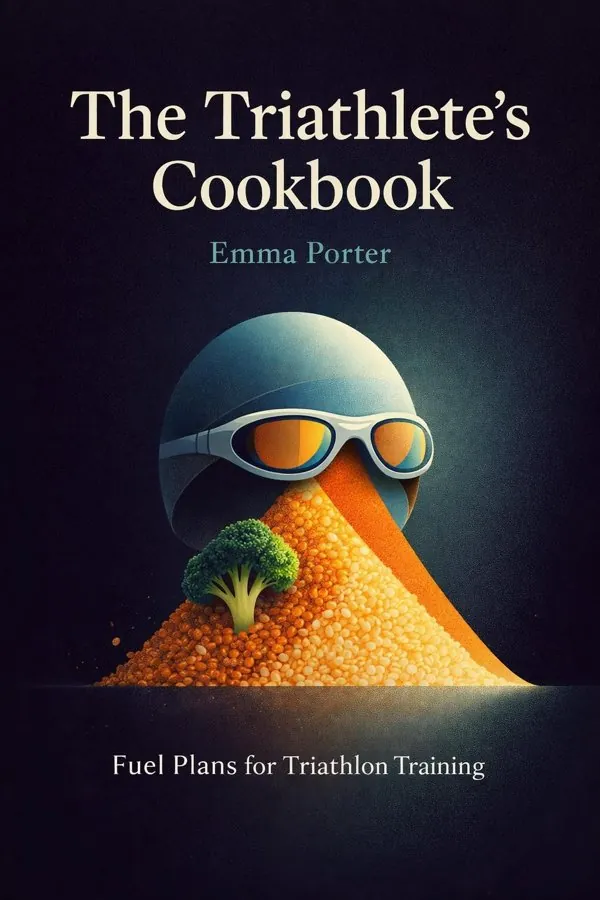
The Triathlete’s Cookbook: Fuel Plans for Triathlon Training: Summary & Key Insights
by Emma Porter
 10 min9 chaptersAudio available
Key Takeaways from The Triathlete’s Cookbook: Fuel Plans for Triathlon Training
A triathlete does not simply burn calories; a triathlete manages three different physiological conversations in one sport.
Food becomes performance nutrition when you understand what each macronutrient actually does in the body.
Many athletes treat hydration as something they notice only when it goes wrong.
One of Porter’s most practical contributions is the idea that meal planning should evolve with the training calendar, not remain static all year.
Race day rarely exposes a lack of motivation; it exposes a lack of nutritional practice.
What Is The Triathlete’s Cookbook: Fuel Plans for Triathlon Training About?
The Triathlete’s Cookbook: Fuel Plans for Triathlon Training by Emma Porter is a nutrition book spanning 5 pages. Triathlon is often described as a test of discipline, grit, and endurance, but Emma Porter makes a compelling case that success in the sport depends just as much on what happens in the kitchen as on what happens in the pool, on the bike, or on the run. The Triathlete’s Cookbook: Fuel Plans for Triathlon Training is a practical guide to eating for performance, recovery, and consistency across every phase of training. Rather than offering generic healthy-eating advice, Porter focuses on the specific metabolic demands of triathlon and translates sports nutrition science into meal plans, timing strategies, and recipes athletes can actually use. What makes this book especially valuable is its balance of expertise and realism. Porter writes not only as a sports nutritionist but also as a triathlete who understands early-morning sessions, double training days, race-week nerves, and the challenge of fueling busy lives. She shows readers how to match food intake to training load, recover faster, stay hydrated, and approach race day with confidence. For beginners and experienced endurance athletes alike, this book reframes nutrition as a performance tool—one that can unlock better energy, better adaptation, and better results.
This FizzRead summary covers all 9 key chapters of The Triathlete’s Cookbook: Fuel Plans for Triathlon Training in approximately 10 minutes, distilling the most important ideas, arguments, and takeaways from Emma Porter's work. Also available as an audio summary and Key Quotes Podcast.
The Triathlete’s Cookbook: Fuel Plans for Triathlon Training
Triathlon is often described as a test of discipline, grit, and endurance, but Emma Porter makes a compelling case that success in the sport depends just as much on what happens in the kitchen as on what happens in the pool, on the bike, or on the run. The Triathlete’s Cookbook: Fuel Plans for Triathlon Training is a practical guide to eating for performance, recovery, and consistency across every phase of training. Rather than offering generic healthy-eating advice, Porter focuses on the specific metabolic demands of triathlon and translates sports nutrition science into meal plans, timing strategies, and recipes athletes can actually use.
What makes this book especially valuable is its balance of expertise and realism. Porter writes not only as a sports nutritionist but also as a triathlete who understands early-morning sessions, double training days, race-week nerves, and the challenge of fueling busy lives. She shows readers how to match food intake to training load, recover faster, stay hydrated, and approach race day with confidence. For beginners and experienced endurance athletes alike, this book reframes nutrition as a performance tool—one that can unlock better energy, better adaptation, and better results.
Who Should Read The Triathlete’s Cookbook: Fuel Plans for Triathlon Training?
This book is perfect for anyone interested in nutrition and looking to gain actionable insights in a short read. Whether you're a student, professional, or lifelong learner, the key ideas from The Triathlete’s Cookbook: Fuel Plans for Triathlon Training by Emma Porter will help you think differently.
- ✓Readers who enjoy nutrition and want practical takeaways
- ✓Professionals looking to apply new ideas to their work and life
- ✓Anyone who wants the core insights of The Triathlete’s Cookbook: Fuel Plans for Triathlon Training in just 10 minutes
Want the full summary?
Get instant access to this book summary and 100K+ more with Fizz Moment.
Get Free SummaryAvailable on App Store • Free to download
Key Chapters
A triathlete does not simply burn calories; a triathlete manages three different physiological conversations in one sport. That is the central insight behind Emma Porter’s approach to nutrition. Swimming challenges breathing rhythm and upper-body engagement, cycling stresses sustained muscular output and glycogen conservation, and running layers impact, heat, and fatigue onto an already depleted body. Because triathlon combines all three, its nutrition demands are more complex than those of a single-discipline sport.
Porter explains that athletes often underperform not because they train too little, but because they fuel too vaguely. Eating “healthy” is not enough if meals do not align with training intensity, session duration, and recovery needs. A short technique swim does not require the same pre-workout fuel as a long brick session. A heavy build week needs more carbohydrates and strategic recovery meals than a lighter week focused on mobility and form. In this sense, nutrition is not background support; it is an active part of training design.
The book encourages athletes to think in terms of workload matching. Hard days require accessible energy, moderate days need balanced support, and easy days allow for more flexibility without neglecting recovery. Porter also addresses the cumulative nature of fatigue: a poorly fueled morning ride can compromise the afternoon run, and several underfueled days can quietly erode adaptation, mood, and immune function.
A practical application is to categorize sessions by demand—easy, moderate, long, and race-specific—and attach a fueling template to each. For example, an easy 45-minute swim may need only a regular meal beforehand, while a two-hour ride may require pre-session carbohydrates, on-bike fuel, and a recovery snack afterward.
Actionable takeaway: Stop fueling by habit and start fueling by session type, training load, and recovery demands.
Food becomes performance nutrition when you understand what each macronutrient actually does in the body. Porter frames carbohydrates, protein, and fat as the triathlete’s nutritional triangle, with each corner supporting a different but interconnected aspect of performance. The key is not choosing one “best” macronutrient, but adjusting the balance according to training goals and timing.
Carbohydrates are the most immediate performance fuel. They replenish glycogen, support high-intensity output, and help athletes maintain pace and concentration during long sessions. Porter emphasizes that many endurance athletes try to train hard while eating too few carbohydrates, then wonder why quality drops. Protein serves a different purpose: it repairs damaged muscle tissue, supports adaptation, and helps preserve lean mass during heavy blocks of training. Fat, meanwhile, contributes to satiety, hormone function, and long-duration energy support, especially when overall diet quality is strong.
The book’s value lies in how it makes these principles usable. A breakfast before intervals might be higher in easy-to-digest carbohydrates, such as oats with banana and honey. A post-workout lunch might prioritize both carbohydrates and protein, such as rice, salmon, and roasted vegetables. On a lighter day, meals may include more healthy fats and fibrous vegetables while still preserving adequate protein.
Porter also warns against rigid formulas. Macronutrient needs shift across training phases, body size, goals, and tolerance. Some athletes digest solid meals well before workouts; others need smoothies, toast, or sports drinks. The book encourages experimentation without abandoning core principles.
A useful system is to build each meal around the dominant demand of the day: fuel, recover, or maintain. This prevents random eating and creates consistency over weeks of training.
Actionable takeaway: Use carbohydrates for training quality, protein for repair, and fat for balance—then adjust the mix based on what your body needs today.
Many athletes treat hydration as something they notice only when it goes wrong. Porter argues that by the time thirst, cramps, dizziness, or a pounding headache arrive, performance has often already declined. Hydration is not just about drinking enough water; it is about maintaining fluid balance and electrolyte status so that the body can regulate temperature, circulate nutrients, and sustain muscular contraction under stress.
Triathlon makes hydration especially tricky because conditions change across disciplines and environments. Pool sessions may hide sweat losses. Long rides make it easier to drink, but athletes may still underconsume. Runs, especially in heat, often reveal the cost of arriving already dehydrated. Porter explains that sodium and other electrolytes matter because they help retain fluid and support nerve and muscle function. Drinking plain water alone during long or hot sessions may not be enough.
The book offers practical ways to personalize hydration. Athletes can track pre- and post-session body weight to estimate sweat loss, observe urine color for a quick daily check, and note how weather affects fluid needs. A one-hour indoor trainer workout in a hot room may require more aggressive hydration than an easy outdoor spin in cool weather. Porter also emphasizes practicing race hydration in training, because gut comfort and bottle strategy are trainable.
Examples include carrying bottles with measured electrolyte content on the bike, starting longer sessions already hydrated, and replacing losses steadily instead of trying to “catch up” afterward. Recovery also improves when fluid intake includes sodium and food, not just water.
Hydration is best viewed as a system: pre-session preparation, during-session maintenance, and post-session restoration. When that system is ignored, fatigue can masquerade as poor fitness.
Actionable takeaway: Create a personalized hydration plan based on sweat rate, weather, and session length, and rehearse it in training until it becomes automatic.
One of Porter’s most practical contributions is the idea that meal planning should evolve with the training calendar, not remain static all year. Triathletes often periodize workouts carefully but fail to periodize nutrition. The result is predictable: they either overeat during lighter phases, underfuel during heavy blocks, or arrive at race season with inconsistent habits.
In base training, the goal is to support consistency and aerobic development. Meals can be balanced and routine, with enough carbohydrates to sustain volume but not necessarily the race-focused intensity of later phases. During build periods, especially when long rides, brick workouts, and higher-intensity sessions increase, carbohydrate needs rise and recovery nutrition becomes more urgent. Race preparation sharpens the focus further: digestive reliability, timing, and specific fueling practice take center stage.
Porter also notes the value of transition and recovery phases. After a race or at the end of a season, nutrition should support healing, immune function, and mental reset rather than staying locked into peak-training patterns. This helps athletes avoid the common trap of eating as though every week is a maximal week.
The book encourages readers to map weekly menus against their training schedule. Hard days might include carbohydrate-rich breakfasts, portable snacks, and recovery dinners prepared in advance. Easier days can emphasize nutrient density, vegetables, and protein while maintaining enough energy to support adaptation. Batch cooking, freezer-friendly meals, and shopping lists reduce decision fatigue during demanding weeks.
For example, an athlete entering a build week may prepare overnight oats, rice bowls, homemade energy bites, and recovery smoothies in advance so that fueling is proactive rather than reactive. This turns good intentions into repeatable habits.
Actionable takeaway: Align your grocery list and meal prep with your current training phase so your nutrition supports what your body is actually trying to do.
Race day rarely exposes a lack of motivation; it exposes a lack of nutritional practice. Porter stresses that successful race fueling is not something athletes improvise from nerves, marketing claims, or what other competitors are doing. It is the outcome of repeated rehearsal in training. The body performs best when race-day nutrition feels familiar.
The book breaks race nutrition into stages: the days before the event, the pre-race meal, intake during the race, and immediate recovery. In the lead-up, the goal is to top up glycogen without overeating or experimenting with unfamiliar foods. On race morning, athletes need a meal that provides usable energy while minimizing gastrointestinal risk. During the race itself, fueling should reflect duration, intensity, and discipline-specific logistics. Cycling often provides the best opportunity to take in calories, while running may require simpler, more frequent intake.
Porter also addresses common mistakes: eating too much fiber the night before, starting the race underhydrated, taking in too little fuel early because adrenaline masks effort, or trying a new gel brand because it was handed out at the expo. For athletes with sensitive stomachs, race success depends on testing concentrations, textures, and timing well in advance.
Examples might include practicing a race breakfast of toast, nut butter, banana, and sports drink; consuming measured carbohydrates every 20 to 30 minutes on long rides; and testing how fluids, gels, or chews feel during transition-heavy workouts. Porter treats these as performance rehearsals, not minor details.
The broader lesson is that race nutrition is strategic, not optional. Even well-trained athletes can lose significant time to poor fueling, dehydration, or gastrointestinal issues.
Actionable takeaway: Build a race-day fueling plan from foods and timings you have successfully tested in training, then resist the urge to change it at the last minute.
Fitness does not improve during training itself; it improves when the body recovers from training. Porter uses this principle to show why post-workout nutrition is one of the most overlooked advantages in endurance sport. A hard session creates the stimulus, but recovery nutrition determines how effectively the body repairs muscle, restores glycogen, and prepares for the next session.
The book highlights the importance of timing without becoming dogmatic. While there is no need for panic if a full meal is not immediate, athletes benefit from eating relatively soon after demanding sessions, especially if another workout follows later the same day or the next morning. Carbohydrates help replenish glycogen stores, while protein supports repair and adaptation. Fluids and electrolytes matter too, particularly after long or sweaty sessions.
Porter’s approach is practical: the best recovery food is not the most scientifically perfect option, but the one an athlete can consistently access after training. A smoothie with milk or yogurt, fruit, oats, and protein can work when appetite is low. A rice bowl with chicken and vegetables may suit those who want a full meal. Even simple combinations like chocolate milk and a banana can be effective when time is tight.
The book also connects recovery nutrition to broader training quality. Poor recovery does not always show up immediately. Sometimes it appears as sluggish legs two days later, persistent soreness, irritability, poor sleep, or an inability to hit target pace. This makes recovery fueling easy to underestimate.
Porter encourages athletes to pre-plan recovery the same way they plan workouts. If you know where your post-session meal is coming from, you are more likely to recover well and maintain consistency across the week.
Actionable takeaway: Decide on your post-workout recovery meal or snack before you train so replenishment happens by design, not by chance.
Athletes often search for the perfect superfood, supplement, or ratio, but Porter reminds readers that performance is more often built by repeated adequacy than by occasional nutritional brilliance. The best fueling strategy is one that fits real life: work schedules, family routines, travel, changing training times, and fluctuating appetite. In that sense, consistency is a competitive advantage.
This idea runs through the book’s meal plans and recipes. Porter favors foods that are practical, portable, and adaptable rather than overly complicated. She understands that triathletes may train before dawn, squeeze workouts into lunch breaks, or come home too tired to cook elaborate dinners. A well-designed nutrition plan must survive ordinary life, or it will collapse under the first stressful week.
Examples include keeping a small rotation of reliable breakfasts, making double portions of recovery-friendly dinners, freezing soups or stews for heavy training weeks, and carrying shelf-stable snacks such as bars, trail mix, or oat bites. Porter also supports flexibility. If one athlete thrives on rice bowls and another prefers wraps, smoothies, or pasta, both can succeed if the nutritional principles remain sound.
The psychological benefit of this approach is important. Perfectionism can lead to all-or-nothing thinking: one missed snack becomes a “bad day,” which becomes several poor choices. Porter instead encourages athletes to return quickly to the next good decision. Sustainable fueling is cumulative, not fragile.
The lesson is especially relevant for age-group triathletes balancing sport with jobs and family. They do not need a chef or a laboratory diet. They need systems that reduce friction and improve reliability.
Actionable takeaway: Build a short list of repeatable meals and snacks you can rely on during busy weeks, and let consistency—not perfection—drive your nutrition.
One of the most underappreciated truths in endurance sport is that the digestive system can be trained just like muscles and lungs. Porter highlights gut training as an essential skill for triathletes who want to perform well over longer distances. Many athletes assume stomach distress is inevitable in competition, when in reality it often reflects a mismatch between race demands and practiced intake.
During long sessions and races, the body must absorb carbohydrates and fluids while blood flow is being directed toward working muscles and temperature regulation. If athletes rarely eat or drink at race-like intensity in training, the gut may struggle when asked to do so under pressure. Porter explains that tolerance can improve through gradual, deliberate practice.
This can look like introducing small amounts of carbohydrate during longer rides, testing different gel or drink concentrations, and rehearsing intake intervals that mirror race plans. The bike is often the best place to train the gut because it allows steadier access to fuel than the run. Over time, athletes can learn not only what products work, but how much they can comfortably process per hour.
Porter also emphasizes individual variability. Some athletes prefer liquid calories, others do better with chews or soft solids. Heat, intensity, anxiety, and hydration status all affect tolerance. That is why generic recommendations are a starting point, not a final answer.
By treating the gut as trainable, athletes reduce the risk of late-race energy crashes and gastrointestinal distress. This turns fueling from a gamble into a practiced capability.
Actionable takeaway: Use long training sessions to progressively practice the amount, form, and timing of fuel you plan to use on race day.
Performance nutrition is often framed as a short-term tool for speed, but Porter broadens the conversation by showing that good fueling also protects long-term health. Triathletes who consistently underfuel, neglect recovery, or chase weight loss at the expense of energy availability may compromise not just performance, but hormone balance, bone health, immune function, mood, and training longevity.
This is one of the book’s most responsible messages. Endurance athletes can become so focused on body composition or calorie expenditure that they ignore the signs of chronic undernourishment: persistent fatigue, poor sleep, plateaued performance, increased illness, irregular cycles, recurrent injuries, and loss of motivation. Porter urges readers to see food as support, not as something to fear or minimize.
The recipes and meal plans reflect this philosophy by emphasizing balanced plates, sufficient energy intake, and nutrient density. Iron-rich foods, quality protein sources, colorful produce, healthy fats, and recovery carbohydrates all play a role. The goal is not merely surviving training, but remaining robust enough to train well over months and years.
Porter’s approach is especially useful for age-group athletes prone to doing “just enough” nutritionally while taking on ambitious training plans. She argues that sustainable progress depends on respecting the body’s need for both fuel and rest. Leaner is not always faster, and lighter is not always healthier.
A practical application is to regularly audit not just race times but health markers: energy levels, sleep quality, menstrual health where relevant, illness frequency, injury patterns, and emotional resilience. These are feedback tools, not side notes.
Actionable takeaway: Judge your nutrition not only by body weight or race results, but by whether it supports stable energy, recovery, resilience, and long-term athletic health.
All Chapters in The Triathlete’s Cookbook: Fuel Plans for Triathlon Training
About the Author
Emma Porter is a sports nutritionist and endurance athlete known for translating nutrition science into practical strategies for triathletes. Drawing on both professional expertise and personal experience in the sport, she focuses on helping athletes fuel training, improve recovery, and perform more consistently on race day. Her work centers on real-world meal planning rather than rigid dieting, making her guidance especially useful for age-group competitors balancing sport with busy lives. Porter’s approach combines evidence-based principles with an understanding of the physical and logistical demands of swimming, cycling, and running in combination. In The Triathlete’s Cookbook, she brings together nutritional education, performance-oriented recipes, and actionable planning tools to show that food is not just support for triathlon training—it is a core part of it.
Get This Summary in Your Preferred Format
Read or listen to the The Triathlete’s Cookbook: Fuel Plans for Triathlon Training summary by Emma Porter anytime, anywhere. FizzRead offers multiple formats so you can learn on your terms — all free.
Available formats: App · Audio · PDF · EPUB — All included free with FizzRead
Download The Triathlete’s Cookbook: Fuel Plans for Triathlon Training PDF and EPUB Summary
Key Quotes from The Triathlete’s Cookbook: Fuel Plans for Triathlon Training
“A triathlete does not simply burn calories; a triathlete manages three different physiological conversations in one sport.”
“Food becomes performance nutrition when you understand what each macronutrient actually does in the body.”
“Many athletes treat hydration as something they notice only when it goes wrong.”
“One of Porter’s most practical contributions is the idea that meal planning should evolve with the training calendar, not remain static all year.”
“Race day rarely exposes a lack of motivation; it exposes a lack of nutritional practice.”
Frequently Asked Questions about The Triathlete’s Cookbook: Fuel Plans for Triathlon Training
The Triathlete’s Cookbook: Fuel Plans for Triathlon Training by Emma Porter is a nutrition book that explores key ideas across 9 chapters. Triathlon is often described as a test of discipline, grit, and endurance, but Emma Porter makes a compelling case that success in the sport depends just as much on what happens in the kitchen as on what happens in the pool, on the bike, or on the run. The Triathlete’s Cookbook: Fuel Plans for Triathlon Training is a practical guide to eating for performance, recovery, and consistency across every phase of training. Rather than offering generic healthy-eating advice, Porter focuses on the specific metabolic demands of triathlon and translates sports nutrition science into meal plans, timing strategies, and recipes athletes can actually use. What makes this book especially valuable is its balance of expertise and realism. Porter writes not only as a sports nutritionist but also as a triathlete who understands early-morning sessions, double training days, race-week nerves, and the challenge of fueling busy lives. She shows readers how to match food intake to training load, recover faster, stay hydrated, and approach race day with confidence. For beginners and experienced endurance athletes alike, this book reframes nutrition as a performance tool—one that can unlock better energy, better adaptation, and better results.
You Might Also Like

Eating by the Seasons Cookbook: Seasonal Produce-Focused Recipes
Clare Foster
10 min
From Crook to Cook: Platinum Recipes from Tha Boss Dogg's Kitchen
Snoop Dogg with Ryan Ford
10 min
Juicing for Beginners: The Essential Guide to Juicing Recipes and Juicing for Weight Loss
Rockridge Press
10 min
The Food Therapist: Break Bad Habits, Eat with Intention, and Indulge Without Worry
Shira Lenchewski
10 min
The Mediterranean Diet Meal Plan: A 4-Week Meal Plan for Optimal Health and Weight Loss
Various Contributors
10 min
The Well Plated Cookbook: Simple, Wholesome Recipes for Everyday Meals
Erin Clarke
10 minBrowse by Category
Ready to read The Triathlete’s Cookbook: Fuel Plans for Triathlon Training?
Get the full summary and 100K+ more books with Fizz Moment.