
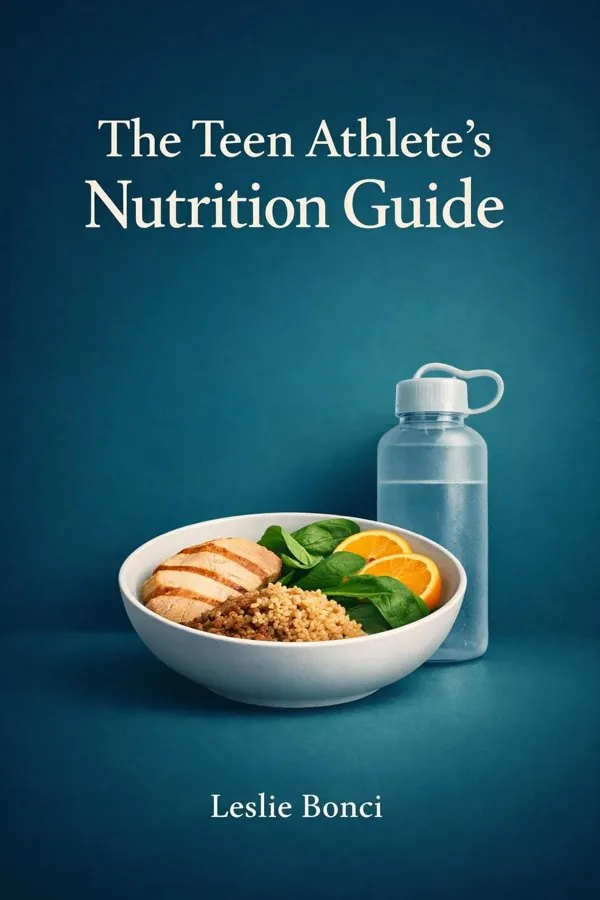
The Teen Athlete’s Nutrition Guide: Practical Planning and Recipes: Summary & Key Insights
by Leslie Bonci
 10 min9 chaptersAudio available
Key Takeaways from The Teen Athlete’s Nutrition Guide: Practical Planning and Recipes
A teenage athlete is never just an athlete; they are also a growing person whose body is constantly changing.
Performance suffers when any one of them is ignored.
Championships are not won by vitamins and minerals alone, but micronutrient gaps can quietly derail progress.
By the time many athletes notice they are thirsty, performance may already be slipping.
Sometimes the difference between feeling strong and feeling sluggish is not what you ate, but when you ate it.
What Is The Teen Athlete’s Nutrition Guide: Practical Planning and Recipes About?
The Teen Athlete’s Nutrition Guide: Practical Planning and Recipes by Leslie Bonci is a nutrition book spanning 5 pages. The Teen Athlete’s Nutrition Guide: Practical Planning and Recipes is a practical, encouraging handbook for young athletes who want to perform better, recover faster, and build healthy habits that last beyond a single season. Leslie Bonci makes a powerful point from the start: nutrition is not an optional add-on to training. It is part of training. For teenagers, that truth matters even more, because their bodies are not only competing and practicing, but also growing, developing, and adapting every day. That means eating well is about more than winning games; it is about supporting health, mood, concentration, strength, and long-term well-being. Bonci writes with the authority of a registered dietitian and sports nutrition specialist who has worked with athletes at many levels. Her guidance is grounded in science but delivered in a realistic, teen-friendly way. Instead of promoting rigid rules or perfection, she shows readers how to make smarter everyday choices around meals, snacks, hydration, timing, and recovery. The result is a highly usable guide for teen athletes, parents, and coaches who want clear answers, practical planning tools, and food strategies that fit real life.
This FizzRead summary covers all 9 key chapters of The Teen Athlete’s Nutrition Guide: Practical Planning and Recipes in approximately 10 minutes, distilling the most important ideas, arguments, and takeaways from Leslie Bonci's work. Also available as an audio summary and Key Quotes Podcast.
The Teen Athlete’s Nutrition Guide: Practical Planning and Recipes
The Teen Athlete’s Nutrition Guide: Practical Planning and Recipes is a practical, encouraging handbook for young athletes who want to perform better, recover faster, and build healthy habits that last beyond a single season. Leslie Bonci makes a powerful point from the start: nutrition is not an optional add-on to training. It is part of training. For teenagers, that truth matters even more, because their bodies are not only competing and practicing, but also growing, developing, and adapting every day. That means eating well is about more than winning games; it is about supporting health, mood, concentration, strength, and long-term well-being.
Bonci writes with the authority of a registered dietitian and sports nutrition specialist who has worked with athletes at many levels. Her guidance is grounded in science but delivered in a realistic, teen-friendly way. Instead of promoting rigid rules or perfection, she shows readers how to make smarter everyday choices around meals, snacks, hydration, timing, and recovery. The result is a highly usable guide for teen athletes, parents, and coaches who want clear answers, practical planning tools, and food strategies that fit real life.
Who Should Read The Teen Athlete’s Nutrition Guide: Practical Planning and Recipes?
This book is perfect for anyone interested in nutrition and looking to gain actionable insights in a short read. Whether you're a student, professional, or lifelong learner, the key ideas from The Teen Athlete’s Nutrition Guide: Practical Planning and Recipes by Leslie Bonci will help you think differently.
- ✓Readers who enjoy nutrition and want practical takeaways
- ✓Professionals looking to apply new ideas to their work and life
- ✓Anyone who wants the core insights of The Teen Athlete’s Nutrition Guide: Practical Planning and Recipes in just 10 minutes
Want the full summary?
Get instant access to this book summary and 100K+ more with Fizz Moment.
Get Free SummaryAvailable on App Store • Free to download
Key Chapters
A teenage athlete is never just an athlete; they are also a growing person whose body is constantly changing. That is why Leslie Bonci emphasizes that energy needs are highly individual. Two teens on the same team can require very different amounts of food based on age, sex, body size, growth stage, training load, position, and even how intensely they move during practice. Nutrition planning works best when it starts with this simple realization: there is no universal meal plan for all teen athletes.
Bonci explains that adolescent athletes need enough energy not only to perform in games and practices, but also to support bone growth, muscle development, hormone function, brain performance, and recovery. When teens eat too little, the effects may show up as fatigue, slower sprint times, poor concentration in school, mood swings, frequent illness, stalled strength gains, or nagging injuries. Underfueling can look “disciplined” from the outside, but in reality it can quietly undermine both performance and health.
She also points out that needs shift throughout the year. Preseason conditioning, tournament weekends, strength cycles, and off-days all call for different levels of intake. A swimmer training twice a day will need more total fuel than a golfer with lighter sessions, just as a football lineman’s needs differ from a distance runner’s. The key is matching intake to output instead of eating randomly or reactively.
A practical way to apply this idea is to think in patterns rather than exact numbers. On harder training days, athletes can increase portions of carbohydrates and add extra snacks. On lighter days, they can eat a bit less while still maintaining balanced meals. Monitoring hunger, energy, mood, sleep, and recovery gives useful feedback.
Actionable takeaway: Stop comparing your plate to someone else’s and build a fueling plan around your own sport, schedule, growth, and recovery signals.
Many athletes are taught to fear one nutrient or glorify another, but Bonci cuts through that confusion with a balanced message: carbohydrates, protein, and fat are teammates, not rivals. Performance suffers when any one of them is ignored. For teens especially, understanding the role of each macronutrient creates a more sustainable and effective way to eat.
Carbohydrates are the body’s quickest and most efficient source of exercise fuel. They help power practices, sprints, jumps, and repeated efforts. Athletes who skimp on carbs often feel flat, heavy-legged, or mentally foggy. Bonci encourages teens to include carbohydrate-rich foods such as fruit, milk, yogurt, oatmeal, rice, pasta, potatoes, bread, cereal, and beans across the day rather than treating them as “bad” foods. A soccer player who eats toast and fruit before practice or rice with dinner after training is not overeating; they are fueling movement.
Protein supports growth, repair, and adaptation. It matters after workouts, but also at breakfast, lunch, dinner, and snacks. Bonci recommends spreading protein through the day with foods such as eggs, milk, yogurt, cheese, lean meat, fish, tofu, nut butters, and beans. This is especially important for teens who skip breakfast and then try to make up for it later.
Fat is often misunderstood, yet it is essential for hormones, satiety, vitamin absorption, and long-lasting energy. Foods such as nuts, seeds, avocado, olive oil, peanut butter, and fatty fish can strengthen the overall quality of a teen athlete’s diet.
The smartest meals combine all three. For example, a turkey sandwich with fruit and milk, or yogurt with granola and nuts, gives the body multiple forms of support.
Actionable takeaway: Build every meal and snack around a combination of carbs, protein, and healthy fat instead of chasing one nutrient at the expense of the others.
Championships are not won by vitamins and minerals alone, but micronutrient gaps can quietly derail progress. Bonci highlights that teen athletes often focus on calories and protein while overlooking the smaller nutrients that make training possible. Iron, calcium, vitamin D, potassium, magnesium, and other micronutrients play major roles in oxygen transport, bone strength, muscle contraction, nerve function, and recovery.
Iron is especially important because it helps carry oxygen through the blood. Teens with low iron may feel constantly tired, short of breath, weak in workouts, or unable to recover well. Bonci notes that female athletes, endurance athletes, and teens with restrictive eating patterns may be especially vulnerable. Iron-rich foods include lean red meat, beans, fortified cereals, spinach, and legumes, and pairing plant sources with vitamin C-rich foods can improve absorption.
Calcium and vitamin D support growing bones, which matters enormously during adolescence. A teenager can be performing at a high level while still laying the foundation for future skeletal health. Bonci encourages consistent intake of dairy foods or fortified alternatives, along with other calcium-rich choices such as yogurt, cheese, milk, calcium-set tofu, and leafy greens. Vitamin D can come from fortified foods, sunlight exposure, and supplements when medically appropriate.
She also reminds readers that whole foods usually deliver more than single nutrients. A smoothie with yogurt, berries, and fortified milk supports calcium, vitamin D, potassium, protein, and carbohydrates all at once. A bean-and-rice bowl delivers iron, magnesium, fiber, and energy.
Rather than assuming a supplement is the answer, Bonci pushes readers to strengthen their daily food patterns first. Supplements may have a role, but they should not replace consistent eating.
Actionable takeaway: Audit your weekly eating pattern for iron- and calcium-rich foods, and fill common nutrient gaps with real meals before reaching for pills or powders.
By the time many athletes notice they are thirsty, performance may already be slipping. Bonci treats hydration as a daily habit, not something that begins when practice starts. Water affects temperature regulation, focus, coordination, endurance, and perceived effort. Even mild dehydration can make exercise feel harder, especially in hot weather or during long sessions.
Teen athletes often underestimate how much fluid they lose. Sweat rates vary widely depending on body size, intensity, clothing, humidity, and sport. A tennis player in summer heat, a wrestler in layers, and a basketball player in a hot gym can all finish a session significantly depleted. Bonci stresses that hydration needs are personal, just like calorie needs.
She recommends beginning the day well hydrated, sipping fluids regularly, and replacing losses after exercise. Urine color can offer a simple clue: pale yellow often signals better hydration than dark yellow. Water is usually enough for shorter, lighter sessions, while sports drinks may help during long, intense practices or tournaments because they provide both fluid and carbohydrates, plus some sodium. Chocolate milk, smoothies, milk, and water-rich foods like fruit can also contribute to rehydration and recovery.
Bonci also addresses a common mistake: waiting until the final minutes of practice to chug fluid. That can leave athletes uncomfortable without fully correcting the problem. A better strategy is steady intake before, during, and after training. Keeping a reusable bottle nearby makes this much easier.
Practical examples include drinking at breakfast, bringing a bottle to school, sipping between classes, taking regular practice breaks to drink, and having fluid with recovery snacks afterward.
Actionable takeaway: Create a personal hydration routine for school days, practice days, and game days so drinking becomes automatic instead of reactive.
Sometimes the difference between feeling strong and feeling sluggish is not what you ate, but when you ate it. Bonci makes nutrient timing approachable by showing that food choices gain or lose value depending on the training schedule. Teen athletes do not need to obsess over perfect timing, but they do benefit from understanding how to eat before, during, and after activity.
Before exercise, the goal is to top off energy without causing stomach discomfort. Bonci suggests easier-to-digest foods rich in carbohydrates, with some protein depending on timing. A bagel with peanut butter two hours before practice, yogurt and fruit after school, or a banana and crackers closer to activity are practical examples. The right choice depends on how much time remains before movement begins.
During longer events, tournaments, or multiple-game days, quick fuel can maintain performance. Fruit, pretzels, applesauce, sports drinks, granola bars, and easy-to-carry snacks help athletes avoid the sharp energy dips that come from going too long without eating.
After exercise, the body is primed to recover. Bonci recommends pairing carbohydrates and protein soon after activity to replenish energy stores and support muscle repair. This does not require expensive shakes. Chocolate milk, a turkey sandwich, yogurt with cereal, or rice with chicken all do the job. The bigger point is not to delay eating for hours after practice, especially when another session or school day follows.
Timing also matters across the whole day. Teens who skip breakfast, eat a tiny lunch, and expect dinner to support evening practice often arrive underfueled. Better spacing improves both energy and mood.
Actionable takeaway: Match meals and snacks to your training clock by planning one pre-workout option, one during-activity option, and one recovery option you can use consistently.
Good intentions often collapse under busy schedules. Bonci understands that teen athletes are juggling school, homework, practices, travel, social life, and family commitments, which is why she places such strong emphasis on practical meal planning. Eating well is easier when food decisions are made ahead of time instead of in the exhausted, rushed moments before practice or after a game.
Her approach is flexible rather than rigid. Meal planning does not mean carefully weighed containers or complicated prep. It means having reliable building blocks available. For breakfast, that might be cereal, milk, fruit, eggs, or frozen waffles. For lunches, wraps, sandwiches, leftovers, yogurt, and trail mix can prevent cafeteria gaps or skipped meals. For dinners, Bonci encourages simple combinations such as pasta with meat sauce, baked potatoes with chili, rice bowls, tacos, soups, stir-fries, or breakfast-for-dinner.
She also highlights the value of strategic snacking. Teens often need snacks because their energy demands are high and their schedules are long. A backpack stocked with shelf-stable items like nut butter crackers, dried fruit, cereal bars, pretzels, roasted chickpeas, or applesauce pouches can rescue a day that would otherwise become nutritionally chaotic. Keeping snack options in the car, locker, or gym bag can be just as important.
Bonci’s recipes and planning tools matter because they reduce friction. When healthy options are easy, portable, and familiar, athletes are more likely to use them. This is especially useful for families who do not have time for elaborate cooking.
Actionable takeaway: Choose three go-to breakfasts, three portable snacks, and three quick dinners this week so you always have a workable nutrition plan, even on your busiest days.
Training does not make athletes stronger by itself; recovery is what allows the body to adapt. Bonci repeatedly reinforces that recovery nutrition is not a bonus for elite players only. It is essential for any teen who practices regularly, competes often, or wants to feel ready for the next session. What athletes do in the hours after exercise shapes how they perform the next day.
Recovery has several jobs. First, it replaces the carbohydrates burned during activity. Second, it supplies protein to repair and rebuild muscle. Third, it restores fluid and electrolytes lost through sweat. Fourth, it helps settle the body and reduce the cumulative stress of hard training. Ignoring recovery may not ruin one workout, but over time it can lead to heavier legs, slower times, increased soreness, poor sleep, and reduced motivation.
Bonci keeps the advice realistic. A recovery meal or snack does not need to be trendy or expensive. A smoothie made with milk and fruit, a cheese sandwich, yogurt with granola, chicken and rice, soup with bread, or chocolate milk with a banana can all support the process. The best recovery choice is often the one an athlete can actually access soon after finishing practice.
She also ties recovery to the bigger picture of rest and consistency. Nutrition works alongside sleep, hydration, and a stable routine. A teen who finishes late practice, eats nothing, stays up too long, and starts the next day underhydrated is creating a chain of poor recovery decisions.
Actionable takeaway: Prepare a simple post-practice recovery option in advance so you can eat within a reasonable window instead of leaving recovery to chance.
The promise of quick improvement is especially tempting for young athletes, which is why Bonci spends time challenging the supplement mindset. Protein powders, pre-workouts, fat burners, energy drinks, and performance pills are often marketed as shortcuts to strength, speed, or leanness. But Bonci argues that most teen athletes need stronger food habits, not more products.
Her point is not that every supplement is automatically harmful or useless. Rather, the danger lies in using supplements to compensate for skipped meals, poor hydration, inconsistent sleep, or unrealistic body expectations. A protein shake cannot make up for a day with no breakfast and a tiny lunch. An energy drink cannot replace fuel, hydration, and rest. Some products may also contain unlisted ingredients, stimulants, or contaminants that are inappropriate for adolescents.
Bonci encourages skepticism toward flashy claims and reminds readers that “natural” does not always mean safe. Since teenagers are still growing, products that alter appetite, increase heart rate, or encourage dehydration can be especially problematic. Even common supplements should be discussed with qualified professionals when there is a real need, such as medically identified nutrient deficiency.
She redirects attention to what actually moves performance: balanced meals, enough total calories, strategic snacks, consistent hydration, and recovery habits. These basics may feel less exciting than a new product, but they are far more reliable and sustainable.
For example, instead of buying a pre-workout drink before morning lifting, a teen might do better with a banana, toast with peanut butter, and water. Instead of a mystery recovery powder, yogurt and fruit may work perfectly well.
Actionable takeaway: Before adding any supplement, first ask whether your meals, snacks, hydration, and sleep are already strong enough to support performance naturally.
Food choices are never only about nutrients; they are also about beliefs, emotions, pressure, and identity. One of Bonci’s most valuable contributions is her effort to move teen athletes away from guilt, fear, and nutrition myths and toward a more stable relationship with eating. In a culture crowded with body ideals and social media advice, that message is essential.
Bonci challenges the idea that athletes must be constantly restrictive to be serious. She shows that rigid rules often backfire, creating stress, underfueling, cravings, low energy, and in some cases disordered eating patterns. Teen athletes are especially vulnerable because they may receive mixed messages: perform better, look leaner, eat “clean,” and somehow still have enough energy to grow. Bonci replaces this confusion with a more humane and effective standard: eat to support what your body does, not to punish what it looks like.
She encourages flexibility, enjoyment, and consistency. That means all foods can fit within an overall balanced pattern. It also means one snack, one dessert, or one fast-food meal does not define an athlete’s health. The more useful question is what the overall pattern looks like across the week. This perspective reduces anxiety and makes healthy habits more sustainable.
Parents and coaches matter here too. Language around food should emphasize strength, energy, readiness, and health rather than shame or weight obsession. A teen who feels safe around food is more likely to make good choices over time.
Actionable takeaway: Replace food guilt with performance questions like, “Did this meal give me energy, recovery, and satisfaction?” and aim for steady habits instead of perfection.
All Chapters in The Teen Athlete’s Nutrition Guide: Practical Planning and Recipes
About the Author
Leslie Bonci is a registered dietitian, sports nutrition specialist, and author known for translating nutrition science into practical advice for athletes and active families. Over the course of her career, she has worked with both professional and amateur athletes, helping them improve performance, recovery, and long-term health through realistic food strategies rather than extreme diets. Bonci is especially respected for her ability to make complex topics such as fueling, hydration, and nutrient timing easy to understand and apply in daily life. In addition to writing books, she has contributed to health and fitness publications and has become a trusted voice in sports nutrition education. Her work consistently emphasizes balance, sustainability, and the idea that food should support both athletic goals and overall well-being.
Get This Summary in Your Preferred Format
Read or listen to the The Teen Athlete’s Nutrition Guide: Practical Planning and Recipes summary by Leslie Bonci anytime, anywhere. FizzRead offers multiple formats so you can learn on your terms — all free.
Available formats: App · Audio · PDF · EPUB — All included free with FizzRead
Download The Teen Athlete’s Nutrition Guide: Practical Planning and Recipes PDF and EPUB Summary
Key Quotes from The Teen Athlete’s Nutrition Guide: Practical Planning and Recipes
“A teenage athlete is never just an athlete; they are also a growing person whose body is constantly changing.”
“Many athletes are taught to fear one nutrient or glorify another, but Bonci cuts through that confusion with a balanced message: carbohydrates, protein, and fat are teammates, not rivals.”
“Championships are not won by vitamins and minerals alone, but micronutrient gaps can quietly derail progress.”
“By the time many athletes notice they are thirsty, performance may already be slipping.”
“Sometimes the difference between feeling strong and feeling sluggish is not what you ate, but when you ate it.”
Frequently Asked Questions about The Teen Athlete’s Nutrition Guide: Practical Planning and Recipes
The Teen Athlete’s Nutrition Guide: Practical Planning and Recipes by Leslie Bonci is a nutrition book that explores key ideas across 9 chapters. The Teen Athlete’s Nutrition Guide: Practical Planning and Recipes is a practical, encouraging handbook for young athletes who want to perform better, recover faster, and build healthy habits that last beyond a single season. Leslie Bonci makes a powerful point from the start: nutrition is not an optional add-on to training. It is part of training. For teenagers, that truth matters even more, because their bodies are not only competing and practicing, but also growing, developing, and adapting every day. That means eating well is about more than winning games; it is about supporting health, mood, concentration, strength, and long-term well-being. Bonci writes with the authority of a registered dietitian and sports nutrition specialist who has worked with athletes at many levels. Her guidance is grounded in science but delivered in a realistic, teen-friendly way. Instead of promoting rigid rules or perfection, she shows readers how to make smarter everyday choices around meals, snacks, hydration, timing, and recovery. The result is a highly usable guide for teen athletes, parents, and coaches who want clear answers, practical planning tools, and food strategies that fit real life.
You Might Also Like
Eating by the Seasons Cookbook: Seasonal Produce-Focused Recipes
Clare Foster
10 min
From Crook to Cook: Platinum Recipes from Tha Boss Dogg's Kitchen
Snoop Dogg with Ryan Ford
10 min
Juicing for Beginners: The Essential Guide to Juicing Recipes and Juicing for Weight Loss
Rockridge Press
10 min
The Food Therapist: Break Bad Habits, Eat with Intention, and Indulge Without Worry
Shira Lenchewski
10 min
The Mediterranean Diet Meal Plan: A 4-Week Meal Plan for Optimal Health and Weight Loss
Various Contributors
10 min
The Well Plated Cookbook: Simple, Wholesome Recipes for Everyday Meals
Erin Clarke
10 minBrowse by Category
Ready to read The Teen Athlete’s Nutrition Guide: Practical Planning and Recipes?
Get the full summary and 100K+ more books with Fizz Moment.