
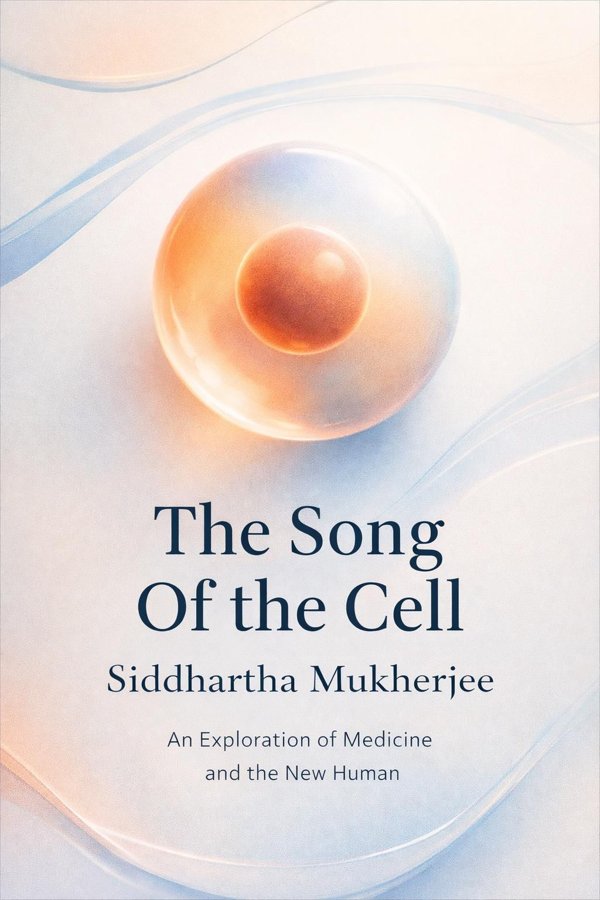
The Song Of The Cell: An Exploration of Medicine and the New Human: Summary & Key Insights
 10 min10 chaptersAudio available
Key Takeaways from The Song Of The Cell: An Exploration of Medicine and the New Human
Every revolution in knowledge begins with a new way of seeing.
To understand life, you must first understand what can act as life on its own.
A human being is less like a machine and more like a vast negotiated society.
Medicine changed forever when disease was relocated from the whole body to the cell.
Your body survives not because it is sealed off from danger, but because it is constantly defended by intelligent cellular guardians.
What Is The Song Of The Cell: An Exploration of Medicine and the New Human About?
The Song Of The Cell: An Exploration of Medicine and the New Human by Siddhartha Mukherjee is a life_science book spanning 10 pages. What if the most powerful way to understand the human body is not through organs, bones, or symptoms, but through the tiny living units that compose us? In The Song Of The Cell, Siddhartha Mukherjee tells the story of the cell as both a scientific discovery and a philosophical revolution. He shows how the cell became the central idea of modern medicine: the place where disease begins, where healing can be measured, and where the future of biotechnology is being built. Blending medical history, laboratory science, clinical stories, and personal reflection, Mukherjee traces how our view of life changed once we learned to see cells, classify them, and manipulate them. From early microscopes to stem-cell therapy, cancer immunology, neuroscience, and gene engineering, he reveals that nearly every medical breakthrough now depends on understanding cellular behavior. This matters because medicine is no longer only about treating the body from the outside. It increasingly works by correcting, reprogramming, replacing, or unleashing cells from within. As a Pulitzer Prize-winning physician, oncologist, and gifted science writer, Mukherjee brings rare authority and human depth to a subject that defines the future of health, identity, and what it means to be human.
This FizzRead summary covers all 10 key chapters of The Song Of The Cell: An Exploration of Medicine and the New Human in approximately 10 minutes, distilling the most important ideas, arguments, and takeaways from Siddhartha Mukherjee's work. Also available as an audio summary and Key Quotes Podcast.
The Song Of The Cell: An Exploration of Medicine and the New Human
What if the most powerful way to understand the human body is not through organs, bones, or symptoms, but through the tiny living units that compose us? In The Song Of The Cell, Siddhartha Mukherjee tells the story of the cell as both a scientific discovery and a philosophical revolution. He shows how the cell became the central idea of modern medicine: the place where disease begins, where healing can be measured, and where the future of biotechnology is being built.
Blending medical history, laboratory science, clinical stories, and personal reflection, Mukherjee traces how our view of life changed once we learned to see cells, classify them, and manipulate them. From early microscopes to stem-cell therapy, cancer immunology, neuroscience, and gene engineering, he reveals that nearly every medical breakthrough now depends on understanding cellular behavior.
This matters because medicine is no longer only about treating the body from the outside. It increasingly works by correcting, reprogramming, replacing, or unleashing cells from within. As a Pulitzer Prize-winning physician, oncologist, and gifted science writer, Mukherjee brings rare authority and human depth to a subject that defines the future of health, identity, and what it means to be human.
Who Should Read The Song Of The Cell: An Exploration of Medicine and the New Human?
This book is perfect for anyone interested in life_science and looking to gain actionable insights in a short read. Whether you're a student, professional, or lifelong learner, the key ideas from The Song Of The Cell: An Exploration of Medicine and the New Human by Siddhartha Mukherjee will help you think differently.
- ✓Readers who enjoy life_science and want practical takeaways
- ✓Professionals looking to apply new ideas to their work and life
- ✓Anyone who wants the core insights of The Song Of The Cell: An Exploration of Medicine and the New Human in just 10 minutes
Want the full summary?
Get instant access to this book summary and 100K+ more with Fizz Moment.
Get Free SummaryAvailable on App Store • Free to download
Key Chapters
Every revolution in knowledge begins with a new way of seeing. The story of the cell starts in the seventeenth century, when early microscopists such as Robert Hooke and Antonie van Leeuwenhoek opened a hidden world that had always existed but had never been observed. Hooke, looking at cork, saw tiny box-like structures and called them “cells.” Leeuwenhoek, with more refined lenses, saw “animalcules,” moving entities in water and bodily fluids. These first observations did more than improve biology; they changed the scale at which humans understood life.
Mukherjee shows that scientific discovery is rarely a single flash of insight. It is usually a sequence of imperfect observations, conceptual leaps, and technological advances. Microscopes did not immediately produce cell theory. It took decades of comparison, debate, and skepticism before scientists accepted that living organisms are composed of repeating microscopic units. Once this idea took hold, the body was no longer seen as a mystical whole animated by vague forces, but as an organized community of living parts.
This shift still shapes medicine today. Blood tests, biopsies, pathology slides, fertility treatments, and cancer diagnostics all depend on the ability to examine cells directly. In a practical sense, every modern diagnosis that uses a microscope descends from those early encounters with the invisible. The lesson is broader than biology: better tools create better questions. When we improve how we observe reality, we transform what we believe is possible.
Actionable takeaway: When facing a complex problem, start by improving your lens. Better observation often comes before better understanding.
To understand life, you must first understand what can act as life on its own. Mukherjee explains the cell as the fundamental unit of living existence: a bounded, organized, self-regulating system capable of metabolism, communication, adaptation, and reproduction. A cell is not just a bag of chemicals. It is a dynamic entity that maintains order against entropy, interprets signals, stores information, and responds to its environment.
This idea became transformative because it unified biology. Plants, animals, microbes, and humans differ enormously, yet all are built from cells. The same broad principles apply across this diversity: membranes define borders, genes store instructions, proteins perform work, and signaling pathways coordinate behavior. Once scientists understood that the cell is the common unit of life, biology moved from description to mechanism.
Mukherjee also emphasizes that cells are not identical. A skin cell, a liver cell, and a neuron contain essentially the same genome, yet they become radically different by turning distinct sets of genes on and off. This is one of the central miracles of development: difference emerges from shared instructions. In practical medicine, this explains why diseases can be tissue-specific, why drug side effects vary, and why regenerative medicine is so difficult and so promising.
For readers, the concept has a useful everyday application. Health habits like sleep, nutrition, exercise, and avoiding toxins are not abstract lifestyle choices; they are conditions that affect trillions of cellular decisions. Inflammation, repair, aging, and resilience are all cellular events.
Actionable takeaway: Think of health at the cellular level. Your daily habits are not merely “good” or “bad”; they shape the environment in which your cells must function.
A human being is less like a machine and more like a vast negotiated society. Mukherjee argues that the true wonder of multicellular life is not just the existence of cells, but their ability to cooperate. Cells communicate through chemical signals, physical contact, electrical impulses, and molecular feedback loops. They divide labor, form tissues, respect boundaries, and coordinate timing. Without this choreography, a body would collapse into chaos.
This cellular cooperation is visible everywhere. Hormones allow distant organs to communicate. Immune cells patrol and report danger. Skin cells form barriers. Heart cells beat in synchrony. Neurons relay information across immense networks. Even development in the embryo depends on cells receiving positional cues that tell them what to become and where to go. In this sense, the body is an argument against simplistic individualism: biological success depends on responsiveness, restraint, and relationship.
The breakdown of cellular communication explains many illnesses. Diabetes involves failures in signaling around insulin and glucose. Autoimmune disease reflects mistaken recognition and overreaction. Fibrosis can result when repair signals persist too long. Cancer often emerges when cells stop obeying communal rules and begin pursuing survival without regard for the whole.
The practical relevance is striking. Many breakthrough therapies do not kill disease directly; they restore communication. Some drugs block bad signals, others amplify weak ones, and still others redirect cellular pathways. Understanding disease increasingly means understanding networks, not isolated defects.
Actionable takeaway: Look for patterns of communication, not just isolated events. Whether in health, work, or relationships, breakdowns often come from failed signaling rather than simple malfunction.
Medicine changed forever when disease was relocated from the whole body to the cell. Mukherjee highlights the nineteenth-century pathologist Rudolf Virchow, who crystallized a radical idea: every cell comes from another cell, and disease arises when normal cellular processes go awry. This was a decisive break from older medical traditions that explained illness through humors, vague imbalances, or diffuse constitutional states.
Virchow’s cellular pathology turned medicine into a more precise science. Instead of asking only where a patient hurts or which organ seems affected, doctors could ask: what are the cells doing? Are they inflamed, infected, deprived, overgrown, malformed, or dead? This made pathology not just descriptive but explanatory. Under the microscope, tissue became evidence. Diagnosis gained structure, and treatment could become targeted rather than symbolic.
Many standard medical practices reflect this legacy. A Pap smear detects abnormal cervical cells before invasive cancer develops. Bone marrow biopsies reveal disorders of blood-cell production. Histology distinguishes one tumor type from another, guiding treatment decisions. Even when advanced imaging is available, physicians still often rely on cellular evidence to confirm what a disease truly is.
Mukherjee also shows that the cellular view reshaped responsibility in medicine. It encouraged physicians to seek causes that could be observed, tested, and challenged. This did not eliminate uncertainty, but it replaced speculation with inquiry. For patients, that shift remains invaluable: better classification leads to better care.
Actionable takeaway: Precision begins with locating the true level of the problem. Before trying to solve anything, ask where the breakdown actually occurs.
Your body survives not because it is sealed off from danger, but because it is constantly defended by intelligent cellular guardians. Mukherjee presents the immune system as one of the most astonishing examples of cellular specialization and coordination. Immune cells identify threats, remember past encounters, distinguish self from non-self, and launch tailored responses against infections, cancers, and damaged tissues.
This is not a crude military force. It is an adaptive, learning network. Macrophages engulf invaders and debris. T cells can kill infected cells or regulate responses. B cells generate antibodies. Memory cells preserve records of past battles, making future responses faster and more effective. Vaccination works because it teaches this cellular system in advance, preparing it for real danger without requiring full-blown disease.
Mukherjee uses immunology to show how medicine has entered a new era. Treatments such as CAR-T therapy do not merely add chemicals to the body; they engineer immune cells themselves to recognize and attack cancer. Checkpoint inhibitors release the brakes that prevent immune cells from fully engaging tumors. These advances reveal a deep principle: sometimes the best treatment is not external intervention but strategic activation of the body’s own cellular intelligence.
There is also a cautionary side. When immune recognition fails, the consequences can be severe. Allergies, autoimmune diseases, inflammatory syndromes, transplant rejection, and cytokine storms all reveal the cost of a powerful system misfiring.
Actionable takeaway: Support systems that learn, adapt, and remember. In health and in life, resilience comes not from rigid defense but from intelligent, flexible response.
One of the book’s most provocative ideas is that thought, memory, emotion, and identity arise from cells. The neuron is not just another specialized cell; it is a biological device for transmitting information across distance and time. Mukherjee explores how neuroscience emerged when scientists realized that the brain is not an undifferentiated organ of spirit, but a dense society of neurons and support cells communicating through electrochemical signals.
This discovery changed how we think about consciousness. If mental life depends on cellular networks, then injury, degeneration, inflammation, and developmental differences can alter personality, language, behavior, and memory. Diseases like epilepsy, Parkinson’s, Alzheimer’s, and multiple sclerosis become not only neurological disorders but disruptions in cellular circuitry. Glial cells, once dismissed as passive support, are now known to help regulate signaling, nourish neurons, and influence brain health.
The practical applications are profound. Brain mapping, neural prosthetics, psychiatric medication, deep-brain stimulation, and stroke rehabilitation all rely on cellular principles. Learning itself reflects changes in synapses and network strength. Sleep helps restore and reorganize brain function. Stress, toxins, and isolation can shape neural behavior over time. In other words, the life of the mind is not detached from biology; it is embodied in it.
Mukherjee does not reduce human experience to mechanism. Instead, he deepens wonder: the fact that cells can produce music, grief, language, and love makes the cellular world more extraordinary, not less.
Actionable takeaway: Protect your brain as a living cellular network. Sleep, movement, learning, and social connection are not luxuries; they are maintenance for the biology of thought.
Some cells carry a remarkable promise: the ability to become many kinds of tissue and, under the right conditions, to repair what has been damaged. Mukherjee treats stem cells as one of the most hopeful and ethically charged frontiers in modern medicine. Stem cells matter because they sit at the intersection of development, regeneration, and identity. They are less specialized than mature cells, yet rich in potential.
In embryos, stem cells generate the diverse tissues of the body. In adults, certain stem-cell populations maintain blood, skin, and parts of the gut, constantly replenishing tissues that wear out. Bone marrow transplantation is one of the clearest examples of stem-cell medicine already in action: replacing diseased blood-forming cells can cure or control otherwise fatal disorders. More experimental efforts aim to regenerate heart muscle, restore insulin-producing cells, or repair nervous tissue.
Mukherjee also explores induced pluripotent stem cells, created by reprogramming mature cells back into a more flexible state. This breakthrough suggests that cellular identity is not fixed forever. A skin cell can, under specific conditions, be pushed backward developmentally and potentially redirected into another lineage. That possibility reshapes biology and medicine alike.
Yet the field also invites caution. Stem cells can form tumors, behave unpredictably, or fail to integrate properly. Ethical questions about embryo use, access, regulation, and hype remain central.
Actionable takeaway: Treat scientific promise with disciplined optimism. The most exciting advances deserve both hope and careful scrutiny before they become trusted medicine.
Cancer is one of the clearest examples of what happens when a cell stops acting as a citizen and starts acting as a tyrant. Mukherjee, an oncologist by training, frames cancer as a disease of cellular rule-breaking. Normal cells divide when needed, die when damaged, stay in their proper tissue, and respond to regulatory signals. Cancer cells progressively escape these constraints. They grow when they should stop, survive when they should die, invade neighboring tissues, and evolve under pressure.
This perspective explains why cancer is so difficult to treat. A tumor is not a static enemy but a changing population of cells subject to mutation, selection, and adaptation. Therapy may kill most cells while leaving behind resistant survivors. The very traits that make cells capable of life—variation, responsiveness, persistence—can be hijacked by cancer for malignant ends.
At the same time, the cellular understanding of cancer has transformed treatment. Pathologists classify tumors by cell type and molecular markers. Targeted therapies block specific pathways. Immunotherapies recruit the patient’s own cells to attack malignant ones. Liquid biopsies and genomic profiling can reveal changes in tumors over time. Cancer medicine is increasingly a strategy of reading and outmaneuvering cellular behavior rather than applying one blunt intervention.
For readers, the lesson extends beyond oncology. Systems become dangerous when components pursue local advantage at the expense of shared order. Cancer is biology’s warning against unchecked autonomy.
Actionable takeaway: Watch for small rule-breaking before it becomes systemic failure. Early detection, whether in health or organizations, is often the difference between correction and crisis.
We are entering an era in which medicine does not simply observe cells but redesigns them. Mukherjee explores the extraordinary implications of cellular engineering: gene editing, synthetic biology, cell therapies, organoids, and laboratory-grown tissues. If the twentieth century was the age of chemical medicine, the twenty-first may become the age of cellular medicine.
This shift is significant because cells are not passive targets. They can be modified to perform new tasks. Immune cells can be engineered to recognize cancer. Gene-editing tools may correct mutations within cells. Stem-cell-derived organoids can model disease in miniature, allowing scientists to test treatments on patient-specific tissue. In the future, damaged organs may be repaired through cellular replacement rather than mechanical intervention alone.
But with greater power comes greater complexity. Cells are living systems embedded in networks, not programmable chips that always behave as intended. Editing one function may alter another. Personalized cellular therapies may be expensive and difficult to scale. Regulatory oversight, long-term safety, equity of access, and the temptation toward enhancement rather than therapy all raise urgent questions.
Mukherjee does not present engineering as pure triumph. He frames it as a threshold. We can now intervene at levels that previous generations could only imagine, yet our wisdom has not necessarily advanced as quickly as our tools. The challenge is not merely what can be done, but what should be done and for whom.
Actionable takeaway: Welcome innovation, but pair technical possibility with ethical literacy. The future belongs not just to what we can engineer, but to what we can govern responsibly.
If our bodies are assemblies of changing cells, then personal identity becomes more fluid than we often assume. Mukherjee ends with the profound implication of cellular medicine: once we can replace, edit, transplant, and reprogram cells, the meaning of the human self must be reconsidered. We already live with bone marrow transplants, donor organs, blood transfusions, IVF embryos, and immune-cell therapies. The “natural” human body has long been more biologically collaborative than our language suggests.
This raises questions far beyond science. If a person receives engineered immune cells that cure leukemia, where does the therapy end and the self begin? If neural or reproductive cells can be altered, what counts as treatment versus enhancement? If identity is rooted in cellular continuity, what happens when continuity is interrupted and rebuilt? Mukherjee does not offer simplistic answers, but he insists that biology now forces philosophical reflection.
At the same time, the cellular perspective can deepen humility. We are not singular entities in total command of our bodies; we are emergent beings composed of countless living units cooperating across time. Health depends on maintaining that harmony. Illness often means its disruption. Medicine increasingly becomes the art of restoring or redesigning that cellular chorus.
For everyday readers, this chapter offers a practical reminder: your body is not fixed, and your biology is not fate. Cellular life is dynamic. Repair, adaptation, and transformation are built into us, even if imperfectly.
Actionable takeaway: Hold your identity with both stability and openness. You are continuous, but you are also biologically changing all the time—and that makes growth possible.
All Chapters in The Song Of The Cell: An Exploration of Medicine and the New Human
About the Author
Siddhartha Mukherjee is an Indian-American physician, oncologist, researcher, and bestselling author whose work focuses on the history and science of medicine. He is best known for The Emperor of All Maladies, a Pulitzer Prize-winning book often described as a biography of cancer, and for The Gene, an expansive account of heredity and identity. Trained in medicine and deeply engaged in cancer research, Mukherjee brings both clinical expertise and literary skill to his writing. His books are known for combining scientific clarity with historical depth, ethical reflection, and human storytelling. Through his work, he has become one of the most influential contemporary interpreters of biomedical science for general readers.
Get This Summary in Your Preferred Format
Read or listen to the The Song Of The Cell: An Exploration of Medicine and the New Human summary by Siddhartha Mukherjee anytime, anywhere. FizzRead offers multiple formats so you can learn on your terms — all free.
Available formats: App · Audio · PDF · EPUB — All included free with FizzRead
Download The Song Of The Cell: An Exploration of Medicine and the New Human PDF and EPUB Summary
Key Quotes from The Song Of The Cell: An Exploration of Medicine and the New Human
“Every revolution in knowledge begins with a new way of seeing.”
“To understand life, you must first understand what can act as life on its own.”
“A human being is less like a machine and more like a vast negotiated society.”
“Medicine changed forever when disease was relocated from the whole body to the cell.”
“Your body survives not because it is sealed off from danger, but because it is constantly defended by intelligent cellular guardians.”
Frequently Asked Questions about The Song Of The Cell: An Exploration of Medicine and the New Human
The Song Of The Cell: An Exploration of Medicine and the New Human by Siddhartha Mukherjee is a life_science book that explores key ideas across 10 chapters. What if the most powerful way to understand the human body is not through organs, bones, or symptoms, but through the tiny living units that compose us? In The Song Of The Cell, Siddhartha Mukherjee tells the story of the cell as both a scientific discovery and a philosophical revolution. He shows how the cell became the central idea of modern medicine: the place where disease begins, where healing can be measured, and where the future of biotechnology is being built. Blending medical history, laboratory science, clinical stories, and personal reflection, Mukherjee traces how our view of life changed once we learned to see cells, classify them, and manipulate them. From early microscopes to stem-cell therapy, cancer immunology, neuroscience, and gene engineering, he reveals that nearly every medical breakthrough now depends on understanding cellular behavior. This matters because medicine is no longer only about treating the body from the outside. It increasingly works by correcting, reprogramming, replacing, or unleashing cells from within. As a Pulitzer Prize-winning physician, oncologist, and gifted science writer, Mukherjee brings rare authority and human depth to a subject that defines the future of health, identity, and what it means to be human.
More by Siddhartha Mukherjee

You Might Also Like
The Selfish Gene
Richard Dawkins
10 min
Awakenings
Oliver Sacks
10 min
Parasite Rex: Inside the Bizarre World of Nature's Most Dangerous Creatures
Carl Zimmer
10 min
The Atlas of Life on Earth
Various
10 min
The Book of Humans: The Story of How We Became Us
Adam Rutherford
10 min
The Horse
Wendy Williams
10 minBrowse by Category
Ready to read The Song Of The Cell: An Exploration of Medicine and the New Human?
Get the full summary and 100K+ more books with Fizz Moment.