
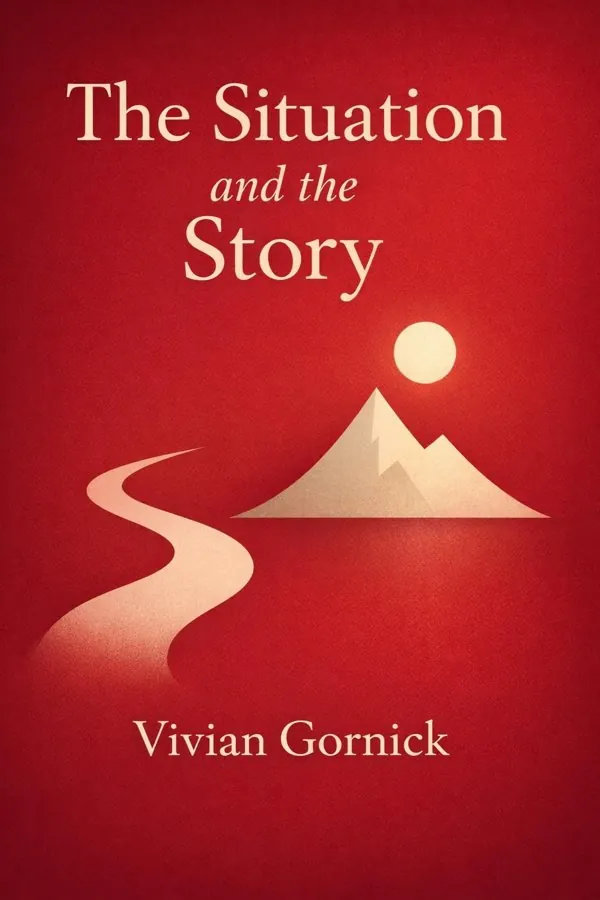
The Situation and the Story: The Art of Personal Narrative: Summary & Key Insights
 10 min5 chaptersAudio available
What Is The Situation and the Story: The Art of Personal Narrative About?
The Situation and the Story: The Art of Personal Narrative by Vivian Gornick is a writing book spanning 5 pages. In this influential work on creative nonfiction, Vivian Gornick explores the craft of personal narrative, examining how writers transform lived experience into art. Through examples from memoirs and essays, she demonstrates the importance of shaping a 'situation' into a 'story'—a process that reveals emotional truth and authorial voice. The book serves as both a guide and meditation on the power of storytelling in nonfiction writing.
This FizzRead summary covers all 5 key chapters of The Situation and the Story: The Art of Personal Narrative in approximately 10 minutes, distilling the most important ideas, arguments, and takeaways from Vivian Gornick's work. Also available as an audio summary and Key Quotes Podcast.
The Situation and the Story: The Art of Personal Narrative
In this influential work on creative nonfiction, Vivian Gornick explores the craft of personal narrative, examining how writers transform lived experience into art. Through examples from memoirs and essays, she demonstrates the importance of shaping a 'situation' into a 'story'—a process that reveals emotional truth and authorial voice. The book serves as both a guide and meditation on the power of storytelling in nonfiction writing.
Who Should Read The Situation and the Story: The Art of Personal Narrative?
This book is perfect for anyone interested in writing and looking to gain actionable insights in a short read. Whether you're a student, professional, or lifelong learner, the key ideas from The Situation and the Story: The Art of Personal Narrative by Vivian Gornick will help you think differently.
- ✓Readers who enjoy writing and want practical takeaways
- ✓Professionals looking to apply new ideas to their work and life
- ✓Anyone who wants the core insights of The Situation and the Story: The Art of Personal Narrative in just 10 minutes
Want the full summary?
Get instant access to this book summary and 100K+ more with Fizz Moment.
Get Free SummaryAvailable on App Store • Free to download
Key Chapters
Every writer of personal narrative must begin by understanding the distinction that defines the genre: the difference between situation and story. The situation is the context—the broken marriage, the journey home, the moment of political awakening. It is what we are compelled to write about because it happened to us. The story, on the other hand, is what we discover as we reflect on that situation: the pattern of meaning, the emotional resolution, the growth of consciousness.
In the act of writing, this distinction becomes a tool of transformation. I have seen many writers stay trapped in situation, retelling experience as though its vividness alone could carry meaning. Yet the reader does not come to watch you live again; they come to see what you have learned from living. That is why the story must emerge as insight—and insight always arises from a narrator who understands their own motives, blindness, and change.
To find the story, you must listen for the voice that knows. It may be angry or wistful, ironic or compassionate, but it must be awake. This voice grows by observing both the self and the world in equal measure. When George Orwell writes in *Shooting an Elephant*, he begins with a colonial situation, yet his story becomes a meditation on power and moral cowardice. The elephant is less the subject than the occasion of insight. In personal narrative, this turning of situation into story is the act of moral recognition—of seeing yourself as actor and witness at once.
It is in that double vision that art resides. The situation grounds us; the story frees us.
+ 3 more chapters — available in the FizzRead app
All Chapters in The Situation and the Story: The Art of Personal Narrative
About the Author
Vivian Gornick is an American writer, critic, and essayist known for her works on feminism, memoir, and literary criticism. She has written for publications such as The Village Voice and The Nation, and her books include 'Fierce Attachments' and 'The Odd Woman and the City'. Gornick is celebrated for her incisive prose and exploration of identity, relationships, and the art of writing.
Get This Summary in Your Preferred Format
Read or listen to the The Situation and the Story: The Art of Personal Narrative summary by Vivian Gornick anytime, anywhere. FizzRead offers multiple formats so you can learn on your terms — all free.
Available formats: App · Audio · PDF · EPUB — All included free with FizzRead
Download The Situation and the Story: The Art of Personal Narrative PDF and EPUB Summary
Key Quotes from The Situation and the Story: The Art of Personal Narrative
“Every writer of personal narrative must begin by understanding the distinction that defines the genre: the difference between situation and story.”
“A good memoir or essay does not rely on the bare authenticity of lived experience—it depends on a narrator who can interpret that experience.”
Frequently Asked Questions about The Situation and the Story: The Art of Personal Narrative
The Situation and the Story: The Art of Personal Narrative by Vivian Gornick is a writing book that explores key ideas across 5 chapters. In this influential work on creative nonfiction, Vivian Gornick explores the craft of personal narrative, examining how writers transform lived experience into art. Through examples from memoirs and essays, she demonstrates the importance of shaping a 'situation' into a 'story'—a process that reveals emotional truth and authorial voice. The book serves as both a guide and meditation on the power of storytelling in nonfiction writing.
You Might Also Like
The Art of Perspective
Christopher Castellani
10 min
Making a Point: The Persnickety Story of English Punctuation
David Crystal
10 min
The Elements Of Eloquence: How To Turn The Perfect English Phrase
Mark Forsyth
10 min
The Pocket Muse: Ideas and Inspirations for Writing
Monica Wood
10 min
A Little Book on Form: An Exploration into the Formal Imagination of Poetry
Robert Hass
10 min
Adventures In The Screen Trade: A Personal View Of Hollywood And Screenwriting
William Goldman
10 minBrowse by Category
Ready to read The Situation and the Story: The Art of Personal Narrative?
Get the full summary and 100K+ more books with Fizz Moment.