
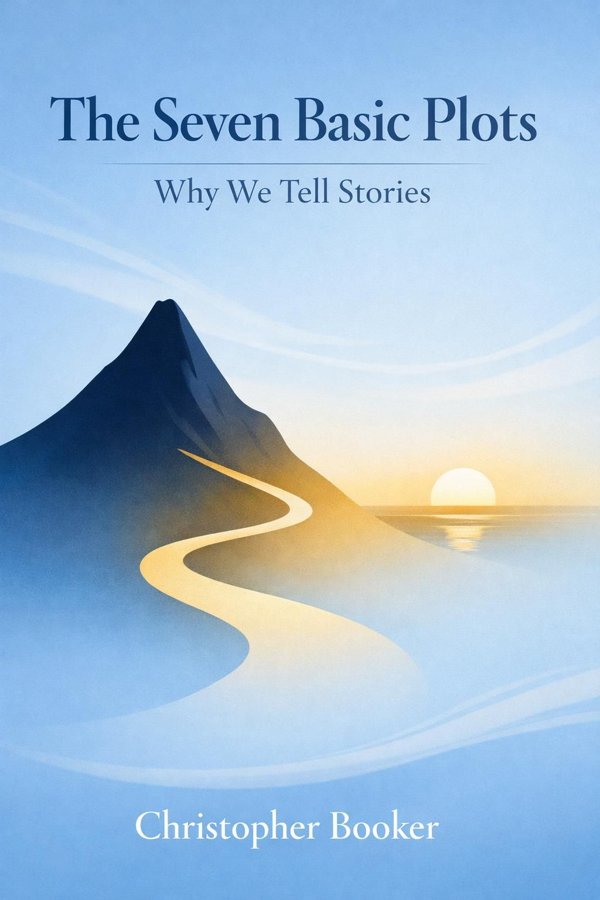
The Seven Basic Plots: Why We Tell Stories: Summary & Key Insights
 10 min12 chaptersAudio available
What Is The Seven Basic Plots: Why We Tell Stories About?
The Seven Basic Plots: Why We Tell Stories by Christopher Booker is a writing book spanning 12 pages. This comprehensive work by Christopher Booker explores the fundamental narrative structures that underpin all storytelling. Drawing on examples from literature, film, and myth, Booker identifies seven archetypal plots—Overcoming the Monster, Rags to Riches, The Quest, Voyage and Return, Comedy, Tragedy, and Rebirth—and examines how they shape human creativity and understanding. The book combines literary criticism, psychology, and cultural analysis to explain why these patterns recur across time and cultures.
This FizzRead summary covers all 12 key chapters of The Seven Basic Plots: Why We Tell Stories in approximately 10 minutes, distilling the most important ideas, arguments, and takeaways from Christopher Booker's work. Also available as an audio summary and Key Quotes Podcast.
The Seven Basic Plots: Why We Tell Stories
This comprehensive work by Christopher Booker explores the fundamental narrative structures that underpin all storytelling. Drawing on examples from literature, film, and myth, Booker identifies seven archetypal plots—Overcoming the Monster, Rags to Riches, The Quest, Voyage and Return, Comedy, Tragedy, and Rebirth—and examines how they shape human creativity and understanding. The book combines literary criticism, psychology, and cultural analysis to explain why these patterns recur across time and cultures.
Who Should Read The Seven Basic Plots: Why We Tell Stories?
This book is perfect for anyone interested in writing and looking to gain actionable insights in a short read. Whether you're a student, professional, or lifelong learner, the key ideas from The Seven Basic Plots: Why We Tell Stories by Christopher Booker will help you think differently.
- ✓Readers who enjoy writing and want practical takeaways
- ✓Professionals looking to apply new ideas to their work and life
- ✓Anyone who wants the core insights of The Seven Basic Plots: Why We Tell Stories in just 10 minutes
Want the full summary?
Get instant access to this book summary and 100K+ more with Fizz Moment.
Get Free SummaryAvailable on App Store • Free to download
Key Chapters
At the foundation of all storytelling lies a psychological rhythm: the movement from ignorance to understanding, or fragmentation to wholeness. This journey plays out both in narrative and within the psyche. When I analyzed thousands of tales, I observed a repeated structure resembling the cycle of life itself. Every protagonist begins separated from a state of harmony, ventures into conflict, and ultimately returns to integration. This pattern reflects our human process of growth, mirrored in myth and dream.
Jung’s theory of archetypes became crucial in clarifying this pattern. These universal figures—the Hero, the Mentor, the Shadow, the Anima—express parts of our inner world. The hero ventures outward, but his quest is inward. When he battles the monster or endures exile, he is confronting aspects of his own psyche. Storytelling, then, is a symbolic enactment of individuation, the process through which one becomes whole. Each plot embodies a different phase or version of that journey: confrontation, aspiration, discovery, sacrifice, renewal. Through the act of storytelling, humanity rehearses its journey toward self-knowledge.
We tell stories not merely to entertain, but because the psyche demands expression. In their deepest form, stories describe the restoration of balance—the return from chaos to order, ignorance to understanding, fear to courage. When this rhythm is broken, when stories forget the movement toward wholeness, they lose meaning. That insight guided my exploration of the seven plots, each one a facet of the same archetypal journey.
This is perhaps the oldest and most primal of all stories. From the epic of Gilgamesh to 'Jaws,' we find the hero stepping forward to confront a great evil. The monster may be a dragon, a tyrant, an invading force—or a psychological shadow. At heart, it represents all that threatens the order of life. In every case, the tale speaks of courage facing darkness. The protagonist must leave ordinary existence, confront the source of terror, and triumph through valor or wisdom.
Within this pattern lies a profound moral meaning. We imagine ourselves in the hero’s place: facing fears that stalk not only human villages but human minds. When Beowulf battles Grendel, when St. George slays the dragon, it is the image of consciousness mastering chaos. Yet there is always a cost, for to defeat the monster one must first recognize it: the greed, pride, or hatred that lives within. When modern tales distort this pattern—turning it into spectacle without moral dimension—the victory feels empty. The true overcoming of monsters transforms both the world and the self.
+ 10 more chapters — available in the FizzRead app
All Chapters in The Seven Basic Plots: Why We Tell Stories
About the Author
Christopher Booker (1937–2019) was a British author, journalist, and one of the founders of the satirical magazine Private Eye. He wrote extensively on literature, culture, and social issues, and is best known for his work on narrative theory in 'The Seven Basic Plots: Why We Tell Stories'.
Get This Summary in Your Preferred Format
Read or listen to the The Seven Basic Plots: Why We Tell Stories summary by Christopher Booker anytime, anywhere. FizzRead offers multiple formats so you can learn on your terms — all free.
Available formats: App · Audio · PDF · EPUB — All included free with FizzRead
Download The Seven Basic Plots: Why We Tell Stories PDF and EPUB Summary
Key Quotes from The Seven Basic Plots: Why We Tell Stories
“At the foundation of all storytelling lies a psychological rhythm: the movement from ignorance to understanding, or fragmentation to wholeness.”
“This is perhaps the oldest and most primal of all stories.”
Frequently Asked Questions about The Seven Basic Plots: Why We Tell Stories
The Seven Basic Plots: Why We Tell Stories by Christopher Booker is a writing book that explores key ideas across 12 chapters. This comprehensive work by Christopher Booker explores the fundamental narrative structures that underpin all storytelling. Drawing on examples from literature, film, and myth, Booker identifies seven archetypal plots—Overcoming the Monster, Rags to Riches, The Quest, Voyage and Return, Comedy, Tragedy, and Rebirth—and examines how they shape human creativity and understanding. The book combines literary criticism, psychology, and cultural analysis to explain why these patterns recur across time and cultures.
You Might Also Like
The Art of Perspective
Christopher Castellani
10 min
Making a Point: The Persnickety Story of English Punctuation
David Crystal
10 min
The Elements Of Eloquence: How To Turn The Perfect English Phrase
Mark Forsyth
10 min
The Pocket Muse: Ideas and Inspirations for Writing
Monica Wood
10 min
A Little Book on Form: An Exploration into the Formal Imagination of Poetry
Robert Hass
10 min
Adventures In The Screen Trade: A Personal View Of Hollywood And Screenwriting
William Goldman
10 minBrowse by Category
Ready to read The Seven Basic Plots: Why We Tell Stories?
Get the full summary and 100K+ more books with Fizz Moment.