
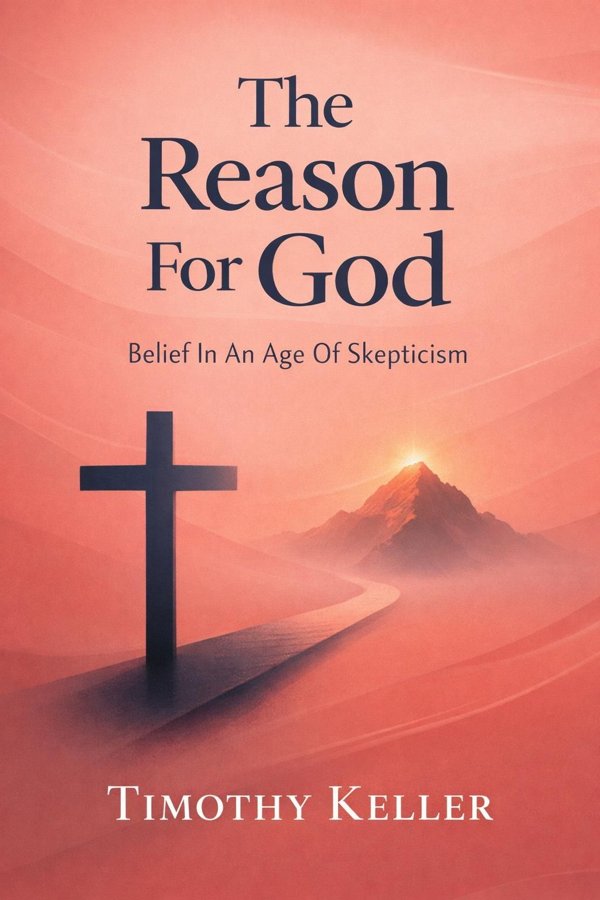
The Reason For God: Belief In An Age Of Skepticism: Summary & Key Insights
 10 min12 chaptersAudio available
What Is The Reason For God: Belief In An Age Of Skepticism About?
The Reason For God: Belief In An Age Of Skepticism by Timothy Keller is a western_phil book spanning 12 pages. In this influential work, pastor and theologian Timothy Keller addresses common doubts and objections to Christianity in modern society. Drawing on philosophy, literature, and his experience in ministry, Keller presents a rational case for faith, exploring questions about suffering, exclusivity, and the existence of God. The book aims to bridge the gap between believers and skeptics through thoughtful dialogue and reasoned argument.
This FizzRead summary covers all 12 key chapters of The Reason For God: Belief In An Age Of Skepticism in approximately 10 minutes, distilling the most important ideas, arguments, and takeaways from Timothy Keller's work. Also available as an audio summary and Key Quotes Podcast.
The Reason For God: Belief In An Age Of Skepticism
In this influential work, pastor and theologian Timothy Keller addresses common doubts and objections to Christianity in modern society. Drawing on philosophy, literature, and his experience in ministry, Keller presents a rational case for faith, exploring questions about suffering, exclusivity, and the existence of God. The book aims to bridge the gap between believers and skeptics through thoughtful dialogue and reasoned argument.
Who Should Read The Reason For God: Belief In An Age Of Skepticism?
This book is perfect for anyone interested in western_phil and looking to gain actionable insights in a short read. Whether you're a student, professional, or lifelong learner, the key ideas from The Reason For God: Belief In An Age Of Skepticism by Timothy Keller will help you think differently.
- ✓Readers who enjoy western_phil and want practical takeaways
- ✓Professionals looking to apply new ideas to their work and life
- ✓Anyone who wants the core insights of The Reason For God: Belief In An Age Of Skepticism in just 10 minutes
Want the full summary?
Get instant access to this book summary and 100K+ more with Fizz Moment.
Get Free SummaryAvailable on App Store • Free to download
Key Chapters
In my years of pastoral ministry, I realized that doubt is not a sign of weakness but a sign of humanity. Modern skepticism has been shaped by Enlightenment ideals that insist reason and faith must be at odds. Many assume belief is irrational superstition, while doubt signifies intellectual integrity. Yet this dichotomy is false. Everyone lives by faith of some sort—whether in empirical science, human progress, or personal intuition. The real question is not whether we believe, but in what and why.
Common objections I hear are that Christianity is exclusive, that it suppresses freedom, and that its doctrines cannot be proven. I respond that faith always begins where absolute certainty ends. Rationality is essential, but it cannot explain everything—beauty, love, and morality point to realities beyond pure materialism. Moreover, every worldview carries unprovable assumptions. Secular doubt rests on its own faith in reason. If belief in God is a leap, unbelief is also a leap, just in the opposite direction.
So when people claim religion leads to conflict, I agree in part—but it’s not religion per se that divides; it’s self-righteousness rooted in the human heart. The answer, therefore, isn’t to abandon faith, but to find one transformed by grace rather than power. Honest doubt, when pursued sincerely, can open us to genuine faith. It can become the beginning of spiritual clarity rather than the end of inquiry.
One of the most emotionally charged objections I encounter is that Christianity is too exclusive, claiming it alone has truth. In a pluralistic age, such an assertion sounds arrogant, maybe even dangerous. But every worldview—secular or religious—makes truth claims that exclude others. Even the statement 'no one should claim absolute truth' is itself an absolute claim.
The real issue is not whether a belief excludes, but how it treats those who disagree. Christianity’s uniqueness lies precisely here: its founder achieved victory through self-sacrifice, not domination. Jesus taught that the way to truth is the way of humility—loving those who differ from you, even at personal cost. Far from fostering superiority, the gospel undermines it. To believe in Christ means understanding that you are saved by sheer grace, not personal merit. That recognition dissolves pride and forces openness, not hostility.
Thus, the Christian faith is exclusive in its truth claims but radically inclusive in its grace. This paradox—truth without arrogance, conviction without cruelty—is what makes Christianity not an obstacle to pluralism but a model for it. True faith, instead of dividing, has the power to reconcile because it roots identity not in superiority, but in love received and given.
+ 10 more chapters — available in the FizzRead app
All Chapters in The Reason For God: Belief In An Age Of Skepticism
About the Author
Timothy Keller (1950–2023) was an American pastor, theologian, and Christian apologist. He founded Redeemer Presbyterian Church in New York City and authored several bestselling books on faith and spirituality, known for engaging contemporary culture with intellectual rigor and compassion.
Get This Summary in Your Preferred Format
Read or listen to the The Reason For God: Belief In An Age Of Skepticism summary by Timothy Keller anytime, anywhere. FizzRead offers multiple formats so you can learn on your terms — all free.
Available formats: App · Audio · PDF · EPUB — All included free with FizzRead
Download The Reason For God: Belief In An Age Of Skepticism PDF and EPUB Summary
Key Quotes from The Reason For God: Belief In An Age Of Skepticism
“In my years of pastoral ministry, I realized that doubt is not a sign of weakness but a sign of humanity.”
“One of the most emotionally charged objections I encounter is that Christianity is too exclusive, claiming it alone has truth.”
Frequently Asked Questions about The Reason For God: Belief In An Age Of Skepticism
The Reason For God: Belief In An Age Of Skepticism by Timothy Keller is a western_phil book that explores key ideas across 12 chapters. In this influential work, pastor and theologian Timothy Keller addresses common doubts and objections to Christianity in modern society. Drawing on philosophy, literature, and his experience in ministry, Keller presents a rational case for faith, exploring questions about suffering, exclusivity, and the existence of God. The book aims to bridge the gap between believers and skeptics through thoughtful dialogue and reasoned argument.
More by Timothy Keller

The Prodigal God: Recovering the Heart of the Christian Faith
Timothy Keller
10 min
Forgive
Timothy Keller
10 min
The Freedom of Self-Forgetfulness
Timothy Keller
10 min
The Meaning of Marriage: Facing the Complexities of Commitment with the Wisdom of God
Timothy Keller
10 minYou Might Also Like

A Little History of Philosophy
Nigel Warburton
10 min
Areopagitica
John Milton
10 min
How To Think Like A Philosopher: Essential Principles For Clear Thinking
Peter Cave
10 min
Language, Truth and Logic
A. J. Ayer
10 min
The Age of Reason
Thomas Paine
10 min
The Essays
Michel De Montaigne
10 minBrowse by Category
Ready to read The Reason For God: Belief In An Age Of Skepticism?
Get the full summary and 100K+ more books with Fizz Moment.