
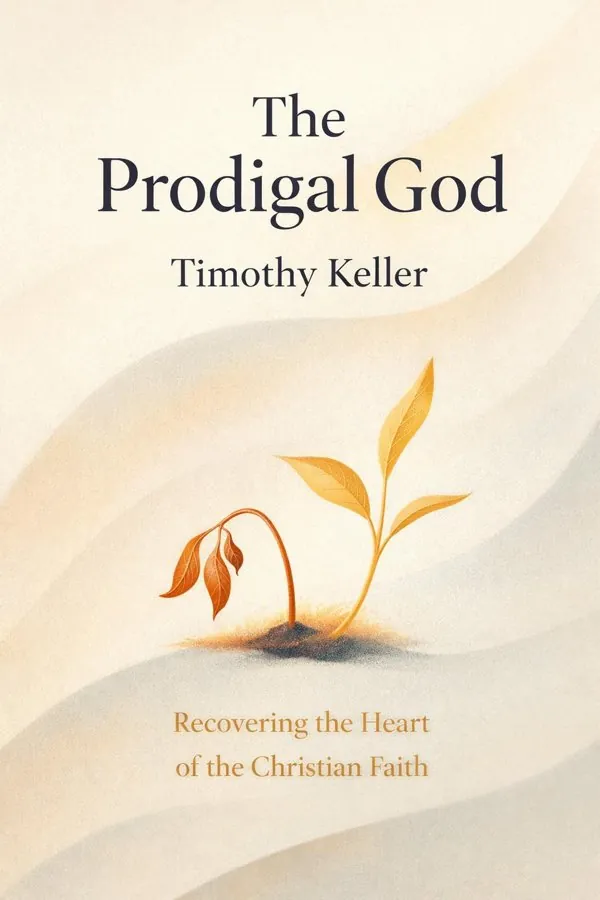
The Prodigal God: Recovering the Heart of the Christian Faith: Summary & Key Insights
 10 min10 chaptersAudio available
What Is The Prodigal God: Recovering the Heart of the Christian Faith About?
The Prodigal God: Recovering the Heart of the Christian Faith by Timothy Keller is a western_phil book spanning 10 pages. In this book, Timothy Keller explores one of Jesus’s best-known parables—the Parable of the Prodigal Son—to reveal the essential message of Christianity. Keller argues that both the 'younger brother' and the 'elder brother' represent different ways of being lost, and that true salvation comes from understanding the radical grace of God. Through clear exposition and practical insight, Keller invites readers to rediscover the heart of the Christian faith as a message of unconditional love and forgiveness.
This FizzRead summary covers all 10 key chapters of The Prodigal God: Recovering the Heart of the Christian Faith in approximately 10 minutes, distilling the most important ideas, arguments, and takeaways from Timothy Keller's work. Also available as an audio summary and Key Quotes Podcast.
The Prodigal God: Recovering the Heart of the Christian Faith
In this book, Timothy Keller explores one of Jesus’s best-known parables—the Parable of the Prodigal Son—to reveal the essential message of Christianity. Keller argues that both the 'younger brother' and the 'elder brother' represent different ways of being lost, and that true salvation comes from understanding the radical grace of God. Through clear exposition and practical insight, Keller invites readers to rediscover the heart of the Christian faith as a message of unconditional love and forgiveness.
Who Should Read The Prodigal God: Recovering the Heart of the Christian Faith?
This book is perfect for anyone interested in western_phil and looking to gain actionable insights in a short read. Whether you're a student, professional, or lifelong learner, the key ideas from The Prodigal God: Recovering the Heart of the Christian Faith by Timothy Keller will help you think differently.
- ✓Readers who enjoy western_phil and want practical takeaways
- ✓Professionals looking to apply new ideas to their work and life
- ✓Anyone who wants the core insights of The Prodigal God: Recovering the Heart of the Christian Faith in just 10 minutes
Want the full summary?
Get instant access to this book summary and 100K+ more with Fizz Moment.
Get Free SummaryAvailable on App Store • Free to download
Key Chapters
When Jesus begins the parable, he describes a younger son who approaches his father demanding his share of the inheritance. In that cultural context, such a request was shocking — effectively wishing his father dead. Yet the father grants it. The son takes his wealth, departs for a distant country, and squanders everything in reckless living.
I’ve often said this younger brother represents every person who believes happiness comes from absolute freedom — from rejecting all authority, embracing self-expression, and defining truth on one’s own terms. This mindset, deeply rooted in modern Western culture, insists that fulfillment is found when we break away from the constraints of tradition or morality.
But the result, as the story illustrates, is alienation. The younger son finds himself destitute, feeding pigs — the ultimate image of shame for a Jewish listener. His search for independence leads to emptiness, his self-discovery to despair. This is what alienation from God looks like: not necessarily moral failure but spiritual disconnection, the loss of meaning and identity when we live apart from the source of love.
In the depths of that humiliation, the younger son finally remembers his father. Yet notice his plan — he rehearses a speech, hoping to earn back a portion of favor by becoming a hired servant. Even as he returns, he still misunderstands grace. He imagines that restoration must be achieved through performance, through compensation.
When the father sees him coming, however, he runs to him — utterly breaking social norms. In ancient patriarchal culture, dignified men didn’t run in public; it was considered shameful. But this father does not care about decorum. He embraces his son before hearing a word of apology. He covers him with the best robe, places a ring on his finger, sandals on his feet, and orders a feast. It’s complete restoration, not conditional forgiveness.
The younger son’s journey tells us that no matter how far we’ve gone, God’s grace can reach farther. But it also warns that our attempts to earn acceptance, even after repentance, still miss the heart of the gospel. The Father’s joy is not transactional but unconditional. The only thing we must do is receive His love — something the younger brother, and many of us, find hardest of all.
As the celebration unfolds, a new tension arises: the elder son refuses to join the feast. He stands outside, angry and resentful. His reasoning is clear — he has worked hard, obeyed every rule, and never disobeyed his father’s commands. Now he feels cheated, humiliated by the father’s extravagant welcome toward the irresponsible sibling.
This moment is crucial. If the younger brother’s lostness came from breaking the rules, the elder’s lostness comes from keeping them. He’s moral, disciplined, devoted — yet his obedience hides a subtle demand: control. He expects that his good behavior will give him leverage over his father’s blessings. That attitude, I argue, is just as spiritually deadly as rebellion.
Many churchgoers live exactly this way. They serve, give, and pray, not purely out of love, but out of expectation. They believe God owes them health, success, or affirmation. But when life doesn’t unfold according to their moral calculations, bitterness sets in. Like the elder brother, they begin to feel victimized — unable to rejoice in the grace given to others.
The elder brother, then, represents religiosity without relationship. He stands physically near his father yet emotionally distant. His obedience is a bargaining chip, not an expression of love. The father’s words to him — “All that I have is yours” — reveal that the elder son has always had access to grace, but never embraced it. His moral achievements kept him from understanding his father’s heart.
Through this lens, Jesus speaks directly to the Pharisees and moral insiders of His day — and to us. Religion can be a form of self-salvation. The tragedy is that you can live a model life, even in the house of the father, yet still be lost. You may know the doctrines but miss the delight. You may obey the law but never taste the feast.
Until the elder brother realizes that he, too, must enter through grace alone, he will remain outside — not because the father locks him out, but because his pride does.
+ 8 more chapters — available in the FizzRead app
All Chapters in The Prodigal God: Recovering the Heart of the Christian Faith
About the Author
Timothy Keller (1950–2023) was an American pastor, theologian, and Christian apologist. He founded Redeemer Presbyterian Church in New York City and authored numerous influential books on faith, theology, and modern life, including 'The Reason for God' and 'The Meaning of Marriage'. Keller was known for his thoughtful engagement with secular culture and his emphasis on grace-centered Christianity.
Get This Summary in Your Preferred Format
Read or listen to the The Prodigal God: Recovering the Heart of the Christian Faith summary by Timothy Keller anytime, anywhere. FizzRead offers multiple formats so you can learn on your terms — all free.
Available formats: App · Audio · PDF · EPUB — All included free with FizzRead
Download The Prodigal God: Recovering the Heart of the Christian Faith PDF and EPUB Summary
Key Quotes from The Prodigal God: Recovering the Heart of the Christian Faith
“When Jesus begins the parable, he describes a younger son who approaches his father demanding his share of the inheritance.”
“As the celebration unfolds, a new tension arises: the elder son refuses to join the feast.”
Frequently Asked Questions about The Prodigal God: Recovering the Heart of the Christian Faith
The Prodigal God: Recovering the Heart of the Christian Faith by Timothy Keller is a western_phil book that explores key ideas across 10 chapters. In this book, Timothy Keller explores one of Jesus’s best-known parables—the Parable of the Prodigal Son—to reveal the essential message of Christianity. Keller argues that both the 'younger brother' and the 'elder brother' represent different ways of being lost, and that true salvation comes from understanding the radical grace of God. Through clear exposition and practical insight, Keller invites readers to rediscover the heart of the Christian faith as a message of unconditional love and forgiveness.
More by Timothy Keller

The Reason For God: Belief In An Age Of Skepticism
Timothy Keller
10 min
Forgive
Timothy Keller
10 min
The Freedom of Self-Forgetfulness
Timothy Keller
10 min
The Meaning of Marriage: Facing the Complexities of Commitment with the Wisdom of God
Timothy Keller
10 minYou Might Also Like

A Little History of Philosophy
Nigel Warburton
10 min
Areopagitica
John Milton
10 min
How To Think Like A Philosopher: Essential Principles For Clear Thinking
Peter Cave
10 min
Language, Truth and Logic
A. J. Ayer
10 min
The Age of Reason
Thomas Paine
10 min
The Essays
Michel De Montaigne
10 minBrowse by Category
Ready to read The Prodigal God: Recovering the Heart of the Christian Faith?
Get the full summary and 100K+ more books with Fizz Moment.