
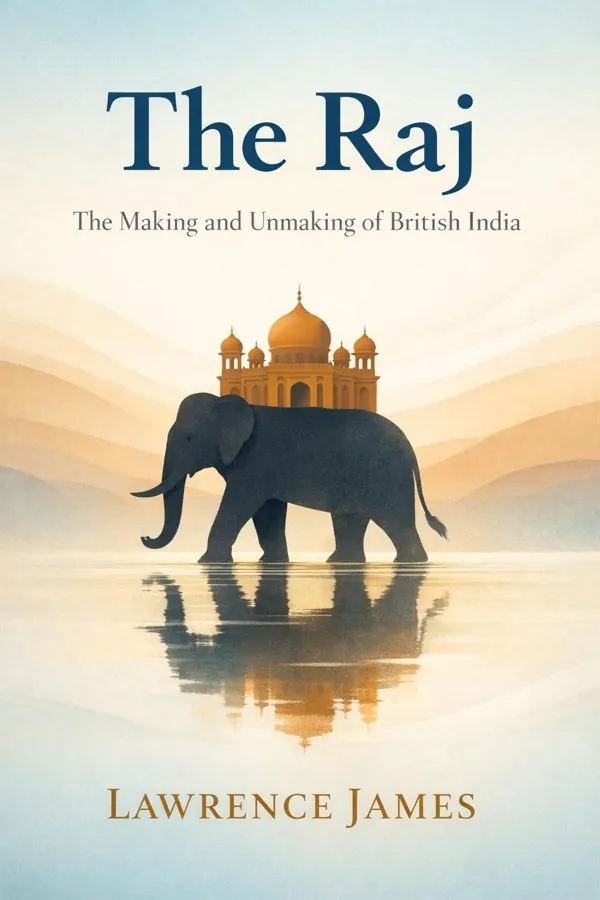
The Raj: The Making and Unmaking of British India: Summary & Key Insights
 10 min7 chaptersAudio available
What Is The Raj: The Making and Unmaking of British India About?
The Raj: The Making and Unmaking of British India by Lawrence James is a world_history book spanning 7 pages. A comprehensive history of the British Raj, this book explores the political, economic, and cultural forces that shaped British rule in India from the eighteenth century to independence in 1947. Lawrence James examines the motivations of empire builders, the complexities of colonial administration, and the profound impact of imperialism on both Britain and India.
This FizzRead summary covers all 7 key chapters of The Raj: The Making and Unmaking of British India in approximately 10 minutes, distilling the most important ideas, arguments, and takeaways from Lawrence James's work. Also available as an audio summary and Key Quotes Podcast.
The Raj: The Making and Unmaking of British India
A comprehensive history of the British Raj, this book explores the political, economic, and cultural forces that shaped British rule in India from the eighteenth century to independence in 1947. Lawrence James examines the motivations of empire builders, the complexities of colonial administration, and the profound impact of imperialism on both Britain and India.
Who Should Read The Raj: The Making and Unmaking of British India?
This book is perfect for anyone interested in world_history and looking to gain actionable insights in a short read. Whether you're a student, professional, or lifelong learner, the key ideas from The Raj: The Making and Unmaking of British India by Lawrence James will help you think differently.
- ✓Readers who enjoy world_history and want practical takeaways
- ✓Professionals looking to apply new ideas to their work and life
- ✓Anyone who wants the core insights of The Raj: The Making and Unmaking of British India in just 10 minutes
Want the full summary?
Get instant access to this book summary and 100K+ more with Fizz Moment.
Get Free SummaryAvailable on App Store • Free to download
Key Chapters
The story begins with the East India Company, founded in 1600 as a commercial venture seeking spices, silks, and profit. For more than a century, its interests remained mercantile; British traders depended on the goodwill of Mughal officials and local merchants. Yet as Mughal authority began to falter in the eighteenth century, the Company saw opportunities that went far beyond trade. The wars between Indian princes opened a space for manipulation, and the East India Company’s officers—men like Robert Clive—understood that control of territory meant control of revenue.
The battlefields of Plassey and Buxar were turning points. These were not simply military victories but the birth of empire through commerce. The Company’s private army defeated rivals and secured political footing in Bengal, establishing a precedent: British power in India would henceforth be justified by its capacity to bring order to chaos. What followed was a gradual transformation from traders to rulers, a shift the British justified as moral duty even as it was driven by financial need. The Company’s control of Bengal meant access to taxation and resources; it also meant the beginning of a complex relationship where business interests ruled nations.
After Plassey, the East India Company’s challenge was to sustain control in a vast and diverse land. Administration became a military enterprise; officers who only decades earlier had been merchants now thought of themselves as governors. The reform of Warren Hastings and the later reorganization under Cornwallis produced a system that mixed British legal forms with Mughal precedents. Yet, despite these outwardly rational structures, corruption, arbitrary taxation, and exploitation remained pervasive.
Military dominance underpinned every administrative reform. Indian sepoys filled the ranks, and their loyalty was maintained through pay and prestige—but also through discipline and inequality. To sustain this empire, British rulers constructed a vision of themselves as guardians of India, the bearers of law and enlightenment. The rhetoric served both moral and political ends: it justified conquest as responsibility.
By the early nineteenth century, the British had completed the great consolidation. Through a careful blend of treaties, annexations, and manipulations of succession, the Company extended its footprint across the subcontinent. Delhi fell, the Marathas were subdued, and even the Sikh kingdom of Ranjit Singh was eventually brought into the imperial fold. India was now, in large part, British India—a mosaic of provinces, princely states, and military cantonments governed from Calcutta but bound to London by commerce and imperial ideology.
+ 5 more chapters — available in the FizzRead app
All Chapters in The Raj: The Making and Unmaking of British India
About the Author
Lawrence James is a British historian and author known for his works on the British Empire and military history. Educated at the University of York, he has written several acclaimed books on imperial and colonial history, including 'Raj: The Making and Unmaking of British India' and 'The Rise and Fall of the British Empire'.
Get This Summary in Your Preferred Format
Read or listen to the The Raj: The Making and Unmaking of British India summary by Lawrence James anytime, anywhere. FizzRead offers multiple formats so you can learn on your terms — all free.
Available formats: App · Audio · PDF · EPUB — All included free with FizzRead
Download The Raj: The Making and Unmaking of British India PDF and EPUB Summary
Key Quotes from The Raj: The Making and Unmaking of British India
“The story begins with the East India Company, founded in 1600 as a commercial venture seeking spices, silks, and profit.”
“After Plassey, the East India Company’s challenge was to sustain control in a vast and diverse land.”
Frequently Asked Questions about The Raj: The Making and Unmaking of British India
The Raj: The Making and Unmaking of British India by Lawrence James is a world_history book that explores key ideas across 7 chapters. A comprehensive history of the British Raj, this book explores the political, economic, and cultural forces that shaped British rule in India from the eighteenth century to independence in 1947. Lawrence James examines the motivations of empire builders, the complexities of colonial administration, and the profound impact of imperialism on both Britain and India.
More by Lawrence James
You Might Also Like
The Age of Capital
Eric Hobsbawm
10 min
The Gulag Archipelago
Aleksandr Solzhenitsyn
10 min
Jerusalem: The Biography
Simon Sebag Montefiore
10 min
The Anglo-Saxons
James Campbell
10 min
The Boer War
Thomas Pakenham
10 min
The Industrial Revolutionaries: The Making of the Modern World 1776–1914
Gavin Weightman
10 minBrowse by Category
Ready to read The Raj: The Making and Unmaking of British India?
Get the full summary and 100K+ more books with Fizz Moment.