
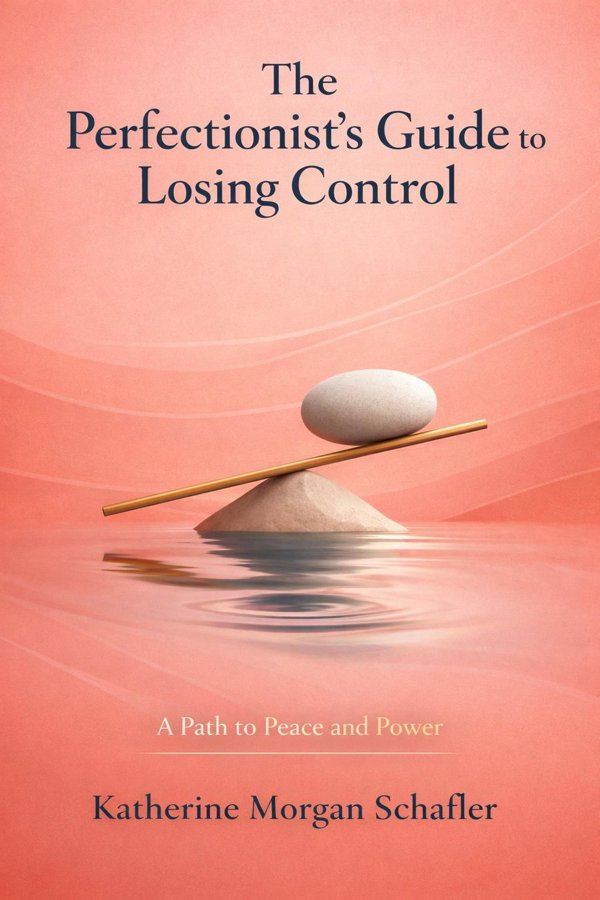
The Perfectionist's Guide to Losing Control: A Path to Peace and Power: Summary & Key Insights
 10 min11 chaptersAudio available
What Is The Perfectionist's Guide to Losing Control: A Path to Peace and Power About?
The Perfectionist's Guide to Losing Control: A Path to Peace and Power by Katherine Morgan Schafler is a mental_health book spanning 11 pages. In this empowering book, psychotherapist Katherine Morgan Schafler redefines perfectionism as a source of strength rather than a flaw. Drawing on clinical experience and psychological research, she explores how perfectionists can harness their drive for excellence without succumbing to burnout or self-criticism. The book offers practical strategies for embracing imperfection, cultivating self-compassion, and finding balance between ambition and acceptance.
This FizzRead summary covers all 11 key chapters of The Perfectionist's Guide to Losing Control: A Path to Peace and Power in approximately 10 minutes, distilling the most important ideas, arguments, and takeaways from Katherine Morgan Schafler's work. Also available as an audio summary and Key Quotes Podcast.
The Perfectionist's Guide to Losing Control: A Path to Peace and Power
In this empowering book, psychotherapist Katherine Morgan Schafler redefines perfectionism as a source of strength rather than a flaw. Drawing on clinical experience and psychological research, she explores how perfectionists can harness their drive for excellence without succumbing to burnout or self-criticism. The book offers practical strategies for embracing imperfection, cultivating self-compassion, and finding balance between ambition and acceptance.
Who Should Read The Perfectionist's Guide to Losing Control: A Path to Peace and Power?
This book is perfect for anyone interested in mental_health and looking to gain actionable insights in a short read. Whether you're a student, professional, or lifelong learner, the key ideas from The Perfectionist's Guide to Losing Control: A Path to Peace and Power by Katherine Morgan Schafler will help you think differently.
- ✓Readers who enjoy mental_health and want practical takeaways
- ✓Professionals looking to apply new ideas to their work and life
- ✓Anyone who wants the core insights of The Perfectionist's Guide to Losing Control: A Path to Peace and Power in just 10 minutes
Want the full summary?
Get instant access to this book summary and 100K+ more with Fizz Moment.
Get Free SummaryAvailable on App Store • Free to download
Key Chapters
We all know what being a perfectionist feels like—meticulous, motivated, sometimes anxious—but few of us truly understand what perfectionism *is*. It’s not simply striving for high standards. It’s an emotional drive anchored in the desire for connection. Perfectionists often equate performance with worth: if I just work harder, if I just get this right, I can relax; I’ll be enough. My work as a psychotherapist revealed that perfectionism is not one thing but many patterns—each shaped by how we learned to manage love, approval, and safety. When we understand this, we can stop seeing perfectionism as a dysfunction and start recognizing it as a strategy.
There’s a difference between unhealthy perfectionism, which comes from fear and self-criticism, and healthy perfectionism, which comes from love and inspiration. The unhealthy kind says, 'I have to be perfect or I’ll fail,' while the healthy kind says, 'I want to give my full self to this because it matters to me.' The distinction sounds subtle but it’s everything. Your motivation determines whether your perfectionism depletes you or fuels you.
In this book, I map five types of perfectionists: Classic, Intense, Parisian, Messy, and Procrastinator. Each type reflects a specific emotional logic. You might recognize yourself in one or see traces of several. Naming your type is the first step toward healing because it brings awareness—and awareness gives you choice. When you know what’s driving your desire for control, you can channel it into conscious creativity rather than compulsive striving.
If you thrive on order, precision, and reliability, you might be a Classic Perfectionist. You crave structure because structure brings calm. You’re the type who loves checklists, who finds harmony in color-coded calendars, who handles chaos by tidying. Your strength is your steady commitment and your ability to create systems that keep life moving forward. But the challenge is learning to let the system serve *you* instead of becoming enslaved by it.
Many Classic Perfectionists feel safest when they’re in control. But life isn’t always controllable, and when things slip out of line, panic, guilt, or self-criticism can take over. My work with clients like this often involves re-teaching flexibility—trusting that imperfection doesn’t mean disorder and that sometimes, grace thrives in the unplanned moments. When you begin to trust yourself more than the system, you free yourself from constant vigilance. You start to realize that your sense of competence doesn’t depend on flawless execution but on responsiveness. That’s when your natural talent for organization becomes an expression of peace rather than tension.
+ 9 more chapters — available in the FizzRead app
All Chapters in The Perfectionist's Guide to Losing Control: A Path to Peace and Power
About the Author
Katherine Morgan Schafler is a New York City–based psychotherapist, writer, and speaker. A former on-site therapist at Google, she specializes in helping high-achieving individuals manage perfectionism and emotional well-being. Her work integrates modern psychology with compassionate self-development.
Get This Summary in Your Preferred Format
Read or listen to the The Perfectionist's Guide to Losing Control: A Path to Peace and Power summary by Katherine Morgan Schafler anytime, anywhere. FizzRead offers multiple formats so you can learn on your terms — all free.
Available formats: App · Audio · PDF · EPUB — All included free with FizzRead
Download The Perfectionist's Guide to Losing Control: A Path to Peace and Power PDF and EPUB Summary
Key Quotes from The Perfectionist's Guide to Losing Control: A Path to Peace and Power
“We all know what being a perfectionist feels like—meticulous, motivated, sometimes anxious—but few of us truly understand what perfectionism *is*.”
“If you thrive on order, precision, and reliability, you might be a Classic Perfectionist.”
Frequently Asked Questions about The Perfectionist's Guide to Losing Control: A Path to Peace and Power
The Perfectionist's Guide to Losing Control: A Path to Peace and Power by Katherine Morgan Schafler is a mental_health book that explores key ideas across 11 chapters. In this empowering book, psychotherapist Katherine Morgan Schafler redefines perfectionism as a source of strength rather than a flaw. Drawing on clinical experience and psychological research, she explores how perfectionists can harness their drive for excellence without succumbing to burnout or self-criticism. The book offers practical strategies for embracing imperfection, cultivating self-compassion, and finding balance between ambition and acceptance.
You Might Also Like

Big Feelings: How to Be Okay When Things Are Not Okay
Liz Fosslien, Mollie West Duffy
10 min
Creative Arts Therapies Handbook: Art, Music and Dance Therapy Practices for Wellbeing
Susan I. Buchalter
10 min
Emotional First Aid: Healing Rejection, Guilt, Failure, and Other Everyday Hurts
Guy Winch
10 min
Lost Connections: Why You're Depressed and How to Find Hope
Johann Hari
10 min
No Time to Panic: How to Stop Worrying and Embrace Life
Matt Gutman
10 min
Overcoming Mobbing: A Recovery Guide for Workplace Aggression and Bullying
Maureen Duffy, Len Sperry
10 minBrowse by Category
Ready to read The Perfectionist's Guide to Losing Control: A Path to Peace and Power?
Get the full summary and 100K+ more books with Fizz Moment.