
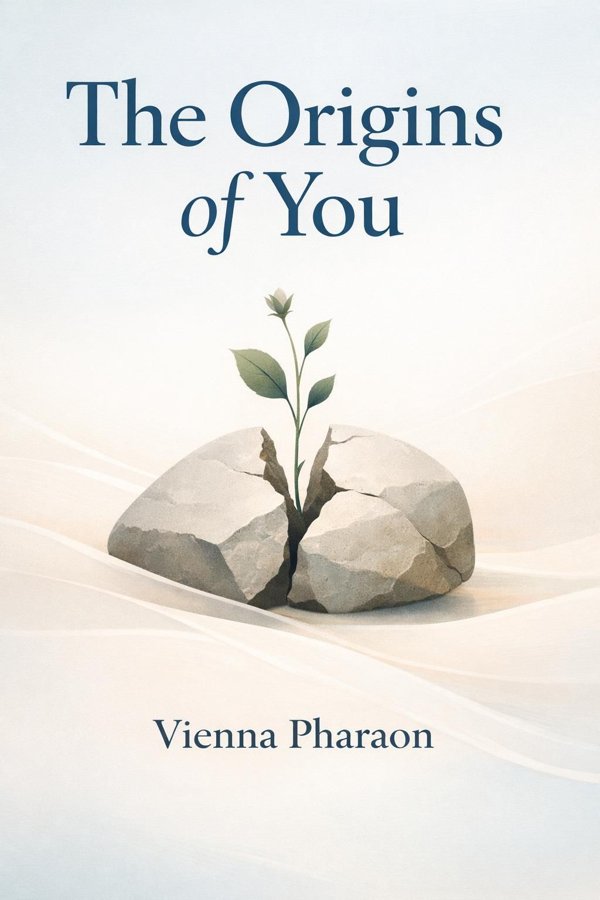
The Origins of You: How Breaking Family Patterns Can Liberate the Way We Live and Love: Summary & Key Insights
 10 min4 chaptersAudio available
What Is The Origins of You: How Breaking Family Patterns Can Liberate the Way We Live and Love About?
The Origins of You: How Breaking Family Patterns Can Liberate the Way We Live and Love by Vienna Pharaon is a mental_health book spanning 4 pages. In this insightful and compassionate work, licensed marriage and family therapist Vienna Pharaon explores how unresolved family dynamics shape our adult relationships, behaviors, and emotional patterns. Drawing on clinical experience and personal stories, she guides readers to identify and heal 'origin wounds'—the emotional imprints from childhood that influence how we connect, love, and live. Through practical exercises and reflection, Pharaon offers a path toward self-awareness and emotional freedom.
This FizzRead summary covers all 4 key chapters of The Origins of You: How Breaking Family Patterns Can Liberate the Way We Live and Love in approximately 10 minutes, distilling the most important ideas, arguments, and takeaways from Vienna Pharaon's work. Also available as an audio summary and Key Quotes Podcast.
The Origins of You: How Breaking Family Patterns Can Liberate the Way We Live and Love
In this insightful and compassionate work, licensed marriage and family therapist Vienna Pharaon explores how unresolved family dynamics shape our adult relationships, behaviors, and emotional patterns. Drawing on clinical experience and personal stories, she guides readers to identify and heal 'origin wounds'—the emotional imprints from childhood that influence how we connect, love, and live. Through practical exercises and reflection, Pharaon offers a path toward self-awareness and emotional freedom.
Who Should Read The Origins of You: How Breaking Family Patterns Can Liberate the Way We Live and Love?
This book is perfect for anyone interested in mental_health and looking to gain actionable insights in a short read. Whether you're a student, professional, or lifelong learner, the key ideas from The Origins of You: How Breaking Family Patterns Can Liberate the Way We Live and Love by Vienna Pharaon will help you think differently.
- ✓Readers who enjoy mental_health and want practical takeaways
- ✓Professionals looking to apply new ideas to their work and life
- ✓Anyone who wants the core insights of The Origins of You: How Breaking Family Patterns Can Liberate the Way We Live and Love in just 10 minutes
Want the full summary?
Get instant access to this book summary and 100K+ more with Fizz Moment.
Get Free SummaryAvailable on App Store • Free to download
Key Chapters
Every family operates as a living, breathing system—a set of invisible rules, roles, and emotional patterns that shape the individuals within it. As children, we do not just grow up; we adapt. We adapt to the moods, needs, and unspoken fears of our caregivers. In doing so, we learn what earns us love and what threatens it. The problem is that these early adaptations, while once protective, often become restrictive later in life.
When I sit with clients, I often help them see the systemic lens of their family story. In one family, harmony may be prized above all, so conflict avoidance becomes a survival skill. In another, achievement is the currency of worth, so constant striving feels necessary just to exist. In still others, chaos or inconsistency teaches a child that safety is never guaranteed, so they become either hypervigilant or perpetually disengaged. These are not conscious choices; they are emotional survival mechanisms shaped by the environment we grew up in.
Our family systems also influence our sense of identity. From them, we absorb core messages about who we are allowed to be. A child taught that their feelings are “too much” may become an adult who minimizes emotions, priding themselves on composure but feeling secretly disconnected. Another who was given attention only when excelling may come to equate love with performance, never quite resting in their inherent worth. The family, then, is not only where we learn belonging—it’s also where we first learn disconnection.
The concept of the origin wound helps us locate these early injuries. They are not singular traumatic events, though they can include them; they are patterns of emotional misattunement that left us with an internalized story: I’m unworthy, unseen, unsafe, or insignificant. We carry that story into our adult lives, seeking to confirm or correct it. Healing begins not in judging our families, but in seeing the dynamics clearly enough to choose differently. When we recognize that many of our behaviors are just old adaptations trying to protect us, we begin to approach our patterns with compassion instead of shame. From there, real change becomes possible.
Through years of therapy and observation, I’ve identified five core origin wounds that emerge again and again: worthiness, belonging, prioritization, trust, and safety. Each of these speaks to a fundamental human need that went unmet in early life, shaping how we relate to ourselves and others.
The wound of worthiness whispers that we are not enough. It grows in environments where love is conditional—given for good grades, good behavior, or emotional invisibility. The adult with this wound may overachieve endlessly or sabotage opportunities, both manifestations of the same underlying belief: I don’t deserve good things. Healing here requires reclaiming one’s inherent value apart from performance, learning to extend to oneself the unconditional regard that was once missing.
The belonging wound forms when a child senses that their authentic self is unwelcome. Maybe someone explicitly said, “Why can’t you be more like your brother?” or maybe the disapproval was subtle: a raised eyebrow, a silence that felt like exile. Adults with this wound often oscillate between isolation and over-accommodation—either disconnecting to preserve selfhood or merging to avoid rejection. Healing invites integration: the courage to stay connected without abandoning yourself.
The prioritization wound arises when a child’s needs consistently come second to those of an overburdened or self-absorbed caregiver. The adult response is a hyperfocus on others, becoming the helper, fixer, or caretaker who finds self-worth through self-erasure. Learning to prioritize oneself without guilt becomes the essential act of healing.
The trust wound develops in unpredictable environments where promises are broken or safety is inconsistent. The adult may struggle with control—micromanaging every detail or refusing to rely on anyone. Repair begins when we allow trust to grow incrementally, learning through experience that reliability can exist.
Finally, the safety wound results from emotional or physical volatility in childhood. Here, hypervigilance becomes the body’s constant state. Healing requires establishing internal and external safety—a grounded nervous system, clear boundaries, and supportive relationships where calm replaces chaos.
Each origin wound shapes both perception and behavior. The goal is not to eliminate them entirely but to bring them into conscious awareness. Once seen, they lose their silent power. This awareness allows us to move from reacting out of pain to responding from presence, rewriting the old scripts that once ran our lives.
+ 2 more chapters — available in the FizzRead app
All Chapters in The Origins of You: How Breaking Family Patterns Can Liberate the Way We Live and Love
About the Author
Vienna Pharaon is a licensed marriage and family therapist based in New York City. She is the founder of Mindful Marriage and Family Therapy and host of the popular podcast 'This Is Why You're Single.' Her work focuses on helping individuals and couples understand and transform the patterns inherited from their families of origin.
Get This Summary in Your Preferred Format
Read or listen to the The Origins of You: How Breaking Family Patterns Can Liberate the Way We Live and Love summary by Vienna Pharaon anytime, anywhere. FizzRead offers multiple formats so you can learn on your terms — all free.
Available formats: App · Audio · PDF · EPUB — All included free with FizzRead
Download The Origins of You: How Breaking Family Patterns Can Liberate the Way We Live and Love PDF and EPUB Summary
Key Quotes from The Origins of You: How Breaking Family Patterns Can Liberate the Way We Live and Love
“Every family operates as a living, breathing system—a set of invisible rules, roles, and emotional patterns that shape the individuals within it.”
“Through years of therapy and observation, I’ve identified five core origin wounds that emerge again and again: worthiness, belonging, prioritization, trust, and safety.”
Frequently Asked Questions about The Origins of You: How Breaking Family Patterns Can Liberate the Way We Live and Love
The Origins of You: How Breaking Family Patterns Can Liberate the Way We Live and Love by Vienna Pharaon is a mental_health book that explores key ideas across 4 chapters. In this insightful and compassionate work, licensed marriage and family therapist Vienna Pharaon explores how unresolved family dynamics shape our adult relationships, behaviors, and emotional patterns. Drawing on clinical experience and personal stories, she guides readers to identify and heal 'origin wounds'—the emotional imprints from childhood that influence how we connect, love, and live. Through practical exercises and reflection, Pharaon offers a path toward self-awareness and emotional freedom.
You Might Also Like
Big Feelings: How to Be Okay When Things Are Not Okay
Liz Fosslien, Mollie West Duffy
10 min
Creative Arts Therapies Handbook: Art, Music and Dance Therapy Practices for Wellbeing
Susan I. Buchalter
10 min
Emotional First Aid: Healing Rejection, Guilt, Failure, and Other Everyday Hurts
Guy Winch
10 min
Lost Connections: Why You're Depressed and How to Find Hope
Johann Hari
10 min
No Time to Panic: How to Stop Worrying and Embrace Life
Matt Gutman
10 min
Overcoming Mobbing: A Recovery Guide for Workplace Aggression and Bullying
Maureen Duffy, Len Sperry
10 minBrowse by Category
Ready to read The Origins of You: How Breaking Family Patterns Can Liberate the Way We Live and Love?
Get the full summary and 100K+ more books with Fizz Moment.