
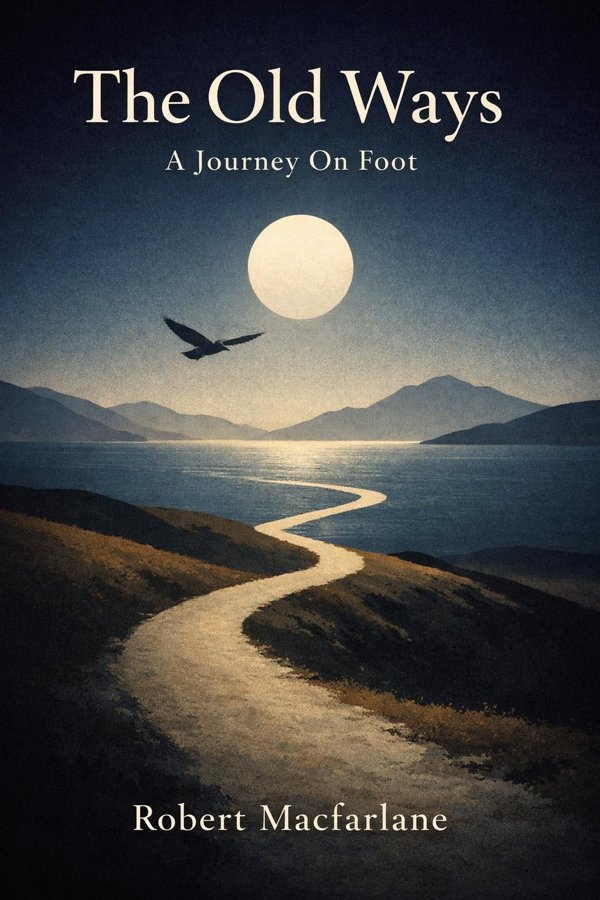
The Old Ways: A Journey On Foot: Summary & Key Insights
 10 min10 chaptersAudio available
What Is The Old Ways: A Journey On Foot About?
The Old Ways: A Journey On Foot by Robert Macfarlane is a travel book spanning 10 pages. The Old Ways: A Journey on Foot is a travel narrative by British author Robert Macfarlane that explores ancient paths, tracks, and sea routes across Britain, Spain, Palestine, and beyond. Blending natural history, philosophy, and personal reflection, Macfarlane examines how landscapes shape human experience and memory, and how walking connects people to the deep past and the natural world. The book was shortlisted for the 2012 Samuel Johnson Prize for Non-Fiction and is considered a modern classic of nature writing.
This FizzRead summary covers all 10 key chapters of The Old Ways: A Journey On Foot in approximately 10 minutes, distilling the most important ideas, arguments, and takeaways from Robert Macfarlane's work. Also available as an audio summary and Key Quotes Podcast.
The Old Ways: A Journey On Foot
The Old Ways: A Journey on Foot is a travel narrative by British author Robert Macfarlane that explores ancient paths, tracks, and sea routes across Britain, Spain, Palestine, and beyond. Blending natural history, philosophy, and personal reflection, Macfarlane examines how landscapes shape human experience and memory, and how walking connects people to the deep past and the natural world. The book was shortlisted for the 2012 Samuel Johnson Prize for Non-Fiction and is considered a modern classic of nature writing.
Who Should Read The Old Ways: A Journey On Foot?
This book is perfect for anyone interested in travel and looking to gain actionable insights in a short read. Whether you're a student, professional, or lifelong learner, the key ideas from The Old Ways: A Journey On Foot by Robert Macfarlane will help you think differently.
- ✓Readers who enjoy travel and want practical takeaways
- ✓Professionals looking to apply new ideas to their work and life
- ✓Anyone who wants the core insights of The Old Ways: A Journey On Foot in just 10 minutes
Want the full summary?
Get instant access to this book summary and 100K+ more with Fizz Moment.
Get Free SummaryAvailable on App Store • Free to download
Key Chapters
My journey began upon the Icknield Way — that pale, ancient track running across the eastern spine of England. It is among the oldest roads in the country, older even than the English language itself. To walk there is to move within deep time: through a corridor carved by Neolithic feet, Roman wheels, and Saxon hooves.
The chalk beneath one’s boots gives a rhythm to walking. Soft, luminous, and durable, it speaks of continuity, but also of erosion. Each rise reveals buried barrows, each dip holds dew ponds that mirror the sky. As I walked the Icknield Way, I thought of all those whose lives had been brief passages along this route — farmers, traders, soldiers, mourners — and how each of them left invisible traces.
The chalk path became a meditation on endurance and fragility. I realized that walking is a way of remembering the transient — that to keep moving is to acknowledge impermanence. The way itself alters every year; grasses encroach, hedges shift, roads overlay the old track. Yet, even when half-lost, the Icknield persists in the imagination. It teaches that landscape and mind are not separate: we leave our marks upon the land, and the land leaves its pattern within us.
The sea has its own paths — invisible to land-dwellers but as ancient and precise as any chalk track. Among the sailors and islanders of Britain’s western shores, I learned that navigation is a form of storytelling. The Hebridean seaways, for instance, retain memory through song, tide, and the texture of the wind.
Sailing these sea roads, I discovered that direction at sea depends upon an intimacy with movement — the shifting color of the water, the cries of birds, the scatter of foam. These are the signs that once guided mariners long before compasses or maps.
On the Isle of Lewis, I met those who still traced the old routes between islands: the path of sea currents connecting communities, carrying fishers, faith, and folklore. The sea paths revealed that travel is never solely about arrival but about relation — between boat and wave, between human and horizon.
Such journeys remind us that the known world does not end where land falls away. To walk out into water is to step into uncertainty, yet it is in uncertainty that awareness sharpens. The sea roads taught me to read motion as inheritance — to recognize that our lives, like tides, follow rhythms larger than ourselves.
+ 8 more chapters — available in the FizzRead app
All Chapters in The Old Ways: A Journey On Foot
About the Author
Robert Macfarlane is a British writer and academic known for his works on landscape, nature, and language. His books, including Mountains of the Mind, The Wild Places, and Underland, have won numerous literary awards and established him as one of the leading voices in contemporary nature writing.
Get This Summary in Your Preferred Format
Read or listen to the The Old Ways: A Journey On Foot summary by Robert Macfarlane anytime, anywhere. FizzRead offers multiple formats so you can learn on your terms — all free.
Available formats: App · Audio · PDF · EPUB — All included free with FizzRead
Download The Old Ways: A Journey On Foot PDF and EPUB Summary
Key Quotes from The Old Ways: A Journey On Foot
“My journey began upon the Icknield Way — that pale, ancient track running across the eastern spine of England.”
“The sea has its own paths — invisible to land-dwellers but as ancient and precise as any chalk track.”
Frequently Asked Questions about The Old Ways: A Journey On Foot
The Old Ways: A Journey On Foot by Robert Macfarlane is a travel book that explores key ideas across 10 chapters. The Old Ways: A Journey on Foot is a travel narrative by British author Robert Macfarlane that explores ancient paths, tracks, and sea routes across Britain, Spain, Palestine, and beyond. Blending natural history, philosophy, and personal reflection, Macfarlane examines how landscapes shape human experience and memory, and how walking connects people to the deep past and the natural world. The book was shortlisted for the 2012 Samuel Johnson Prize for Non-Fiction and is considered a modern classic of nature writing.
More by Robert Macfarlane
You Might Also Like
The Half Known Life: In Search of Paradise
Pico Iyer
10 min
A Walk in the Woods: Rediscovering America on the Appalachian Trail
Bill Bryson
10 min
How to Travel the World on $50 a Day: Travel Cheaper, Longer, Smarter
Matt Kepnes
10 min
In Xanadu: A Quest
William Dalrymple
10 min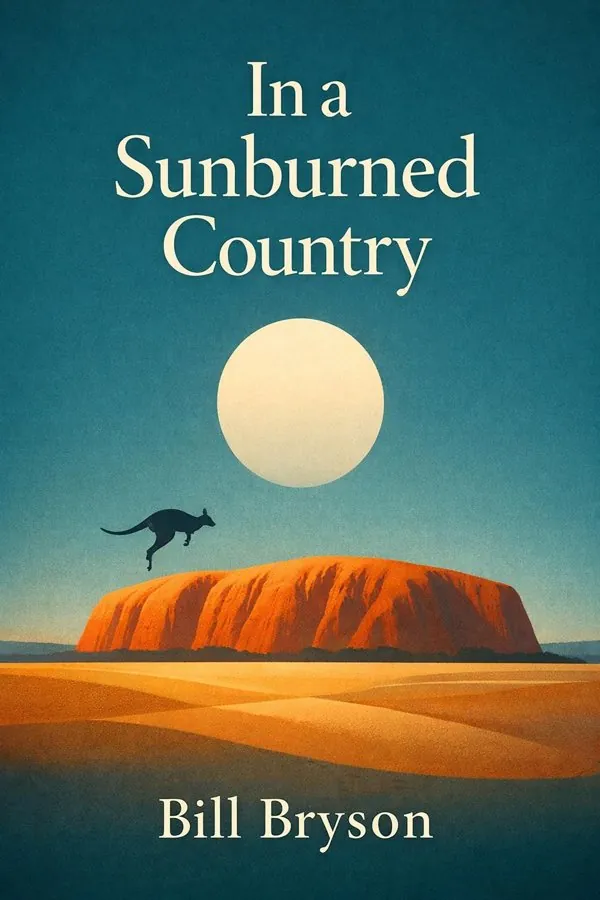
In a Sunburned Country
Bill Bryson
10 min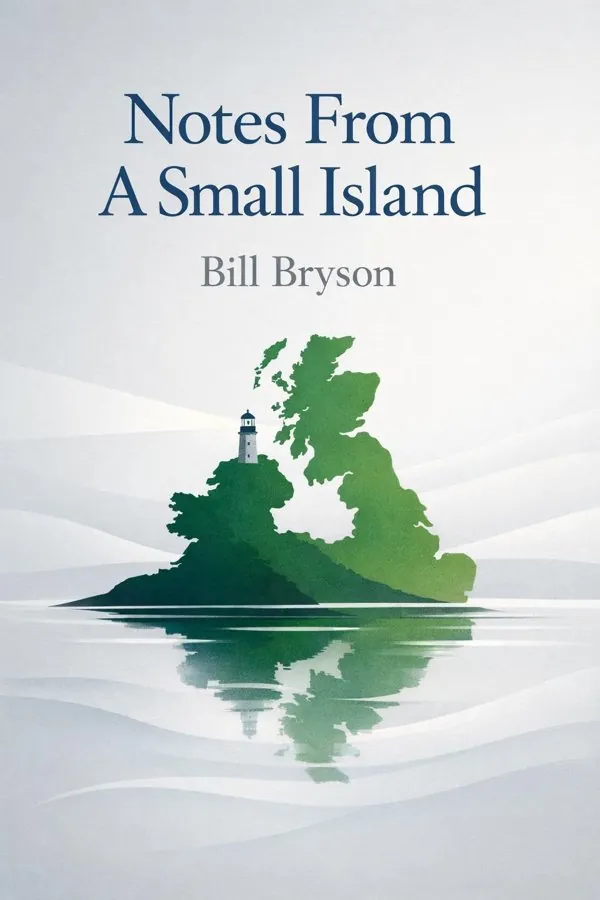
Notes From A Small Island
Bill Bryson
10 minBrowse by Category
Ready to read The Old Ways: A Journey On Foot?
Get the full summary and 100K+ more books with Fizz Moment.