
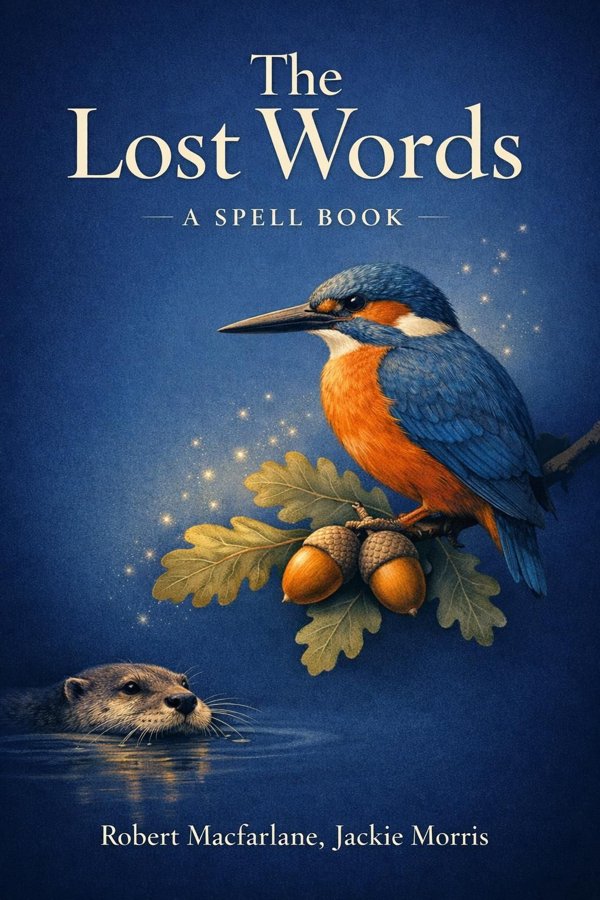
The Lost Words: A Spell Book: Summary & Key Insights
by Robert Macfarlane, Jackie Morris
 10 min11 chaptersAudio available
What Is The Lost Words: A Spell Book About?
The Lost Words: A Spell Book by Robert Macfarlane, Jackie Morris is a environment book spanning 11 pages. The Lost Words: A Spell Book is a beautifully illustrated collection of acrostic poems by Robert Macfarlane and paintings by Jackie Morris. It celebrates nature and language by reintroducing words like 'acorn', 'kingfisher', and 'otter' that have disappeared from children's dictionaries. Each poem acts as a 'spell' to summon the wonder of the natural world, encouraging readers of all ages to reconnect with the wild through lyrical verse and vivid imagery.
This FizzRead summary covers all 11 key chapters of The Lost Words: A Spell Book in approximately 10 minutes, distilling the most important ideas, arguments, and takeaways from Robert Macfarlane, Jackie Morris's work. Also available as an audio summary and Key Quotes Podcast.
The Lost Words: A Spell Book
The Lost Words: A Spell Book is a beautifully illustrated collection of acrostic poems by Robert Macfarlane and paintings by Jackie Morris. It celebrates nature and language by reintroducing words like 'acorn', 'kingfisher', and 'otter' that have disappeared from children's dictionaries. Each poem acts as a 'spell' to summon the wonder of the natural world, encouraging readers of all ages to reconnect with the wild through lyrical verse and vivid imagery.
Who Should Read The Lost Words: A Spell Book?
This book is perfect for anyone interested in environment and looking to gain actionable insights in a short read. Whether you're a student, professional, or lifelong learner, the key ideas from The Lost Words: A Spell Book by Robert Macfarlane, Jackie Morris will help you think differently.
- ✓Readers who enjoy environment and want practical takeaways
- ✓Professionals looking to apply new ideas to their work and life
- ✓Anyone who wants the core insights of The Lost Words: A Spell Book in just 10 minutes
Want the full summary?
Get instant access to this book summary and 100K+ more with Fizz Moment.
Get Free SummaryAvailable on App Store • Free to download
Key Chapters
Each piece in *The Lost Words* is shaped as an acrostic, where the first letters of each line spell out the name of the lost creature or plant. This structure serves more than playful artifice—it’s a ritual. By spelling the name, we perform recognition; by reading the poem aloud, we perform restoration. Each acrostic becomes a chant, a remembering of the vanished.
The form itself echoes ancient incantations, in which words held power over the world they described. To speak was to summon. In our cultural forgetting, speech has weakened, and so these poems return us to that older belief—that naming is an act of respect and attention. Jackie Morris’s illustrations weave perfectly alongside this idea. Her paintings act as visual spells, expanding the poems with landscapes of fur, feather, leaf, and water, wrapping the reader in sensory re-engagement.
Together, the text and image do not merely coexist—they converse. The rhythm and vocabulary of each spell invite the reader into participation: seeing, saying, remembering. The book’s structure creates a sequence of reawakenings. Each entry is both standalone and part of a larger resurrection of language, drawing us deeper into the wild world word by word.
The acorn spell opens with promise. An acorn is a small thing, easy to overlook, yet within it lies an oak’s entire universe—roots, trunk, crown, and centuries of endurance. When children lose this word, they lose more than a seed; they lose a link to patience, to cycles of growth, to the idea that the mighty begins small.
In this spell, I wrote as if the acorn itself were speaking—a voice of potential, whispering resilience. Jackie painted oaks rising from golden mist, their branches sprawling into eternity. The acorn becomes a symbol of language’s generative power; one word can sprout forests inside the mind. Reading this spell aloud feels like planting something unseen—a recognition that growth begins with speaking, with remembering the name and its meaning.
The acorn calls us to think not just of trees but of connection—the way we are rooted to the earth, to our own histories, and to each other through shared stories of nature. It reminds us that nurture starts in awareness. When we revive *acorn*, we revive patience and continuity in ourselves.
+ 9 more chapters — available in the FizzRead app
All Chapters in The Lost Words: A Spell Book
About the Authors
Robert Macfarlane is a British author known for his works exploring nature, landscape, and language, including 'Mountains of the Mind' and 'The Old Ways'. Jackie Morris is a British artist and illustrator celebrated for her watercolor depictions of wildlife and mythic themes. Together, they created 'The Lost Words' to inspire a renewed relationship with the natural world.
Get This Summary in Your Preferred Format
Read or listen to the The Lost Words: A Spell Book summary by Robert Macfarlane, Jackie Morris anytime, anywhere. FizzRead offers multiple formats so you can learn on your terms — all free.
Available formats: App · Audio · PDF · EPUB — All included free with FizzRead
Download The Lost Words: A Spell Book PDF and EPUB Summary
Key Quotes from The Lost Words: A Spell Book
“Each piece in *The Lost Words* is shaped as an acrostic, where the first letters of each line spell out the name of the lost creature or plant.”
“An acorn is a small thing, easy to overlook, yet within it lies an oak’s entire universe—roots, trunk, crown, and centuries of endurance.”
Frequently Asked Questions about The Lost Words: A Spell Book
The Lost Words: A Spell Book by Robert Macfarlane, Jackie Morris is a environment book that explores key ideas across 11 chapters. The Lost Words: A Spell Book is a beautifully illustrated collection of acrostic poems by Robert Macfarlane and paintings by Jackie Morris. It celebrates nature and language by reintroducing words like 'acorn', 'kingfisher', and 'otter' that have disappeared from children's dictionaries. Each poem acts as a 'spell' to summon the wonder of the natural world, encouraging readers of all ages to reconnect with the wild through lyrical verse and vivid imagery.
You Might Also Like
A Life on Our Planet: My Witness Statement and a Vision for the Future
David Attenborough
10 min
A Sky Full Of Birds
Matt Merritt
10 min
Carbon Zero: Imagining Cities That Can Save the Planet
Alex Steffen
10 min
Eaarth: Making a Life on a Tough New Planet
Bill McKibben
10 min
The Social Contract and Environmental Governance
Various Editors
10 min
The Wild Places
Robert Macfarlane
10 minBrowse by Category
Ready to read The Lost Words: A Spell Book?
Get the full summary and 100K+ more books with Fizz Moment.