
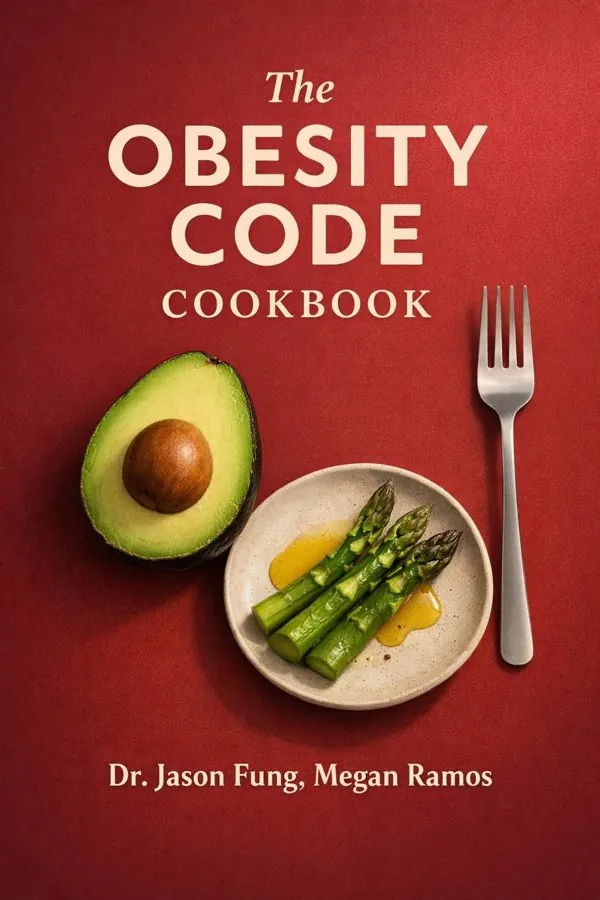
The Obesity Code Cookbook: Recipes to Help You Manage Insulin, Lose Weight, and Improve Your Health: Summary & Key Insights
by Dr. Jason Fung, Megan Ramos
 10 min4 chaptersAudio available
What Is The Obesity Code Cookbook: Recipes to Help You Manage Insulin, Lose Weight, and Improve Your Health About?
The Obesity Code Cookbook: Recipes to Help You Manage Insulin, Lose Weight, and Improve Your Health by Dr. Jason Fung, Megan Ramos is a nutrition book spanning 4 pages. This companion cookbook to Dr. Jason Fung’s bestselling 'The Obesity Code' provides over 100 recipes designed to support intermittent fasting and low-carbohydrate eating. It offers practical meal ideas that help regulate insulin levels, promote fat loss, and improve metabolic health. The book emphasizes whole foods, healthy fats, and balanced nutrition to sustain long-term wellness.
This FizzRead summary covers all 4 key chapters of The Obesity Code Cookbook: Recipes to Help You Manage Insulin, Lose Weight, and Improve Your Health in approximately 10 minutes, distilling the most important ideas, arguments, and takeaways from Dr. Jason Fung, Megan Ramos's work. Also available as an audio summary and Key Quotes Podcast.
The Obesity Code Cookbook: Recipes to Help You Manage Insulin, Lose Weight, and Improve Your Health
This companion cookbook to Dr. Jason Fung’s bestselling 'The Obesity Code' provides over 100 recipes designed to support intermittent fasting and low-carbohydrate eating. It offers practical meal ideas that help regulate insulin levels, promote fat loss, and improve metabolic health. The book emphasizes whole foods, healthy fats, and balanced nutrition to sustain long-term wellness.
Who Should Read The Obesity Code Cookbook: Recipes to Help You Manage Insulin, Lose Weight, and Improve Your Health?
This book is perfect for anyone interested in nutrition and looking to gain actionable insights in a short read. Whether you're a student, professional, or lifelong learner, the key ideas from The Obesity Code Cookbook: Recipes to Help You Manage Insulin, Lose Weight, and Improve Your Health by Dr. Jason Fung, Megan Ramos will help you think differently.
- ✓Readers who enjoy nutrition and want practical takeaways
- ✓Professionals looking to apply new ideas to their work and life
- ✓Anyone who wants the core insights of The Obesity Code Cookbook: Recipes to Help You Manage Insulin, Lose Weight, and Improve Your Health in just 10 minutes
Want the full summary?
Get instant access to this book summary and 100K+ more with Fizz Moment.
Get Free SummaryAvailable on App Store • Free to download
Key Chapters
The central message of both *The Obesity Code* and this cookbook is that hormones, not calories, determine body weight. Insulin—the hormone that regulates blood sugar—is the key driver of fat storage. Every time you eat, your body releases insulin to manage the glucose circulating in your bloodstream. Frequent eating and carbohydrate-heavy foods keep insulin levels elevated, which blocks the body’s ability to burn fat. Over time, the body becomes insulin resistant, meaning it needs even more insulin to manage the same amount of glucose. This cycle of high insulin leads directly to obesity, type 2 diabetes, and metabolic imbalance.
The way out of this cycle begins with reclaiming control over insulin. That means eating in a way that minimizes its constant stimulation. Low-carbohydrate, high-fat meals stabilize insulin and reduce cravings, allowing fat to once again become the body’s primary fuel. This doesn’t mean eliminating all carbohydrates but focusing on those that come from whole, unprocessed sources—vegetables, nuts, seeds—where fiber and nutrient density slow digestion and tame insulin response.
It’s equally important to understand that breakfast, lunch, and dinner are cultural constructs, not biological necessities. For decades, we’ve been told never to skip breakfast, yet this habit merely continues the insulin flood from dawn to dusk. The body needs fasting periods to metabolically reset, just as it needs sleep to recover. In this book, every recipe aligns with this principle. The design allows flexibility: some meals can serve as the first meal after a fasting period; others are perfect for days you eat two or three times without excess snacking.
Once you see food not as an enemy but as a tool for hormonal harmony, everything changes. A meal becomes an act of biology, not guilt. A day of fasting becomes restorative, not restrictive. This shift from calorie counting to insulin awareness is what underpins every recipe that follows.
Before delving into recipes, it’s vital to create an environment that supports your new metabolic goals. Your kitchen is not just a place of preparation—it’s a space of transformation. Stocking it thoughtfully is the first act of commitment to your health. The most essential pantry staples are those that nourish without spiking insulin: olive oil, avocado oil, coconut oil, grass-fed butter, and ghee become your allies in flavor and satiety. For proteins, the emphasis is on quality and variety—wild fish, pastured poultry, eggs, and grass-fed meats. Non-starchy vegetables, particularly leafy greens, cauliflower, broccoli, zucchini, and peppers, supply nutrients while keeping insulin steady. Natural seasonings and condiments like sea salt, vinegar, and herbs build layers of taste without empty carbohydrates.
The larger mindset shift is equally important. Many people approach a new way of eating with anxiety—worried about social settings, about cravings, or about failing yet another diet. I often remind my patients: you’re not dieting, you’re reteaching your body how to function as it was designed to. The insulin-centric approach is not temporary; it’s permanent in its logic, even if your specific fasting schedule or food choices vary with time. The key is flexibility. If you occasionally enjoy a sweeter fruit or glass of wine, it’s not sabotage—it’s part of balance. What matters most is returning to a pattern of meals that supports stable insulin and renewed metabolic resilience.
Meal planning becomes simple once you stock the right ingredients. The recipes in this book are arranged to fit naturally within fasting-friendly windows. Breakfasts can be skipped entirely or enjoyed at midday; lunches focus on light but satisfying combinations like salads with healthy fats and proteins; dinners bring comfort without compromise, often with roasted vegetables, hearty sauces, and good fats that satiate without overloading sugar or starch. Every meal is a building block for long-term health, not a temporary fix.
+ 2 more chapters — available in the FizzRead app
All Chapters in The Obesity Code Cookbook: Recipes to Help You Manage Insulin, Lose Weight, and Improve Your Health
About the Authors
Dr. Jason Fung is a Canadian nephrologist and a leading expert on intermittent fasting and low-carbohydrate diets. He is the author of several books on obesity and metabolic health. Megan Ramos is a clinical educator and co-founder of The Fasting Method, specializing in therapeutic fasting and dietary interventions for weight management and diabetes.
Get This Summary in Your Preferred Format
Read or listen to the The Obesity Code Cookbook: Recipes to Help You Manage Insulin, Lose Weight, and Improve Your Health summary by Dr. Jason Fung, Megan Ramos anytime, anywhere. FizzRead offers multiple formats so you can learn on your terms — all free.
Available formats: App · Audio · PDF · EPUB — All included free with FizzRead
Download The Obesity Code Cookbook: Recipes to Help You Manage Insulin, Lose Weight, and Improve Your Health PDF and EPUB Summary
Key Quotes from The Obesity Code Cookbook: Recipes to Help You Manage Insulin, Lose Weight, and Improve Your Health
“The central message of both *The Obesity Code* and this cookbook is that hormones, not calories, determine body weight.”
“Before delving into recipes, it’s vital to create an environment that supports your new metabolic goals.”
Frequently Asked Questions about The Obesity Code Cookbook: Recipes to Help You Manage Insulin, Lose Weight, and Improve Your Health
The Obesity Code Cookbook: Recipes to Help You Manage Insulin, Lose Weight, and Improve Your Health by Dr. Jason Fung, Megan Ramos is a nutrition book that explores key ideas across 4 chapters. This companion cookbook to Dr. Jason Fung’s bestselling 'The Obesity Code' provides over 100 recipes designed to support intermittent fasting and low-carbohydrate eating. It offers practical meal ideas that help regulate insulin levels, promote fat loss, and improve metabolic health. The book emphasizes whole foods, healthy fats, and balanced nutrition to sustain long-term wellness.
You Might Also Like
Eating by the Seasons Cookbook: Seasonal Produce-Focused Recipes
Clare Foster
10 min
From Crook to Cook: Platinum Recipes from Tha Boss Dogg's Kitchen
Snoop Dogg with Ryan Ford
10 min
Juicing for Beginners: The Essential Guide to Juicing Recipes and Juicing for Weight Loss
Rockridge Press
10 min
The Food Therapist: Break Bad Habits, Eat with Intention, and Indulge Without Worry
Shira Lenchewski
10 min
The Mediterranean Diet Meal Plan: A 4-Week Meal Plan for Optimal Health and Weight Loss
Various Contributors
10 min
The Well Plated Cookbook: Simple, Wholesome Recipes for Everyday Meals
Erin Clarke
10 minBrowse by Category
Ready to read The Obesity Code Cookbook: Recipes to Help You Manage Insulin, Lose Weight, and Improve Your Health?
Get the full summary and 100K+ more books with Fizz Moment.