
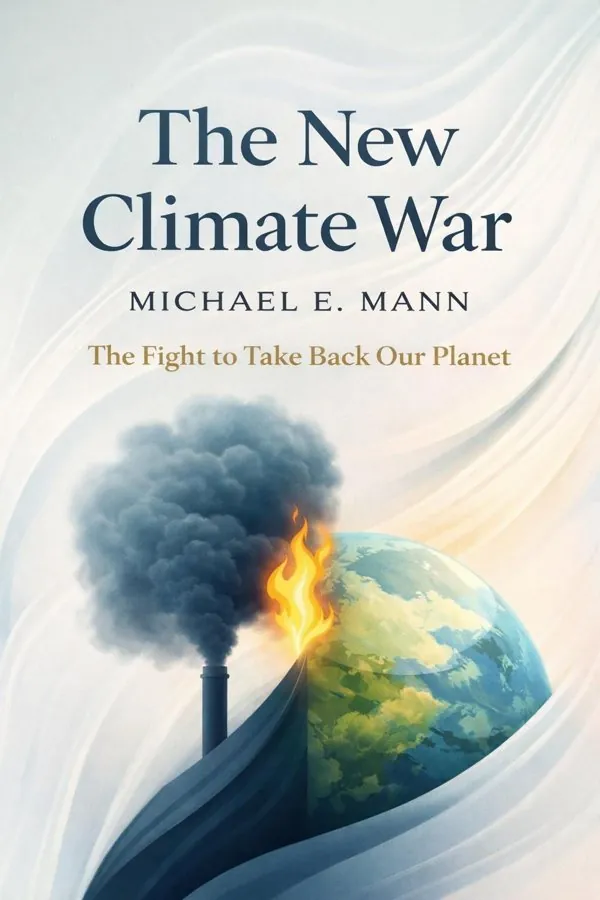
The New Climate War: The Fight to Take Back Our Planet: Summary & Key Insights
 10 min11 chaptersAudio available
What Is The New Climate War: The Fight to Take Back Our Planet About?
The New Climate War: The Fight to Take Back Our Planet by Michael E. Mann is a environment book spanning 11 pages. In this book, climate scientist Michael E. Mann exposes the tactics used by powerful interests to delay climate action. He explains how fossil fuel companies and their allies have shifted from outright denial of climate change to more subtle forms of deflection and division, such as promoting individual responsibility narratives and false solutions. Mann calls for collective action, policy change, and systemic reform to combat the climate crisis effectively.
This FizzRead summary covers all 11 key chapters of The New Climate War: The Fight to Take Back Our Planet in approximately 10 minutes, distilling the most important ideas, arguments, and takeaways from Michael E. Mann's work. Also available as an audio summary and Key Quotes Podcast.
The New Climate War: The Fight to Take Back Our Planet
In this book, climate scientist Michael E. Mann exposes the tactics used by powerful interests to delay climate action. He explains how fossil fuel companies and their allies have shifted from outright denial of climate change to more subtle forms of deflection and division, such as promoting individual responsibility narratives and false solutions. Mann calls for collective action, policy change, and systemic reform to combat the climate crisis effectively.
Who Should Read The New Climate War: The Fight to Take Back Our Planet?
This book is perfect for anyone interested in environment and looking to gain actionable insights in a short read. Whether you're a student, professional, or lifelong learner, the key ideas from The New Climate War: The Fight to Take Back Our Planet by Michael E. Mann will help you think differently.
- ✓Readers who enjoy environment and want practical takeaways
- ✓Professionals looking to apply new ideas to their work and life
- ✓Anyone who wants the core insights of The New Climate War: The Fight to Take Back Our Planet in just 10 minutes
Want the full summary?
Get instant access to this book summary and 100K+ more with Fizz Moment.
Get Free SummaryAvailable on App Store • Free to download
Key Chapters
In the first phase of the climate struggle, the fossil fuel industry’s goal was straightforward: deny everything. They launched aggressive campaigns asserting that climate change was a myth, or that natural cycles, not human emissions, were responsible. But denial has a shelf life. With the melting of glaciers, the intensity of wildfires, and the frequency of hurricanes staring us in the face, the evidence became impossible to ignore.
So the old warriors refined their methods. They realized that delay was as good as denial, perhaps even better, because it could disguise itself as concern. They shifted the narrative from 'the problem doesn’t exist' to 'the problem isn’t us.' Suddenly, advertising told you to check your personal carbon footprint, oil companies posed as environmental stewards funding 'clean' innovations, and influencers reminded you that turning off the lights could change the world. All of this sounds empowering until you ask: what is missing from the picture?
What’s missing is accountability from the systems that make individual lifestyle changes nearly futile without policy-level transformation. Fossil fuel interests promote deflection precisely because it redirects the public’s gaze away from their policies and profits. When citizens feel solely responsible, they turn inward rather than outward, focusing on consumption instead of demanding structural change.
This shift—from denial to deflection—is not accidental. It is the result of deliberate strategy, and understanding that strategy is the first step to dismantling it.
Disinformation is the lifeblood of the new climate war. I have seen firsthand how misinformation morphs across different platforms—from fake scientists touting 'alternative facts' to coordinated digital networks amplifying conspiracy theories that discredit legitimate research. The objective is simple: slow progress by confusing the public.
Climate disinformation isn’t just about lying; it’s about distorting the truth in ways that make collective action harder. For example, creating exaggerated narratives about the cost of renewable energy, or presenting carbon taxation as an attack on working families. These tactics exploit fear and resentment to keep fossil fuels politically protected.
The psychological sophistication of modern disinformation cannot be overstated. Algorithms ensure divisive messages reach those most susceptible to them. Political groups exploit echo chambers, encouraging tribal loyalty over scientific reasoning. The outcome is a fractured public, unsure whom to trust. By exposing these patterns, I want readers to see disinformation as a system of control—not as isolated mistakes of understanding.
+ 9 more chapters — available in the FizzRead app
All Chapters in The New Climate War: The Fight to Take Back Our Planet
About the Author
Michael E. Mann is an American climatologist and geophysicist, currently Distinguished Professor of Atmospheric Science at Penn State University. He is known for his pioneering work on climate reconstructions and for his advocacy for science-based climate policy.
Get This Summary in Your Preferred Format
Read or listen to the The New Climate War: The Fight to Take Back Our Planet summary by Michael E. Mann anytime, anywhere. FizzRead offers multiple formats so you can learn on your terms — all free.
Available formats: App · Audio · PDF · EPUB — All included free with FizzRead
Download The New Climate War: The Fight to Take Back Our Planet PDF and EPUB Summary
Key Quotes from The New Climate War: The Fight to Take Back Our Planet
“In the first phase of the climate struggle, the fossil fuel industry’s goal was straightforward: deny everything.”
“Disinformation is the lifeblood of the new climate war.”
Frequently Asked Questions about The New Climate War: The Fight to Take Back Our Planet
The New Climate War: The Fight to Take Back Our Planet by Michael E. Mann is a environment book that explores key ideas across 11 chapters. In this book, climate scientist Michael E. Mann exposes the tactics used by powerful interests to delay climate action. He explains how fossil fuel companies and their allies have shifted from outright denial of climate change to more subtle forms of deflection and division, such as promoting individual responsibility narratives and false solutions. Mann calls for collective action, policy change, and systemic reform to combat the climate crisis effectively.
More by Michael E. Mann

You Might Also Like

A Life on Our Planet: My Witness Statement and a Vision for the Future
David Attenborough
10 min
A Sky Full Of Birds
Matt Merritt
10 min
Carbon Zero: Imagining Cities That Can Save the Planet
Alex Steffen
10 min
Eaarth: Making a Life on a Tough New Planet
Bill McKibben
10 min
The Social Contract and Environmental Governance
Various Editors
10 min
The Wild Places
Robert Macfarlane
10 minBrowse by Category
Ready to read The New Climate War: The Fight to Take Back Our Planet?
Get the full summary and 100K+ more books with Fizz Moment.