
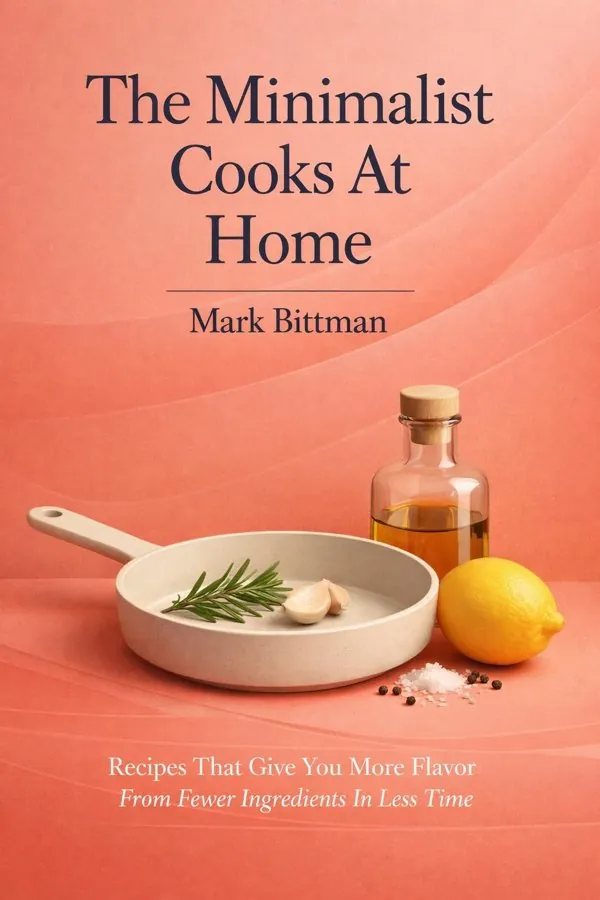
The Minimalist Cooks At Home: Recipes That Give You More Flavor From Fewer Ingredients In Less Time: Summary & Key Insights
by Mark Bittman
 10 min9 chaptersAudio available
Key Takeaways from The Minimalist Cooks At Home: Recipes That Give You More Flavor From Fewer Ingredients In Less Time
The most memorable dishes are often the ones that know when to stop.
A well-equipped kitchen is not the same thing as an over-equipped kitchen.
A cook who understands a few core techniques can make hundreds of meals without feeling stuck.
The best cookbook is not the one you admire on the shelf, but the one that gets you into the kitchen on a Tuesday night.
Rigid cooking creates stress; adaptable cooking creates freedom.
What Is The Minimalist Cooks At Home: Recipes That Give You More Flavor From Fewer Ingredients In Less Time About?
The Minimalist Cooks At Home: Recipes That Give You More Flavor From Fewer Ingredients In Less Time by Mark Bittman is a nutrition book spanning 5 pages. What if better cooking did not require more ingredients, more equipment, or more time, but less of all three? In The Minimalist Cooks At Home, Mark Bittman argues that great food is often the result of restraint rather than excess. Drawing on his experience as the creator of The New York Times column "The Minimalist," Bittman offers a practical, liberating approach to home cooking: choose a few good ingredients, use simple techniques, and trust flavor to emerge from clarity instead of complexity. The book brings together one hundred inventive recipes designed for real life, along with smart shortcuts, flexible variations, and advice that helps readers cook with confidence instead of anxiety. Its value lies not only in the dishes themselves, but in the mindset behind them. Bittman shows that home cooking can be fast, relaxed, economical, and deeply satisfying without sacrificing taste. For busy eaters, intimidated beginners, and experienced cooks tired of overcomplicated recipes, this book serves as both a cookbook and a philosophy of everyday deliciousness.
This FizzRead summary covers all 9 key chapters of The Minimalist Cooks At Home: Recipes That Give You More Flavor From Fewer Ingredients In Less Time in approximately 10 minutes, distilling the most important ideas, arguments, and takeaways from Mark Bittman's work. Also available as an audio summary and Key Quotes Podcast.
The Minimalist Cooks At Home: Recipes That Give You More Flavor From Fewer Ingredients In Less Time
What if better cooking did not require more ingredients, more equipment, or more time, but less of all three? In The Minimalist Cooks At Home, Mark Bittman argues that great food is often the result of restraint rather than excess. Drawing on his experience as the creator of The New York Times column "The Minimalist," Bittman offers a practical, liberating approach to home cooking: choose a few good ingredients, use simple techniques, and trust flavor to emerge from clarity instead of complexity. The book brings together one hundred inventive recipes designed for real life, along with smart shortcuts, flexible variations, and advice that helps readers cook with confidence instead of anxiety. Its value lies not only in the dishes themselves, but in the mindset behind them. Bittman shows that home cooking can be fast, relaxed, economical, and deeply satisfying without sacrificing taste. For busy eaters, intimidated beginners, and experienced cooks tired of overcomplicated recipes, this book serves as both a cookbook and a philosophy of everyday deliciousness.
Who Should Read The Minimalist Cooks At Home: Recipes That Give You More Flavor From Fewer Ingredients In Less Time?
This book is perfect for anyone interested in nutrition and looking to gain actionable insights in a short read. Whether you're a student, professional, or lifelong learner, the key ideas from The Minimalist Cooks At Home: Recipes That Give You More Flavor From Fewer Ingredients In Less Time by Mark Bittman will help you think differently.
- ✓Readers who enjoy nutrition and want practical takeaways
- ✓Professionals looking to apply new ideas to their work and life
- ✓Anyone who wants the core insights of The Minimalist Cooks At Home: Recipes That Give You More Flavor From Fewer Ingredients In Less Time in just 10 minutes
Want the full summary?
Get instant access to this book summary and 100K+ more with Fizz Moment.
Get Free SummaryAvailable on App Store • Free to download
Key Chapters
The most memorable dishes are often the ones that know when to stop. That is the central insight behind Mark Bittman’s minimalist philosophy: flavor does not automatically improve when you add more ingredients. In many home kitchens, complexity becomes a substitute for confidence. People pile in spices, sauces, garnishes, and techniques because they worry that the food will be boring otherwise. Bittman pushes back on that instinct. He argues that when you strip a dish down to its essentials, each ingredient becomes more expressive. A tomato tastes more like a tomato. Garlic becomes fragrant rather than overwhelming. A roast chicken, properly seasoned, can deliver more pleasure than an elaborate restaurant-style preparation.
This philosophy is not about deprivation. It is about intentionality. Every ingredient should earn its place. If an herb, spice, or condiment does not improve the dish in a meaningful way, leave it out. The result is food that is easier to shop for, faster to prepare, and often more satisfying to eat. Bittman’s recipes demonstrate that a handful of carefully chosen components can create meals that feel complete rather than sparse.
In practice, this might mean making pasta with olive oil, garlic, and breadcrumbs instead of a ten-ingredient sauce, or roasting fish with lemon and herbs rather than burying it under layers of seasoning. The lesson extends beyond recipes: when you understand what each ingredient contributes, you gain freedom to improvise and simplify.
Actionable takeaway: Before cooking, look at your ingredient list and ask of each item, "What essential role does this play?" If you cannot answer clearly, consider removing it.
A well-equipped kitchen is not the same thing as an over-equipped kitchen. One of Bittman’s most reassuring messages is that you do not need professional-grade gadgets or a huge arsenal of specialized tools to cook delicious food at home. In fact, too many tools can create clutter, confusion, and dependence. Minimalist cooking begins with a lean toolkit: a sharp chef’s knife, a cutting board, a few sturdy pots and pans, baking sheets, measuring tools, and perhaps one or two versatile extras such as a cast-iron skillet or food processor.
This approach matters because equipment often becomes a psychological barrier. People think they cannot cook certain meals until they own the right blender, mandoline, grill pan, or stand mixer. Bittman shows that technique and judgment matter far more than gadgets. A good knife can replace several single-use tools. A heavy pan can sear, saute, roast, and even bake. A baking sheet can become the foundation for vegetables, fish, chicken, and simple desserts.
The same principle applies to pantry building. Instead of chasing obscure ingredients for one-time use, stock a core set of dependable staples: olive oil, salt, pepper, vinegar, grains, canned beans, garlic, onions, citrus, and a few favorite spices. With those in place, everyday meals become easier to assemble. You spend less time shopping, less money on novelty ingredients, and less mental energy managing kitchen chaos.
Actionable takeaway: Audit your kitchen this week. Identify the five tools and ten pantry staples you use most often, and build your cooking routine around those essentials instead of accumulating more.
A cook who understands a few core techniques can make hundreds of meals without feeling stuck. Bittman emphasizes that minimalist cooking depends less on collecting recipes than on mastering foundational methods. Roasting, sauteing, boiling, grilling, braising, and making simple vinaigrettes are not just isolated skills; they are frameworks for endless variation. Once you understand how heat affects vegetables, how long fish takes to cook, or how acid balances richness, recipes become suggestions rather than rigid instructions.
This is one reason the book feels empowering. Bittman does not treat cooking as a secret language available only to experts. He translates technique into approachable decisions. If you can roast a tray of vegetables, you can adapt for carrots, broccoli, cauliflower, potatoes, or squash. If you know how to pan-cook a piece of chicken or fish, you can swap herbs, add citrus, or change the side dish without changing the method. Minimalism is therefore not just about fewer ingredients; it is about fewer moving parts.
These techniques also support speed. Complicated recipes often slow cooks down because every step depends on another. By contrast, strong technique allows for fluid, efficient meals. You can glance at what you have, choose a method, and start. For example, leftover cooked beans can become a warm salad, a soup, or a side dish with little more than olive oil, onion, and herbs.
Actionable takeaway: Choose one basic method this week, such as roasting or sauteing, and use it with three different ingredients so you learn the technique rather than memorizing a single recipe.
The best cookbook is not the one you admire on the shelf, but the one that gets you into the kitchen on a Tuesday night. Bittman’s recipes are designed for repeat use, which is why they matter. They are practical enough for daily life yet interesting enough to keep cooking from becoming mechanical. Rather than presenting elaborate showpieces, he offers dishes that deliver strong flavor with a short ingredient list and direct preparation. This makes the book especially useful for people who want homemade food but feel overwhelmed by time pressure, decision fatigue, or kitchen inexperience.
The range of recipes is part of the appeal. Bittman moves from appetizers and salads to soups, grain dishes, seafood, meat, vegetables, and simple sweets, showing that minimalism is not limited to one cuisine or meal type. A dish might begin with a familiar base and then gain personality through one smart twist: a different herb, a crunchy topping, a quick sauce, or a change in cooking method. That balance between familiarity and invention helps readers expand their repertoire without feeling lost.
Just as importantly, the recipes model a way of thinking. They teach proportion, substitution, and balance. If a recipe uses spinach, you can try chard. If it calls for white beans, chickpeas may work. If you lack one spice, the dish can still succeed. In this sense, the recipes are confidence-building exercises disguised as dinner.
Actionable takeaway: Pick two simple recipes from your regular rotation and rewrite them in minimalist form by trimming unnecessary steps or ingredients while protecting the main flavor.
Rigid cooking creates stress; adaptable cooking creates freedom. One of Bittman’s most valuable contributions is his insistence that recipes should be flexible. Instead of treating substitutions as dangerous, he treats them as normal. This is especially important in home cooking, where ingredient availability, budget, season, and appetite constantly change. Minimalism works because it relies on structures rather than perfection. When a recipe is built on a clear relationship between a few ingredients, it becomes easy to adjust without losing its identity.
This flexibility helps cooks plan better and waste less. If you know that a roasted vegetable dish can accommodate whatever is in the refrigerator, you are less likely to let produce spoil. If a salad can shift from arugula to spinach to shredded cabbage, you become more resilient as a cook. A basic soup can absorb leftover beans, grains, or herbs. A pasta dish can reflect what is in season or what needs to be used up. Bittman’s approach reduces the fear that one missing ingredient will ruin the meal.
Adaptability also builds intuition. You start thinking in categories rather than fixed formulas: greens, proteins, acids, aromatics, textures. That mental model makes shopping easier and meal planning faster. It also brings cooking closer to real life, where no two weeks look exactly the same.
Actionable takeaway: For your next three meals, make one intentional substitution in each recipe and note what function the replacement served, such as adding richness, freshness, texture, or acidity.
When a recipe contains fewer ingredients, each one carries more responsibility. That is why quality matters so much in Bittman’s minimalist framework. He does not suggest that every meal requires luxury products, but he does argue that better ingredients make simple cooking far more rewarding. If you are making a salad with just greens, oil, vinegar, and salt, the freshness of the greens and the flavor of the oil become crucial. If dinner is grilled fish with lemon, the fish itself must be worth tasting. Minimalism shifts attention from manipulation to selection.
This idea can change how people shop. Instead of buying many mediocre items, Bittman encourages choosing fewer but better ones when possible. A ripe tomato in season can anchor a whole meal. Good bread can turn soup into dinner. Fresh herbs can transform eggs, beans, or roasted vegetables. Even basic pantry items matter: a flavorful olive oil or decent mustard can improve many dishes at once.
At the same time, quality does not always mean expensive. It can mean buying produce in season, choosing ingredients with shorter supply chains, or learning which affordable staples consistently deliver value. Canned beans, eggs, onions, rice, and cabbage can be excellent foundations when handled well. The point is not gourmet elitism; it is respect for ingredients as the source of flavor.
Actionable takeaway: The next time you cook a very simple dish, upgrade just one central ingredient, such as the bread, oil, tomatoes, or eggs, and notice how much that single choice changes the result.
People often stop cooking at home not because they dislike it, but because it feels unsustainable inside a busy life. Bittman addresses this directly by making speed a serious culinary value rather than an afterthought. Minimalist cooking recognizes that a meal does not need to consume an entire evening to be worthwhile. In fact, when recipes are shorter, cleaner, and more manageable, people cook more often, eat better, and rely less on takeout or processed convenience foods.
The book’s time-saving approach is practical, not gimmicky. It is not about cutting corners so aggressively that food loses character. It is about identifying which steps truly matter. Maybe vegetables do not need to be peeled. Maybe a sauce can be made in the same pan as the main ingredient. Maybe one well-cooked component paired with bread or a salad is enough. Bittman also values overlap: roasting extra vegetables for tomorrow, making grains that can reappear in lunch, or using the same herb in multiple meals.
This mindset lowers the threshold for beginning. If you know dinner can be on the table in thirty minutes with minimal cleanup, cooking becomes a default option rather than a special project. Over time, this changes household habits. Quick, flavorful home meals become routine, and routine is what makes healthy, economical cooking stick.
Actionable takeaway: Identify one recurring weeknight bottleneck, such as chopping, cleanup, or planning, and simplify it with a single system like prewashing produce, one-pan meals, or repeating a reliable template dinner.
A crowded recipe can produce more than a crowded plate; it can produce a crowded mind. One overlooked advantage of Bittman’s approach is how effectively it reduces decision fatigue. When meals rely on fewer ingredients and more repeatable structures, cooking asks less of your attention. You spend less time cross-checking long shopping lists, hunting down obscure condiments, and wondering what to do with leftovers from one-time purchases. Simpler cooking is not only faster in practice; it is lighter cognitively.
That mental simplicity has real consequences. It makes meal planning more consistent, grocery spending more predictable, and refrigerator management easier. You buy ingredients with multiple uses and begin to notice natural overlaps between meals. A bunch of parsley can season beans, brighten soup, and finish roasted vegetables. Yogurt can become breakfast, sauce, or marinade. Lemons can dress greens, flavor fish, and sharpen grains. This kind of ingredient economy helps households waste less food and money.
Minimalism also makes cooking feel more available on low-energy days. When you know that a satisfying meal may require just pasta, garlic, oil, and a vegetable, the gap between intention and action shrinks. That matters because sustainable home cooking depends on friction reduction as much as inspiration.
Actionable takeaway: For one week, plan meals around overlapping ingredients instead of separate recipes, aiming for each major item you buy to appear in at least two or three different dishes.
One of the quiet revolutions in Bittman’s work is his rejection of cooking as performance. In much food media, cooking is presented as spectacle: difficult techniques, dramatic plating, and an endless pursuit of novelty. Bittman brings the focus back to nourishment, pleasure, and practicality. He reminds readers that the purpose of home cooking is not to impress an audience but to feed yourself and others well. This shift is deeply liberating because it removes the pressure to cook like a professional and replaces it with permission to cook like a thoughtful human being.
That perspective changes how success is measured. A meal succeeds if it tastes good, fits your day, uses what you have, and invites you to cook again tomorrow. It does not need to look perfect or involve culinary heroics. By presenting cooking as an ordinary, learnable activity, Bittman restores dignity to the everyday meal. This is especially meaningful for beginners who feel excluded by chef culture or by cookbooks that assume endless time and confidence.
Minimalist cooking also encourages a calmer relationship with the kitchen. Mistakes become manageable because the stakes are lower. You can recover from overcooked vegetables with a squeeze of lemon and good oil. You can turn leftovers into something new. Cooking becomes iterative instead of theatrical.
Actionable takeaway: For your next meal, define success before you cook using three simple criteria, such as tasty, affordable, and ready in thirty minutes, and let those standards guide your choices instead of perfectionism.
All Chapters in The Minimalist Cooks At Home: Recipes That Give You More Flavor From Fewer Ingredients In Less Time
About the Author
Mark Bittman is an American food journalist, columnist, and bestselling author known for transforming the way people think about home cooking. He became widely influential through his New York Times column "The Minimalist," where he championed recipes built on simplicity, flavor, and practicality rather than culinary showmanship. Bittman has written numerous cookbooks and food-related works, often focusing on accessible cooking, healthy eating, and the social systems surrounding food production and consumption. His writing style is clear, direct, and encouraging, making him especially popular among home cooks who want useful guidance without intimidation. Across his career, Bittman has argued that cooking should be manageable, flexible, and pleasurable, helping readers see that great meals can come from everyday ingredients and straightforward techniques.
Get This Summary in Your Preferred Format
Read or listen to the The Minimalist Cooks At Home: Recipes That Give You More Flavor From Fewer Ingredients In Less Time summary by Mark Bittman anytime, anywhere. FizzRead offers multiple formats so you can learn on your terms — all free.
Available formats: App · Audio · PDF · EPUB — All included free with FizzRead
Download The Minimalist Cooks At Home: Recipes That Give You More Flavor From Fewer Ingredients In Less Time PDF and EPUB Summary
Key Quotes from The Minimalist Cooks At Home: Recipes That Give You More Flavor From Fewer Ingredients In Less Time
“The most memorable dishes are often the ones that know when to stop.”
“A well-equipped kitchen is not the same thing as an over-equipped kitchen.”
“A cook who understands a few core techniques can make hundreds of meals without feeling stuck.”
“The best cookbook is not the one you admire on the shelf, but the one that gets you into the kitchen on a Tuesday night.”
“Rigid cooking creates stress; adaptable cooking creates freedom.”
Frequently Asked Questions about The Minimalist Cooks At Home: Recipes That Give You More Flavor From Fewer Ingredients In Less Time
The Minimalist Cooks At Home: Recipes That Give You More Flavor From Fewer Ingredients In Less Time by Mark Bittman is a nutrition book that explores key ideas across 9 chapters. What if better cooking did not require more ingredients, more equipment, or more time, but less of all three? In The Minimalist Cooks At Home, Mark Bittman argues that great food is often the result of restraint rather than excess. Drawing on his experience as the creator of The New York Times column "The Minimalist," Bittman offers a practical, liberating approach to home cooking: choose a few good ingredients, use simple techniques, and trust flavor to emerge from clarity instead of complexity. The book brings together one hundred inventive recipes designed for real life, along with smart shortcuts, flexible variations, and advice that helps readers cook with confidence instead of anxiety. Its value lies not only in the dishes themselves, but in the mindset behind them. Bittman shows that home cooking can be fast, relaxed, economical, and deeply satisfying without sacrificing taste. For busy eaters, intimidated beginners, and experienced cooks tired of overcomplicated recipes, this book serves as both a cookbook and a philosophy of everyday deliciousness.
You Might Also Like
Eating by the Seasons Cookbook: Seasonal Produce-Focused Recipes
Clare Foster
10 min
From Crook to Cook: Platinum Recipes from Tha Boss Dogg's Kitchen
Snoop Dogg with Ryan Ford
10 min
Juicing for Beginners: The Essential Guide to Juicing Recipes and Juicing for Weight Loss
Rockridge Press
10 min
The Food Therapist: Break Bad Habits, Eat with Intention, and Indulge Without Worry
Shira Lenchewski
10 min
The Mediterranean Diet Meal Plan: A 4-Week Meal Plan for Optimal Health and Weight Loss
Various Contributors
10 min
The Well Plated Cookbook: Simple, Wholesome Recipes for Everyday Meals
Erin Clarke
10 minBrowse by Category
Ready to read The Minimalist Cooks At Home: Recipes That Give You More Flavor From Fewer Ingredients In Less Time?
Get the full summary and 100K+ more books with Fizz Moment.