
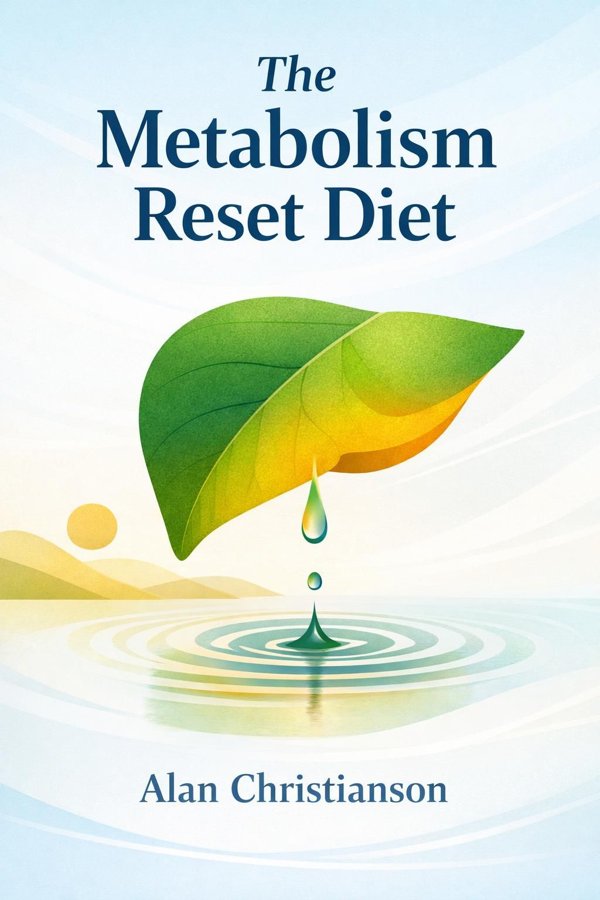
The Metabolism Reset Diet: Repair Your Liver, Stop Storing Fat, and Lose Weight Naturally: Summary & Key Insights
 10 min9 chaptersAudio available
Key Takeaways from The Metabolism Reset Diet: Repair Your Liver, Stop Storing Fat, and Lose Weight Naturally
Most people think metabolism lives in the thyroid, the muscles, or some vague concept called “calorie burn,” but Christianson asks us to look somewhere more fundamental: the liver.
A central promise of the book is both encouraging and controversial: metabolism is not fixed, and it does not always need to be “hacked” through extremes.
Change feels more manageable when it has a clear beginning, middle, and end.
Every bite either asks more of the liver or gives it room to recover.
Weight gain is often treated as a visible problem, but Christianson focuses on an invisible mechanism beneath it: insulin resistance.
What Is The Metabolism Reset Diet: Repair Your Liver, Stop Storing Fat, and Lose Weight Naturally About?
The Metabolism Reset Diet: Repair Your Liver, Stop Storing Fat, and Lose Weight Naturally by Alan Christianson is a nutrition book spanning 5 pages. Why do so many people eat less, exercise more, and still feel stuck with weight gain, fatigue, and stubborn cravings? In The Metabolism Reset Diet, Dr. Alan Christianson argues that the answer often lies not in willpower, but in liver health. He presents the liver as the body’s metabolic control center: when it becomes overburdened, it shifts the body toward fat storage, unstable energy, and poor appetite regulation. Rather than offering another extreme diet, Christianson proposes a structured four-week reset designed to help the liver recover using whole foods, strategic meal composition, and sustainable lifestyle habits. What makes this book stand out is its practical framing of metabolism as something dynamic and repairable. Christianson combines clinical experience in endocrinology and metabolic health with accessible explanations of insulin resistance, blood sugar imbalance, inflammation, and fatty liver. The result is a plan that is both medically informed and highly usable in everyday life. For readers frustrated by diets that only address calories or carbs, this book offers a broader and more hopeful message: improve liver function, and the body often becomes far better at burning fat naturally.
This FizzRead summary covers all 9 key chapters of The Metabolism Reset Diet: Repair Your Liver, Stop Storing Fat, and Lose Weight Naturally in approximately 10 minutes, distilling the most important ideas, arguments, and takeaways from Alan Christianson's work. Also available as an audio summary and Key Quotes Podcast.
The Metabolism Reset Diet: Repair Your Liver, Stop Storing Fat, and Lose Weight Naturally
Why do so many people eat less, exercise more, and still feel stuck with weight gain, fatigue, and stubborn cravings? In The Metabolism Reset Diet, Dr. Alan Christianson argues that the answer often lies not in willpower, but in liver health. He presents the liver as the body’s metabolic control center: when it becomes overburdened, it shifts the body toward fat storage, unstable energy, and poor appetite regulation. Rather than offering another extreme diet, Christianson proposes a structured four-week reset designed to help the liver recover using whole foods, strategic meal composition, and sustainable lifestyle habits.
What makes this book stand out is its practical framing of metabolism as something dynamic and repairable. Christianson combines clinical experience in endocrinology and metabolic health with accessible explanations of insulin resistance, blood sugar imbalance, inflammation, and fatty liver. The result is a plan that is both medically informed and highly usable in everyday life. For readers frustrated by diets that only address calories or carbs, this book offers a broader and more hopeful message: improve liver function, and the body often becomes far better at burning fat naturally.
Who Should Read The Metabolism Reset Diet: Repair Your Liver, Stop Storing Fat, and Lose Weight Naturally?
This book is perfect for anyone interested in nutrition and looking to gain actionable insights in a short read. Whether you're a student, professional, or lifelong learner, the key ideas from The Metabolism Reset Diet: Repair Your Liver, Stop Storing Fat, and Lose Weight Naturally by Alan Christianson will help you think differently.
- ✓Readers who enjoy nutrition and want practical takeaways
- ✓Professionals looking to apply new ideas to their work and life
- ✓Anyone who wants the core insights of The Metabolism Reset Diet: Repair Your Liver, Stop Storing Fat, and Lose Weight Naturally in just 10 minutes
Want the full summary?
Get instant access to this book summary and 100K+ more with Fizz Moment.
Get Free SummaryAvailable on App Store • Free to download
Key Chapters
Most people think metabolism lives in the thyroid, the muscles, or some vague concept called “calorie burn,” but Christianson asks us to look somewhere more fundamental: the liver. The liver is the body’s metabolic traffic controller. It decides when incoming nutrients are stored, when energy is released, how hormones are processed, and how efficiently the body handles toxins, blood sugar, and fat. When it is healthy, these systems work with surprising elegance. When it is overloaded, the body can begin storing energy more aggressively, even when someone is trying hard to lose weight.
Christianson explains that modern eating patterns create a perfect storm for liver dysfunction. Excess sugar, refined starches, alcohol, frequent snacking, poor sleep, and highly processed foods all increase the liver’s workload. Over time, this may contribute to fatty liver, insulin resistance, inflammation, brain fog, and stubborn weight gain. What looks like a “slow metabolism” may actually be a stressed liver struggling to maintain balance.
This shift in perspective matters because it changes the strategy. Instead of only chasing calorie deficits or punishing workouts, readers are encouraged to support the organ that governs fuel handling. Practical examples include replacing sugary breakfast foods with protein-rich meals, reducing processed foods that promote fat accumulation in the liver, and spacing meals to give the body time to regulate energy properly.
The takeaway is simple but powerful: if weight loss has felt impossible, stop blaming your willpower and start considering liver health as the foundation of metabolic repair.
A central promise of the book is both encouraging and controversial: metabolism is not fixed, and it does not always need to be “hacked” through extremes. Christianson argues that the body has a strong capacity for repair, especially because liver tissue renews itself relatively quickly. That means the right changes, applied consistently over a short period, may lead to meaningful metabolic improvements. In other words, a reset is possible—not because of magic, but because biology is responsive.
This idea challenges the fatalism many readers carry. People often believe that years of dieting, age, genetics, or hormonal issues have permanently damaged their ability to lose weight. Christianson does not deny these influences, but he reframes them. The body may be adaptive, sluggish, and inflamed, yet it still responds when major metabolic stressors are removed. A reset works by reducing the specific burdens that drive liver fat accumulation and poor insulin signaling.
Instead of fasting aggressively or cutting out all carbohydrates forever, the book promotes a temporary but focused intervention. It emphasizes nutrient-dense whole foods, specific food sequencing, and a reduction in items that disproportionately stress the liver. The broader lesson is that healing often comes from subtraction before addition: remove the foods and habits that create dysfunction, and many symptoms begin to ease.
A practical application is to treat the reset as a therapeutic phase rather than a lifelong punishment. For four weeks, follow the structure carefully, observe changes in energy, sleep, waist circumference, and appetite, and let the results guide long-term choices. The actionable takeaway: stop looking for a harder plan and start looking for a reparative one.
Change feels more manageable when it has a clear beginning, middle, and end. Christianson’s four-week structure is important not just nutritionally, but psychologically. It gives readers a defined window to commit fully, gather feedback from their bodies, and break the cycle of random dieting. The plan is meant to be short enough to feel doable and focused enough to produce visible results.
The program centers on specific meal patterns and food choices designed to reduce the liver’s fat burden while improving satiety and blood sugar regulation. Rather than counting every calorie, readers work within a framework of approved foods, portion guidance, and timing principles. This keeps attention on food quality and metabolic impact rather than on obsessive arithmetic. Christianson emphasizes consistency over perfection and encourages readers to treat the month as a health experiment.
One reason the structure works is that it cuts decision fatigue. Many people fail not because they lack motivation, but because every meal becomes a negotiation. A fixed plan removes ambiguity. Breakfast may emphasize protein and produce instead of pastries or cereal. Lunch and dinner may center on lean proteins, non-starchy vegetables, and supportive fats, while common liver stressors are temporarily removed. The simplicity helps adherence.
The four-week design also helps readers notice patterns. If cravings drop after a week, if sleep improves by the second week, or if bloating fades after removing processed foods, those outcomes build confidence. Progress becomes experiential rather than theoretical.
The takeaway: treat the reset as a structured trial. Commit to the full four weeks, reduce daily food decisions, and let measurable changes in hunger, energy, and body composition reinforce the process.
Every bite either asks more of the liver or gives it room to recover. That is one of the book’s most practical insights. Christianson does not portray food simply as calories; he presents it as metabolic information. Some foods spike blood sugar, drive fat production in the liver, and increase hunger later. Others stabilize energy, improve fullness, and reduce the biochemical chaos that keeps the body in storage mode.
The book strongly favors whole, minimally processed foods. Protein becomes especially important because it supports blood sugar stability, satiety, and tissue repair. Non-starchy vegetables provide fiber and micronutrients while keeping the glycemic load modest. Certain fats, when eaten in sensible amounts, can help create satisfaction without the crash-and-crave cycle linked to refined carbohydrates. At the same time, the plan reduces or removes foods that commonly worsen liver strain, such as added sugars, processed snack foods, liquid calories, and highly refined starches.
Christianson also emphasizes that “healthy” foods are not automatically metabolically helpful for every goal. For example, smoothies, dried fruit, granola, or frequent fruit juice may sound wholesome yet still deliver too much fast-absorbing sugar for someone trying to reverse liver fat and insulin resistance. The point is not fear, but context.
A practical application is to build meals around a simple template: protein first, vegetables second, then supportive fats and appropriate whole-food carbohydrates as allowed within the plan. This keeps meals grounded and satisfying.
The actionable takeaway: stop judging foods by marketing labels alone. Ask whether a food helps stabilize blood sugar and reduce liver burden—or whether it quietly pushes your body back toward storage.
One of the most liberating ideas in the book is that appetite is not purely a matter of discipline. Hunger, fullness, energy, and cravings are shaped by hormones and metabolic signals, many of which are influenced by the liver. When the body is inflamed, blood sugar is unstable, or insulin remains chronically elevated, hunger can become louder and less rational. People often blame themselves for overeating when their physiology has been nudging them in that direction all along.
Christianson connects liver health to broader hormonal balance. The liver helps process hormones and supports the body’s ability to manage stress chemistry, reproductive hormones, and metabolic signaling. If this system is impaired, readers may experience not only weight challenges but also fatigue, poor concentration, mood volatility, and irregular appetite patterns.
That is why the reset is about more than fat loss. A person who eats a liver-supportive breakfast may notice fewer cravings later in the day. Someone who improves sleep and reduces alcohol may discover that evening snacking becomes less intense. These are hormonal wins disguised as behavior changes. The body starts cooperating.
The practical lesson is to observe hunger quality. Are you physically hungry, emotionally activated, or simply recovering from a blood sugar crash? Meals that combine protein, fiber, and routine often reduce chaotic appetite better than raw restraint does. Likewise, supporting sleep and stress regulation can improve eating behavior without directly “trying harder.”
The takeaway: if cravings feel overwhelming, look upstream. Better hormone balance often starts with better metabolic and liver health, not stricter self-criticism.
Food is the centerpiece of Christianson’s plan, but it is not the whole story. The liver responds to lifestyle as well as nutrition, and some of the most important inputs are easy to underestimate. Sleep quality, alcohol intake, movement, stress load, and meal timing all influence whether the body spends its days repairing or merely coping.
Sleep is especially important because poor sleep worsens insulin resistance, appetite dysregulation, and inflammation. A person who is underslept often craves more sugary or starchy foods, which can sabotage liver recovery without realizing it. Stress matters too. Chronic stress changes hormonal signaling, encourages impulsive eating, and can make the body more likely to store energy centrally around the abdomen. Christianson does not suggest that readers eliminate stress altogether, only that they stop ignoring its metabolic cost.
Movement also plays a supporting role. Gentle daily activity, especially walking after meals, can improve glucose handling without the recovery burden of excessive exercise. For many metabolically stressed people, consistency beats intensity. The goal is not to “burn off” bad eating, but to create an internal environment where nutrients are handled more efficiently.
Practical examples include setting a regular bedtime, minimizing alcohol during the reset, taking a 10- to 20-minute walk after dinner, and avoiding constant grazing throughout the day. These habits make the dietary work more effective.
The actionable takeaway: pair the food plan with recovery-oriented routines. Better sleep, less alcohol, regular movement, and lower stress are not side notes—they are metabolic multipliers.
One reason many diets fail is that they define success too narrowly. If the scale does not move fast enough, people assume nothing is happening. Christianson encourages a broader way of tracking progress, because metabolic healing often shows up before dramatic weight loss. The body may first improve in ways that are less visible but deeply meaningful: steadier energy, fewer cravings, reduced bloating, better sleep, improved mood, and a smaller waistline.
This broader lens matters because the scale can be noisy. Water retention, digestion, hormonal shifts, and timing can obscure real progress. A person may be losing liver fat, reducing inflammation, and gaining metabolic flexibility even if body weight changes gradually. Focusing only on pounds can cause people to abandon a plan that is actually working.
The book therefore supports practical tracking tools beyond body weight. Waist measurement is useful because abdominal fat is closely linked to metabolic risk. Hunger levels can be scored across the day. Energy, mental clarity, and sleep quality are also important indicators. If someone no longer needs a midafternoon caffeine rescue or can go several hours without feeling desperate for a snack, that is significant progress.
Troubleshooting also becomes easier with better data. If weight stalls but cravings are down and sleep is better, patience may be appropriate. If hunger is extreme and energy is poor, meal composition may need adjustment. Reflection helps personalize the plan.
The takeaway: judge the reset by a full set of signals, not just the scale. When your waist, appetite, focus, and sleep improve, your metabolism is likely changing in the right direction.
Perhaps the book’s most valuable message is that lasting metabolic health does not come from endless restriction. The reset is intentionally structured and selective, but it is meant to lead into a sustainable way of eating, not lifelong dietary punishment. Christianson wants readers to learn which habits help their bodies function better so that they can carry those principles forward with flexibility.
This is an important distinction. Many diets succeed short term because they are rigid, dramatic, or novel. They fail later because no one can maintain that level of intensity indefinitely. Christianson’s approach is more strategic. Use a focused phase to reduce liver stress, restore better signaling, and then reintroduce broader choices carefully, guided by how the body responds. The long-term win is not perfect eating; it is improved metabolic resilience.
For example, a reader may discover during the reset that sugary drinks trigger cravings, that protein at breakfast improves concentration, or that alcohol disrupts sleep and weight loss more than expected. These lessons become personal rules of thumb. Sustainability grows from awareness, not from memorizing a list of forbidden foods.
The book also implies a healthier mindset: food choices are feedback, not moral verdicts. If symptoms return after old habits creep back in, that is not failure. It is information. The body is showing what it handles well and what it does not.
The actionable takeaway: use the reset to build a permanent foundation—more whole foods, steadier meals, fewer liver-stressing habits—and aim for consistency you can live with, not perfection you can only maintain briefly.
All Chapters in The Metabolism Reset Diet: Repair Your Liver, Stop Storing Fat, and Lose Weight Naturally
About the Author
Dr. Alan Christianson is a naturopathic medical doctor and a recognized voice in metabolic, hormonal, and thyroid health. He specializes in natural endocrinology and is known for translating complex medical concepts into practical advice that readers can use in daily life. Christianson is the founding physician of Integrative Health, a clinic based in Scottsdale, Arizona, where he has worked extensively with patients facing weight challenges, fatigue, thyroid disorders, and blood sugar issues. He is also the author of several bestselling health books and a frequent media guest on topics related to nutrition and metabolism. His work often blends clinical experience, functional medicine perspectives, and lifestyle-based interventions, with an emphasis on helping people restore health through sustainable, whole-body strategies rather than extreme or short-lived fixes.
Get This Summary in Your Preferred Format
Read or listen to the The Metabolism Reset Diet: Repair Your Liver, Stop Storing Fat, and Lose Weight Naturally summary by Alan Christianson anytime, anywhere. FizzRead offers multiple formats so you can learn on your terms — all free.
Available formats: App · Audio · PDF · EPUB — All included free with FizzRead
Download The Metabolism Reset Diet: Repair Your Liver, Stop Storing Fat, and Lose Weight Naturally PDF and EPUB Summary
Key Quotes from The Metabolism Reset Diet: Repair Your Liver, Stop Storing Fat, and Lose Weight Naturally
“Most people think metabolism lives in the thyroid, the muscles, or some vague concept called “calorie burn,” but Christianson asks us to look somewhere more fundamental: the liver.”
“A central promise of the book is both encouraging and controversial: metabolism is not fixed, and it does not always need to be “hacked” through extremes.”
“Change feels more manageable when it has a clear beginning, middle, and end.”
“Every bite either asks more of the liver or gives it room to recover.”
“Weight gain is often treated as a visible problem, but Christianson focuses on an invisible mechanism beneath it: insulin resistance.”
Frequently Asked Questions about The Metabolism Reset Diet: Repair Your Liver, Stop Storing Fat, and Lose Weight Naturally
The Metabolism Reset Diet: Repair Your Liver, Stop Storing Fat, and Lose Weight Naturally by Alan Christianson is a nutrition book that explores key ideas across 9 chapters. Why do so many people eat less, exercise more, and still feel stuck with weight gain, fatigue, and stubborn cravings? In The Metabolism Reset Diet, Dr. Alan Christianson argues that the answer often lies not in willpower, but in liver health. He presents the liver as the body’s metabolic control center: when it becomes overburdened, it shifts the body toward fat storage, unstable energy, and poor appetite regulation. Rather than offering another extreme diet, Christianson proposes a structured four-week reset designed to help the liver recover using whole foods, strategic meal composition, and sustainable lifestyle habits. What makes this book stand out is its practical framing of metabolism as something dynamic and repairable. Christianson combines clinical experience in endocrinology and metabolic health with accessible explanations of insulin resistance, blood sugar imbalance, inflammation, and fatty liver. The result is a plan that is both medically informed and highly usable in everyday life. For readers frustrated by diets that only address calories or carbs, this book offers a broader and more hopeful message: improve liver function, and the body often becomes far better at burning fat naturally.
You Might Also Like

Eating by the Seasons Cookbook: Seasonal Produce-Focused Recipes
Clare Foster
10 min
From Crook to Cook: Platinum Recipes from Tha Boss Dogg's Kitchen
Snoop Dogg with Ryan Ford
10 min
Juicing for Beginners: The Essential Guide to Juicing Recipes and Juicing for Weight Loss
Rockridge Press
10 min
The Food Therapist: Break Bad Habits, Eat with Intention, and Indulge Without Worry
Shira Lenchewski
10 min
The Mediterranean Diet Meal Plan: A 4-Week Meal Plan for Optimal Health and Weight Loss
Various Contributors
10 min
The Well Plated Cookbook: Simple, Wholesome Recipes for Everyday Meals
Erin Clarke
10 minBrowse by Category
Ready to read The Metabolism Reset Diet: Repair Your Liver, Stop Storing Fat, and Lose Weight Naturally?
Get the full summary and 100K+ more books with Fizz Moment.