
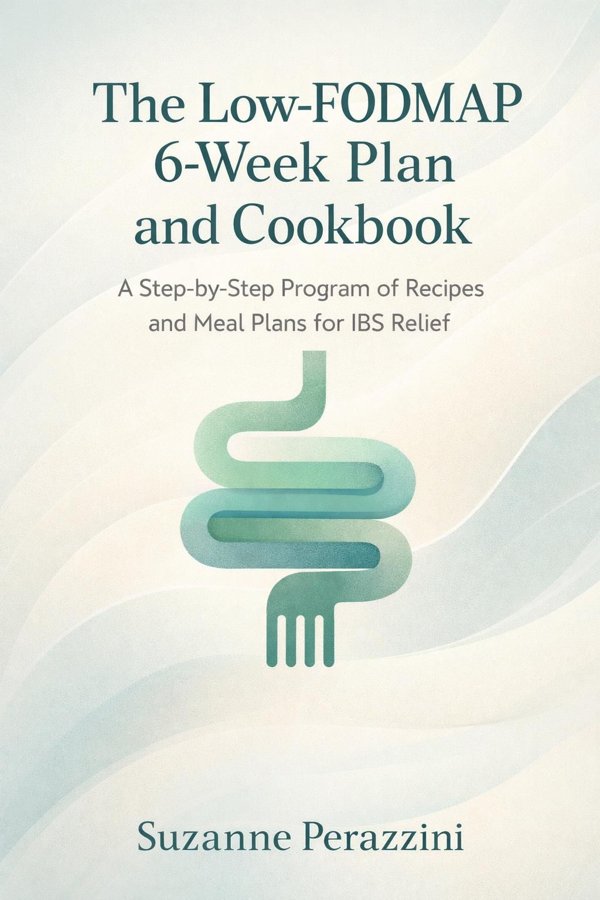
The Low-FODMAP 6-Week Plan and Cookbook: A Step-by-Step Program of Recipes and Meal Plans for IBS Relief: Summary & Key Insights
 10 min9 chaptersAudio available
Key Takeaways from The Low-FODMAP 6-Week Plan and Cookbook: A Step-by-Step Program of Recipes and Meal Plans for IBS Relief
One of the most liberating realizations for people with IBS is that their symptoms are real even when standard tests show nothing “wrong.
People often fail on therapeutic diets not because the plan is ineffective, but because they begin it in chaos.
Relief often begins not with a miracle food, but with a temporary simplification.
The biggest mistake many people make with the low-FODMAP diet is stopping at elimination.
A successful IBS plan is not the strictest one; it is the one you can live with.
What Is The Low-FODMAP 6-Week Plan and Cookbook: A Step-by-Step Program of Recipes and Meal Plans for IBS Relief About?
The Low-FODMAP 6-Week Plan and Cookbook: A Step-by-Step Program of Recipes and Meal Plans for IBS Relief by Suzanne Perazzini is a nutrition book spanning 6 pages. Digestive distress can shrink a person’s world faster than almost any other chronic condition. Meals become stressful, social events feel risky, and even healthy foods can seem unpredictable. In The Low-FODMAP 6-Week Plan and Cookbook, Suzanne Perazzini offers a practical way out of that confusion by turning the clinically recognized low-FODMAP approach into a structured, everyday program. Rather than presenting a vague list of foods to avoid, she guides readers through a clear six-week process: preparation, elimination, reintroduction, and long-term personalization. The result is a book that functions as both a symptom-relief manual and a cookbook for rebuilding confidence around eating. What makes this guide especially valuable is its blend of nutritional expertise and lived practicality. Perazzini, a certified nutritional therapist and digestive-health coach, understands that managing IBS is not just about science; it is also about shopping, cooking, planning, and staying sane in real life. Her recipes, meal plans, and step-by-step instructions help readers reduce overwhelm while learning how to identify their own triggers. For anyone struggling with IBS, bloating, or digestive uncertainty, this book offers a compassionate, actionable framework for relief.
This FizzRead summary covers all 9 key chapters of The Low-FODMAP 6-Week Plan and Cookbook: A Step-by-Step Program of Recipes and Meal Plans for IBS Relief in approximately 10 minutes, distilling the most important ideas, arguments, and takeaways from Suzanne Perazzini's work. Also available as an audio summary and Key Quotes Podcast.
The Low-FODMAP 6-Week Plan and Cookbook: A Step-by-Step Program of Recipes and Meal Plans for IBS Relief
Digestive distress can shrink a person’s world faster than almost any other chronic condition. Meals become stressful, social events feel risky, and even healthy foods can seem unpredictable. In The Low-FODMAP 6-Week Plan and Cookbook, Suzanne Perazzini offers a practical way out of that confusion by turning the clinically recognized low-FODMAP approach into a structured, everyday program. Rather than presenting a vague list of foods to avoid, she guides readers through a clear six-week process: preparation, elimination, reintroduction, and long-term personalization. The result is a book that functions as both a symptom-relief manual and a cookbook for rebuilding confidence around eating.
What makes this guide especially valuable is its blend of nutritional expertise and lived practicality. Perazzini, a certified nutritional therapist and digestive-health coach, understands that managing IBS is not just about science; it is also about shopping, cooking, planning, and staying sane in real life. Her recipes, meal plans, and step-by-step instructions help readers reduce overwhelm while learning how to identify their own triggers. For anyone struggling with IBS, bloating, or digestive uncertainty, this book offers a compassionate, actionable framework for relief.
Who Should Read The Low-FODMAP 6-Week Plan and Cookbook: A Step-by-Step Program of Recipes and Meal Plans for IBS Relief?
This book is perfect for anyone interested in nutrition and looking to gain actionable insights in a short read. Whether you're a student, professional, or lifelong learner, the key ideas from The Low-FODMAP 6-Week Plan and Cookbook: A Step-by-Step Program of Recipes and Meal Plans for IBS Relief by Suzanne Perazzini will help you think differently.
- ✓Readers who enjoy nutrition and want practical takeaways
- ✓Professionals looking to apply new ideas to their work and life
- ✓Anyone who wants the core insights of The Low-FODMAP 6-Week Plan and Cookbook: A Step-by-Step Program of Recipes and Meal Plans for IBS Relief in just 10 minutes
Want the full summary?
Get instant access to this book summary and 100K+ more with Fizz Moment.
Get Free SummaryAvailable on App Store • Free to download
Key Chapters
One of the most liberating realizations for people with IBS is that their symptoms are real even when standard tests show nothing “wrong.” Perazzini begins by clarifying this point: irritable bowel syndrome is a functional digestive disorder, which means the gut may look normal structurally while reacting poorly to certain foods, stressors, and digestive processes. This matters because many sufferers blame themselves, feel dismissed, or assume they simply have to live with discomfort. The low-FODMAP diet offers a more precise explanation by focusing on short-chain carbohydrates that are poorly absorbed in the gut and easily fermented by bacteria, often triggering gas, bloating, pain, diarrhea, or constipation.
Perazzini explains that FODMAPs are not “bad” foods in a universal sense. Many are found in highly nutritious foods such as onions, garlic, wheat, beans, certain fruits, and dairy products. The problem is not moral or nutritional failure; it is individual digestive tolerance. This reframing helps readers move away from fear-based eating and toward informed experimentation.
The book also emphasizes that IBS symptoms can vary widely. One person may react strongly to fructans in wheat and onions, while another may struggle more with lactose or polyols. That is why a low-FODMAP approach is not meant to be a permanent all-or-nothing lifestyle from day one. It is a structured investigative process.
A practical application is keeping a symptom and food journal before and during the program. Tracking meals, symptoms, stress, and timing can reveal patterns that might otherwise remain hidden. Actionable takeaway: stop thinking in terms of “safe” and “unsafe” foods forever, and start viewing IBS management as a personalized discovery process grounded in clear observation.
People often fail on therapeutic diets not because the plan is ineffective, but because they begin it in chaos. Perazzini treats preparation as a serious phase rather than a minor prelude, and that is one of the book’s smartest choices. Before readers even begin elimination, she walks them through clearing out confusing pantry staples, learning ingredient labels, identifying hidden high-FODMAP additives, and stocking the kitchen with foods they can rely on. This reduces decision fatigue at the exact moment when motivation is still fragile.
Preparation also has an emotional function. IBS can make eating feel unsafe, so building a kitchen full of workable options restores a sense of control. Instead of focusing on deprivation, Perazzini encourages readers to create a strong foundation: low-FODMAP grains, tolerated proteins, suitable fruits and vegetables, gentle flavorings, and convenient snack options. The message is simple but powerful: if your environment supports the plan, your willpower does not need to do all the work.
For example, a poorly prepared reader might start the first week with nothing but a list of forbidden foods, then panic at lunchtime and grab something unsuitable. A prepared reader has cooked rice in the fridge, tolerated vegetables ready to sauté, lactose-free yogurt on hand, and simple recipes bookmarked. The second reader is far more likely to succeed.
Perazzini also underscores planning for everyday obstacles: work lunches, family dinners, travel, and cravings. Making a shopping list, prepping staples on weekends, and choosing two or three repeatable breakfasts can reduce friction dramatically.
Actionable takeaway: before starting any elimination phase, spend several days setting up your environment so the easiest choice is also the right one.
Relief often begins not with a miracle food, but with a temporary simplification. In Weeks 1 and 2, Perazzini guides readers through the elimination phase, where high-FODMAP foods are removed for a limited period to calm symptoms and establish a clearer baseline. This phase is not meant to be nutritionally restrictive forever; it is designed to reduce digestive “noise” so readers can tell what their bodies are actually reacting to.
The elimination phase works best when it is both strict enough to provide clarity and realistic enough to follow. Perazzini helps readers strike that balance through meal plans, recipes, and shopping guidance. Instead of vague advice to “eat bland,” she offers practical meals that still feel satisfying. This matters because overly sparse eating can lead to hunger, frustration, and abandonment of the plan.
She also prepares readers for an important truth: symptom changes may not be instant or perfectly linear. Some people improve quickly, while others need time for inflammation, stress, and digestive sensitivity to settle. The key is consistency, not perfection. If a reader accidentally eats garlic in a sauce once, the answer is not despair but returning calmly to the plan.
Examples of practical application include building meals around plain proteins, tolerated grains like rice or oats, low-FODMAP vegetables, and simple flavor strategies using herbs, citrus, and garlic-infused oil. This keeps food enjoyable without undermining the process.
Perazzini’s tone suggests that the elimination phase is an information-gathering period, not a punishment. Readers should pay close attention to symptom changes, bowel patterns, bloating levels, and overall energy.
Actionable takeaway: approach the first two weeks as a disciplined but temporary reset, and measure progress by improved clarity and reduced symptoms rather than by chasing dietary perfection.
The biggest mistake many people make with the low-FODMAP diet is stopping at elimination. Perazzini strongly counters that tendency by showing that Weeks 3 and 4, the reintroduction phase, are where the diet becomes truly useful. Elimination may reduce symptoms, but reintroduction provides the real payoff: it identifies which FODMAP groups actually cause problems and which foods can safely return.
This phase restores nuance. Without it, readers may unnecessarily avoid nutritious foods and live with more restriction than needed. Perazzini frames reintroduction as a structured experiment. You test one category at a time in measured amounts while keeping the rest of the diet stable. That allows you to observe whether symptoms are tied to excess fructose, lactose, fructans, galacto-oligosaccharides, or polyols rather than concluding that “everything hurts.”
A practical example might be testing lactose with increasing portions of yogurt over several days, then pausing to assess symptoms before moving to another category. Another reader might discover they tolerate small amounts of wheat but react strongly to onion and garlic. That distinction can change daily life dramatically, making eating out, shopping, and cooking much easier.
Perazzini also emphasizes patience and careful note-taking. If several new foods are added at once, the results become muddy. Reintroduction requires a scientist’s mindset: one variable at a time, clear records, honest observation. This prevents both false confidence and unnecessary fear.
Importantly, this stage helps rebuild trust in food. Many readers enter the book convinced their digestive system is mysterious and hostile. Reintroduction turns that uncertainty into data.
Actionable takeaway: do not treat symptom relief as the finish line; follow through with systematic reintroduction so you can replace vague food anxiety with specific, evidence-based personal knowledge.
A successful IBS plan is not the strictest one; it is the one you can live with. In Weeks 5 and 6, Perazzini shifts the reader from a temporary protocol into long-term personalization. This is where the low-FODMAP diet stops being a short intervention and becomes a tailored lifestyle based on what the individual has learned. The goal is not endless restriction but the broadest, most varied diet possible with the fewest symptoms.
Perazzini recognizes that sustainability depends on flexibility. Once readers know their key triggers, they can make smarter trade-offs. Someone who tolerates lactose but not fructans can stop fearing all dairy and focus on managing wheat, onion, and garlic exposure. Another person may be able to handle small servings of certain legumes if they are prepared properly and eaten in the right context. This personalization reduces the emotional burden of eating and makes adherence more realistic over months and years.
The book also implicitly teaches a valuable mindset: tolerance is not always absolute. Portion size matters. Frequency matters. Stress, sleep, hormones, and general digestive health may influence how well a food is tolerated on a given day. Personalization therefore involves building a “good enough” system rather than a rigid rulebook.
In practice, this could mean creating a repeatable weekly menu of reliable meals while leaving room for occasional experiments. It might also mean identifying high-risk restaurant ingredients, carrying fallback snacks, or using symptom patterns to decide when to eat more conservatively.
Perazzini’s larger point is empowering: you are not trying to eat like a textbook. You are trying to understand your own body well enough to live freely.
Actionable takeaway: use the final weeks to design a personal eating framework based on your tested tolerances, daily routine, and quality-of-life priorities.
Dietary advice becomes meaningful only when it reaches the dinner table. One of the book’s greatest strengths is that it does not leave readers stranded with abstract guidelines. Perazzini includes recipes and meal plans that translate low-FODMAP principles into breakfasts, lunches, dinners, snacks, and practical staples. This reduces the common gap between knowing what to do and actually doing it consistently.
For people with IBS, cooking can feel intimidating because so many flavorful ingredients, especially onion and garlic, are also common triggers. Perazzini addresses this by showing that digestive-friendly food does not have to be dull. She uses approved ingredients, smart substitutions, and techniques such as infused oils, herbs, acids, and texture contrasts to preserve satisfaction. That is crucial, because a boring diet often leads to rebound eating or resentment.
Meal planning is equally important. Instead of forcing readers to invent every meal from scratch, the book gives structure. A clear weekly plan can minimize impulse decisions, reduce shopping confusion, and support symptom stability. For example, a reader might rely on a simple breakfast rotation, prepare one soup or stew in bulk, and keep a few portable snacks ready for workdays or travel.
Recipes also support emotional recovery. When people discover they can still cook enjoyable meals, share food with family, and eat with more confidence, the diet starts to feel like a tool rather than a sentence.
Perazzini’s approach is deeply practical: meals should be manageable for ordinary life, not designed only for ideal conditions. Convenience matters. Familiarity matters. Repetition can be useful.
Actionable takeaway: choose a small set of dependable low-FODMAP recipes and build them into your weekly routine so symptom management becomes automatic instead of mentally exhausting.
Food may be the trigger readers notice first, but Perazzini makes it clear that IBS rarely exists in a vacuum. Digestive symptoms are shaped not only by what you eat, but also by stress, eating patterns, lifestyle habits, and overall gut sensitivity. This broader perspective prevents the low-FODMAP diet from becoming an oversimplified cure-all and helps readers understand why the same meal may feel fine one day and terrible the next.
Stress is especially important because the gut and brain communicate constantly. Anxiety, rushing meals, poor sleep, and chronic tension can amplify pain, bloating, motility issues, and digestive reactivity. A person may blame a single ingredient when the real issue was eating too quickly during a stressful workday or combining a trigger food with several other challenges at once.
Perazzini’s method encourages readers to notice these interactions. A symptom diary can include more than ingredients: meal timing, portion size, stress level, hydration, menstrual cycle changes, sleep quality, and bowel habits. Over time, this creates a richer and more useful picture than food tracking alone.
Practical application might include slowing down at meals, spacing food more evenly through the day, avoiding huge portions of even tolerated foods, and planning gentler meals during high-stress periods. For some readers, this insight is transformative because it reduces black-and-white thinking. The goal is not to control every variable perfectly, but to understand how different factors combine.
This broader lens also softens self-blame. If symptoms flare, it does not automatically mean the diet failed. The digestive system is dynamic.
Actionable takeaway: track and address lifestyle factors alongside food choices so you can manage IBS as a whole-body pattern rather than as a simple ingredient problem.
The deepest contribution of Perazzini’s book may be psychological as much as nutritional. Many people with IBS live in a cycle of vigilance, embarrassment, and fear around food. They avoid restaurants, decline invitations, and feel anxious before every meal because they no longer trust their bodies. The six-week structure does more than reduce symptoms; it rebuilds confidence by replacing chaos with a method.
Perazzini’s approach is reassuring because it transforms eating from a source of uncertainty into a manageable system. Readers are not told to guess blindly, follow food fads, or eliminate random categories forever. They are asked to prepare carefully, test systematically, observe honestly, and personalize intelligently. That process itself can lower stress because it makes the problem feel solvable.
Confidence also grows through small wins. A symptom-free breakfast. A successful week of planned meals. A clear reaction during reintroduction that finally explains years of bloating. A restaurant meal navigated successfully by avoiding known triggers. Each success helps restore a normal life that IBS may have disrupted.
This shift matters because fear can become a secondary problem. Some people become so anxious about flare-ups that their diets become narrower and their social lives smaller than necessary. Perazzini encourages a healthier balance: respect symptoms, but do not let them define every choice.
In practical terms, confidence might mean creating a shortlist of trusted meals, communicating needs calmly in social settings, and using reintroduction results to expand rather than shrink the diet.
Actionable takeaway: use the low-FODMAP process not just to remove triggers, but to rebuild trust in your body and create a calmer, more flexible relationship with food.
All Chapters in The Low-FODMAP 6-Week Plan and Cookbook: A Step-by-Step Program of Recipes and Meal Plans for IBS Relief
About the Author
Suzanne Perazzini is a certified nutritional therapist and health coach specializing in digestive health, with particular expertise in helping people manage irritable bowel syndrome through the low-FODMAP diet. She is widely known for translating complex nutritional guidance into practical, everyday strategies that readers can actually follow. Her work focuses on identifying food triggers, improving gut comfort, and helping clients build sustainable eating habits rather than relying on overly restrictive rules. Through her writing, coaching, and educational resources, Perazzini has supported thousands of people dealing with bloating, pain, and digestive uncertainty. Her approach combines evidence-based nutrition with real-life usability, making her a trusted guide for readers seeking symptom relief, clarity, and a more confident relationship with food.
Get This Summary in Your Preferred Format
Read or listen to the The Low-FODMAP 6-Week Plan and Cookbook: A Step-by-Step Program of Recipes and Meal Plans for IBS Relief summary by Suzanne Perazzini anytime, anywhere. FizzRead offers multiple formats so you can learn on your terms — all free.
Available formats: App · Audio · PDF · EPUB — All included free with FizzRead
Download The Low-FODMAP 6-Week Plan and Cookbook: A Step-by-Step Program of Recipes and Meal Plans for IBS Relief PDF and EPUB Summary
Key Quotes from The Low-FODMAP 6-Week Plan and Cookbook: A Step-by-Step Program of Recipes and Meal Plans for IBS Relief
“One of the most liberating realizations for people with IBS is that their symptoms are real even when standard tests show nothing “wrong.”
“People often fail on therapeutic diets not because the plan is ineffective, but because they begin it in chaos.”
“Relief often begins not with a miracle food, but with a temporary simplification.”
“The biggest mistake many people make with the low-FODMAP diet is stopping at elimination.”
“A successful IBS plan is not the strictest one; it is the one you can live with.”
Frequently Asked Questions about The Low-FODMAP 6-Week Plan and Cookbook: A Step-by-Step Program of Recipes and Meal Plans for IBS Relief
The Low-FODMAP 6-Week Plan and Cookbook: A Step-by-Step Program of Recipes and Meal Plans for IBS Relief by Suzanne Perazzini is a nutrition book that explores key ideas across 9 chapters. Digestive distress can shrink a person’s world faster than almost any other chronic condition. Meals become stressful, social events feel risky, and even healthy foods can seem unpredictable. In The Low-FODMAP 6-Week Plan and Cookbook, Suzanne Perazzini offers a practical way out of that confusion by turning the clinically recognized low-FODMAP approach into a structured, everyday program. Rather than presenting a vague list of foods to avoid, she guides readers through a clear six-week process: preparation, elimination, reintroduction, and long-term personalization. The result is a book that functions as both a symptom-relief manual and a cookbook for rebuilding confidence around eating. What makes this guide especially valuable is its blend of nutritional expertise and lived practicality. Perazzini, a certified nutritional therapist and digestive-health coach, understands that managing IBS is not just about science; it is also about shopping, cooking, planning, and staying sane in real life. Her recipes, meal plans, and step-by-step instructions help readers reduce overwhelm while learning how to identify their own triggers. For anyone struggling with IBS, bloating, or digestive uncertainty, this book offers a compassionate, actionable framework for relief.
You Might Also Like
Eating by the Seasons Cookbook: Seasonal Produce-Focused Recipes
Clare Foster
10 min
From Crook to Cook: Platinum Recipes from Tha Boss Dogg's Kitchen
Snoop Dogg with Ryan Ford
10 min
Juicing for Beginners: The Essential Guide to Juicing Recipes and Juicing for Weight Loss
Rockridge Press
10 min
The Food Therapist: Break Bad Habits, Eat with Intention, and Indulge Without Worry
Shira Lenchewski
10 min
The Mediterranean Diet Meal Plan: A 4-Week Meal Plan for Optimal Health and Weight Loss
Various Contributors
10 min
The Well Plated Cookbook: Simple, Wholesome Recipes for Everyday Meals
Erin Clarke
10 minBrowse by Category
Ready to read The Low-FODMAP 6-Week Plan and Cookbook: A Step-by-Step Program of Recipes and Meal Plans for IBS Relief?
Get the full summary and 100K+ more books with Fizz Moment.