
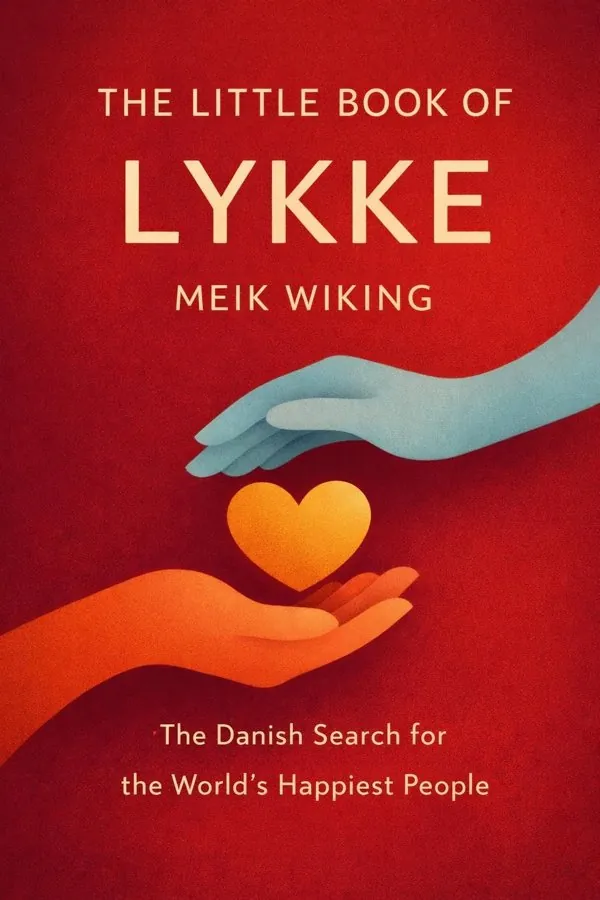
The Little Book of Lykke: The Danish Search for the World's Happiest People: Summary & Key Insights
by Meik Wiking
 10 min7 chaptersAudio available
What Is The Little Book of Lykke: The Danish Search for the World's Happiest People About?
The Little Book of Lykke: The Danish Search for the World's Happiest People by Meik Wiking is a positive_psych book spanning 7 pages. In this follow-up to his bestselling 'The Little Book of Hygge', Meik Wiking explores the concept of 'lykke'—the Danish word for happiness. Drawing on research from the Happiness Research Institute in Copenhagen, Wiking examines what makes people happy across the world, from community and trust to freedom and kindness, offering practical insights and inspiring stories to help readers find more joy in everyday life.
This FizzRead summary covers all 7 key chapters of The Little Book of Lykke: The Danish Search for the World's Happiest People in approximately 10 minutes, distilling the most important ideas, arguments, and takeaways from Meik Wiking's work. Also available as an audio summary and Key Quotes Podcast.
The Little Book of Lykke: The Danish Search for the World's Happiest People
In this follow-up to his bestselling 'The Little Book of Hygge', Meik Wiking explores the concept of 'lykke'—the Danish word for happiness. Drawing on research from the Happiness Research Institute in Copenhagen, Wiking examines what makes people happy across the world, from community and trust to freedom and kindness, offering practical insights and inspiring stories to help readers find more joy in everyday life.
Who Should Read The Little Book of Lykke: The Danish Search for the World's Happiest People?
This book is perfect for anyone interested in positive_psych and looking to gain actionable insights in a short read. Whether you're a student, professional, or lifelong learner, the key ideas from The Little Book of Lykke: The Danish Search for the World's Happiest People by Meik Wiking will help you think differently.
- ✓Readers who enjoy positive_psych and want practical takeaways
- ✓Professionals looking to apply new ideas to their work and life
- ✓Anyone who wants the core insights of The Little Book of Lykke: The Danish Search for the World's Happiest People in just 10 minutes
Want the full summary?
Get instant access to this book summary and 100K+ more with Fizz Moment.
Get Free SummaryAvailable on App Store • Free to download
Key Chapters
Money matters. But perhaps not as much as we think. Our research consistently shows a clear pattern: happiness increases with income — up to a point. Beyond that threshold, the correlation weakens. What predicts sustainable happiness is not wealth itself but how societies use resources. A fairer distribution of income, access to social services, and a sense of financial security create more contentment than high GDP alone.
Consider Denmark again: not everyone drives luxury cars, but most feel safe knowing they’ll have medical care and education. Similarly, in Costa Rica, though average income is modest, social bonds and public trust make people feel rich in the ways that truly matter. Societies that close the gap between rich and poor often find higher levels of collective happiness. Inequality breeds envy and discouragement, while fairness gives everyone hope.
On a personal level, spending habits influence well-being. People who spend money on experiences and others — dinners with friends, gifts for loved ones, community donations — report far more lasting joy than those who spend only on themselves. Money, then, is a tool. Used wisely, it can create connection, freedom, and peace of mind. Misused, it fuels isolation and stress. Lykke invites you to see wealth not as accumulation, but as a shared resource to build better lives together.
+ 5 more chapters — available in the FizzRead app
All Chapters in The Little Book of Lykke: The Danish Search for the World's Happiest People
About the Author
Meik Wiking is the CEO of the Happiness Research Institute in Copenhagen and a leading expert on happiness, well-being, and quality of life. He is also the author of 'The Little Book of Hygge' and has been featured internationally for his research on what makes life meaningful and fulfilling.
Get This Summary in Your Preferred Format
Read or listen to the The Little Book of Lykke: The Danish Search for the World's Happiest People summary by Meik Wiking anytime, anywhere. FizzRead offers multiple formats so you can learn on your terms — all free.
Available formats: App · Audio · PDF · EPUB — All included free with FizzRead
Download The Little Book of Lykke: The Danish Search for the World's Happiest People PDF and EPUB Summary
Key Quotes from The Little Book of Lykke: The Danish Search for the World's Happiest People
“Whenever we analyze the happiest communities, one pattern is universal: people feel they belong.”
Frequently Asked Questions about The Little Book of Lykke: The Danish Search for the World's Happiest People
The Little Book of Lykke: The Danish Search for the World's Happiest People by Meik Wiking is a positive_psych book that explores key ideas across 7 chapters. In this follow-up to his bestselling 'The Little Book of Hygge', Meik Wiking explores the concept of 'lykke'—the Danish word for happiness. Drawing on research from the Happiness Research Institute in Copenhagen, Wiking examines what makes people happy across the world, from community and trust to freedom and kindness, offering practical insights and inspiring stories to help readers find more joy in everyday life.
More by Meik Wiking
You Might Also Like
Don't Sweat the Small Stuff... and It's All Small Stuff
Richard Carlson
10 min
Option B
Sheryl Sandberg & Adam Grant
10 min
Hallelujah Anyway: Rediscovering Mercy
Anne Lamott
10 min
I Can Do It: How to Use Affirmations to Change Your Life
Louise Hay
10 min
The Coffee Bean: A Simple Lesson to Create Positive Change
Jon Gordon, Damon West
10 min
The Happiness Hypothesis: Finding Modern Truth in Ancient Wisdom
Jonathan Haidt
10 minBrowse by Category
Ready to read The Little Book of Lykke: The Danish Search for the World's Happiest People?
Get the full summary and 100K+ more books with Fizz Moment.