
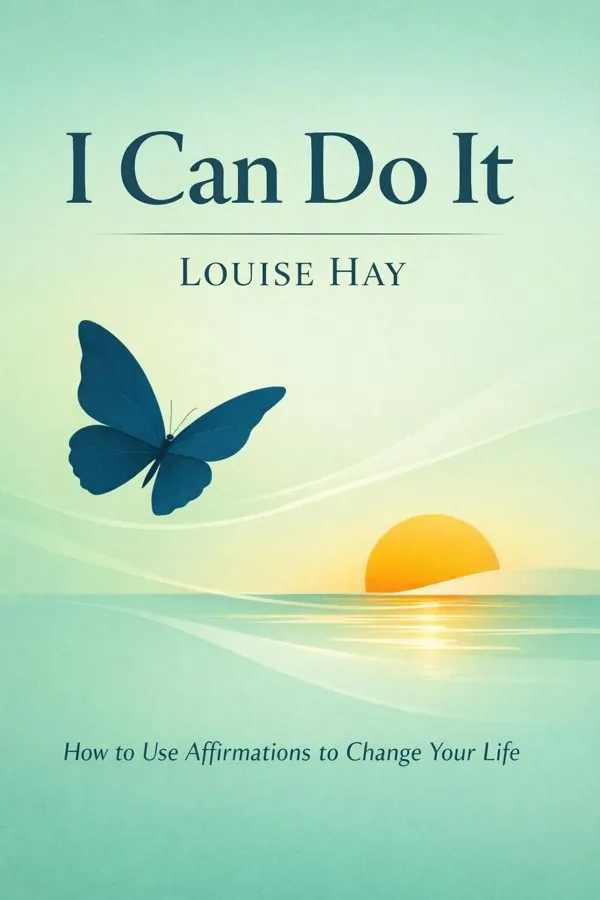
I Can Do It: How to Use Affirmations to Change Your Life: Summary & Key Insights
by Louise Hay
 10 min8 chaptersAudio available
Key Takeaways from I Can Do It: How to Use Affirmations to Change Your Life
Most people do not realize how often they are talking themselves into limitation.
Change rarely begins with a dramatic breakthrough; more often, it begins with repetition.
Many people try to change their lives while secretly believing they do not deserve better.
People often postpone change because they feel trapped by the past or intimidated by the future.
Resentment can feel justified, but Hay argues that carrying it keeps you emotionally tied to pain.
What Is I Can Do It: How to Use Affirmations to Change Your Life About?
I Can Do It: How to Use Affirmations to Change Your Life by Louise Hay is a positive_psych book. I Can Do It: How to Use Affirmations to Change Your Life is Louise Hay’s practical guide to one of her most influential ideas: the belief that thoughts shape experience, and that changing your inner language can begin to change your life. In this accessible book, Hay shows readers how affirmations—simple, intentional statements spoken with belief and repetition—can help reframe fear, self-doubt, resentment, scarcity thinking, and emotional pain. Rather than offering abstract philosophy, she gives readers a direct method for building self-worth, healing emotional patterns, and creating a more hopeful relationship with the future. The book matters because many people live with an internal voice that is critical, fearful, and limiting. Hay argues that this voice is learned, not permanent, and that it can be replaced with one that supports growth, peace, and possibility. Her message has resonated with millions because it is both compassionate and actionable. As a pioneering voice in the self-help movement and the author of You Can Heal Your Life, Louise Hay built her authority through decades of teaching, counseling, and advocating emotional healing. This book distills her wisdom into a daily practice readers can start using immediately.
This FizzRead summary covers all 8 key chapters of I Can Do It: How to Use Affirmations to Change Your Life in approximately 10 minutes, distilling the most important ideas, arguments, and takeaways from Louise Hay's work. Also available as an audio summary and Key Quotes Podcast.
I Can Do It: How to Use Affirmations to Change Your Life
I Can Do It: How to Use Affirmations to Change Your Life is Louise Hay’s practical guide to one of her most influential ideas: the belief that thoughts shape experience, and that changing your inner language can begin to change your life. In this accessible book, Hay shows readers how affirmations—simple, intentional statements spoken with belief and repetition—can help reframe fear, self-doubt, resentment, scarcity thinking, and emotional pain. Rather than offering abstract philosophy, she gives readers a direct method for building self-worth, healing emotional patterns, and creating a more hopeful relationship with the future.
The book matters because many people live with an internal voice that is critical, fearful, and limiting. Hay argues that this voice is learned, not permanent, and that it can be replaced with one that supports growth, peace, and possibility. Her message has resonated with millions because it is both compassionate and actionable. As a pioneering voice in the self-help movement and the author of You Can Heal Your Life, Louise Hay built her authority through decades of teaching, counseling, and advocating emotional healing. This book distills her wisdom into a daily practice readers can start using immediately.
Who Should Read I Can Do It: How to Use Affirmations to Change Your Life?
This book is perfect for anyone interested in positive_psych and looking to gain actionable insights in a short read. Whether you're a student, professional, or lifelong learner, the key ideas from I Can Do It: How to Use Affirmations to Change Your Life by Louise Hay will help you think differently.
- ✓Readers who enjoy positive_psych and want practical takeaways
- ✓Professionals looking to apply new ideas to their work and life
- ✓Anyone who wants the core insights of I Can Do It: How to Use Affirmations to Change Your Life in just 10 minutes
Want the full summary?
Get instant access to this book summary and 100K+ more with Fizz Moment.
Get Free SummaryAvailable on App Store • Free to download
Key Chapters
Most people do not realize how often they are talking themselves into limitation. Louise Hay’s central insight is that the thoughts and phrases you repeat internally are not harmless background noise; they help shape your emotions, your expectations, and your behavior. When you constantly think, “I’m not good enough,” “Nothing ever works out,” or “I always fail,” you begin to act from those assumptions. You may avoid opportunities, tolerate poor treatment, or sabotage progress because your inner narrative has already decided what is possible.
Hay argues that affirmations work by interrupting these automatic thought patterns and replacing them with conscious, supportive beliefs. An affirmation is not magic, and it is not about denying reality. It is a deliberate mental practice that trains your mind to focus on what you want to create rather than what you fear. If your habitual thinking reinforces helplessness, affirmations begin to build a new inner environment—one where confidence, healing, abundance, and self-respect can grow.
For example, someone who feels overwhelmed at work might replace “I can’t handle this” with “I am calm, capable, and supported.” A person recovering from heartbreak may choose “I lovingly release the past and welcome peace.” These phrases matter because repeated language influences attention, emotional tone, and action. You begin to notice options, take healthier steps, and respond differently.
Hay’s deeper message is that personal change starts with awareness. Before you can use affirmations effectively, you must notice the beliefs already running your life. Pay attention to your complaints, your fears, and the phrases you say most often. They reveal the mental blueprint you are living from.
Actionable takeaway: For one day, write down your most common negative self-statements, then create one gentle, positive affirmation to counter each of them.
Change rarely begins with a dramatic breakthrough; more often, it begins with repetition. Hay teaches that affirmations work because the mind learns through repeated exposure. Just as years of criticism, fear, guilt, or disappointment can form entrenched beliefs, repeated statements of self-acceptance and possibility can begin to loosen those old patterns. The process may feel awkward at first because your mind is used to familiar negativity. That discomfort does not mean the affirmation is false—it often means you are challenging an old mental habit.
Hay encourages persistence. If a person has spent decades believing they are unworthy, they should not expect one sentence repeated twice to erase that conditioning. Instead, affirmations should become part of daily life: spoken in the mirror, written in a journal, posted on walls, repeated in moments of stress, and used as emotional anchors throughout the day. Over time, this repetition can reduce the power of self-defeating thoughts and make healthier beliefs feel more natural.
Consider someone who struggles with money anxiety. Their old script may be, “There is never enough.” Hay would recommend replacing that with something like, “Life supports me, and I am open to prosperity.” At first the new statement may feel unrealistic, but repeated use shifts attention from panic to possibility. The person may become more willing to budget wisely, ask for opportunities, or stop equating self-worth with financial fear.
The book emphasizes that consistency matters more than intensity. You do not need to force emotion every time you say an affirmation. What matters is showing up regularly and planting better thoughts in the mind, even before you fully believe them.
Actionable takeaway: Choose one affirmation for a current challenge and repeat it every morning, every night, and whenever the old pattern returns for the next 30 days.
Many people try to change their lives while secretly believing they do not deserve better. Hay insists that self-love is not a luxury or a vague spiritual ideal—it is the emotional foundation for every lasting transformation. Without self-love, affirmations can feel mechanical because part of you continues to resist joy, success, health, or intimacy. If deep down you believe you are flawed, broken, or unworthy, you may unconsciously reject the very things you say you want.
Hay’s approach is compassionate but direct: healing begins when you stop attacking yourself. This means ending the habit of constant self-criticism, comparing yourself to others, replaying past mistakes, and defining yourself by your wounds. Self-love involves treating yourself with the same patience and encouragement you would offer a dear friend. In practical terms, that includes using kind inner language, setting better boundaries, honoring your body, and allowing yourself to grow imperfectly.
One of Hay’s most famous practices is mirror work—looking into your own eyes and speaking loving affirmations aloud. For many readers, this feels surprisingly intense because it exposes how difficult self-acceptance can be. Yet that is exactly why the practice matters. Saying “I love and approve of myself” may reveal resistance, sadness, or disbelief, but it also begins the process of softening that internal hardness.
Self-love does not mean narcissism or pretending everything is perfect. It means recognizing your inherent worth while still making changes. A person working through weight issues, anxiety, or career disappointment can still affirm, “I am willing to love myself as I learn and grow.” That willingness becomes the doorway to real change.
Actionable takeaway: Spend two minutes each day in front of a mirror saying, “I love and accept myself,” and notice without judgment whatever feelings arise.
People often postpone change because they feel trapped by the past or intimidated by the future. Hay reminds readers that the only place transformation can occur is in the present moment. You cannot think a new thought yesterday, and you cannot take action tomorrow. The point of power is always now. This idea gives affirmations their urgency and their practicality: each new statement is an act of present choice.
Hay does not deny that the past influences us. Old wounds, childhood messages, and repeated disappointments can shape current beliefs. But she refuses to give the past absolute authority. No matter what you learned before, you can begin choosing a different thought today. Similarly, the future is not fixed. It is influenced by what you repeatedly think, feel, and do in the present.
This mindset is especially useful for people who feel overwhelmed by the size of their problems. If you are trying to recover from burnout, repair self-esteem, or improve relationships, the goal can seem too large. Hay’s method narrows the focus: what is the next healing thought you can choose right now? Perhaps it is “I am safe in this moment,” “I am willing to change,” or “I release the need to struggle.” These statements help interrupt spirals of regret and anxiety.
In daily life, present-focused affirmations can be used in traffic, during conflict, before a meeting, or while lying awake at night. They bring attention back from imagined catastrophe to a usable moment of agency. You may not solve everything instantly, but you stop reinforcing helplessness.
Hay’s deeper contribution here is psychological: when people discover they can choose one better thought now, they begin to reclaim a sense of power.
Actionable takeaway: When you catch yourself ruminating on the past or fearing the future, pause and repeat, “My power is in the present moment,” five times slowly.
Resentment can feel justified, but Hay argues that carrying it keeps you emotionally tied to pain. One of the most challenging and liberating themes in the book is forgiveness. For Hay, forgiveness is not about excusing harmful behavior, denying injustice, or forcing reconciliation. It is about releasing the emotional burden that bitterness places on your mind and body. As long as you remain internally fused to old anger, you continue reliving the hurt.
Affirmations become a tool for softening resistance and opening space for release. If direct forgiveness feels impossible, Hay suggests beginning with willingness: “I am willing to forgive,” or “I am willing to release the past.” This matters because personal change often starts before emotional certainty. You do not need to feel pure compassion instantly; you simply need to stop feeding the wound with repeated mental rehearsal.
Forgiveness also applies inward. Many people are harsher with themselves than with anyone else. They replay mistakes, shame themselves for what they tolerated, and define their identity by regret. Hay sees this as a major obstacle to healing. Self-forgiveness allows you to acknowledge your past without letting it become your permanent self-concept.
A practical example might involve someone who still feels angry at a parent’s criticism. Rather than denying the pain, they might use affirmations such as “I release what no longer serves me” or “I choose peace over replaying old wounds.” Over time, this can reduce emotional charge and create room for healthier boundaries and greater calm.
Forgiveness in Hay’s framework is less a single event than a repeated decision to stop investing your life-force in old pain.
Actionable takeaway: Identify one person or situation you still mentally revisit, and begin a daily practice of saying, “I am willing to let this go and be free.”
A powerful aspect of Hay’s teaching is that affirmations are not limited to mood improvement; they can be applied to every major life area. She encourages readers to look at recurring problems in health, work, love, money, and self-expression not only through external circumstances but also through the beliefs they may be reinforcing. If you repeatedly expect rejection, chaos, scarcity, or failure, you may unknowingly participate in patterns that keep producing them.
Hay’s point is not to blame people for all hardship. Rather, she invites them to examine how inner assumptions interact with outer reality. Someone who believes “No one values me” may avoid speaking up, choose dismissive partners, or fail to ask for fair compensation. A person who thinks “My body is against me” may relate to health with frustration instead of care. An affirmation helps establish a different inner orientation, such as “I deserve respectful relationships,” “My work has value,” or “I lovingly care for my body.”
This approach is especially practical because it links thought to behavior. As beliefs improve, choices often change. You may leave unhealthy dynamics sooner, apply for better roles, rest more consistently, communicate more clearly, or stop assuming that struggle is your destiny. Hay wants readers to see that affirmations are not just words to repeat—they are seeds for new actions.
Her method encourages tailoring affirmations to specific situations. For relationships, you might use “I attract loving, honest, and supportive people.” For career, “I am open to rewarding work that uses my gifts.” For health, “Every cell in my body responds to love.” Whether one interprets these spiritually or psychologically, their function is to direct attention toward healing and possibility.
Actionable takeaway: Choose one life area that feels stuck and write three affirmations that reflect the reality you want to build there.
The moment an affirmation feels unbelievable, many people assume it is not working. Hay offers a different interpretation: resistance is often a sign that you have touched an important wound. If saying “I deserve love” makes you tense, cynical, or emotional, that reaction is valuable information. It reveals that somewhere inside, an opposing belief is active. Instead of treating resistance as failure, Hay treats it as a doorway into healing.
This reframing is crucial because personal development often collapses when people expect immediate comfort. Affirmations can bring buried beliefs to the surface: fear of being seen, shame from childhood criticism, distrust after betrayal, or guilt around success. The goal is not to fight these reactions aggressively but to meet them with curiosity. Ask: What part of me rejects this statement? What old message am I still carrying? Whose voice does this belief sound like?
For instance, if someone repeats “I am worthy of success” and immediately hears “Don’t be arrogant” or “You’ll only disappoint yourself,” that internal response points to a deeper script. The affirmation has done its job by exposing the obstacle. Hay encourages continued practice, often with gentler bridge statements such as “I am willing to learn that success is safe for me” or “I am open to recognizing my worth.”
This approach makes affirmations more humane and more effective. Rather than using positive language to suppress pain, you use it to illuminate where healing is needed. Over time, what once felt false may begin to feel possible, then familiar, then natural.
Actionable takeaway: When an affirmation triggers discomfort, write down the negative thought that appears and create a softer, more believable affirmation that begins with “I am willing.”
Transformation is rarely the result of inspiration alone; it comes from practice. Hay repeatedly emphasizes that affirmations are most effective when they become part of daily routine rather than something used only in crisis. A few moments of intentional mental training each day can gradually reshape how you interpret events, how you respond to stress, and what you believe you deserve.
A sustainable practice does not need to be complicated. Hay suggests weaving affirmations into ordinary life: saying them while getting dressed, writing them in a notebook, placing them on a bathroom mirror, repeating them during walks, or using them before sleep. The goal is to make supportive thought patterns more available than old harmful ones. This regularity gives the mind repeated evidence of a new identity and a new emotional direction.
Daily practice also builds resilience. On difficult days, you may not feel inspired, hopeful, or confident. That is exactly when affirmations matter most. A practiced statement like “All is well,” “I trust the process of life,” or “I am safe and supported” can act as a stabilizing cue during stress. It reminds you that you do not have to believe every anxious thought that appears.
Hay’s method works best when paired with simple reflection. Notice which affirmations energize you, which provoke resistance, and which feel too vague. Adjust them so they remain specific, encouraging, and present-tense. The practice is personal; the right affirmation is the one that helps you move from fear toward freedom.
Ultimately, Hay presents affirmations not as occasional slogans but as a way of living more consciously. The words you choose every day become the emotional climate of your life.
Actionable takeaway: Create a five-minute affirmation routine for morning and evening, using three statements that support your current emotional and practical goals.
All Chapters in I Can Do It: How to Use Affirmations to Change Your Life
About the Author
Louise Hay was an influential American self-help author, speaker, and publisher whose work helped popularize affirmations, self-love, and emotional healing in modern personal development. Born in 1926, she rose from a difficult early life to become one of the most recognized voices in the wellness and self-improvement world. Her landmark book You Can Heal Your Life sold millions of copies and introduced readers to her belief that thoughts and beliefs shape well-being and life experience. She later founded Hay House, a publishing company that became a major platform for spiritual and self-help authors. Known for her compassionate, encouraging style, Hay spent decades teaching people how to release limiting beliefs and cultivate inner peace. Her work continues to inspire readers seeking healing, confidence, and personal transformation.
Get This Summary in Your Preferred Format
Read or listen to the I Can Do It: How to Use Affirmations to Change Your Life summary by Louise Hay anytime, anywhere. FizzRead offers multiple formats so you can learn on your terms — all free.
Available formats: App · Audio · PDF · EPUB — All included free with FizzRead
Download I Can Do It: How to Use Affirmations to Change Your Life PDF and EPUB Summary
Key Quotes from I Can Do It: How to Use Affirmations to Change Your Life
“Most people do not realize how often they are talking themselves into limitation.”
“Change rarely begins with a dramatic breakthrough; more often, it begins with repetition.”
“Many people try to change their lives while secretly believing they do not deserve better.”
“People often postpone change because they feel trapped by the past or intimidated by the future.”
“Resentment can feel justified, but Hay argues that carrying it keeps you emotionally tied to pain.”
Frequently Asked Questions about I Can Do It: How to Use Affirmations to Change Your Life
I Can Do It: How to Use Affirmations to Change Your Life by Louise Hay is a positive_psych book that explores key ideas across 8 chapters. I Can Do It: How to Use Affirmations to Change Your Life is Louise Hay’s practical guide to one of her most influential ideas: the belief that thoughts shape experience, and that changing your inner language can begin to change your life. In this accessible book, Hay shows readers how affirmations—simple, intentional statements spoken with belief and repetition—can help reframe fear, self-doubt, resentment, scarcity thinking, and emotional pain. Rather than offering abstract philosophy, she gives readers a direct method for building self-worth, healing emotional patterns, and creating a more hopeful relationship with the future. The book matters because many people live with an internal voice that is critical, fearful, and limiting. Hay argues that this voice is learned, not permanent, and that it can be replaced with one that supports growth, peace, and possibility. Her message has resonated with millions because it is both compassionate and actionable. As a pioneering voice in the self-help movement and the author of You Can Heal Your Life, Louise Hay built her authority through decades of teaching, counseling, and advocating emotional healing. This book distills her wisdom into a daily practice readers can start using immediately.
More by Louise Hay
You Might Also Like
Don't Sweat the Small Stuff... and It's All Small Stuff
Richard Carlson
10 min
Option B
Sheryl Sandberg & Adam Grant
10 min
Hallelujah Anyway: Rediscovering Mercy
Anne Lamott
10 min
The Coffee Bean: A Simple Lesson to Create Positive Change
Jon Gordon, Damon West
10 min
The Happiness Hypothesis: Finding Modern Truth in Ancient Wisdom
Jonathan Haidt
10 min
59 Seconds: Think a Little, Change a Lot
Richard Wiseman
10 minBrowse by Category
Ready to read I Can Do It: How to Use Affirmations to Change Your Life?
Get the full summary and 100K+ more books with Fizz Moment.