
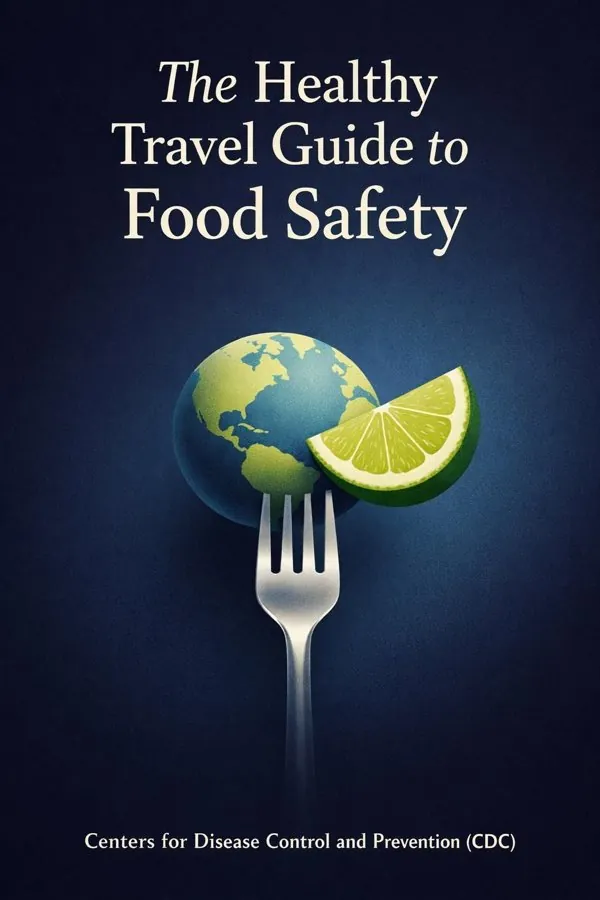
The Healthy Travel Guide to Food Safety: Avoid Foodborne Illness While Traveling: Summary & Key Insights
by Centers for Disease Control, Prevention (CDC)
 10 min9 chaptersAudio available
Key Takeaways from The Healthy Travel Guide to Food Safety: Avoid Foodborne Illness While Traveling
The biggest misconception about foodborne illness is that it is a rare inconvenience rather than a predictable travel risk.
Safe eating abroad does not require avoiding local food; it requires learning how to judge where food comes from and how it is prepared.
Many travelers focus on food and forget that unsafe water is often the hidden source of illness.
The simplest defense against foodborne illness is also the one travelers neglect most often: clean hands.
Food safety often comes down to time and temperature.
What Is The Healthy Travel Guide to Food Safety: Avoid Foodborne Illness While Traveling About?
The Healthy Travel Guide to Food Safety: Avoid Foodborne Illness While Traveling by Centers for Disease Control and Prevention (CDC) is a health_med book spanning 8 pages. Travel often invites people to be adventurous with food, but curiosity and appetite can quickly turn into illness when safety is overlooked. The Healthy Travel Guide to Food Safety: Avoid Foodborne Illness While Traveling is a concise, practical guide that helps travelers make smarter decisions about what they eat and drink in unfamiliar settings. Rather than discouraging cultural exploration, it teaches readers how to enjoy local cuisine while reducing the risk of food poisoning, traveler’s diarrhea, and other preventable infections. The guide matters because foodborne illness is one of the most common health problems travelers face. A single unsafe meal, contaminated drink, or poor hygiene practice can disrupt an entire trip and, in some cases, lead to severe dehydration or medical emergencies. The CDC brings exceptional authority to this topic. As one of the world’s leading public health institutions, it combines scientific evidence, disease surveillance, and practical prevention guidance into recommendations people can actually use. This book is less about fear and more about preparedness: it equips travelers with the habits, warning signs, and decision-making tools needed to stay healthy wherever they go.
This FizzRead summary covers all 9 key chapters of The Healthy Travel Guide to Food Safety: Avoid Foodborne Illness While Traveling in approximately 10 minutes, distilling the most important ideas, arguments, and takeaways from Centers for Disease Control and Prevention (CDC)'s work. Also available as an audio summary and Key Quotes Podcast.
The Healthy Travel Guide to Food Safety: Avoid Foodborne Illness While Traveling
Travel often invites people to be adventurous with food, but curiosity and appetite can quickly turn into illness when safety is overlooked. The Healthy Travel Guide to Food Safety: Avoid Foodborne Illness While Traveling is a concise, practical guide that helps travelers make smarter decisions about what they eat and drink in unfamiliar settings. Rather than discouraging cultural exploration, it teaches readers how to enjoy local cuisine while reducing the risk of food poisoning, traveler’s diarrhea, and other preventable infections.
The guide matters because foodborne illness is one of the most common health problems travelers face. A single unsafe meal, contaminated drink, or poor hygiene practice can disrupt an entire trip and, in some cases, lead to severe dehydration or medical emergencies. The CDC brings exceptional authority to this topic. As one of the world’s leading public health institutions, it combines scientific evidence, disease surveillance, and practical prevention guidance into recommendations people can actually use. This book is less about fear and more about preparedness: it equips travelers with the habits, warning signs, and decision-making tools needed to stay healthy wherever they go.
Who Should Read The Healthy Travel Guide to Food Safety: Avoid Foodborne Illness While Traveling?
This book is perfect for anyone interested in health_med and looking to gain actionable insights in a short read. Whether you're a student, professional, or lifelong learner, the key ideas from The Healthy Travel Guide to Food Safety: Avoid Foodborne Illness While Traveling by Centers for Disease Control and Prevention (CDC) will help you think differently.
- ✓Readers who enjoy health_med and want practical takeaways
- ✓Professionals looking to apply new ideas to their work and life
- ✓Anyone who wants the core insights of The Healthy Travel Guide to Food Safety: Avoid Foodborne Illness While Traveling in just 10 minutes
Want the full summary?
Get instant access to this book summary and 100K+ more with Fizz Moment.
Get Free SummaryAvailable on App Store • Free to download
Key Chapters
The biggest misconception about foodborne illness is that it is a rare inconvenience rather than a predictable travel risk. In reality, changing environments, unfamiliar pathogens, different sanitation systems, and disrupted routines all increase a traveler’s vulnerability. A person who feels healthy at home can become sick abroad simply because their body is encountering microbes it has not adapted to, or because food storage and handling practices differ from what they are used to.
The CDC frames food safety as a universal issue, not one limited to low-income destinations or visibly unsanitary places. A polished restaurant can still serve contaminated food, just as a humble roadside stall can sometimes provide safe meals if the food is cooked thoroughly and handled properly. What matters is understanding how contamination happens: through unsafe water, undercooked foods, unwashed produce, dirty hands, cross-contamination, or improper temperature control.
Travel intensifies these risks because people are more likely to eat impulsively, rely on convenience, and ignore minor warning signs in the excitement of a new place. Jet lag, dehydration, and fatigue can also make illness harder to recognize early. Even a mild stomach infection can ruin sightseeing plans, business meetings, or family events.
A practical application is to think like a risk manager before each meal. Ask simple questions: Was it cooked hot? Does the place look busy and clean? Is water treated? Has the food been sitting out? These small pauses can prevent major problems.
Actionable takeaway: Treat food safety as an essential part of travel planning, not as an afterthought once symptoms begin.
Safe eating abroad does not require avoiding local food; it requires learning how to judge where food comes from and how it is prepared. One of the guide’s most useful lessons is that travelers should observe food environments closely instead of relying only on reputation, price, or appearance. A restaurant packed with locals, food prepared to order, and visible cleanliness often offer better signs of safety than glossy menus or tourist marketing.
The CDC encourages travelers to pay attention to turnover, temperature, and handling. Freshly cooked food served steaming hot is generally safer than dishes that have been sitting at room temperature. Buffets, pre-cut fruit, sauces left uncovered, and meat displayed in warm conditions all deserve caution. Street food is not automatically unsafe, but it should be chosen carefully. Vendors who cook food in front of you, use clean utensils, and serve food immediately are usually safer bets than stalls with exposed ingredients or food swarmed by flies.
Practical judgment also matters in markets and grocery stores. Sealed packaging, intact expiration dates, and proper refrigeration are good signs. Avoid bulging cans, leaking containers, cracked eggs, and dairy products that seem poorly chilled. If accommodations include a kitchen, buying simple ingredients and preparing some meals yourself can reduce uncertainty.
A useful habit is to scan for clues before ordering: Are staff handling money and food with the same hands? Are cooked and raw foods separated? Is there soap available in the restroom? These details reveal how seriously a place takes hygiene.
Actionable takeaway: Eat where food is cooked fresh, served hot, and handled cleanly, and let observation guide your choices more than convenience or curiosity alone.
Many travelers focus on food and forget that unsafe water is often the hidden source of illness. The guide emphasizes that contaminated water can reach the body in more ways than drinking from the tap. It can appear in ice cubes, diluted juices, washed produce, toothbrushing water, fountain drinks, or even beverages served in seemingly reputable settings. If the local water supply is uncertain, every contact point matters.
The CDC’s guidance is straightforward: prefer sealed bottled water from reliable brands, boiled water, or appropriately treated water. Hot beverages made with boiled water, such as tea or coffee, are usually safer if served steaming. Carbonated drinks in unopened cans or bottles are often lower risk. By contrast, drinks with ice, fresh juices mixed with local water, and beverages sold in reused containers may be unsafe even if they look refreshing.
Travelers going to remote areas, hiking regions, or places with unreliable infrastructure may benefit from carrying purification tablets, portable filters, or knowing how to boil water effectively. This is especially important for brushing teeth, washing baby bottles, or taking medications. Even healthy adults can become dehydrated quickly after a bout of diarrhea; children and older adults face even greater risk.
A common practical mistake is assuming luxury accommodation guarantees safe tap water. In some destinations, hotels may still rely on local water systems. Asking specifically whether tap water and ice are safe is wise. When in doubt, use treated or bottled water for everything that enters the mouth.
Actionable takeaway: Assume water safety must be verified, not guessed, and use only sealed, boiled, or properly treated water for drinking and oral hygiene.
The simplest defense against foodborne illness is also the one travelers neglect most often: clean hands. Hand hygiene sounds ordinary, but it interrupts one of the most common routes by which harmful bacteria, viruses, and parasites move from surfaces into the body. Airports, public transit, cash, shared bathrooms, hotel surfaces, and market stalls all create repeated opportunities for contamination before a traveler ever takes a bite.
The CDC stresses washing hands with soap and safe water before eating, before preparing food, and after using the restroom. Soap and running water are better than a quick rinse because they physically remove germs. When soap and water are unavailable, alcohol-based hand sanitizer is a valuable backup, though it does not replace handwashing when hands are visibly dirty or greasy. Travelers should also remember that touching the face, adjusting contact lenses, or handling snacks after touching contaminated surfaces can transfer pathogens.
Personal cleanliness goes beyond hands. Clean utensils, washed reusable bottles, and hygienic food containers matter too. If you are traveling with children, ensuring they wash or sanitize before meals is especially important because children often touch many surfaces and then eat with their hands. For people who buy food on the go, carrying tissues, sanitizer, and perhaps disinfecting wipes can turn good intentions into consistent habits.
Consider a practical scenario: after exchanging cash for street food, you reach immediately for the meal. Without cleaning your hands, you may undermine the safety of an otherwise well-cooked dish. Hygiene is often the difference between a safe meal and an avoidable infection.
Actionable takeaway: Build a strict routine of washing or sanitizing hands before every meal and after every high-contact activity.
Food safety often comes down to time and temperature. Harmful microorganisms grow rapidly when food sits in the so-called danger zone between cold storage and hot serving temperatures. The CDC’s advice reminds travelers that even food that starts safe can become risky if left out too long in warm climates, transported carelessly, or stored in unreliable refrigerators.
This matters especially in tropical destinations, long road trips, shared hostels, camping situations, and accommodations with weak electricity or limited cooling. Leftover rice, seafood, cooked meats, dairy products, and mayonnaise-based dishes can spoil quickly. Travelers sometimes assume that because a meal smelled fine a few hours ago, it remains safe later. Unfortunately, dangerous contamination often cannot be seen, smelled, or tasted.
Safe handling means eating foods soon after they are prepared, refrigerating perishables promptly, and being skeptical of leftovers when storage conditions are uncertain. If a minibar or hostel refrigerator does not feel cold enough, it may not be keeping food safe. Raw and cooked foods should be separated to prevent cross-contamination. If using a shared kitchen, wash cutting boards, knives, and counters before use, and do not place ready-to-eat foods where raw meat or seafood has been handled.
A practical travel example is the picnic lunch packed early in the morning for a day of sightseeing. Without an insulated bag or ice packs, cheese, meat, eggs, and cut fruit may become unsafe by midday. In such cases, shelf-stable foods like crackers, nut butter, whole fruit you can peel yourself, or sealed snacks are often better options.
Actionable takeaway: Eat perishable food while it is hot or properly chilled, and discard anything that has sat too long in uncertain conditions.
Foodborne illness usually begins as a nuisance, but delay can turn it into a serious problem. The guide helps travelers recognize common symptoms quickly: nausea, vomiting, diarrhea, stomach cramps, fever, and weakness. These signs may appear within hours or after several days, depending on the organism involved. Because travel often includes long transit times, heat exposure, and limited bathroom access, even mild illness can become disruptive fast.
The CDC encourages early response rather than denial. Rest, fluid replacement, and attention to warning signs are essential. Oral rehydration is one of the most important tools, especially when diarrhea or vomiting causes fluid and electrolyte loss. Travelers should be particularly alert for blood in stool, high fever, severe dehydration, confusion, persistent vomiting, or symptoms lasting longer than expected. These signs warrant medical evaluation. Children, pregnant travelers, older adults, and people with chronic illnesses may deteriorate more quickly.
A practical strategy is to carry a small health kit with oral rehydration salts, thermometer, hand sanitizer, and any provider-recommended medications. Before departure, travelers can also identify how to access local clinics or emergency services. Keeping travel insurance details and medication lists handy saves time if care is needed.
Just as important is avoiding the spread of illness to others. A sick traveler should wash hands carefully, avoid preparing food for companions, and be cautious about shared bathrooms and surfaces. If symptoms begin after a suspicious meal, noting what and where you ate may help a clinician assess likely causes.
Actionable takeaway: Treat gastrointestinal symptoms promptly with hydration and monitoring, and seek medical care early if red-flag symptoms appear.
Not all travelers face equal consequences from foodborne illness. The CDC highlights that infants and young children, pregnant people, older adults, and those with weakened immune systems are more likely to suffer severe illness, dehydration, or complications from infections that might be mild in others. People with diabetes, inflammatory bowel disease, cancer, HIV, or those taking immune-suppressing medications should approach food and water safety with added caution.
For these groups, prevention is not just about comfort; it can be medically significant. Foods that some travelers might casually risk, such as undercooked eggs, unpasteurized dairy, raw seafood, deli foods left out, or untreated water, may pose far greater danger. Caregivers traveling with children should also think beyond restaurant meals. Bottle preparation, pacifiers dropped on public surfaces, and snacks shared with unwashed hands are all common exposure routes.
Vaccine and pre-travel medical guidance also matter. Depending on destination and health status, travelers may need professional advice on vaccines, preventive medication, or destination-specific precautions related to hepatitis A, typhoid, or other diseases linked to food and water. Consulting a travel medicine clinic in advance can clarify what is recommended and help tailor precautions to itinerary, age, and medical history.
A practical example is a pregnant traveler choosing between a fresh local cheese plate and a fully cooked meal. Cultural temptation is understandable, but avoiding unpasteurized or uncertain dairy is the safer choice. Likewise, an immunocompromised traveler may decide to avoid raw salads unless confident they were washed with safe water.
Actionable takeaway: If you or your travel companions are medically vulnerable, use stricter food rules and seek pre-travel medical advice before departure.
Most travel health problems feel overwhelming not because they are impossible to manage, but because people face them unprepared in an unfamiliar place. The guide underscores the value of planning before departure: understanding destination risks, learning emergency contacts, reviewing CDC travel notices, and packing basic health supplies. Preparation turns uncertainty into decision-making power.
The CDC’s broader contribution is not merely telling travelers what to avoid, but pointing them toward reliable information. Conditions change across countries and even regions within the same country. Local outbreaks, water system issues, climate events, and sanitation disruptions can alter risk quickly. Checking official CDC travel resources before and during a trip allows travelers to adjust behavior in real time.
A smart pre-trip checklist might include travel insurance documents, a list of allergies and medications, oral rehydration salts, safe snacks for transit days, water treatment options if needed, and addresses of nearby medical facilities at the destination. Travelers should also know how to contact local emergency services and whether their phone will work abroad. If traveling in a group, discussing what to do if someone becomes ill can prevent confusion later.
Preparation also supports confidence. Travelers who know how to identify safe food, purify water, and respond to symptoms are more likely to explore comfortably rather than swing between reckless eating and unnecessary fear. Public health guidance is most useful when translated into routines before the trip begins.
Actionable takeaway: Review CDC destination advice and assemble a simple food-safety and illness-response plan before you leave home.
One of the most valuable messages in the guide is that safe travel is not about avoiding cultural food experiences; it is about replacing guesswork with informed judgment. Travelers sometimes react to health warnings in one of two extremes: they either ignore all precautions in the name of authenticity or avoid local food altogether out of fear. The CDC’s approach offers a better middle path.
Enjoying local cuisine safely means favoring foods that are freshly cooked, served hot, and prepared in places with visible hygiene. It means choosing fruits you can peel yourself, declining raw garnishes washed in uncertain water, and understanding that some cherished local specialties may be lower risk than others depending on how they are made. A bowl of hot soup or grilled food can be safer than an elaborate cold dish, even if both are equally traditional.
This mindset respects both health and culture. It allows travelers to ask informed questions, observe preparation methods, and adapt choices without insulting local hospitality or withdrawing from the experience. For example, if invited to a home meal, a traveler can happily accept thoroughly cooked dishes and politely avoid untreated water or raw accompaniments. If visiting a market, sampling can focus on items cooked to order instead of foods that have sat exposed all day.
The deeper lesson is psychological: food safety should not diminish the joy of travel. It should protect it. Good decisions preserve energy, time, and well-being so the trip remains memorable for the right reasons.
Actionable takeaway: Stay open to local food experiences, but let informed selection—not impulse or fear—shape what you eat and drink.
All Chapters in The Healthy Travel Guide to Food Safety: Avoid Foodborne Illness While Traveling
About the Authors
The Centers for Disease Control and Prevention (CDC) is the national public health agency of the United States and one of the world’s most trusted sources of health guidance. Founded to protect communities from infectious disease and other health threats, the CDC conducts scientific research, monitors outbreaks, issues prevention recommendations, and supports emergency response efforts in the United States and globally. Its work spans immunization, chronic disease prevention, environmental health, travel medicine, and public health preparedness. Through evidence-based education and surveillance, the CDC helps individuals, clinicians, and governments make informed health decisions. In the area of travel health, the agency is especially respected for providing practical, up-to-date advice on destination risks, food and water safety, vaccines, and disease prevention for travelers of all kinds.
Get This Summary in Your Preferred Format
Read or listen to the The Healthy Travel Guide to Food Safety: Avoid Foodborne Illness While Traveling summary by Centers for Disease Control and Prevention (CDC) anytime, anywhere. FizzRead offers multiple formats so you can learn on your terms — all free.
Available formats: App · Audio · PDF · EPUB — All included free with FizzRead
Download The Healthy Travel Guide to Food Safety: Avoid Foodborne Illness While Traveling PDF and EPUB Summary
Key Quotes from The Healthy Travel Guide to Food Safety: Avoid Foodborne Illness While Traveling
“The biggest misconception about foodborne illness is that it is a rare inconvenience rather than a predictable travel risk.”
“Safe eating abroad does not require avoiding local food; it requires learning how to judge where food comes from and how it is prepared.”
“Many travelers focus on food and forget that unsafe water is often the hidden source of illness.”
“The simplest defense against foodborne illness is also the one travelers neglect most often: clean hands.”
“Food safety often comes down to time and temperature.”
Frequently Asked Questions about The Healthy Travel Guide to Food Safety: Avoid Foodborne Illness While Traveling
The Healthy Travel Guide to Food Safety: Avoid Foodborne Illness While Traveling by Centers for Disease Control and Prevention (CDC) is a health_med book that explores key ideas across 9 chapters. Travel often invites people to be adventurous with food, but curiosity and appetite can quickly turn into illness when safety is overlooked. The Healthy Travel Guide to Food Safety: Avoid Foodborne Illness While Traveling is a concise, practical guide that helps travelers make smarter decisions about what they eat and drink in unfamiliar settings. Rather than discouraging cultural exploration, it teaches readers how to enjoy local cuisine while reducing the risk of food poisoning, traveler’s diarrhea, and other preventable infections. The guide matters because foodborne illness is one of the most common health problems travelers face. A single unsafe meal, contaminated drink, or poor hygiene practice can disrupt an entire trip and, in some cases, lead to severe dehydration or medical emergencies. The CDC brings exceptional authority to this topic. As one of the world’s leading public health institutions, it combines scientific evidence, disease surveillance, and practical prevention guidance into recommendations people can actually use. This book is less about fear and more about preparedness: it equips travelers with the habits, warning signs, and decision-making tools needed to stay healthy wherever they go.
More by Centers for Disease Control and Prevention (CDC)
Healthy Meetings Handbook: Better Food, Movement, and Breaks for Productive Meetings
Centers for Disease Control and Prevention (CDC)
10 min
Healthy Neighborhood Design Guide: Urban Approaches for Population Longevity (Compilations)
Centers for Disease Control and Prevention (CDC)
10 minYou Might Also Like

On Immunity
Eula Biss
10 min
The Three-Body Problem
Liu Cixin
10 min
Community Health Volunteer Toolkit: Training and Practical Activities
World Health Organization
10 min
Healing Back Pain: The Mind-Body Connection
John E. Sarno
10 min
Health Literacy for All: Practical Guides to Communicate Health Information (Compilations)
World Health Organization
10 min
The Complete Guide to Sports Supplements: An Evidence-Based Review
Anita Bean
10 minBrowse by Category
Ready to read The Healthy Travel Guide to Food Safety: Avoid Foodborne Illness While Traveling?
Get the full summary and 100K+ more books with Fizz Moment.